WHAT’S THE POINT(S)?

In an article in the newspaper the other day (yes, some of us still read those), there was a discussion about how much films have depended on reviews to generate interest.  The piece was making the point that box office receipts, in fact the difference between success and failure for newly released motions pictures, was predicated directly on receiving positive reviews.  Reviews have had an impact on a lot of things over the years…movies, restaurants, books, and, of course, fermented beverages.  But the gist of this article was that, these days, reviews are pretty much a life and death proposition for films.

Is this really news?  People are busier and the competition for consumer dollars is fierce.  There are so many choices for virtually everything, and consumers, faced with making decisions about entertainment, dining, appliances, etc., like to have someone to turn to for advice more than ever.  The critic fills that role and is put in a position of elevated power as a tastemaker these days.  It has to be frustrating (to say the least) for a studio to invest millions (tens of millions?, hundreds of millions?) into a picture or TV series only to have the whole thing derailed by a couple of bad reviews.  Talk about life on the edge.  But while this may be a frightening scenario to Hollywood types, all we in the wine biz can say is, ‘Welcome to our world’.

We have been doing this long enough to remember a time before everything was dictated by reviews.  OK, maybe that isn’t entirely true.  In olden times, wine scribes would write about wines in newspapers, offer their opinion using (gasp) words!  One guy talked about a wine he liked, people would read it, and perhaps go out and try it.  But then the paper would go in the recycling bin and eventually those flowery words would be forgotten.  Three things changed that had far reaching effects on the power of the review.

First was the review format itself.  Rather than occasional pieces and regular columns in a newspaper, or something published in a food-centric magazine that was usually no longer timely when it finally got into print, there were wine specific publications that came out on a regular basis that dealt specifically with wine.  The second thing was the familiar 100-point rating system which effectively ranks the wines in some kind of digestible pecking order.  People could save the books, magazines, or issues, and refer to them whenever they wanted to find out something.  Unfortunately these printed formats did have to be manually gone through when someone needed information.

As it has with so many other things, the internet changed all of that.  A wine buyer today can call on databases from a number of different publications 24/7 and has the ‘answer’ (if you want to call it that) right at their fingertips.  Consumers have the critic in their pocket, as well as price search tools, and even maps should they actually decide to drive somewhere in the context of wine buying. It has never been easier to get information.

Now there has been plenty of discussion on these pages about how a critical, scored review is like a photo, a picture of a wine at a particular moment in time, within the context of all kinds of variables including bottle development, wine temperature, barometric pressure, the biodynamic calendar, and a whole host of other things, all affecting the showing.  Then you have the critic interpreting what they see at that very fluid moment in time and passing judgment on the wine, absolutely and forever.  Finally all of this information is encapsulated and expressed in a single number that defines everything, and measures the wine’s value in the marketplace vis-à-vis other choices available to the consumer.

Ultimately that ‘number’ will be the most significant tool in the majority of decisions made about any particular wine by most people.  Does that seem fair?  Would you like your entire ‘being’ subjectively evaluated based on a single day or couple of days, for all of eternity?  Of course not!  Yet that is exactly what is happening with wines (and apparently a lot of other things these days) on a regular basis.  What is particularly disturbing is that this whole mentality has trickled down to the most peripheral of wine buyers and folks who aren’t particularly ‘dialed in’ on wine ask about rating validation before purchasing.

One supposes it’s easier that way, and someone can merely react to a perceived validation rather than wade through a lot of ‘winespeak’ (buttery minerals, creamy jimmies, blah, blah).  Busy people need fast answers, even if those answers don’t necessarily hold up under scrutiny.  What does a ‘92’ taste like? Hey, we get it. Though we don’t necessarily embrace it, we’ve learned how to play it.  A lazy industry handed the critics the power long ago, and that has been the way of things for three decades.  But as things continue to develop, and more would-be reviewers come on line, how is the consumer best served?

It has to be getting more difficult for consumers these days.  There are so many reviewers flinging scores out there, and often those numbers get detached from the actual reviewer and exist in a vacuum.  We do this every day and we have trouble keeping it all straight!  We’ve have gotten to the point (truth be told we have been this way for a long time) where we take nothing at face value.  Purveyors interject a score into a conversation without reference, and we ask who it is from.  Then we look it up.  The ratio of how often we are given the wrong data by suppliers, either cavalierly, ignorantly or with intent to deceive, is appalling.

But even if all of the information is correct and appropriately conveyed (good luck with that part), it is still a rather muddy proposition.  It’s a simple fact that big numbers sell wine.  You’ll have someone grouse about how a reviewer is too generous with their scoring, yet that same person isn’t likely to buy a $40 Cabernet that ‘only’ got 91 points, even if that is a strong recommendation for the particular critic that gave the score.

The person who makes a $50 Chardonnay is incensed when a critic gives him a ‘90’ even if there are only a couple of other wines that scored higher.  The problem isn’t the review in the publication, because no one will see it (most buyers won’t read down that far). It’s that the score will be there for all eternity when people look it up.  Is the consumer really served by this?  Does a 90-point $10 Chardonnay taste the same as a 90-point $50 example?  Is the price taken into account? Critics don’t address those questions, or make any statement about what the ratings mean.  So what is the takeaway?

As more reviewers crowd the field, the ‘numbers’ will only go higher.   Purveyors and merchants aren’t going to talk about how this or that wine got ‘89s’.  In the real world, no one cares or takes the time to calibrate, even if that 89 represents an enthusiastic tout for the particular reviewer.  Writers know that, and it is a real balancing act for them to generate reviews that people will quote while at the same time maintaining credibility with subscribers (we presume they think about that stuff).

Why do the writers care about being quoted by the industry?  Most of them won’t admit it, but that is their best form of advertising.  A review service is, after all, a business that relies on people paying into it.  The industry is a big supporter from a research standpoint (we now subscribe to six and very loosely follow a few others).  But consumer followers are clearly important, too.  Yet as the number of review services expands, we have to wonder how much the influence of each will be diluted.  Given that, who will be the ones that people follow (if any, maybe everyone will just read Yelp…ugh)?

The newer ‘services’ seem to generate somewhat higher scores.  Are they trying to deliberately get people to pay attention with more ‘quotable’ work (i.e. higher numbers), or are they just more enthusiastic?  Who’s to gauge whether it isn’t incrementally more exciting finding a sensational wine under $20 than an icon for the ages?  A couple of extra points aren’t hurting anyone if it guides people to cool stuff, right?

At the other end of the spectrum are the reviewers that score conservatively.  Respected writers like Stephan Tanzer (Vinous) and Alan Meadows (Burghound) don’t give away points like Halloween candy.  So even though they are specialists, and typically deal with pricier goods, their scores don’t seem very thrilling in the big arena with inflated scores being the norm these days.  A $300 Grand Cru gets a ‘93’ and a $12 Spanish red gets a ‘92’.  How is anyone supposed to make sense out of that, even when both reviews are well intentioned?

Take the California editor for Wine Spectator, James Laube (or ‘Angry Jim’ as we refer to him here).  The magazine in general, and he in particular, have seemingly taken on a ‘tough guy’ attitude with respect to scores.  One has to wonder how many people are going to be compelled to try anything after reading column after column of 91 point Cabernets with $100+ price tags.

The real question is which ‘camp’ is really serving its readers best in this market with a staggering number of choices and numbers flying everywhere?  And where will it go from here?


LEGGO MY EGGO?

Every once in a while we have to smile when some seriously committed winery bottles something special and gives it a names that sounds like the ‘cease and desist’ order is just a matter of time.  It’s likely that very few in the great big world have experienced the sensational talents of the Michelini brothers through their various wine projects.  Zorzal wines have proven to be a revelation both in demonstrating the exciting ‘next wave’ of South American wines and providing surprising value.

We have had great response to their almost laughably inexpensive Pinot Noir and Pinot Noir Rosé, and what the brothers can do when they pull out all of the stops as they have with their Superuco Malbecs. Here they are doing serious work with what may ultimately prove to be the real ‘great grape’ of Argentina…Cabernet Franc.  With all due respect to Malbec, we have had some surprising experiences with Argentine Francs, though admittedly there haven’t been a ton of examples.  The best Francs have the richness to play with the big kids, but often achieve a certain elegance that Malbec rarely does.

We’d love to talk about how the brothers discovered some ancient and forgotten cache of Cabernet Franc vines but, in fact, this vineyard in Gualtallary, a subregion of the Uco Vally (at over 4200 feet elevation) was only planted in 2007.  The secret, if there is one other than the usual low-yields/hand harvesting mantra you here with so many great producers, is the vessel.

The current weapon of choice for this project, as well as a growing number of winemakers all over the world, is the concrete egg.  The grapes are harvested and fermented with their gross lees, which they stay in contact with for 3-5 months, in the concrete egg.  We aren’t going to get into the biodynamics or voodoo as to why the ‘egg’ works.  But it does seem to.  Concrete somehow causes the reds to be plusher and more integrated, to the point where, in this case, there is no oak used at all.

The 2015 Zorzal Wines Eggo Franco is remarkably complex and layered.  Harmonious texture, lots of stuff going on (earth, fresh tobacco, spice, mineral, and meat) in this mouthful of dark red and black fruits.  Advocate’s Luis Gutierrez gives this one a 93 and suggests ‘Eggo’ shows very much the wild character of Gualtallary.  It’s a lot of wine for the money and it both engages and challenges.

We hope the ‘powers that be’ leave the lads to their ‘eggo’ fun.  This is another creative, dynamic effort from the Michelinis and ‘new’ Argentina and no one is going to confuse this with a breakfast choice anyway.


SANCERRE: MORE THAN JUST WHITE WINE

A lot of you already know about things like Sancerre Rosé and Sancerre Rouge.  They have been interesting ‘alternatives’, but not necessarily something to seek out.  It seems that is changing a little bit and, while we have to allow for the fact that the vintages had an influence, we can recall too many cases where such wines could be stars in broader categories.

What are we getting at.  Well, first off, two of the best rosés we have had this year have been from… Sancerre!  That is hard to fathom in the sea of pink wine that has gushed forth this year, and we’ll admit to being just as surprised we were compelled to say it as you might be hearing it.  It all started the day we were filming a piece with Sancerre maestro Alphonse Mellot.  His 2016 traditional Sancerres were spectacular, by the way, but we expected that.  What got us scratching our heads even with all of the serious juice that was on the table was the Alphonse Mellot Sancerre Rose La Moussiere 2016.

This single-vineyard pink made from 100% Pinot Noir from a horse-plowed, limestone-rich, south-facing rolling hillside hits you up from with the classic strawberry fruit that Pinot-based rosés tend to show, but the subtle layers of insistent minerality are a bonus.  Can’t remember anything from Burgundy at this level and it’s half the price of some of those upscale Provence pinks and can play with some pretty serious dishes.

Not long after that we were presented with Andre Dezat Sancerre Rosé 2016 , an estate that, according to the small importer who now brings it in, has not had much presence in the U.S. until recently, having big clients in the U.K..  Glad this made it across the pond.  From soils that are limestone, sandy clay, and flint, this one really packs a mineral bent to the fruit.

Vinous’ Josh Raynolds’ notes ring true, “Brilliant orange-pink. Fresh strawberry, tangerine and honeysuckle on the mineral-accented nose. Bright and nervy on the palate, offering brisk red berry and orange pith flavors and a touch of white pepper. Closes stony and taut, showing good focus and a refreshing suggestion of bitter quinine.” A vivid, character-filled pink that will get your attention.

Maybe the biggest surprise of this trio is the Domaine Naudet Sancerre Rouge 2015.  Over the years we have slugged through countless undernourished Sancerre Rouges, Alsace Pinot Noirs and German Spatburgunders, many of which cost a lot more than this one.  But we dare say, here, you should not only consider this a pretty tasty, surprisingly user friendly Sancerre Rouge, but a consideration for a house Pinot!

This can hang with Pinots from anywhere and, though it is clearly more delicate than something from Santa Lucia Highlands (weight-wise think Central Otago), there is plenty of ripe cherry fruit to ‘bite into’ here.  Red berries and cherries, some earth and mineral, cool-climate tactile feel, all with the ripeness provided by the 2015 vintage.  Time will tell if this was a ‘one-off’, or some sort of break-out for the domaine.  From a 16-hectare estate founded in 1985 (with 3.5 hectare planted to Pinot…vines 20-45 years-old), this sees no wood and has modest alcohols (12.5%).   A bright, fresh, engaging Pinot.

2003 Bollig-Lehnert Riesling ist zurück!

Summer rerun? Well maybe, but in the best way.  We actually ran this aged Bollig-Lehnert Riesling in an email nearly two years ago.  The importer apparently got another shot at this lovely aged Riesling recently and asked us if we were interested in more.  We said ‘jah’!  It would have been the subject of another email, but we simply don’t have enough for that.  We thought we’d leave a little note here for Riesling fans, along with the context of that piece we did before.

“Recently, there’s been a big push among German producers towards drier styles, presumably at the behest of the restaurant scene in Germany.  We could rail on about our opinion regarding the new dry ‘trocken’ Riesling movement, but suffice it to say we are not impressed with the direction things are taking.  German wines have been made a certain way for a long time for a reason.  The wines we are presenting today are perfect examples of why.

”Classic Rieslings with their zingy acidity beg for a little residual sugar to round things out, but they age beautifully.  As they age, they dry out a bit and take on more minerality and nuance as they reflect the site from which they were sourced.  The resulting wines have a charm, delicacy, and complexity that is unlike anything else.  We don’t run across fine aged Riesling in the marketplace all that often (remember that Schloss Schonborn Marcobrunn deal from a little ways back?).  But when we do, we pay attention.

“The Bollig-Lehnert Riesling Spatlese Dhroner Hofberger 2003 is a stunning example from what was one of the most controversial vintages in Germany in the last couple of decades.   A lot of people decided that 2003 was way too hot for Riesling.  They reputedly possessed lower acids that made them of questionable aging potential.  People in the know suggested that these wines would develop beautifully because of their high extract and concentration, supported by elevated tartaric acidity and fruit density.  In this case (and most of the others we have had the opportunity to taste) the latter folks were right.  This spätlese has hardly changed from its initial bottling with palate coating extract, high spätlese richness, brilliant clarity and palate freshness.  The fruit has settled down a bit as has the urgent sweetness, though this is still a classic spat.  This Hofberger doesn’t seem even 5 years old let alone 12 and the peach, citrus, cinnamon and slate nuances are delightful!”

At $14.98, it’s also a steal…

‘FRESH & EASY’ PORTUGUESE WHITES

We have followed Portuguese whites for some time.  Frankly for much of that period, they were little more than utilitarian.  They weren’t necessarily intended for great heights, so comparing them to ‘grand vin’ is kind of pointless.  They were, for the most part, simply ‘white and wet’.

Over the last half-dozen years or so, however, we have started to see some new faces that take their business more seriously.  They keep the wines clean and fresh.  They don’t over crop.  And the wines have fruit along with their brisk acidity.  Lately we find ourselves reaching for these a lot more often, and the newest versions of two of our favorites have hit the floor just in time.

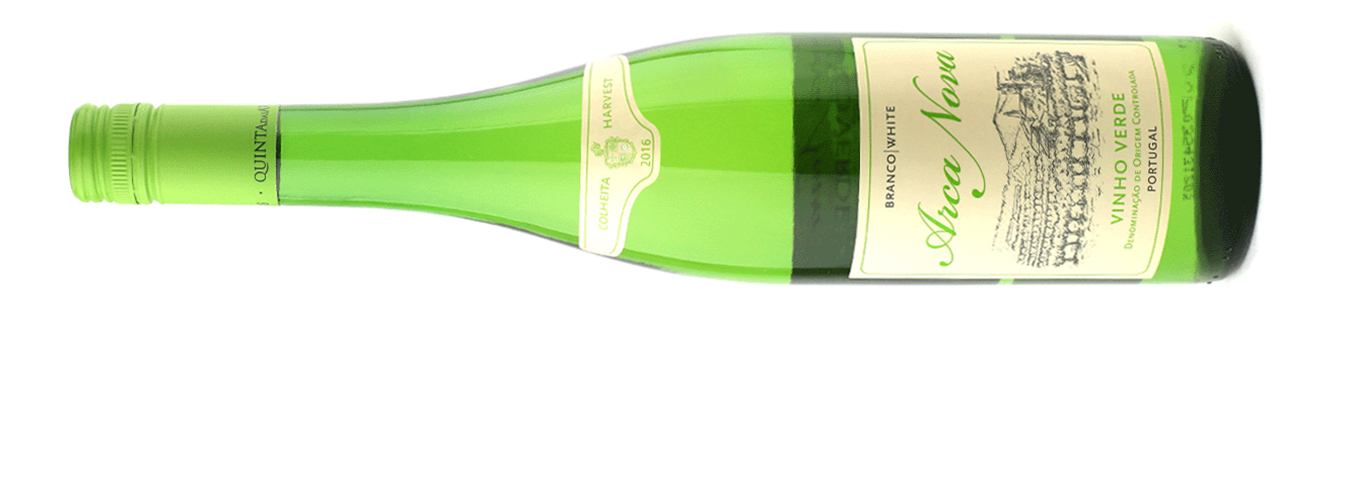
The ‘official’ drink me by-the-sea wine of Portugal is called Vinho Verde, which translates into ‘green wine’.  These are intended to be consumed young and bright, but for the most part are not necessarily compelling.  A couple of years ago we discovered this producer, and have looked for this bottling every year since.  The Arca Nova Vinho Verde 2016  is a compelling go-to again, all of that crisp quaffability but also corresponding fruit and flavor interest that you don’t find in too many Vinho Verdes.

Dubbed one of the official Winex ‘house whites’, there’s texture to the lime/apple fruit and a feeling of substance to go along with the expected zing and delicate mineral notes.   Fermentation occurs at low temperatures in stainless steel vats, preserving the wine’s jump-out-of-the-glass verve and keeping a little CO2 in the mix to give it a little hint of spritz taking the whole experience up a couple of notches!  It’s a steal at this price so ‘don’t fear the deal’ and it zips nicely with the lighter fare of summer.  You may not know the grapes (Loureiro 50%, Arinto 40%, and Treixadura 10%), but this one performs in the glass where it matters.

Another of our old favorites, and arguably a wine whose earlier versions sent us the message that there was something going on in Portugal, is the Soalheiro Alvarinho Vinho Verde 2016The grape here is a bit more familiar (Alvarinho is what the Portuguese call Albariño), and Soalheiro can compete with Spain’s best versions. Yellow melon, lime, kiwi, a wisp of salinity, this is another superb performer with a bit more power and substance and, of course, plenty of sizzle.

A Wine Advocate 92 for Soalheiro (not bad for a ‘little’ Portuguese white), the descriptive notes ring true, “This shows all the hallmarks of Soalheiro, fresh, clean and lively. It is a pointed wine that seems a bit on the lean side, but it is very tightly wound, utterly gripping on the juicy finish and perfectly focused…Don’t drink it too cold—if you do, the power just takes over. If you like them crisp and dry, with that laser-like burst of acidity, this is an easy choice at a nice price.”

The Iberian Peninsula is rocking this summer with whites…

“Too sexy” Guidalberto 2015

On any given day.  That’s typically a sports related saying about how a game can have a decidedly different outcome from one day to the next.  The saying does have applications to wine, too, however.  In this era of the critic, a wine’s evaluation can have a lasting effect on the particular wine’s following.  We have made the point many times that critics are people, too.  They have good days and bad days, happy days and angry days.  Wines go through a constant evolution as well and last week’s so-so can be next week’s knockout.  Given people, wines, biodynamic calendars, barometric pressure, bottle variation, relativity, etc., etc., the whole process is pretty fluid.  Yet the score lives indefinitely.

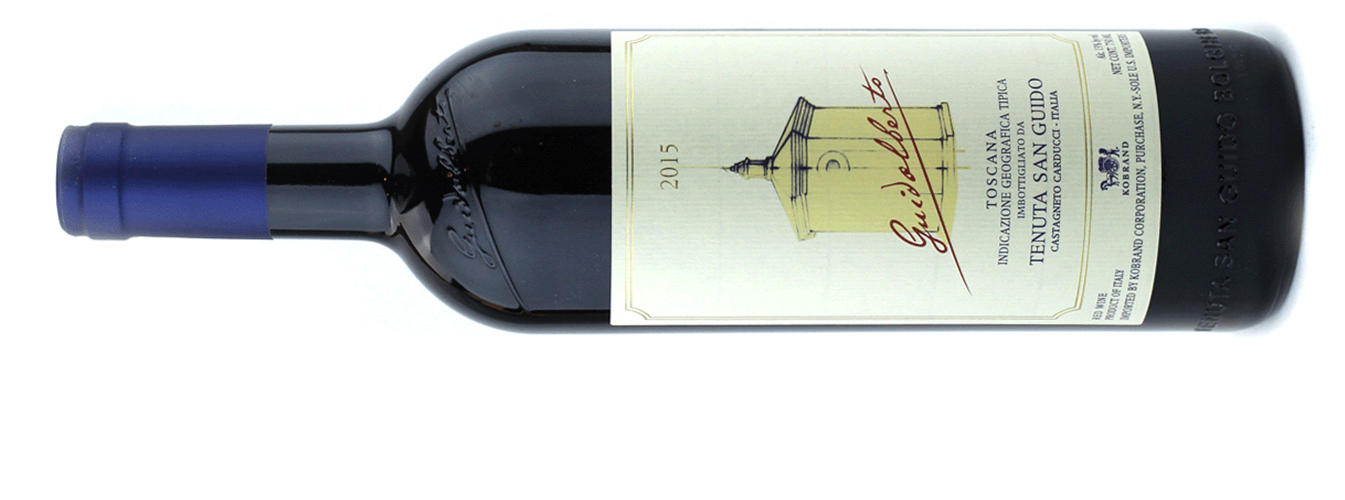
That is our only explanation for this wine, the sexiest version of Sassicaisa’s Guidalberto we can recall, getting only 91 points.  The Tenuta San Guido Guidalberto Toscana 2015 is a fruit bomb with layered flavors of dark red fruits tinged with leather, anise, earth and spice.  It is big, broad and generous in thee mouth with an almost sappy palate feel and more richness on the palate than any Guidalberto we can recall.  Lush, layered, downright hedonistic for a Cabernet-based Italian red (it’s 60 % Cabernet Sauvignon and 40 % Merlot), this one impressed us right out of the gate.

Even more curious is that this one only garnered a couple of points better than the rather uninspiring 2014 (a difficult vintage in all fairness).  The words are encouraging enough from Wine Advocate, “The 2015 Guidalberto opens to a darkly saturated garnet hue. It shows similar concentration and power in terms of its aromatic delivery. Aromas are shapely and round with dark fruit nuances followed by leather, spice and dark tar…You feel the lush softness of the second grape as the wine glides smoothly over the palate. It takes on more weight in the glass.”  The conclusion? A little baffling.

Maybe this wine is too sexy for Bolgheri, but we certainly don’t see that as a flaw.  This is a pretty flashy, rather accessible, very delicious effort.  Sometimes we don’t agree with the critics.  This is one of those times.  We like this a lot.

There was another point in the Advocate article, “The 2015 vintage promises good things in Tuscany and this wine offers an informal sneak peek at what we can expect from the celebrated Tenuta San Guido vineyards in Bolgheri.”  No argument there, but this offers more than just a ‘sneak peek’….$39.98

SANCERRE’S ‘NEXT BIG THING’

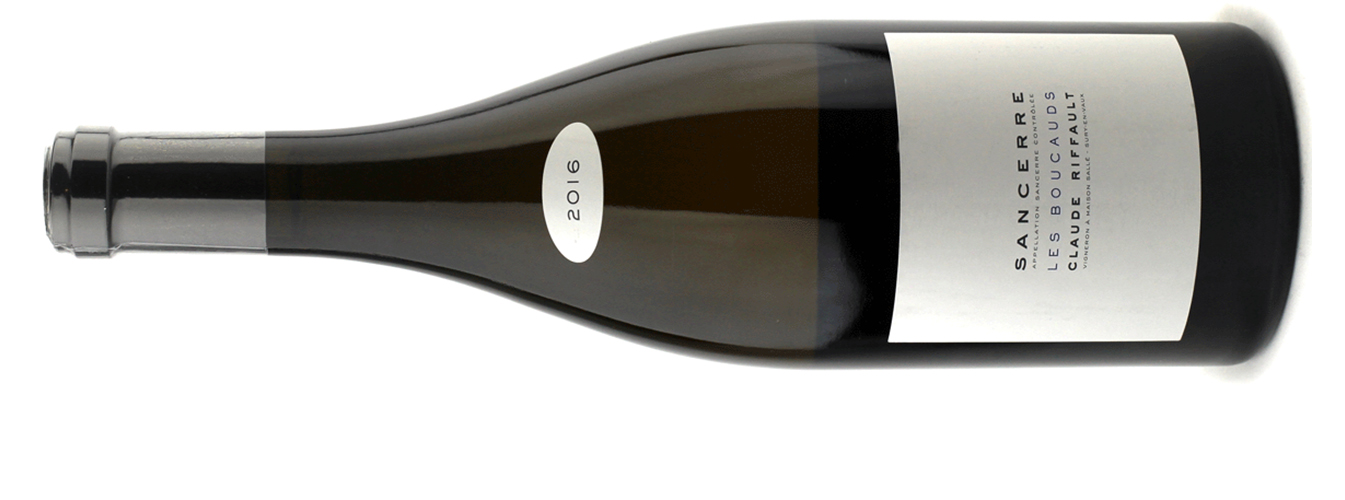
Actually, the title may not be entirely ‘on point’.  In all fairness, Claude Riffault is already a big deal to fans of Sancerre.  The estate has been a consistent player producing captivating, true to type examples of the genre and getting big reviews.  What he hasn’t quite done yet is get to the upper tier price levels that it currently takes to buy labels like Vatan, Alphonse Mellot, and Paul Cotat.  However, there is little doubt that he can get there.  It wasn’t that long ago that Mellot’s wines sold for these kinds of prices (mid-$20 as opposed to around twice that now).   For now, these are still some of the best deals on elite quality Sancerre.

Riffault’s style focuses on purity, intense flavors, balance, and vineyard expression.  His last 2013s and 2015s pulled down tremendous reviews from Wine Advocate (among others) and, having tasted those two vintages ourselves, we can say without hesitation that the 2016s are right at that upper performance level.  Young Stephane Riffault has kicked up the quality here since taking the helm and has focused on more organic farming, an important point with regard to a genre like Sancerre where the wines rely on transparency.

The family owns 33 different (and quite small) plots on steep hillsides in four
different villages. Some are limestone while others are classic flint.  Everything is hand harvested and vinified by plot.  The results speak for themselves.  The Claude Riffault Sancerre Les Boucauds 2016 comes from steep slopes of Terres Blanches soils – marls and clays over Kimmeridgian limestone. Half Steel-aged, half neutral barrels, this one is broad in the mouth with a rounded profile of ripe grapefruit, yellow stone fruits, bright flavors and a tantalizing zing of acidity to the long finish.  The Boucauds has size and power on the attack but everything is perfectly proportioned. The last one (2015) was an Advocate 92, and this one is every bit of that.

The Claude Riffault Sancerre Les Chasseignes 2016 is a subtly-but-distinctively different take on the subject.  From shallow limestone soil and subsoil containing overlapping stones, also done in half steel and half neutral oak, this one is very Sancerre but more layered and nuanced with the flavors leaning more mineral.  A little less ‘pop’, a little more complexity, sort of the white wine version of the ‘iron fist in the velvet glove’.  Last year’s effort was a glowing 93 from Advocate and this little gem is a bit better in our minds.

To us this estate is importer John David Headrick’s ‘greatest hit and this young man is putting out some serious juice.  It’s only a matter of time before these command more serious d’argent (money).  If you love Sancerre (we do!), these are a must.

MORE PINK

There’s still plenty of summer left, not even counting the summer we have here in SoCal that can sometimes hang around until early November.  Thus, by virtually any definition, we are still in the throes of rosé season.  A brief word on that.  Our rosé section is pretty much set unless something amazing comes along.  Yet even being very selective about what we have brought in, and buying the smallest percentage of offerings since we got serious about pink wine some fifteen years back, we still have our largest and most varied selection ever.

In part, it’s because we like the 2016s a lot.  But it is largely because we were presented more pink wine than ever!  That is both good and bad.  It’s ‘good’ because the more great options you have, the better selection you can offer.  But, as we have lamented in the past, there are way too many people making rosé, and a lot of it is pretty ordinary and overpriced.  Sorting through all of that is our job.  Here are a couple of things we haven’t talked about before.

The La Bastide Blanche Rose Bandol 2016 is definitely a candidate for pink of the season.  Beyond the fact that it is an extremely well-priced for a Bandol and has a pretty glowing review from Vinous Media (92 points and some nice words), it is a textbook example of what makes Bandol unique and special.  You’ve got the inviting deeper salmon hue, a lovely nose of citrus, strawberry, and melon all happening at once with some mineral, and the intriguing muskiness to the nose that speaks the influence of Mourvedre (this is around 70% Mourvedre with the balance Grenache, Cinsault, and a splash of Clairette, a white grape that adds a little lift).

On the palate, the Bastide shows ample weight and refreshing cut, but there’s a coolness and somewhat cerebral nature to the flavors that juxtapose the fruit and florality.  Thinking man’s pink? Sure, it can play that role as well as just being a great drink if you just want that.

We had lots of success with the junior version of Puech Haut Rosé Prestige until the market absorbed it.  A consistent, well reviewed and rather ‘cost effective’ pink, if one couldn’t sell that one to wine drinkers they should consider a career change.  But while we were cruising around a large trade event not long ago, we came upon the Eric Solomon table and had the opportunity to taste their upper cuvee, the Puech-Haut Coteaux du Languedoc Rose Tete de Belier 2016Hello!  This one, side by side with the delicious Prestige showed another couple of gears.  More lifted and layered, even a bit ethereal as pinks go, this is classy juice.

The Mourvedre takes charge here, too, though playing with just Genache the Belier goes a little higher toned and stone fruit driven and has a touch of wild herbs.  Jeb Dunnuck in his Wine Advocate piece called it, “…one of the finest Rosés out there and will drink nicely over the coming year.” We agree with the first part and wouldn’t hesitate to have a little for next summer as Mourvedre based pinks do seem to have a little longevity.  There are those that insist that they aren’t even revved up until 18 months old.

Finally, Chidane rosé?  That was our reaction when we saw this pink from one of the Loire’s great Chenin masters, but this sneaky little charmer won the day.  A definite ‘all-geek’ selection, the Francois Chidaine Touraine Rose 2016 is a quirky blend of 50% Pinot Noir and 50% Grolleau (a relatively arcane local grape) that comes off like a Sancerre rose.  Delicate cherry, a little tea, a definite tactile impression, high-toned minerality, and a nice cut to the finish, it is sedate and quite tasty.  In difficult vintages this wine probably wouldn’t work, but it’s a cool change-of-pace in this instance.

All three of these were farmed biodynamically.  Á votre santé.


ALLOCATIONS: A CONTINUATION

In our last ‘dribblings’ piece we talked about why allocations as a marketing strategy were created.  Essentially it started as a way to apportion in demand goods to a wide range of customers, as well as a way for the seller to control the distribution patterns of his wines.  Admittedly, the fact that wine is a unique product that cannot be replicated or reproduced creates some scenarios that most businesses do not face, though the wine industry (mostly wineries themselves) have gone beyond what would be enough to effectively deal with the problem of limited stock to supply overwhelming demand.

Many wineries have taken the position that they not only want to sell their juice, but also micro-manage who gets the opportunity to purchase said juice.  Why would someone care about that as long as the wine gets bought and paid for?  We are not the people to ask, and can generate volumes with stories of wineries going out of their way to control where every bottle goes.  But it is a fact of life in the wine business and has been for a long time, both among those who have those high-demand, limited items, and those who’d like to think they do.

We regularly see special offers from wineries that have been so effective in ‘allocating’ that they haven’t sold much of anything.  But that is a story for another time.

At the end of our last piece, we made reference to some of the new techniques wineries are using in their ‘allocations’.  Another term for it would be ‘bundling’.  Wineries that have a successful item or two that people clamor for every year on their mailing list are now adding other products to peoples ‘allocations’ with the tacit understanding that the consumer is expected to take the entire offering.  If they don’t, it may adversely alter the amounts they are offered on the future.

We’re sure some of you have been in situations where your allotment letter of a particular in-demand, high dollar Cabernet comes and you note that the winery has also blessed you with a few bottles of their new $45 Sauvignon Blanc that they will tell you is very special, too.  You may not even like Sauvignon Blanc, but if you care about the Cabernet, the winery figures you’ll pony up for the Sauv. Blanc as well.  This is an aggressive tactic that takes FOMO (fear of missing out) and uses it to shoehorn more items into the consumers ‘cart’.

Hey, it happens out in the trade to some extent as well, though it is on the wane because, these days, there is simply too much great wine out there for a single winery to get away with it for very long.  We hear from a lot of consumers who want to sell their multi-year verticals of the ‘other wines they had to buy’ in order to get the wines they really wanted.  We stopped playing those games with suppliers decades ago but understand that people get super passionate about certain wines and will put up with a lot of silliness to get them.

The winery knows that, too.   If the winery is hot enough, they’ll just figure if you don’t want to play, someone else will.  It seems to be accepted practice these days, particularly among some of the direct-to-consumer wine programs.  We think the days of such things might be numbered.  The power of the single critic to create an instant icon isn’t what it used to be in the ‘print’ days, prices have soared on such wines to greatly reduce the potential demand, and we seriously doubt the next generation would respond to this kind of nonsense anyway.

Still, for whatever reason, people who make wine seem to believe it is their birthright to decide who can buy their wine.  We’ll go out on a limb and say that as much as vintners will try and tell you they allocate because they want to ‘protect their brand’ and ‘insure the widest possible distribution’, there’s more than a little ego involved.  Plus vintners would be indignant if you suggested to them that this process might create some of the problems they seek to resolve.

A number of ‘cult’ California wines turn up at auction every year because people on the mailing list have created a nice little income supplement by reselling their allocations.  The wines have become too expensive for normal people to drink, but there are some people out there willing to pay ‘mad money’ to get some of these items.  So people on the ‘mailing list’ will continue to take their allocations because they don’t want to lose them, and simply resell some or all of it.  Allocating didn’t solve that problem, it prolongs it.

“Wine, like water, will often flow to the place it is destined to be.” 

You have likely heard about the ‘grey market’ in certain higher end European wines.  This market exists because of the allocation process.  We’ll illustrate how it works with a curious American example that happened years ago.  A certain sales manager of a famous California winery was bragging that he exported wines to 25 countries and was about to add a 26th.  He was going to send 3 cases of his highest demand reserve Cabernet to Lichtenstein.   Could he have sold them here in a nano-second?  Clearly.  Does anyone in Lichtenstein care about this wines?  He couldn’t answer, but was going to do it anyway so he could add another pin to his map.

Now to illustrate how the ‘grey market’ works, let’s use our Cabernet in Lichtenstein.  Obviously the three cases are not enough to stimulate international trade, but it is the reason and mechanics we want to show.  So let’s say the buyer in Lichtenstein has no idea what he is going to do with this big time California Cab, nor does he think he can sell it for enough to make it worth the effort.  He will look around the world and see who is willing to pay a premium and perhaps try to sell it all in one shot to some other market, maybe even back to America if the price is right.  The American winery guy still smugly has his 26th pin in the map, but it really didn’t accomplish anything.

Wine, like water, will often flow to the place it is destined to be.  Say some top notch Burgundy house has a relationship with a distributor in Switzerland, developed over the years because the winery felt it needed to be represented in that country among others.  If there is enough profit, or an easier transaction to sell Switzerland’s allocation out the ‘back door’ to another market, it will happen.  The winery intended for this wine to be in Switzerland for lord-knows-what reason, but the mechanics of the marketplace will often prevail.

The winery/domaine decided to allocate its wines in a certain way to various world markets to achieve some perceived marketing strategy and distribution.  Why?  Again, don’t know.  But the point is he isn’t balancing supply and demand appropriately if the wines are being resold to other markets.  So what did this ‘allocation’ do really?  Clearly one or more of those markets didn’t need all they were given…and what were they supposed to do with the wine?

It is one of the great mysteries why the wine industry spends so much time worrying about apportioning wines to entities who may not care at all about them.  But it seems to be ingrained in the system, and we don’t see that changing any time soon.  If you ever wonder why our California section is more moderate these days, far too many wineries make it way more difficult than it needs to be to simply get products we’d be interested in selling.  Thankfully there is enough great wine in the world that such things as ‘allocations,’ and other such gamesmanship, really don’t have the impact they used to because there are simply too many great choices, most of which don’t have some sort of ‘sales prevention’ agenda.

Something ‘old’ is something ‘new’ from CVNE

In today’s world, the search is to find something new and exciting.  This would absolutely qualify on the thrilling part…but it isn’t new.  As a matter of fact, it’s old.  We’ll explain.  A lot of you already know about the Cune Monople Blanco, something of a staple around here for the last few years and a crazy value white that has even graced the Wine Spectator Top 100.  They have been making this wine this way for more than four decades.  But this isn’t what we are talking about, though the 2016 is once again delicious in its own style.

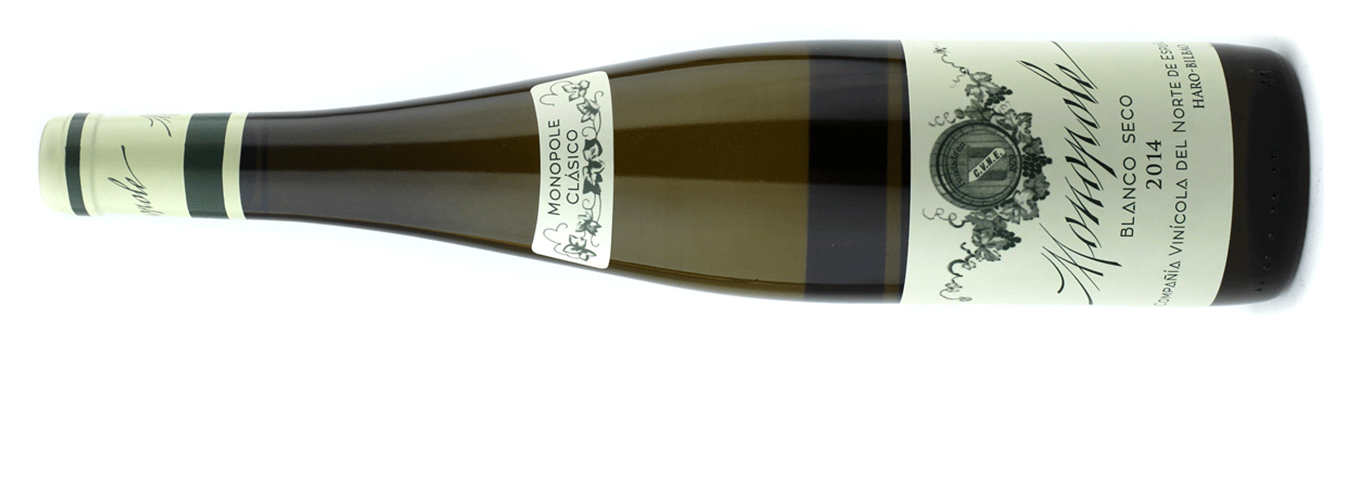
What really got us excited was this new/old release called Cune Monopole Rioja Blanco Clásico 2014, the word ‘clásico’ being of particular importance. This is the reintroduction of a unique, ‘old school’ white produced prior to the 1980s.  Cune’s explanation of the story is pretty clear.

“From the early 20th century to the 70s, Monopole was a staple of homes and restaurants across Spain. It was one of CVNE’s main wines. Sadly, fashion turned against it, sales fell, and production in this style ceased in the 80s.  Fresh, fine, bone dry, this wine had the peculiarity and originality of having some barrel ageing with a percentage of Sherry wine, with written permission from the Rioja appellation. The Sherry added structure to the Rioja white, while they both integrated harmoniously in barrel and later in bottle.

A bottle of this old Monopole was searched for in the Haro winery’s cemetery. A solitary 1979 bottle appeared. The wine was savory, very fresh, balanced, delicious. On the spot, the decision was made: we would make this wine again, as it had been made historically.  We called Ezequiel Garcia, CVNE winemaker from the 40s until the 70s, to invite him back to help us produce that wine again. Ezequiel, aka ‘the wizard’ and now in his eighties, had no doubts and said ‘Yes’ straight away.

Monopole is the story of a remake, 40 years on; this time, with the original director as guest star. And this time, handmade and in small quantities, to best ignore the whims of fashion.  The wines’ aging contributes to its peculiar organoleptic characteristics, adding aromas of chamomile, dried fruits, and a long and persistent aftertaste. The marked acidity increases Monopole Clásico’s freshness.”

We loved this wine’s panache, with a nose of pear, grain, a whiff of salinity and the subtle, penetrating nuttiness of a fine, dry Sherry.  Plenty of personality up front, a nice cut of acidity in the back, and lots of complexity to contemplate in between, it kind of reminded us of a Lopez de Heredia Tondonia with the wine’s natural vigor playing off the nuttiness in an aged white.  The Monopole Clasico’s unique ‘recipe’ really delivers.

 Wine’s Advocate’s Luis Gutierrez seemed as dazzled by this new ‘old’ gem, and reviewed it before it was even bottled…not the usual practice with Spanish whites.

“I was thinking “I wish this wine went back to the more serious bottlings of 40 and 50 years ago…” when tasting the regular Monopole, and they showed me this 2014 Monopole Clásico, which is a wine to celebrate the centenary of the brand (registered in 1914) and it blew me away. They have produced this wine like it was done in the good old times, adding some Manzanilla Sherry (yes, yes, you read it correctly); they top up the Viura with Manzanilla purchased from the Hidalgo family of Sanlúcar de Barrameda.

Not only did they add the wine (Sherry), they purchased the wine in bota, so the wine is also aged in Sherry casks. It does have an amazing nose with notes of sea breeze, iodine and esparto grass. The palate is extremely tasty, but at the same time is light and fresh, with the acidity of Viura and the kick and pungency from Manzanilla. Awesome!… This will be bottled in a couple of months, but I couldn’t help reporting on it… Welcome back, Monopole!…91-93 points.

Awesome, indeed!  Luis was obviously stoked.  It is rare for him to have multiple exclamation points in an article.  So are we.  Even though it’s an ‘old’ style, it’s new to us, and very compelling.  One of the most exciting whites we’ve had in a while, and that is saying a lot.