
Keeping it real with $20 Pinot Noirs

There have been more than a few statements on these pages about how California wineries (read that Napa in particular) have gotten a little out of touch with real people.  There are lots of folks coming in from outside the industry that are here to be the next Harlan.  We have had a few choice words as well about producers making 5 or six different Pinot Noirs to ‘showcase the vineyards’ with $40-60 (or more) price tags.  All too often the nuances of the various sites are lost in the oak treatment and heavy-handed winemaking.  Other times there are well crafted Pinots done with minimal handling and oxygen exposure that take days to unwind.  Art for art’s sake? Oh yeah, and most people can’t or don’t want to spend that kind of money on a regular basis.

It seems all is not lost though.  Interestingly enough, we have recently been presented with a number of California Pinot Noirs we can sell for under $20 that are not only good, but stylistically distinctive.  While we can’t necessarily call it a ‘movement’ yet, it is comforting to know that there are vintners out there that care about giving the consumer something pleasing and affordable, but also with a little flair.

Each of these Pinot Noirs has its own story, is loaded with personality, and produced in pretty modest quantities.   In each case there are people involved that are industry veterans, and these are all a far cry from the neutered, corporate, lowest-common-denominator Pinots that occupy this price point in the broad market.  Any or all of these may appear in a larger offer down the road, though they don’t fit the profile of the usual whiz-bang, this-score-at-this-price format.  These are still under the radar (heck, we just found them!), but they are soulful, tasty, purposeful Pinots made by folks who are bent on ‘keeping it real’.  Bravo…

Raised on a small family farm in Wisconsin, Francis Joyce came to Monterey in the early 1970s to pursue a career in auto racing.  As the story goes, in the 80s he acquired several ‘pirated’ cuttings from European vineyards and set of shop to grow grapes and continued farming as he pursued a new career in dentistry.  Son and current winemaker Russell grew up in the vineyards and developed a passion for winemaking as he started to take more of the reigns at the property.

These folks are all about ‘transparency’ of the vineyard, though with them it isn’t just lip service.  They harvest a little on the earlier side so that the grapes are at a stage where the ripeness level does not require them to get manipulative in the cellar while showcasing the crisp lines of the cooler parts of Monterey.  The wine has an extended stay on the lees but is done in entire neutral oak.  The resulting wine in this case is a blend that show the lifted fresh fruit and crunchy flavors they feel is the region’s best expression.  Joyce Pinot Noir Submarine Canyon Monterey County 2016is a blend of clones and vineyards and named for the Monterrey Bay Submarine Canyon which is the deepest such ‘trench’ on the West Coast.  High-toned flavors of dried strawberry, cranberry, rhubarb, and a crisp edge of saline minerality are highlights of this ‘cool customer’ of a wine that still has plenty of flesh and packs 14% alcohol.

The Pence Ranch Pinot Noir Sta. Rita Hills 2016 is not associated with the current Vice-President.  It is instead something much more interesting to wine drinkers as an exciting new Pinot star from the team of winemaker Sashi Moorman (Sandhi, Evening Land, Domaine de la Cote, Piedrasassi) and grower Blair Pence.  From the warmer east side of the Santa Rita Hills, near John Sebastiano’s vineyard, this wine delivers a refined, spicy blast of darker cherry fruit and deliciousness that reminds us of the Bonaccorsi Pinot.  In other words, it aims to please with a plush texture, sweet-but-lifted flavors and tender edges even at this young age.  ‘Terroir’ is all well and good, but it helps to have a winemaker that takes the time to understand the vineyard in context rather than ‘one-recipe-fits-all’. Pretty engaging stuff.

Fortunately long time industry veteran Marcel van Stuijvenberg chose not to use his own name on the label, and he got the wine part figured as well.  This wine is something of an enlightened throwback. The 45 year-old vines in the McIntyre vineyard are the oldest in the region and were planted with Pommard and Swan clones rather than some of the new, hipper ‘numbered’ clones (114, 115, 667, 777, etc.) that are widely popular today.  Perhaps it is the old vines, maybe it’s those old-time clones (or maybe a combination of the two!) that give this wine a fab ‘Old-World’ feel with layered depth but with New World punch to the fruit behind it. Complex and surprisingly refined and subtle, with flavors that lean on the darker red side of the spectrum but with a Pinot purity that shines and none of the Syrah-esque aspects that many SLH Pinots bear, the White Hart Pinot Noir Santa Lucia Highlands 2015 is a terrific value.


Faustino Chronicles, Part Dos: The VII for $10

Over the years we have worked with a variety of wines from Faustino, mostly more than a dozen vintages of the Faustino I Rioja Gran Reserva dating back to 1964 and library finds of older bottles of the Faustino V Rioja Reserva. For whatever reason we have had little exposure to their ‘popularly priced’ wines and haven’t been ‘grabbed’ in the few experiences that we have had with them…until now.  It is always dangerous to talk up an inexpensive wine too much because you don’t want to create unreasonable expectations so consider this the appropriate level of enthusiasm.

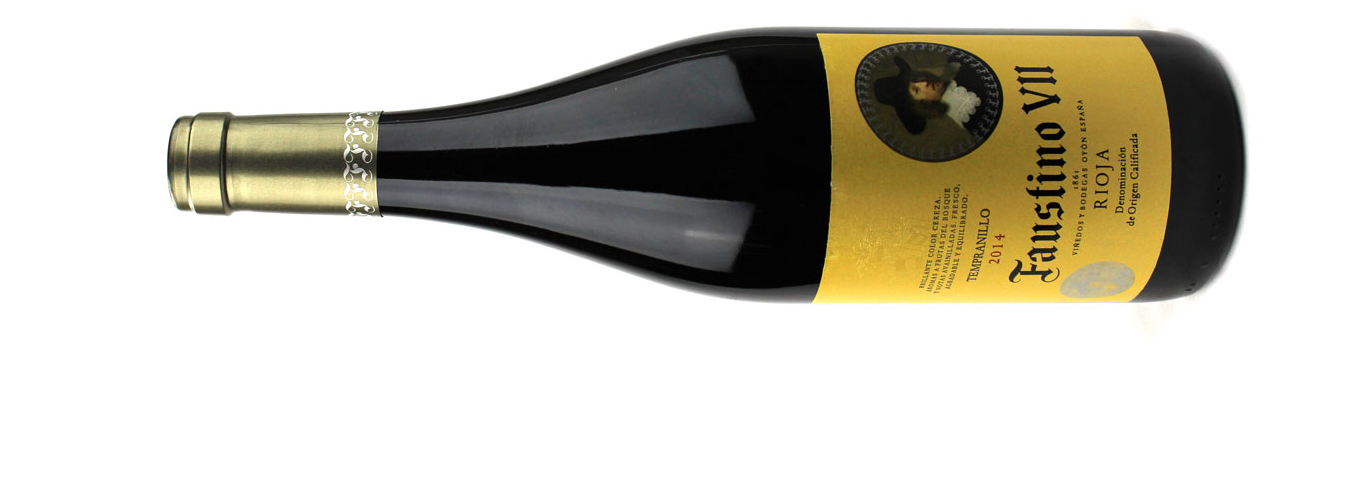
We aren’t going to tell you that the Faustino VII Rioja Tempranillo 2014 tastes like a $50 wine.  We aren’t going to bury you in superlatives like some sort of cheesy retailer’s email.  But we are going to make what we feel is the honest and salient point, this is darned good juice for what it costs.  If you want something polished, elegant, and appealing for under $10, this wine should be on your radar.

Our philosophy has always been that we wouldn’t recommend something to you we wouldn’t drink ourselves, and we actually have taken bottles of this home to do just that.  We appreciate a deal as much as you do and this wine delivers a lot for its modest tab.

Made from 100% Tempranillo, with a six month sojourn in American oak, it has all of the classic Rioja trappings of spice, damp earth and subtle toast notes wrapped around a plummy core of fruit.  It’s about the weight of a Pinot Noir but with more Old World fruit.  It showcases the surprising versatility of Rioja to not only compliment heartier fish, any fowl, or the ‘other white meat’, but can stand up to steak and lamb as well.  It’s a great house go-to at a ‘go-to’ kind of price.

Wine Spectator had some nice notes, “Cherry, licorice and fresh herb flavors mingle in this polished red. Light tannins and fresh acidity lend focus. Lively, modest and balanced. Drink now through 2019.”  Their ‘score’ was ‘modest’, too, but this isn’t the kind of wine that would stick out in a ‘taste-athon’ nor are numbers the point with a wine like this.  Rather it is something you can get comfortable with for its direct, honest, unmanipulated flavors, and angst-free fare.


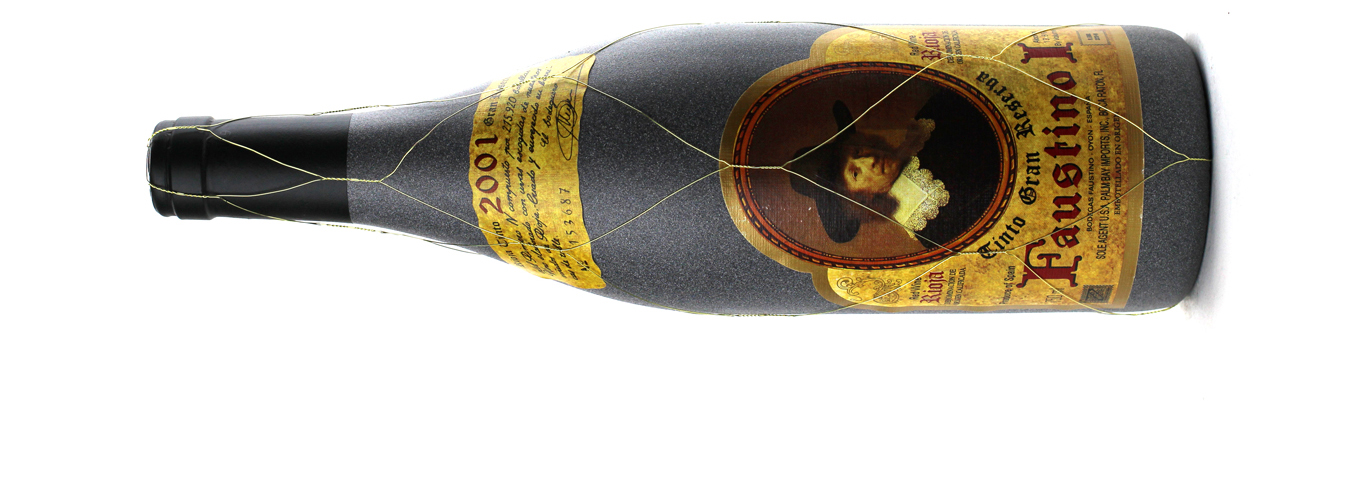
Faustino Chronicles, Part One: Last call for Rioja Gran Reserva 2001…No really!

Almost four years ago, we wrote this about the 2001 Faustino Rioja Gran Reserva,

“An amazing Rioja, a surprising review, and a price that’s under $30… here we have the makings of one of the most exciting offers we have presented this year. Sure, we ‘play the hits’ as well as anyone, promoting hot buys and wines that get big reviews. However, unlike a lot of other wine merchants, we put a lot more effort into developing brands that we happen to like ourselves whether or not they have been favored by the media. Faustino Rioja is one of those brands (particularly their Gran Reserva) that we have developed over the years simply because we happen to like it (gasp).”

That was a pre-arrival offer we did in November of 2013, and it did prove to be one of the most exciting offers we did that year, and the year after that, and even for our Anniversary sale last year.  How does such a spectacular wine and value stay on the market for so long?  We alone sold about 1000 cases of it, and it seemed that every time we thought it was almost gone, the supplier ‘found’ some more.  It got to the point where we kind of took it for granted.  How much of a wine that was a 97 point, Decanter Magazine Wine of the Year did these guys make anyway?

Suffice it to say it has been an amazing run almost unparalleled in our history, and the Faustino I Rioja Gran Reserva 2001 has made many happy customers as well as having been a welcome go-to for us.  I mean, how many 97-point, 16-year-old reds are out there under $30?  Only one we know of.  But for all of you who have been fans of this (and there must be a few if you), this really is the ‘last call’ on this special wine.  Judging from what the wholesaler has left, it will sell out some time, without warning, over the next month.

Yeah, we know we have intimated before that the party was over, only to be told by the purveyor that another batch appeared.  This time however, we think they are serious for a couple of reasons.  They released a final finite batch that they had been saving for a restaurant that, as happens so often, didn’t fulfill their commitment.  Prior to that there was no wine to be had for a few weeks.  Perhaps more telling, the purveyor is set to receive inventory on the 2004 Gran Reserva, something they would never even had ordered if there was still 2001 to be had.

Stock up on this legendary Rioja while you can because this time ‘the end is near’ and ‘you don’t know what you’ve got ‘til it’s gone…”


WHAT’S THE POINT(S)?

In an article in the newspaper the other day (yes, some of us still read those), there was a discussion about how much films have depended on reviews to generate interest.  The piece was making the point that box office receipts, in fact the difference between success and failure for newly released motions pictures, was predicated directly on receiving positive reviews.  Reviews have had an impact on a lot of things over the years…movies, restaurants, books, and, of course, fermented beverages.  But the gist of this article was that, these days, reviews are pretty much a life and death proposition for films.

Is this really news?  People are busier and the competition for consumer dollars is fierce.  There are so many choices for virtually everything, and consumers, faced with making decisions about entertainment, dining, appliances, etc., like to have someone to turn to for advice more than ever.  The critic fills that role and is put in a position of elevated power as a tastemaker these days.  It has to be frustrating (to say the least) for a studio to invest millions (tens of millions?, hundreds of millions?) into a picture or TV series only to have the whole thing derailed by a couple of bad reviews.  Talk about life on the edge.  But while this may be a frightening scenario to Hollywood types, all we in the wine biz can say is, ‘Welcome to our world’.

We have been doing this long enough to remember a time before everything was dictated by reviews.  OK, maybe that isn’t entirely true.  In olden times, wine scribes would write about wines in newspapers, offer their opinion using (gasp) words!  One guy talked about a wine he liked, people would read it, and perhaps go out and try it.  But then the paper would go in the recycling bin and eventually those flowery words would be forgotten.  Three things changed that had far reaching effects on the power of the review.

First was the review format itself.  Rather than occasional pieces and regular columns in a newspaper, or something published in a food-centric magazine that was usually no longer timely when it finally got into print, there were wine specific publications that came out on a regular basis that dealt specifically with wine.  The second thing was the familiar 100-point rating system which effectively ranks the wines in some kind of digestible pecking order.  People could save the books, magazines, or issues, and refer to them whenever they wanted to find out something.  Unfortunately these printed formats did have to be manually gone through when someone needed information.

As it has with so many other things, the internet changed all of that.  A wine buyer today can call on databases from a number of different publications 24/7 and has the ‘answer’ (if you want to call it that) right at their fingertips.  Consumers have the critic in their pocket, as well as price search tools, and even maps should they actually decide to drive somewhere in the context of wine buying. It has never been easier to get information.

Now there has been plenty of discussion on these pages about how a critical, scored review is like a photo, a picture of a wine at a particular moment in time, within the context of all kinds of variables including bottle development, wine temperature, barometric pressure, the biodynamic calendar, and a whole host of other things, all affecting the showing.  Then you have the critic interpreting what they see at that very fluid moment in time and passing judgment on the wine, absolutely and forever.  Finally all of this information is encapsulated and expressed in a single number that defines everything, and measures the wine’s value in the marketplace vis-à-vis other choices available to the consumer.

Ultimately that ‘number’ will be the most significant tool in the majority of decisions made about any particular wine by most people.  Does that seem fair?  Would you like your entire ‘being’ subjectively evaluated based on a single day or couple of days, for all of eternity?  Of course not!  Yet that is exactly what is happening with wines (and apparently a lot of other things these days) on a regular basis.  What is particularly disturbing is that this whole mentality has trickled down to the most peripheral of wine buyers and folks who aren’t particularly ‘dialed in’ on wine ask about rating validation before purchasing.

One supposes it’s easier that way, and someone can merely react to a perceived validation rather than wade through a lot of ‘winespeak’ (buttery minerals, creamy jimmies, blah, blah).  Busy people need fast answers, even if those answers don’t necessarily hold up under scrutiny.  What does a ‘92’ taste like? Hey, we get it. Though we don’t necessarily embrace it, we’ve learned how to play it.  A lazy industry handed the critics the power long ago, and that has been the way of things for three decades.  But as things continue to develop, and more would-be reviewers come on line, how is the consumer best served?

It has to be getting more difficult for consumers these days.  There are so many reviewers flinging scores out there, and often those numbers get detached from the actual reviewer and exist in a vacuum.  We do this every day and we have trouble keeping it all straight!  We’ve have gotten to the point (truth be told we have been this way for a long time) where we take nothing at face value.  Purveyors interject a score into a conversation without reference, and we ask who it is from.  Then we look it up.  The ratio of how often we are given the wrong data by suppliers, either cavalierly, ignorantly or with intent to deceive, is appalling.

But even if all of the information is correct and appropriately conveyed (good luck with that part), it is still a rather muddy proposition.  It’s a simple fact that big numbers sell wine.  You’ll have someone grouse about how a reviewer is too generous with their scoring, yet that same person isn’t likely to buy a $40 Cabernet that ‘only’ got 91 points, even if that is a strong recommendation for the particular critic that gave the score.

The person who makes a $50 Chardonnay is incensed when a critic gives him a ‘90’ even if there are only a couple of other wines that scored higher.  The problem isn’t the review in the publication, because no one will see it (most buyers won’t read down that far). It’s that the score will be there for all eternity when people look it up.  Is the consumer really served by this?  Does a 90-point $10 Chardonnay taste the same as a 90-point $50 example?  Is the price taken into account? Critics don’t address those questions, or make any statement about what the ratings mean.  So what is the takeaway?

As more reviewers crowd the field, the ‘numbers’ will only go higher.   Purveyors and merchants aren’t going to talk about how this or that wine got ‘89s’.  In the real world, no one cares or takes the time to calibrate, even if that 89 represents an enthusiastic tout for the particular reviewer.  Writers know that, and it is a real balancing act for them to generate reviews that people will quote while at the same time maintaining credibility with subscribers (we presume they think about that stuff).

Why do the writers care about being quoted by the industry?  Most of them won’t admit it, but that is their best form of advertising.  A review service is, after all, a business that relies on people paying into it.  The industry is a big supporter from a research standpoint (we now subscribe to six and very loosely follow a few others).  But consumer followers are clearly important, too.  Yet as the number of review services expands, we have to wonder how much the influence of each will be diluted.  Given that, who will be the ones that people follow (if any, maybe everyone will just read Yelp…ugh)?

The newer ‘services’ seem to generate somewhat higher scores.  Are they trying to deliberately get people to pay attention with more ‘quotable’ work (i.e. higher numbers), or are they just more enthusiastic?  Who’s to gauge whether it isn’t incrementally more exciting finding a sensational wine under $20 than an icon for the ages?  A couple of extra points aren’t hurting anyone if it guides people to cool stuff, right?

At the other end of the spectrum are the reviewers that score conservatively.  Respected writers like Stephan Tanzer (Vinous) and Alan Meadows (Burghound) don’t give away points like Halloween candy.  So even though they are specialists, and typically deal with pricier goods, their scores don’t seem very thrilling in the big arena with inflated scores being the norm these days.  A $300 Grand Cru gets a ‘93’ and a $12 Spanish red gets a ‘92’.  How is anyone supposed to make sense out of that, even when both reviews are well intentioned?

Take the California editor for Wine Spectator, James Laube (or ‘Angry Jim’ as we refer to him here).  The magazine in general, and he in particular, have seemingly taken on a ‘tough guy’ attitude with respect to scores.  One has to wonder how many people are going to be compelled to try anything after reading column after column of 91 point Cabernets with $100+ price tags.

The real question is which ‘camp’ is really serving its readers best in this market with a staggering number of choices and numbers flying everywhere?  And where will it go from here?


LEGGO MY EGGO?

Every once in a while we have to smile when some seriously committed winery bottles something special and gives it a names that sounds like the ‘cease and desist’ order is just a matter of time.  It’s likely that very few in the great big world have experienced the sensational talents of the Michelini brothers through their various wine projects.  Zorzal wines have proven to be a revelation both in demonstrating the exciting ‘next wave’ of South American wines and providing surprising value.

We have had great response to their almost laughably inexpensive Pinot Noir and Pinot Noir Rosé, and what the brothers can do when they pull out all of the stops as they have with their Superuco Malbecs. Here they are doing serious work with what may ultimately prove to be the real ‘great grape’ of Argentina…Cabernet Franc.  With all due respect to Malbec, we have had some surprising experiences with Argentine Francs, though admittedly there haven’t been a ton of examples.  The best Francs have the richness to play with the big kids, but often achieve a certain elegance that Malbec rarely does.

We’d love to talk about how the brothers discovered some ancient and forgotten cache of Cabernet Franc vines but, in fact, this vineyard in Gualtallary, a subregion of the Uco Vally (at over 4200 feet elevation) was only planted in 2007.  The secret, if there is one other than the usual low-yields/hand harvesting mantra you here with so many great producers, is the vessel.

The current weapon of choice for this project, as well as a growing number of winemakers all over the world, is the concrete egg.  The grapes are harvested and fermented with their gross lees, which they stay in contact with for 3-5 months, in the concrete egg.  We aren’t going to get into the biodynamics or voodoo as to why the ‘egg’ works.  But it does seem to.  Concrete somehow causes the reds to be plusher and more integrated, to the point where, in this case, there is no oak used at all.

The 2015 Zorzal Wines Eggo Franco is remarkably complex and layered.  Harmonious texture, lots of stuff going on (earth, fresh tobacco, spice, mineral, and meat) in this mouthful of dark red and black fruits.  Advocate’s Luis Gutierrez gives this one a 93 and suggests ‘Eggo’ shows very much the wild character of Gualtallary.  It’s a lot of wine for the money and it both engages and challenges.

We hope the ‘powers that be’ leave the lads to their ‘eggo’ fun.  This is another creative, dynamic effort from the Michelinis and ‘new’ Argentina and no one is going to confuse this with a breakfast choice anyway.


SANCERRE: MORE THAN JUST WHITE WINE

A lot of you already know about things like Sancerre Rosé and Sancerre Rouge.  They have been interesting ‘alternatives’, but not necessarily something to seek out.  It seems that is changing a little bit and, while we have to allow for the fact that the vintages had an influence, we can recall too many cases where such wines could be stars in broader categories.

What are we getting at.  Well, first off, two of the best rosés we have had this year have been from… Sancerre!  That is hard to fathom in the sea of pink wine that has gushed forth this year, and we’ll admit to being just as surprised we were compelled to say it as you might be hearing it.  It all started the day we were filming a piece with Sancerre maestro Alphonse Mellot.  His 2016 traditional Sancerres were spectacular, by the way, but we expected that.  What got us scratching our heads even with all of the serious juice that was on the table was the Alphonse Mellot Sancerre Rose La Moussiere 2016.

This single-vineyard pink made from 100% Pinot Noir from a horse-plowed, limestone-rich, south-facing rolling hillside hits you up from with the classic strawberry fruit that Pinot-based rosés tend to show, but the subtle layers of insistent minerality are a bonus.  Can’t remember anything from Burgundy at this level and it’s half the price of some of those upscale Provence pinks and can play with some pretty serious dishes.

Not long after that we were presented with Andre Dezat Sancerre Rosé 2016 , an estate that, according to the small importer who now brings it in, has not had much presence in the U.S. until recently, having big clients in the U.K..  Glad this made it across the pond.  From soils that are limestone, sandy clay, and flint, this one really packs a mineral bent to the fruit.

Vinous’ Josh Raynolds’ notes ring true, “Brilliant orange-pink. Fresh strawberry, tangerine and honeysuckle on the mineral-accented nose. Bright and nervy on the palate, offering brisk red berry and orange pith flavors and a touch of white pepper. Closes stony and taut, showing good focus and a refreshing suggestion of bitter quinine.” A vivid, character-filled pink that will get your attention.

Maybe the biggest surprise of this trio is the Domaine Naudet Sancerre Rouge 2015.  Over the years we have slugged through countless undernourished Sancerre Rouges, Alsace Pinot Noirs and German Spatburgunders, many of which cost a lot more than this one.  But we dare say, here, you should not only consider this a pretty tasty, surprisingly user friendly Sancerre Rouge, but a consideration for a house Pinot!

This can hang with Pinots from anywhere and, though it is clearly more delicate than something from Santa Lucia Highlands (weight-wise think Central Otago), there is plenty of ripe cherry fruit to ‘bite into’ here.  Red berries and cherries, some earth and mineral, cool-climate tactile feel, all with the ripeness provided by the 2015 vintage.  Time will tell if this was a ‘one-off’, or some sort of break-out for the domaine.  From a 16-hectare estate founded in 1985 (with 3.5 hectare planted to Pinot…vines 20-45 years-old), this sees no wood and has modest alcohols (12.5%).   A bright, fresh, engaging Pinot.