Rosé ROUNDUP


First off, our  apologies for not getting to this sooner, though it isn’t entirely our fault.  Given that Memorial Day has come and gone, we have to consider ourselves somewhat remiss in how little we have done promoting pink wine so far.  The season is upon us.  Now, in our defense, we have been a little preoccupied with a few other topics.

The 2016 Bodeaux prearrivals campaign demands a certain commitment of time.  It is the most important vintage to offered on pre-arrival since the 2010s, and possibly could provide the best opportunities for consumers since 2005.   But it is a slippery slope because, as good as the wines are, we have mixed emotions about how the campaign will play out given the remarkable sea of other choices there are out there today of all kinds of wine, and how many folks are willing to put up today’s money for something that isn’t coming for two years and really won’t be drinkable until a decade or so later.  In that sense it is a historic campaign in terms of what it will say about the whole futures market moving forward.

We also are spending a lot of time evaluating more deals in the marketplace than we ever remember seeing.  You’ve seen some of the stuff we have been tossing out there, and those are only the ones that pass muster.  There are nearly five times that many don’t even initiate a serious conversation, but we still have to look.  Finally, we are still wading through a ton of pink wines brought to us by the Johnny-come-latelys.  We  have already found plenty to get us through the summer in style, but you never know when the next gem will appear.

Finally, our choice of the word ‘roundup’ was made because of alliteration.  We couldn’t possibly cover all of the highlights of our current selection in one piece.  So we’re going to give you a few that come to mind so that you can start to get your pinks in order for the summer.  We’ll start with something that kind of surprised us.  Domestic rosés all to often lack the acidity and texture to be refreshing.  It’s nobody’s fault.  It’s just warmer here, generating higher alcohols and lower acidity, and too many folks are getting into the act just to cash in on the fad.  While we are getting a lot better at it here at home, far too many vintners here don’t have the experience in this arena and most of the local pinks are at a disadvantage outside their own tasting room.

The Andrew Murray Esperance Rose 2016 was a pleasant exception to that generalization.  It is nearly 100% Cinsault that is estate grown for making rosé (as opposed to a saignee of red wine).  Light, fresh, clean, there’s dried strawberry and red melon with an impression of minerality, a pleasing tactile crispness, and the flavors are dry.  In the winery’s own words, “this is definitely not a kool-aid Rosé of yesteryear from California”.  It got the attention of some serious Francophiles when it comes to pinks (us).  Pleasing juice, and the price makes perfect sense (far too many domestic pinks, besides being a little flabby, are kind of expensive).  A well conceived effort.

The Chateau de Trinquevedel Rose Tavel 2016 has been a staple here for some time.  Tavel has a certain cache when it comes to pink wine, which makes some of them a little expensive for what they are.  This small family farm makes classic Tavel with fresh acidity but also the defining mid-palate weight and somewhat deeper color.  The blend here is 45% Grenache, 24% Cinsault, 15% Clairette, 10% Mourvèdre, and 6% Syrah.  The flavors roll to red berry and red melon, with delicate underpinnings of spice and garrigue, and a little rounder midpalate than pinks from further south.  Far too easy to drink and very food friendly.

One of the consistent pink wine bargains over the last few years is the Le Cengle Cotes de Provence Rose Vieilles Vignes 2016, pale in color, delicate and crisp on the palate but with more going on than the visuals and price ($12.98) would lead you to expect.  The blend is 25% Cinsault, 35% Syrah, 35% Grenache and 5% Mourvedre, but there are refreshing citrus and white peach tones that give it a little bit of  white wine impression.  Certainly a candidate for go-to pink given the price and performance.

Domaine Tempier has made Bandol rosé a ‘thing’ almost by themselves.  There are some wonderful examples that cost nearly half as much because the market hasn’t caught on to yet. The Gros Nore Bandol Rose 2016 is a sensational follow-up to their outstanding 2015.  Former boxer Alain Pascal fashions this blend of 50% Mourvèdre, 25% Cinsault and 25% Grenache from grapes grown in clay soils.  Red fruit, minerals, a hint of honey at the crest, some ‘orangy’ citrus streaks, and just a touch of that cool Mourvedre earthiness, this is pretty serious as pinks go if you want to dive into it, but can play the casual, delicious quaff if called upon to do so.

Finally, here’s your absolute bargain, the Mourgues du Gres Fleur d’Eglantine Costieres de Nimes Rose 2016.  We have worked with this estate for years and they are usually in the mix with both pinks and reds.  To be honest, they don’t ‘hit’ everything every year.  But they have had a number of efforts that have ‘nailed it’ and, when they do, it provides a remarkable value performances.  The 2016 Rose is one of those ‘hit’ times.  The main thrust is Mourvedre with small parts of Carignan, Grenache, and Syrah.  The wine starts with red berries, slides into an orange and garrigue note and finishes with a little salinity.  At $9.98, it’s party time.


NO ORDINARY CHIANTIS

Chianti has come a long way since the days where all anyone saw were the straw fiasco bottles in the local checkered tablecloth Italian joint.  The rules have changed, and a number of the wineries have stepped up their game with regard to the quality of the entry-level and reserva wines.  A lot of folks are still trying to come to grips with the whole Gran Selezione designation which started with the 2010 vintage.  With all due respect to our inspired friends at Castello di Ama, the world is still a little shell-shocked with the proliferation of $50, $60, $70 Chianti, ourselves included.

Our job is to explain all of these trends to you.  But we also know for most folks, Chianti is a go-to, something to accompany some good food while not breaking the bank.  We hear you.  Maybe it was just a good day, but we found two outstanding examples back-to-back on morning not long ago.  They do have a couple of things in common.  Both were from the Classico zone, and both were produced by folks who were much more famous for their Super Tuscans, Podere Poggio Scalette (il Carbonione) and Castellare (I Sodi di San Niccolo).

Obviously one could invoke our mantra of ‘little wines from big-time sources’, but we haven’t found a Scalette or Castellare ‘regular’ Chianti this memorable before.  These are by no means ‘regular’!  We’ll start with the Podere Poggio Scalette Chianti Classico 2012.  Their Il Carbonione gets a bit of attention but Antonio Galloni, in his notes on this Chianti, was most enthuisiastic.  His words, “Poggio Scalette’s 2012 Chianti Classico is gorgeous. Dark red and black stone fruits, spices, leather and menthol meld together in a supple yet powerful wine endowed with terrific depth and complexity at its level. All the elements are in the right place.”

Like their flagship wine, this is 100% Sangiovese, and a bit darker and deeper than the norm as seems to be the case with this property.  But Galloni’s score was a mere 89+, suggesting with the ‘+’ that there was upside potential, but not high enough to turn heads.  Chiantis typically don’t get re-reviewed like, say, Bordeaux, so this wine will stand with that score for all of eternity most likely.  We are here to say that all of those ‘elements that were in the right place’ have come together beautifully since that tasting note was written in September, 2014!  Polished, classy juice from a top house, a fine option for the fare ($23.98).

We met the winemaker from Castellare years ago and he struck us as not only talented by, given the points he was discussing that day, extraordinarily meticulous.  His track record has born out our impressions over the course of several I Sodis and the currently in stock , smashing Castellare Di Castellina Chianti Classico Riserva Il Poggiale 2012.

You don’t see a lot of stuff this good from a producer like Castellare for under $20.  But the 2015 served up spectacular fruit that give Castellare Di Castellina Chianti Classico 2015  ($19.98) the stuffing and authority of a lot of reserve level wines.  All that aside, you can enjoy this one simply on the basis of its layered, intense fruit component, purity of flavor, and outgoing personality.  Even as good as 2015 is shaping up to be, we don’t imagine we’ll find many that perform like this.  A spectacularly fruit driven go-to that should deliver for years but is already quite showy.

WHAT’S UP WITH FINE DINING?

Fair question from our perspective and it is that perspective that defines our position. Granted we have pulled no punches in calling out by-the-glass failures, wine list pretense and sommeliers who have more attitude than anything else. But, as much as we have great expectations about what the fine dining experience should be, we do like to eat out and enjoy an innovative menu.

We have a lot of friends in the restaurant business, so it’s not like we’re against eating out. But we do have a little bit of an edge developed over the years working as ‘second class citizens’ in an industry that treats eateries with kid gloves and creates more advantageous programs with minimal purchase requirements for them. Why should a restaurant literally pay less, sometimes substantially less per bottle, for a two case wine order than a retailer for an order 10 to 20 times that size?  There is no business logic for that, particularly when one takes into account that restaurants are one of (if not the) highest failure rate businesses in the country. Yet it has been that way since we started.

We have had plans to address this fine dining issue for some time, but more in the context of what we see happening around us. We’re talking about the disappearance of the ‘white table cloth’ venue. Yes there are still a number of them that have opened in hotbeds like San Francisco, New York and Las Vegas. But the upscale burger palace and pizza spot have been proliferating at a much faster clip than what one would consider ‘traditional’ restaurant concepts.

Yes there are still steak houses. But how many have opened recently around you? You are much more likely to see places that serve ‘gourmet burgers’ (at $20 or so) and have an extensive selection of IPA beers, with wine service that has been given little thought beyond having both colors (red and white). The point is that places like fancy burger joints, upscale pizza places and, of course, those places dedicated to permutations of the chicken wing, are essentially a step up from the fast food the ‘next generation’ grew up on.

Is this upscale dining these days? Does Michelin have a special section for ‘gastro pubs’ and ‘wine bars’? Given the rate at which these types of venues are opening these days, they surely must be popular. But what kind of experience is the diner getting for these elevated costs? By the time you have a couple of cocktails and a couple of upscale ‘angus burgers’, the costs aren’t insignificant. Is this the millennials idea of ‘living large’? Or is this what they can afford simply because true ‘fine dining’ has become prohibitively expensive?

The other day we heard an interesting term from a well known vintner who, though he put it in a nice way, suggested that they were deigning to visit retailers like us because of the ‘restaurant crisis’. Huh? There was a clear vision in this fellow’s mind of restaurants being ‘costed’ out of existence. Rents for certain places have become almost laughably steep, food costs have been erratic, and little employee amenities like extra ‘paid’ sick days and medical insurance mandated in places like San Francisco have made profitable operation quite a challenge.

As this gentlemen went on to say, “restaurants can’t make money on food any more” and are forced to rely more on “beverage” for their profits. Essentially that translates to restaurants demanding even heavier discounts and favorable pricing to improve their bottom line from suppliers. Also, he pointed out that a lot of restaurants are raising the ‘multiples’ on their wine lists, making, say a $20 wine that would have been $60 under the old system, now closer to $100. First of all, restaurant wine was expensive enough before, so making it more expensive hardly seems like a well thought out solution.

Second, you can’t bank ‘percentages’. You bank dollars. So raising prices could (and usually does) have the opposite effect by lowering sales and thereby potentially decreasing profits. With all due respect to Uber, the stricter alcohol laws have probably lowered ‘on-sale’ wine sales over the years anyway.

So what do we have to look forward to? Well one might presume those large, cozy restaurants are a thing of the past, unless they are underwritten by a hotel or some other entity for which the restaurant is a draw that pays off in other ways. Restaurants have been seemingly getting smaller by virtue of the costs of rent and labor. Usually the sizeable venues are going to be chains that can survive based on economies of scale. This of course comes with the corporate mentality that can tone down the innovation part of the dining experience.

An emerging scenario is the deliberately small, fixed menu establishment. Something on the order of 18-30 seats, which makes the staffing needs less, with a fixed menu so food costs are much more controlled. This seems to be the ‘new wave’, gives the chef great latitude in what to serve since they know exactly what they will need, and can provide an amazing experience. Of course these experiences seem to come at a considerable cost. Dinner for two, a couple bottles of wine (with those hefty markups), tax, tip, some sort of add-on percentage for staff health care or some such, and an Uber, can run well over $1000. That’s a lot of ‘wings’.  Also, they are charging for the meal up front.  So lord help you if you get the flu. Talk about the hidden costs of illness.

Where is this going? Well, certainly the restaurant landscape is going to continue to change. Restaurants (and menus) are trending smaller, and more of the middle tier of restaurants, mostly chains, is proliferating. For a lot of folks, that’s OK. There are lots of people that like to go to the same restaurant, sit in the same chair and order the same thing (we find fine wine buyers to be substantially more adventurous as a rule). And, yeah, there will b a good number of ethnic places, too. But we may be seeing the last of a certain ‘maverick’ breed that has influenced the food scene over the last few decades.

Where are the next icon eateries going to come from? Great chefs may have to start with food trucks because of the prohibitive costs of opening a brick and mortar venue. Maybe everyone will be cooking in business parks and serving via UberEats or Eat24, or in a food court of some sort. The problem we see is that the next generation of innovators, new versions of places like Spago, Valentino, Providence, French Laundry or Boulevard, will have a much lower chance to survive and become an icon. It has never been easy. But with the current rent scenarios, mandated entitlements, and, of course, a near-double minimum wage, the road is going to be much harder for aspiring chefs and their investors.

For our part, we like to eat out, though we do have a little bit of trouble with a meal costing as much as a house payment. We, like everybody else, will see what develops. The only thing for sure is that it will continue to change, and not necessarily for the better. As for the ‘restaurant crisis’, what our vintner friend was talking about is real for wineries. With an ever increasing number of premium wine labels, serious competition from imports, and what promises to be a lot fewer places dealing in those kinds of wines in general, a lot of ‘upscale wines’ will have trouble finding homes. Then what?.

SWAN PINOT: HOME RUN FOR THE ‘OLD GUARD’

JOSEPH SWAN VINEYARDS PINOT NOIR TRENTON ESTATE VINEYARD 2013

 Historically, this is one of those labels where we never really ‘got it’.  The reputation of Joseph Swan has been exalted for pretty much our entire time in the wine business.  But perhaps because history doesn’t really matter to us when it comes to purchasing, only what’s in the glass, we have not been big fans.  A lot of the wines were a bit too, um, ‘exotic’.  Maybe we had the misfortune to have them all on ‘root days’ (arguably before anyone knew what that was).  But we never understood why the ‘old timers’ spoke of the label in such glowing terms, and presumably never tasted the wines that generated such a buzz back in the day.

It is with that history, and with full knowledge of the fact that a number of people will simply tune out as we are pitching a $70 Pinot with a 91 point score, we say that the Joseph Swan Vineyards Pinot Noir Trenton Estate Vineyard 2013 is bloody amazing.   We kept tasting this and looking at each other with the expression, ‘is this really that good?’.  The answer is, “heck yeah!”  It is one of the best Pinots we have tasted from anywhere this year, and we have been tasting 2015 Burgundies among other things.

Apparently the 40th vintage of this wine, it shows deft winemaking in its unfettered purity, haunting, subtle spice and anise tones to the deep dark red and blue fruits, refined tannins and just the right touch of acidity to make the wine pop on the palate.  If you are looking for some sweet, gooey ‘jamball’, this is not that.  It is instead a very focused, refined and harmonious expression of Russian River Pinot that can play alongside anything.

It isn’t ‘big’ as that is defined these days.  But it is deep and expressive, simply a gorgeous effort that made us reconsider our position on this producer.  We must, in all fairness, give some of the credit to 2013, one of the most impressive vintages we have ever had from California.  It was also one that was particularly kind to Pinot, giving the wines an unusual depth and power while maintaining balance.

Lisa Perotti-Brown’s description, while accurate and complimentary enough, sounds a little clinical, “The 2013 Pinot Noir Trenton Estate Vineyard presents a pale to medium ruby color and tar and asphalt-led nose, opening out to a core of raspberry preserves, red currant jelly and licorice, plus a waft of underbrush. Full-bodied, rich and powerful in the mouth, it gives mouth-filling berry preserves and anise flavors with a chewy backbone and a long, fruity finish.”

The score and the rhetoric, while pretty good for her, simply doesn’t convey our level of enthusiasm.  Maybe she had it on a ‘root day’.  In any case, this is a serious, layered bottle of Pinot that deserves equally serious attention.  There are lots of other wines that would be easier sells, but this one is very special, and maybe something of a game-changer for us….$69.99

#TRENDING

At the end of our last op-ed piece, which discussed large trends in the wine business past and present, we said, “There are a couple more things we’d like to hit, like ‘sweet’ reds and kitchen sink blends in ‘cool’ packages (aka ‘Prisoner’ envy).  In many cases they are one-in-the-same.  Those are definitely trending upward much to our chagrin…”  People will say that, if such wines are popular, what’s the problem?  That’s a complicated question.

One can always make the case that any time you have something that the public is latching on to, that’s a positive.  From that perspective, it is tough to argue.  One thing that previous ‘trend’ wines like White Zinfandel, Merlot, and fizzy Portuguese pink wines in the 60s and 70s have done was create more wine drinkers.  But the backlash suffered by each and every one of these genres after they went out of vogue was rough to say the least.

One of the great quandaries for the industry over the last decade has been how to appeal to the next generation of wine drinkers, the ‘millennials’.  In thus hunt, the current trend towards reds with residual sugar and/or ‘red blends’ seems to be striking a cord with the ‘Pepsi Generation 2.0’.

The wine we would credit with starting this whole new genre of ‘sweetish reds’, made from diverse and not necessarily complimentary grapes, is “The Prisoner”.  Dave Phinney, the ‘inventor’ of this concept, candidly admitted before an interview here one day that the whole thing started as a mistake.  He had a batch of wine grapes that got a ‘stuck fermentation’.  Let us explain briefly, and not particularly technically.  As you are aware, grape juice becomes wine as the yeasts convert the sugars to alcohol (roughly in a ratio of .55 degree of alcohol for each 1 degree of sugar).  Sometimes the yeasts die before the fermentation is finished, which results in the as-yet-unfermented sugar remaining in the wine and the wine tasting sweet.

In any case, rather than try to force fermentation by introducing more aggressive yeasts, Phinney worked with blending. There are other winemaking ways to try and solve the problem, but they don’t always work. The key point is that there is noticeable sweetness in lots with that issue.  In the old days, such wines would be bottled as ‘late harvest’, telling the customer that it was ‘dessert’ style.  That made it a niche wine that people would fit into an occasional scenario but generally avoid because it was ‘sweet’.

While the discovery may have happened accidentally, the process of dealing with it was a fresh, innovative approach to the situation in creating a whole new identity.  Blend in the residual sugar lots with other wines to get it to a particularly appealing level with the perception of dryness, give it a cool name, and put an attention getting label on it.  Oh yeah, and charge a premium price.  This was genius, though not unprecedented.  Jess Jackson built an empire by making Chardonnay with a little sweetness.  The old adage people talk ‘dry’ but drink ‘sweet’ has always been true, the ‘catch’ being you simply can’t tell them it’s sweet.  But the upscale marketing was an innovative twist.

Phinney’s success in doing it with reds was a breakthrough, quality wine and the guy got paid big money for his idea. He figured out that you don’t need a lot of sweetness to fill in the cracks and round out a wine. Good for him. He used that success to ‘double down’ on the quality, locking up top vineyards sources throughout the Napa Valley to produce The Prisoner.

But his success spawned what we like to refer to as ‘Prisoner envy’.  Another winery took the leave-a-little-sugar-in-it approach to Pinot Noir and created a hugely successful brand that also sold for millions.  But the majority of the new renditions of this concept follow the basic Prisoner model of a little bit of sweetness, a ‘cool’ or irreverent label and no varietal identity.  They exist at several price levels as well so there is more market penetration and broad acceptance.  With most of these ‘copycat’ Prisoners it’s more about the label than the juice, and the fruit-sourcing for many of these bottlings has most certainly not been at the level of Phinney’s groundbreaking efforts, though many try to charge a similar price.

This has been the most significant wine trend in at least the last decade, but curiously none of the media ever mentions the residual sugar.  Do they not taste it? Some wines hide it better than others, but it is there.  It was interesting to talk to one of the winemaking principals at a well known Napa address who was also presenting his own version of this new genre.  He said that they had been measuring residual sugars in a number of wines on the market as they were trying to define their own style and found readings in some wines as high as 10%.  To give you some idea, a wine is considered ‘sweet’ if it has more than 3%!

Given the success of Prisoner, Conundrum, and the like, everyone is trying to get into the act with some sort of sweetish red of their own.  Apparently, the world is buying the stuff and, yes, ultimately it may create some new wine drinkers among that hard-to-read next generation.  The thing is that, like with white Zinfandel, Merlot, rosé, etc., the category is now expanding too fast and not everything made is as well considered (to put it politely).  Unfortunately, the wine industry will keep it up until it implodes, as they have so often with categories like those we mentioned.

So, what is our problem if it sells? Well, nothing if we were considering an option to buy stock in one of these projects (though with a definite ‘intermediate term’ frame of mind). The RSR (‘residual suger red’) from a business standpoint might make a lot of sense, particularly given the prices that some corporate entities have thrown down to buy such brands.  Sugar sells, whether the market, or the public, care to admit it.  But we definitely don’t see it as a long-term proposition.  We’ll see.

Our other objections to the wines themselves are personal.  We like wines that are definitive stylistically and have a sense of place.  To do that, you have to pay attention to both farming and winemaking.  It isn’t easy to get all of the components right but we feel the best wine expressions fall into this camp.  First off, with these multi-varietal blends, it seems wineries are ‘stepping outside the box’, but not in a good way.  There are reasons certain varietals have evolved as being able to partner with one another.  Centuries of experience and experimentation have validated certain combinations like the varietal choices in Bordeaux and the Rhone.  They have been proven to stay complimentary as a wine ages.

When you blend grape varieties that aren’t necessarily complimentary, you run the risk of some flavors overpowering and others cancelling each other out.  Sangiovese, Cabernet, and Petite Sirah with a little residual sugar and oak staves?  Why not? Everything starts to taste simply like ‘red wine’, but wrap it in a hip package and sell the sizzle and you might make it work, though that isn’t our preference.

We like when varietal characteristics show themselves and certain blends (again like Bordeaux or the Rhone) evolve in a more linear path.  That aspect is what makes wine so fascinating.  If you just put together a bunch of ‘stuff’, that’s what it will taste like.  These blends can have size, color and punch, but not necessarily the nuances and complexity that make wine unlike any other beverage.

Take an amorphous blend, tweak it with some oak chips and leave a little sugar in it, and you have a wine-like beverage that varies little from year to year.  Sounds a little like a soft drink or juice.  Plus, when you make wines this way, you have the means to constantly tinker with the blend to get a consistent profile.  But such manipulative winemaking takes away a lot of the ‘soul’ of the wine itself.  The RSRs, which have a lot of punch and roundness on entry, are often front-loaded and simple.  But they can lack finesse, sit heavy on the palate, and do not play well with anything except ribs slathered in BBQ sauce or a cowboy ribeye.

We taste a number of these through the course of what we do, and find it hard to differentiate from one jam-ball red to another, and the sweetness and/or artificial oak notes glaze over nuance and flaws alike.  Are we saying such wines are bad?  Well, not necessarily, they are just not why we drink wine.  They can be tiring to drink, matching poorly with most dishes.  As far as aging, all bets are off because the sweet veneer interferes with the layers of flavor that aging is supposed to bring out.

Curiously, we have rarely read anything in the media that calls out the overt sweetness in some of these RSRs.  In fact, a number of them get good reviews because they stand out in a crowd by virtue of their weight and overt ‘fruitiness’.  Are we the only ones that see this? Actually, we know that isn’t the case because we have had a number of candid discussions with winemakers who are trying to make their own Prisoner-esque concepts.  We think (hope?) this escalation, too, will pass.  There’s room for a few well-done examples but overkill seems to always be the end result.  Also, we are concerned that a lot of people won’t know what ‘wine’ (by our definition) is supposed to taste like, and we’ll admit our own reluctance to get behind most of them.

If this genre creates more wine drinkers, in theory that is OK.  But we have been pretty adamant about disliking the idea of wine becoming more predictable and uniform thanks to this growing manipulative bent in winemaking. ‘Mutt-blend’ RSRs are the most blatant example of this trend.  The ‘cool label’ trend that eschews information is another adjunct issue.  One guy hits a home run and everybody wants piece, at any cost.  Marketing gone wild?  Then again maybe it’s our problem and we sound like a bunch of conspiracy theorists.


PLOYEZ JACQUEMART-A DIFFERENT KIND OF PINK

Yeah, we are kind of weird about Champagne. We love the stuff and think it has purpose every day of the year, not just the holidays and Valentines Day. It’s great for celebrations, but also makes a fine aperitif and excellent foil for certain dishes as well. So we’re likely to spring a Champagne piece on you any time.

We were quite taken with the Ployez Jacquemart Extra Brut Rose for its sleek bead and ample, distinctive palate. We have talked about this family-run house before but this stylish pink is something new to us. This wine is only produced in years where the red grapes excel and the base cuvee here is primarily from 2013, made with first pressed Premir and Grand Cru fruit. The red juice for this primarily red cuvée sees some time in oak which gives it a bit more depth and muscle.

The toasty edge plays nicely off the surprisingly full midpalate, and the bead is fine and precise. You’d never guess from tasting it that the dosage in this bubbly is a low 3-4 grams per liter (standard bruts run 10-15 gpl, hence the ‘extra-brut‘ handle).  The lower dosage has a lot to do with the clarity of the fruit in this sparkler, but to do it this well in this style is not easy. We could say this is a food focused cuvée, but we think a lot of you will appreciate it on its own for its masculine style.

A ‘NOSTALGIC’ CABERNET DEAL

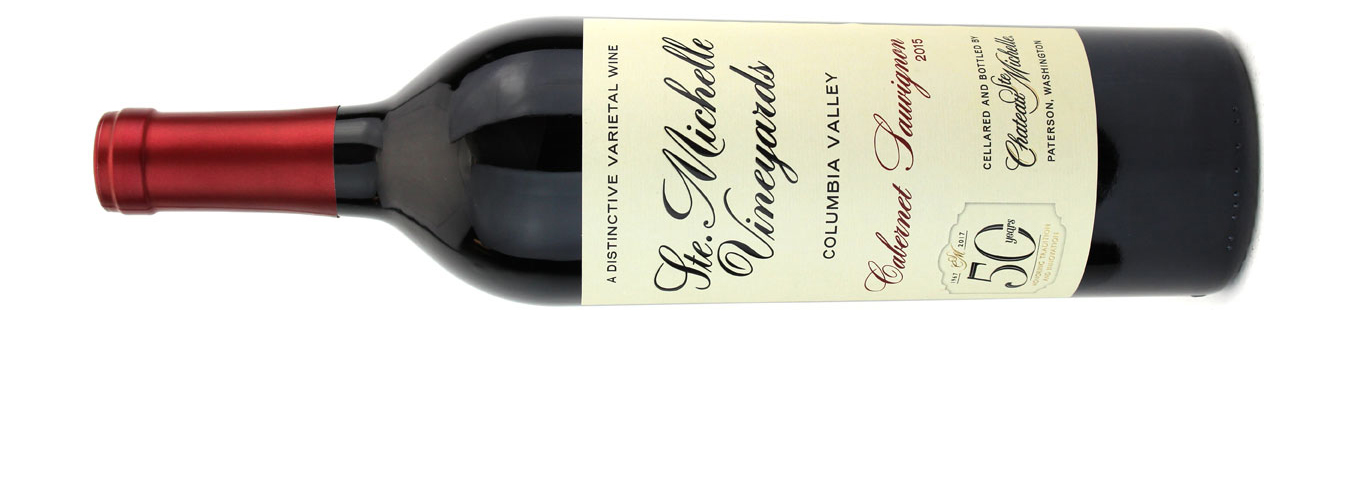
Who knew back in 1967 that we would get here?  Steve was still in high school and Chateau Ste Michelle, then called Ste. Michelle Vineyards, would start a long and impressive run as well as essentially be the genesis of the wine industry in Washington State.  We’re sure there are historians that would dispute that latter point with an example of some winery that may have preceded the folks at Ste. Michelle.  But in point of fact this is the winery that eventually got people’s (and critic’s) attention at a time when the Hugh Johnson Wine Atlas did not even have a Washington section.  The rest, as they say, is history.

We don’t necessarily go in for nostalgia plays.  Usually it is an excuse for a winery to make some special ‘commemorative’ bottling and charge a big price tag.  But this one caught our fancy because the folks at Ste. Michelle took the unusual step of ‘doing a solid’ for their customers and creating a wine at a ‘throwback’ price while adorning it with a take on their original label from back in the day.  It’s a ‘feel good’ story which, of course, is the point.  But back when they started, no one would have any way of knowing that the 2015, which is being released in their 50th year of existence (though from their 48th vintage) would happen to come in a near perfect vintage in the great Northwest (one of the warmest ever).

The winery chose Cabernet to celebrate their milestone, and sourced the grapes from Columbia Valley vineyards in eastern Washington including Cold Creek, Canoe Ridge Estate and Indian Wells.   The blend is 87% Cabernet Sauvignon, 6% Merlot, 4% Syrah, 1% Malbec, 1% Cabernet Franc, and 1% Petit Verdot and saw fourteen months in a combination of French and American oak, 32% of which was new.  The juicy Ste. Michelle Cabernet Sauvignon Columbia Valley 50th Anniversary Commemorative Bottling 2015 shows plenty of ripe dark fruits, a touch of vanilla, surprising amplitude and polished tannins for something this age.  Think of this as a step back in time, to when you could get a pretty compelling bottle of wine for ten bucks, only it’s 2017 and you can’t get much of anything for this kind of price.

Therein lays the attraction.  Cool label, sure.  Great feeling and commemoration of a surprising history that few would have predicted back then.  But in the end, our interest in the ‘50th’ is because it’s a really good, honest bottle of Cabernet for an unbelievable price in today’s market.  Think of this as at least on par with, and arguably better than the best offerings we’ve sold from their Columbia Crest brand over the years, many of which received 90-92+ scores.

Thus far we haven’t seen any reviews on this one, but the price/quality relationship is more than enough reason to get excited about it.   As you know, we are not ones to spend a lot of effort promoting large wineries, though we are certainly not afraid of doing so when the wine merits.  It certainly does here. Kudos to Ste. Michelle for their doing something tasty at a price where everyone can celebrate a little, as well as one of the better value Cabernets around.