NEYERS CABERNET SAUVIGNON NEYERS RANCH CONN VALLEY 2013

NEYERS CABERNET SAUVIGNON NEYERS RANCH CONN VALLEY 2013

There are certainly times when wine offers are ‘cut and dried’. Somebody gave it a big review, it’s super hard to find, or there is some other compelling reason to connect with an offer immediately. It is the way of things in the age of the internet… quick decisions made by evaluating easily digestible bullet points and clicking. We have no objection to the process, and understand it. But it can also work to the exclusion of some really spectacular finds that, while they might be among of the most desirable wines in a particular category over the course of a year, don’t have a simple story that can be sliced, diced and edited into a rapid-fire offer.

We knew going in that his was going to be one of those stories that required a bit of an attention span, and therefore eliminated a number of readers and was an uphill fight in the current world of ‘quick hits’. The story of Bruce Neyers and the Neyers Cabernet Sauvignon Neyers Ranch-Conn Valley 2013 isn’t one that can be adequately told in “25 words or less”, let alone “140 characters”. But at the end of the day, we believe the ‘read’ will pay dividends in telling you about one f the most interesting Cabernets we have seen of late.We’ll open with a little perspective piece done by Spectator’s James Laube which we think is really on point, “There are so many things that Neyers winery is doing right these days that it’s hard to know where to begin…What impresses me about their winery goes beyond the quality of the wines, which is often exceptional, and extends to the sensibility of pricing. That comes from being on the sales side of the equation, working with dozens of imports and being a consumer at heart. It’s a function of Bruce Neyers having been in the wine business for 43 years, including 21 at the helm of his own winery.” He had stints at Mayacamas, Heitz, Stony Hill, and Joseph Phelps Vineyards. Bruce is a wine industry lifer, not somebody that flew in on a private jet and decided he was going to make the next Screaming Eagle.

It is that grounded perspective that is the first aspect of why this wine got us going. We’ve had people trying to sell us revved up, one dimensional oak bombs for 2, 3, or 4 times as much money as this one, a lot of them laughingly overpriced. Bruce sees all of that and goes about his business, setting a price that represents a bargain in the rarified air of serious Napa Valley Cabernet.

The vineyard, located in Conn Valley, is also a large part of the story. Bruce and his wife of 46 years, Barbara were introduced to this property in 1984. It had been a vineyard previously as indicated by the abandoned grape stakes and end posts. The land was a succession of gentle hills with a south-facing exposure; in parts it seemed impossibly steep and rocky. We thought it was beautiful, especially from the top of the hill looking southwest across Lake Hennessey towards the heart of the Napa Valley. Then there was that creek – Conn Creek it’s called — that flowed through the south block of the property. An idyllic spot that soil analysis proved was beautifully suited to Cabernet.

The vineyard was planted, or shall we say ‘repalnted’ in 1992 by the esteemed David Abreu. The vines sit on a steep, south-facing slope of basalt mixed with gravel and loam. It is considered one of the best sites for Cabernet in the Napa Valley, and now this primo site has some of the oldest Cabernet vines in the Valley. WE have spoken at length about the value of older vines, and would also make the point that a lot of those trophy Cabs other people presented us were from 6-10 year old plantings.
The last piece of the puzzle was 2013, the vintage. Robert Parker said, “…2013 may turn out to be the finest vintage I have experienced in tasting North Coast varietals over the last 37 years. It’s a game-changer …” In Bruce’s case, drought and wind reduced the crop by 25%.

Sensible, passionate winery owner, organic farming, exceptional site and, now, mature vines (2013 was their 21st harvest), lower yields and an outstanding vintage, you can see where we are going with this. But we wouldn’t be telling this story if the wine wasn’t special. For true fans of Cabernet, this is a gem. The Neyers Cabernet Sauvignon Neyers Ranch-Conn Valley 2013 is wonderfully aromatic, combining cassis and blackberry fruit with violets, cocoa and spice notes. There’s a persistent underlying minerality and whiffs of lead pencil and cedar. The palate is decidedly plush and there is an endearing softness to the edges.

There are plenty of Napa Cabs that have power and punch. Size does matter to Cabernet drinkers. But this one has more than just volume. There are layers to the flavors as well as already emerging complexity and something that can only be defined as ‘soul’. We don’t have a bunch of ‘bullet point’ scores to throw at you here. But to tell the truth our minds were made up at first sip and whatever might come later review-wise will just be a bonus. A must for Cabernet lovers.

OVERLAND WINES ARE A KICK (RANCH)

Over time we have consistently tried to make (belabor?) the point that one of the things that makes us different is our commitment to research. Long ago we figured out that we don’t know everything. Never will. But that doesn’t stop us from looking at as many wines as we can because you just never know when the next star will appear. Sometimes we have to slog through a lot of so-so stuff to find a gem or two, but that’s how you learn. Sometimes it just comes up and hits you in the face.

At first look, these were a little curious. The labels gave the stylistic impression more of a newspaper or poster from the Old West. The story it seems is that on the site of today’s Kick Ranch there was an original vineyard planted by some pioneer types that made the 2000 miles journey out west via covered wagon and landed in a small village called…Santa Rosa. The journey started in 1854 and, by 1875, the records show the family was cultivating some 25 acres of vineyards, putting them on a very close timeline to one Augustin Harasthy, considered the ‘father of California viticulture.

The history lesson ended there and there were no longer any vines on the property when Dick Keenan & Kathy McNamara purchased it around the turn of this century. After ten years of growing grapes and selling them to, as we found out, some pretty famous names (Beaven, Bedrock, Paul Hobbs, and Rosenblum, have made vineyard designated Kick Ranch bottlings), they decided it was time to produce some of their own wine.

The property’s sense of history supports the ‘old-timey’ feel to the labeling and bottles. But there was a clear purpose to the winemaking style here, too. This isn’t someone trying to make a Euro-look-alike. The Kick Ranch wines embrace their ‘trailblazer’ heritage with boldly styled, broad shouldered, very California fare. Kick Ranch’s winemaker, Glenn Alexander, was a former rancher and later manufacturer who wanted to get back to the land. He also runs a viticulture business where he tends vines for some Sonoma heavyweights.

Glenn’s consulting winemaker isn’t some jet-setter who flies in once or twice a year, nor some instantly recognizable, high-profile north coast ‘hired-gun’. It is, instead, friend and mentor Hugh Chappelle of neighboring Quivara. Hugh is a very knowledgable, down to earth sort and very focused on the vineyard approach to winemaking. Lots of winemakers say that, but Hugh came across as sincere in our conversation with him. That means he’s not the type to impose a particular winemaking style. There is little stylistic similarity between the typically more restrained Quivara style and polished, ‘frontal assault’ approach to the Overland reds.

The whole vibe here is a little ‘down home’, and that clearly suggests an authenticity to Kick Ranch’s wines as they express ‘real’ Sonoma, not some stylized California wine with an eye towards the international palate. If this be ‘cowboy’ wine, that’s OK. These wines are deliciously true to their roots.

Turns out we weren’t the only ones who liked the juice. Interestingly enough, Robert Parker also commented on the distinctive packaging. Said Parker, “I must say I liked the squat, German grenade-shaped bottles as well as some of the motivational language on the labels from “wines of promised efforts” to “the courage is in the start.” He also found there was a lot more to these than just ‘novelty packaging’.

Start with the Overland Argonaut Kick Ranch 2012, a wine named with the ‘covered wagon’ set in mind as their web page explained, “In the 1850’s, local California newspapers called those who moved to California during the gold rush of 1849, “Argonauts”. The reference is to wine growing as an ‘adventure’. ‘Argonaut’ is 82% Syrah and 18% Petite Sirah that sees 22 months in a combination of new and 2-year-old French oak.

Broad and deep (the wine, not the bottle), with plenty of black fruit and a pleasing ‘chew’ to the finish (but not astringence), this is the consummate California mouthful. An Advocate 93+, Parker’s take was, “The impressive 2012 Syrah Argonaut Kick Ranch exhibits an opaque purple color, blueberry and blackberry fruit intertwined with licorice and camphor notes, full body, sweet tannin and a long finish. This heady wine should drink well for a decade or more.” Less than 300 cases were produced of this one.
Even ‘pioneers’ need white wine sometimes, and the Overland Sauvignon Blanc Kick Ranch 2013 delivers plenty in what might be considered something of a throwback style. We had the opportunity to buy either the 2013 or 2014 Sauvignon Blanc, both Wine Advocate ‘90s’, but chose the 2013 because it was in such an appealing place. Round in the mouth with ripe fig and melon fruit, and an unobtrusive touch of oak, the 2013 had mid-palate appeal but still plenty of freshness. Bob’s take, “The outstanding 2013 Sauvignon Blanc Kick Ranch offers lots of honeysuckle, orange blossom, caramelized grapefruit and melon notes. This exotic, medium-bodied, deliciously fruity, dry, zesty Sauvignon is filled with character.” You don’t hear Advocate say,” Enjoy it over the next several years…” about California Sauvignon Blanc very often (ever?), but he did here. Overland produced a ‘whopping’ 330 cases of this one .

We had an email plans for thse wines but couldn’t secure enough wine to support it.  Still, this is fine, off the beaten path California juice.  If you’re muse is sitting around drinking Chinons and Savoies, these probably aren’t for you. If you are a fan of boldly flavored California wines, however, these will play well at your table.

BRETON BOURGUEIL FRANC DE PIED 2015

BRETON BOURGUEIL FRANC DE PIED 2015

Cabernet Franc can be trying, but when the fruit gets to a certain ripeness, they are magic. Of course it takes just the right situation for them to hit that highest note, and nature has to cooperate. The Breton Bourgeil Franc de Pied 2015 is one of the most haunting examples from this particular appellation we have had ever. But it’s only Bourgueil, you say? How good could something from such a modest, utilitarian section of the Loire be that outstanding?

As we have said so often in Burgundy (it applies here, too), the three most important things about a wine are the producer, the weather, and the dirt. The Bretons have been a favorite of ours since we started selling a lot of their stuff back in the 2005 vintage. Catherine and Pierre Breton are as ‘blue chip’ as it gets in this part of the world. They always do fine work in both Bourgueil and Chinon (as well as a little Vouvray ). When Nature is kind, their game improves exponentially. So these grapes fell into the right hands.

The next part in this case is the ‘dirt’, or more specifically the vines. The term Franc de Pied refers to vines that are ungrafted. They exist on their own root-stock which makes them more vulnerable to phylloxera and other issues. They need special care. Given the difficulty of the vineyard maintenance and the special conditions the vines need to thrive, plots like this are relatively rare. But because the material is homogenous, it is capable of a depth of flavor and an almost exotic expression of the varietal. This simply has another gear or two by comparison to mere mortal bottlings.

Finally, in case you haven’t heard, 2015 is a uniquely special vintage. It was beyond exceptional here. We can count the vintages like this we have experienced on one hand. But not only was 2015 outstanding, it excelled in the most conspicuous of ways. Most 2015s have almost uniformly endearing, jump-out-of-the-glass type fruit components that should appeal to experienced palates and novices alike. Loire reds are no different in 2015. The Breton Bourgeil Franc de Pied 2015 simply jumps higher! The effusive nose shows notes of violets, wild herbs, fresh leaf tobacco and a little note of pepper as accents to the central theme of mulberry and red currant fruit. In the mouth, the plump, supple, gentle, but expansive fruit comes to the fore and takes charge, with gentle tannins and subdued acidity. No ’green’ flavors anywhere.

We have occasionally spoken of how a wine can succeed in a way that transcends its varietal and appellation to almost become something else. This is one of those cases, the wine existing on a plane somewhere between optimally ripe Bourgueil and a reserve Pinot from Oregon. It’s almost an ‘umami’ thing. It is definitely a delicious thing that can be enjoyed for pure hedonism, or pondered for its uniqueness and complexity. A must, we took all of it…$29.98

And Now, a Look Even Further Ahead: Part IV

Essentially from our previous pieces, we have suggested that the whole wine landscape has changed over the last twenty years as wine became more engrained in a larger segment of the population. However as the baby boomers, the first generation to really embrace wine, pass from the active market place the wine industry will have to reevaluate itself. That is something it has failed to do thus far with one of the most monumental changes in the history of mankind, the internet.

We have posited that the new, millennial buyer is more likely to be comfortable with wine because they grew up at a time where many more households had wine on the table on a regular basis. They will have more information at their fingertips 24/7 that they can access instantaneously via a number of devices. There will be no reason to wonder any more about anything but the most arcane aspects of wine, and even a lot of that info is out there if someone wants to dig a little harder.

Most will think of wine as an acceptable beverage, but we suspect fewer will have the opportunity to have that first ‘epiphany’ because this is a faster, noisier, more instant gratification group for whom burgers, pizza, buffalo wings, and forays into ethnic cuisines, most of which aren’t necessarily wine friendly nor bring with them any kind of wine culture. We’d go out on a limb and say that, in the vast majority of the venues we’ve just mentioned, it is unlikely you will find anyone who knows much of anything about wine. Things are way more casual than they used to be food wise. Millennials go out more, but typically don’t take the fine dining thing particularly seriously and don’t spend as much when they do go out according to studies we have read.

Are we saying that is bad? Not at all, simply that it is and is not the most conducive environment to recruit new wine drinkers. In a world of texting, Facebook (or whatever the hippest new social media platform is), virtual reality and self driving cars, fewer people take the time (or have it) to sit down and have a quiet dinner and a bottle of wine. Fine wine is a special, contemplative experience and that sort of entertainment is kind of out of vogue. We could go in a number of different directions from here but, suffice it to say, the speed and sensory overload of today’s world doesn’t necessarily pair well with an elegant, subtle red.

On a broad market level, the wine industry is attempting by and large to amp up the wines and the ‘kitch’ trying to make an impression. Bold, if not necessarily complex flavors via a little manipulation in the cellar mediates vintage. This uniformity makes wine ‘brands’ more like Pepsi (or Coke, we aren’t biased). It’s a homogenization of wine to a frightening extent. Everything is starting to have annoyingly similar flavor profiles as if a ‘control group’ is dictating styles.

So in the face of that, where’s our millennial generation going to get hit by the wine bug? Word of mouth and random contact with people who have already been bitten will still be a great way. But it’s that person on the street just going through life…where are they going to have that defining moment that changes their perspective? A lot of folks learned wine at an outlet where they found someone to talk to that was truly passionate. But such places are disappearing in California as a function of brutal competition, high rents, and an inability in such an environment to find good floor people.

Most of the people in ‘chains’, if you can find anyone to talk to at all, are not that far from novices themselves and definitely have some sort of employer mandated agenda like selling their own exclusive brands. Big box stores? Good luck finding anybody to ask a question of any kind, let alone something in depth.

Sommeliers? You aren’t going to find one of those in anything but top flight restaurants and, given the markups, it’s going to cost a ‘regular Joe’ a lot more to learn something. The casual dining experience, which seems to be where the restaurant expansion is these days, is less likely to produce that ‘discovery’ scenario. The accelerating pace of life in general (both real and virtual), coupled with fewer opportunities to experience some kind of ‘connection’ to wine outside the home, will make the whole embracing of fine wine as more than a ‘casual beverage option’ much more difficult.

We don’t mean to sound like depressed 1920s poets in some French café. Some will find a way. But today’s environment and generation just don’t seem as fertile a mix for fine wine appreciation. And we haven’t considered the effects of surging factors like home-delivery of meals on an unprecedented scale, presumably bringing food to someone intently engaged in some FPS (first person shooter) video experience who won’t even have a free hand to eat let alone hold and ponder a glass of wine.

Other stuff we think about…

Global warming: Whether you believe that greenhouse gasses are the cause of global warming or that it was an inevitable direction of some 10,000 year weather cycle, there is hard data that it exists. We have extensively studied European vintages back into the 40’s, and seen how many truly crummy vintages there were in the period from 1945 through 1980. In the last quarter century, the percentage of ‘great’ vintages has increased, and true ‘stinkers’ are relatively rare. But even casually saying that the average temperature increases a little every couple of years (we have heard specifics as high as 1 degree per year), what happens down the road is the issue.

Warmer weather has given us a plethora of noteworthy vintages in recent times. So, ‘hooray, global warming’ from a wine perspective? But fast forward a decade or two and think about this. All of the greatest growing sites are ‘great’ because their situation/exposure/terroir allows them to ripen the grapes consistently. Those great sites will eventually become too warm and not be as hospitable to the grapes for which they are renowned. It’s a little early to start planting Mourvedre in Germany. But the thought of doing so is considerably less insane than a couple of decades ago and freak vintages (like super hot 2003 was in Europe) might start coming around more regularly. Maybe these are the good old days.

Paradise Lost: We have often said that the wine industry has succeeded in spite of itself. We attribute that to the times and the innate appeal of the product. There were some very successful business models that worked back in the 70s and 80s that created a number of brands that have been solid for years. Here, decades later, the wine industry still holds those programs (Cakebread, Far Niente, and Sonoma Cutrer among them) as holy grails. But the times they are a changin’.

Labels are still trying to emulate the success those brands achieved ‘back in the day’ by using the same formula of perceived exclusivity, premium pricing, and restaurant focused marketing. The thing is that, back then, there were substantially fewer brands vying for people’s attention. It’s a lot harder to catch someone’s eye in a group of 500 labels than a group of 50, yet the market is saturated with would-be superstars who all want to play the same game. We have exactly the same conversations with wineries about how ‘special’ their wines are that we had three decades ago, only more of them because of the sheer volume of wineries.

The rise of the critic changed how wine was marketed, and the internet changed the world. Yet the wine industry still blindly preaches the mantra of the old days. There’s a lot of unsold wine out there because of ‘the games people play’. Still, as wineries come to grips with their own failures, they still cling to ‘the ideal’. Shhh, don’t tell anyone, there’s a bit of big time wine being dumped at restaurants at a fraction of the price to move it. There’s a lot of wine sitting in warehouses unsold.

We get people coming to us regularly with wine they need to move at heavily discounted prices, many of them good labels, with the request that we sell it for the same price that they did (or clearly failed to) so as not to hurt their image. Our take is that maybe their image isn’t what they think it is. Maybe it shouldn’t have been that price in the first place. If they couldn’t sell it to people who supposedly like their wines within those parameters and nothing else to sell, what makes them think we could do it against our very competitive selection.

Wine Spectator recently published that direct-to-consumer shipping was at an all time high. Fair enough. We’d say that more wineries are adopting that model because they make the most money that way, and there are record numbers of wineries playing that avenue. We also would suggest that without a tout from a significant critical source, that plan is not sustainable and people will tire of paying $60-80 (or more) for a ‘$30’ wine just because it is ‘exclusive’ or ‘rare’. We don’t see millennials putting up with that nonsense at all.

The wine industry has lived a charmed life over the last three (or four) decades. It has been a good ride, but much has changed. If the industry as a whole does not accept the new reality and rethink their approach, they will not only attract fewer new buyers, but are in danger of losing a bit of their existing audience. Finding new buyers is going to be difficult enough moving forward for reasons we have discussed. But it is considerably harder to bring back buyers you have alienated.

And Now, a Look Even Further Ahead: Part III

Our last piece (Part II) ended with a very telling question. It is based on different patterns of the populace and tries to predict the behavior of the generation that grew up with the internet, cell phones, more ‘less traditional’ households, and, now, the dawn of virtual reality and Wingstop. While we can only predict with limited accuracy (if we were really able to predict that stuff, people would pay us money), there are some reasonable basis for hypothesis.

One is that ‘entertainment’ happens more outside the home in casual restaurants, gastro pubs, pizza places, et al. Clubs, cocktails, and craft beers are much more ingrained in the culture. Entertainment options are at historic highs (since now you’ve added virtual reality to plain old reality), as are the dining choices. A generation of immigrants (we do not make presumptions about anyone’s status), mostly not from Europe, have brought their food traditions with them. There’s an amazing array of cuisines from South and Central America, Asia and the Pacific Rim. Mexican cuisine, longtime staples in California, has countless more regional examples.

In places like Los Angeles and San Francisco, there is a dizzying array of food choices. All kinds of folks are eating all kinds of different foods. The thing is, and we say this in the most objective way possible, the majority of this new, expanded ‘food scene’ are from places with no ingrained wine culture. We interpret that as a potential problem from the standpoint of the learning curve. Everybody who ultimately gets ‘serious’ about wine has an experience or two that tickle the imagination, that motivates them to follow the path.

The typically bustling, high-decibel eating environments of today don’t necessarily support the quiet contemplation of your beverage. Sometimes you can’t even hear the person across from you, let alone talk about the wine. The energy of such a room is part of the experience, but the odds of randomly discovering wine is reduced by the fact there us so much other stimulus. In most Thai, Vietnamese, Chinese, or Indian eateries, if there is a wine ‘program’ at all, it’s usually a small list of ordinary, very commercial bottles selected by a distributor rep without necessarily any regard to the cuisine but rather what they are supposed to sell. Often times the restaurateurs themselves don’t care. Beer is easier (though less so today with the craft explosion).

A lot more people eat at these types of restaurants as a percentage than three decades ago. Heck the extent and diversity of cultural food options really didn’t exist back then, and the ones that did were an occasional novelty for the typical family. The key point is that the expansive landscape of more ethnic fare will provide fewer opportunities percentage-wise for people who have yet to have that ‘definitive’ wine experience.

One would think that there would be more avenues than ever where someone might stumble into wine. But that’s not necessarily the case in today’s world. We old-timers learned by tasting, reading, and finding a few folks to talk to in a wine store. Since all the prices were fixed back in the 70s, a standard wine venue could support itself by carrying ‘the hits’ and a lot more options that grocery stores did not. When price fixing went away, so did a lot of those types of venues because they couldn’t adjust to the new reality. Fast forward today and buying patterns have changed (at least in California) because of the market shifting to a different group of venues that provided convenience and price advantages.

People today are a lot more harried. They will shop ‘specialized’ for big purchases, but most would like to take care of the day-to-day stuff in as few stops as possible. So they are less likely to make the extra trip for wine when they can find something palatable in the now-somewhat-expanded grocery store selection or ‘big box’ set. Are they interested in trying something new? Maybe, but there is little information on the shelves in such places save for an occasional point score from some publication that they may or may not know. It’s not likely there is anyone that can answer even the simplest of questions, either.

Big box stores? There’s a modest selection of ‘the hits’ and no one that knows anything on the floor. So unless you know what you are looking for, you’re flying blind and likely to just buy the same old things. Is just buying the same old thing wrong? Not for a lot of people. But even if you have the desire and motivation to expand your horizons you might need a little help. In such venues, if there even is anyone ‘working the floor’ (which is rare), it’s usually some supplier rep with an agenda to sell their own stuff.
The wine store of old is generally gone, replaced by more hybridized versions that have passionate buyers and innovative selections. The problem is that most aren’t going to have many of those old familiar favorites for you to fall back on because ‘big brand’ giveaways by grocers and big box stores have made these brands untenable even to carry for convenience. So basically to make that extra trip, you have to have made the decision that you want to get out of the ‘rut’ and get into wine. That’s a big commitment for most people.

What about those alcoholic beverage chain stores that advertise they have ‘experts’ on the floor to help you? Good luck with that. The term ‘experts’ is tossed around rather loosely, and most of them are only trained to move you into that high margin ‘store brand’.

Restaurant-by-the-glass programs should offer the best opportunity to learn. But there are a host of problems. In a busy, noisy restaurant, the likelihood of being able to talk to someone who actually can spend the time to help you and knows the wine is small (though they are out there). Plus, as we have mentioned in other pieces, you don’t know if the wine you’re tasting is representative of the genre it represents if you don’t already know the genre. Moreover, given the generally marginal condition of most ‘back bar’ wines, where you have no idea how long that particular bottle has been open, you don’t really know if the juice in your glass is even representative of that wine. Given that, it is fairly remarkable how much energy wineries put into wine-by-the- glass offers since they have little idea what the customer is actually drinking. They could be turning off potential wine drinkers to their brand or wine in general with some half-dead white or decrepit red.

As for experimenting with wine list at restaurant, where you see them open the bottle, you can learn that way provided it’s an eatery with a more enlightened yet still consumer friendly list. It’s no easy task to find one of those, and the learning curve will be the most expensive of any. This of course also presumes the person running the wine program is actually concerned about the diners themselves and doesn’t have some sort of personal agenda.

There are suggestions of forming tasting groups where a bunch of people all learn together. They work, but they are at least step B or C. At that point you have already gone to the next level of interest and aren’t a novice any more. The same goes with wine education classes. The passionate will find a way. Our point is that the person who might potentially be interested in learning more will have a much harder time in today’s market stumbling onto that formative ‘aha’ moment that will give him/her the fire. More to the issue, those who might have it may never find out they do because, under a wide range of scenarios, the situation may never present itself.

The ‘next generation’ of wine drinkers, whoever they might be, will have the most to do with how the next couple of decades play out for the wine industry in general. They are likely to be more open to wine as a beverage choice than any generation to date, but less likely to go far beyond that (other than the occasional tech millionaire who wants to fill the wine cellar in the mansion he just bought). As the prices of better bottles get to be more expensive, and the range of beverage choices competing for the consumer dollar continues to expand, wine geekdom will likely be even more ‘the road less followed’.

Pricing, marketing, global warming, is it the ‘juice’ or the ‘show’? We’ll take a swing at that stuff in a couple of weeks…

SOULFUL CHARDONNAY: ALMA DE CATTLEYA CHARDONNAY SONOMA COUNTY 2015

ALMA DE CATTLEYA CHARDONNAY SONOMA COUNTY 2015

It’s getting harder and harder to find good deals in California. Sure there are those so-called value bottlings that essentially offer plonk for a low price, but that’s not really a good deal if you are a discriminating wine drinker. Heck, you don’t even have to be all that discriminating to know that a lot of that stuff is simple, calculated, and something that strives for adequacy.

That’s what makes this wine kind of special. This is not some made-to-order line item to fit into a specified price strata. This is a soulful, expressive, bright Chardonnay that is the personal statement of a winemaker with a burgeoning reputation and a fascinating history. A lot of passion and knowledge goes into this wine and it shows in the glass. This all emanates from Bibiana González Rave, a Columbian born lady who decided in her teens that she wanted to make wine.

Hard to figure where it all started but she studied chemical engineering in Columbia after which she got herself to France, where between Bordeaux and Cognac she learned viticulture, enology and microbiology. She had all of the tools to be a winemaker but that was only the beginning. She worked at a number of French domaines including Ogier and Clusel-Roch in the Rhone and Haut Brion and La Dominique in Bordeaux.

She worked harvests in South Africa at Saronsberg Cellars as well as in California and France, working six harvests in three years at one point. One can get a little winded just reading her story but, in 2007, she decided to take her show to the West Coast. In California she worked at La Crema, Peay Vineyards, Au Bon Climat and Qupé before Lynmar, where she was winemaker from 2009 through 2011.

Upon leaving Lynmar, he started her own vineyard and winery-consulting business, Rave Vines & Wines, produced a handful of wines under her own label, Cattleya (named for the national flower of Columbia, the orchid, and the word alma is Spanish for  ‘soul’).  She married Jeff Pisoni, of the Pisoni Vineyard family, formed a winery with him called Shared Notes, secured new grape sources for her own wines and signed on as winemaker for Jayson Pahlmeyer’s Sonoma Coast Pinot and Chardonnay project called Wayfarer Ranch. She has been given broader responsibilities within the range of Pahlmeyer projects recently. To borrow a phrase from athletics, ‘You can’t stop her you, can only hope to contain her.’

You wonder when she has time to do all of this. Given the range of her vast winemaking experience at high end locales, you also wonder why she would choose to make something in this kind of price range. Yes, she makes the requisite $60-90 vineyard designated offerings that have pulled down big numbers from the critics. But here is this brilliantly precise, vivid Chardonnay for under $20, clearly made with the same attention to detail. Lifted apple fruit, well integrated notes of clean minerality, mid-palate volume and plenty of freshness, this outclasses the price point. Are we saying this is one of those desirable ‘little’ wines made by a big time winemaker that reaches to a higher level? ¡Claro que si!

DURAND SAINT JOSEPH LAUTARET 2010

DURAND SAINT JOSEPH LAUTARET 2010

No the vintage isn’t wrong. We actually sold out this same wine a couple of years back. We are fans of the pure, genuine Syrahs from the brothers Durand, we are big fans of the 2010s in the Northern Rhone, and to have another chance to sell it with a bit more bottle age is too good to be true. Where did it come from? Lots of possibilities. Well, maybe this one got lost in the shuffle of five different 2010 reds (2 Saint Josephs and 3 Cornas) produced here. Maybe the importer picked up a few extra cases late in the game. Maybe he was holding the wine for someone who finally reneged.

All of these things happen fairly regularly in the ‘biz’, the salient point being that here’s an opportunity to buy a refined, 91-point Saint Joseph from a great vintage for a very modest fare. The stuff is definitely ‘in a place’ right now with plenty f cool blackberry fruit that is started to round out, laced with the ‘grey rock’ minerality and whiffs of meat and pepper. Lovely stuff from a vintage that’s pretty much gone from the market, our price is substantially better than the couple of places that still have it left.

The Advocate notes read as follow, “the 2010 St.-Joseph Lautaret exhibits notes of black raspberries, pen ink, subtle toast, forest floor and powdered rock along with superb intensity and medium to full body. While accessible now, it should be at its best in two years and last for 15 (the review shows a $42 list) … This up-and-coming small estate is run by brothers Eric and Joel Durand, who made terrific wines in 2009, top-class 2010s and impressively strong efforts from the more challenging 2011 vintage.”

The Saint Joseph Lautaret has definitely settled in beautifully and we’re pretty sure it would vaporize via an email, except we don’t like to send emails when we don’t have enough juice to support a good run. So consider this an insider’s tip for the readers of the new format Stock Report, a little hidden gem early in the game. This type of thing happens on occasion, where we got more than we can drink ourselves, but not enough for a broadcast offer. The ongoing Stock Report gives us the opportunity to tell you about things like this ‘real time’… we have ours, of course. . . . $26.98 (special price)

PAGO DE LOS CAPELLANES RIBERA DEL DUERO JOVEN 2015

PAGO DE LOS CAPELLANES RIBERA DEL DUERO JOVEN 2015

Darned if a couple of days before the Jan 31-Feb 28 Wine Spectator showed up, the latest version of the Tinto Joven from Pago de los Capellanes (2015) hit the floor.  What was interesting was that, in an article titled “Editor’s Picks: 30 Wineries to Trust”, one of the 30 was Capellanes.  Actually we, and you, learned to ‘trust’ these guys a long time ago.  If memory serves we started what has been a long relationship with this bodega with the 1998 Joven, and sold their wines for years before Spectator, or anybody else, talked about them at all.

There have been some grand versions over the years, particularly at the Crianza and Reserva levels.  But we can’t wait to see what those are like in 2015 because this Joven is more exciting than any of this Joven series that we have tasted since the beginning.  It’s that darned 2015 vintage again we suspect.  The gushing fruit, telltale juiciness, and gregarious flavors really put this rendition on another level.

The ‘jovens’, for those not familiar with the nomenclature, are a wineries entry level bottling, usually the first to market with a minimum of barrel time  (or in some cases ‘none’).  This one is 100% Tempranillo from the winery’s proerty in the Pederosa del Duero subsection.  The soils here are chalk and clay which infuses all of their wines with a distinctive underpinning of minerality.  The fruit component usually ranges from dark cherry to plum and, only in very special vintages, reaches into the blue fruit profiles.  Sometimes these can be a little reticent out of the gate, typical of Tempranillo in its youth.  But this one already has a juicy demeanor and shows off a surprisingly lush fruit core.  It’s only going to get better.

They polish this one in new French oak for five months to smooth the edges and infuse a little vanilla highlight.  This is way too easy to drink and one heck of an all-purpose mouthful for this kind of tab.  This Joven will be a real eye-opener for those that are trying Capellanes for the first time, like that ’98 was for us so many years ago, only better.  A lot of you already know the house, and the 2015 is mas delicioso. . . $16.98

THILLARDON CHENAS VIBRATIONS 2015

THILLARDON CHENAS VIBRATIONS 2015

This is one of the most exciting new faces in Beaujolais that you probably haven’t heard of.  The brothers Thillardon, Paul-Henri and Charles, are emerging stars in the region that are hitting their stride at just the right time. They are the ‘poster boys’ for the ‘young and the restless’ natural wine movement in Beaujolais and champions of the forgotten Chenas ‘cru’. Since the domaine was founded way back in 2008, the brothers have accumulated several small parcels throughout Chenas through either leasing or outright purchase and made the decision to move toward the natural winemaking movement after meeting with Fleurie natural wine guru Jean-Louis Dutraive (Domaine de la Grand Cour). From there they have continued to work their way into the natural wine ‘brotherhood’ in Beaujolais.

Dutraive was eco-certified in 2009, and the Thillarons website (all in French) also bears the seal. According to a lengthy article we read in the appetizingly named blog ‘Notdrinkingpoison’ (See complete article), 2015 was the first year that Paul-Henri claimed he got to do everything he wanted from a winemaking perspective. He refrigerated the fermentation for the first time, inducing s long, cool, semi-carbonic process and vinified entirely whole cluster. His timing couldn’t have been better. We certainly can’t remember having something this compelling from Chenas recently. A certain amount of the credit goes to the vintage, but there is a growing buzz about Paul-Henri as well.

His mode is to bottle small parcels individually. One of the things the article pointed out was that a number of the parcels they work with aren’t as exposed, which served to preserve the freshness of the cuvees in the warm 2015 vintage. The first whiff of the Thillardon Chenas Vibrations 2015 makes a big impression. Spices, flowers, chalky minerality are all nicely proportioned within vibrant red fruits that jump out of the glass. It has the wild expressiveness that well-made natural wines exhibit, and there’s little or no sulfer. So we’d recommend this vinous joy-ride be taken sooner rather than later for its gregarious personality. The lads only make small cuvees of 500 cases or less from their various parcels, so there’s not a lot of this out there. Don’t miss it!..$29.98

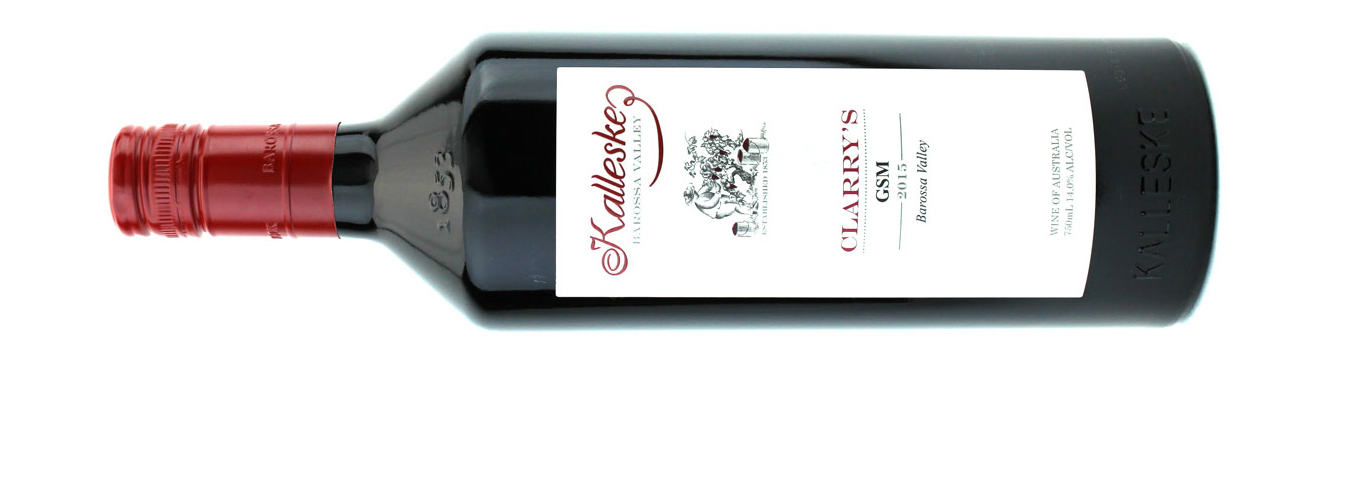
KALLESKE GSM CLARY’S 2015

KALLESKE GSM CLARY’S 2015

The ‘Land Down Under’ is still a ‘place of wonder’ when it comes to intriguing value reds. You just have to know where to look. Besides all of the widely distributed corporate beverages (Penfolds, Hardys, etc.), there are a number of small, passionate, under the radar producers with old vines and long histories that are doing some exceptional work for pretty easy-to-swallow prices. We sold some of the first Kalleske wines to come into the country back in the mid-00s and have been a fan of Troy Kalleske’s rich-but-sleek style ever since.

The Kalleske Clary’s GSM was a little later to the party but is the best we have tasted from them (though they weren’t in the market for a while). ‘Clarry’, for whom the cuvee is named, was Troy’s grandfather who tended these old vineyards (established in 1838…no that’s not a misprint). Clarry’s is a blend of Grenache, Shiraz and Mataro with old vine Grenache from the 1940s and 1960s. The wine is fermented in open-top fermenters and basket pressed. To preserve the superb fresh fruit flavors, it only sees one year in very old oak hogsheads (300 liter barrels) .

Who uses grapes from 40-60 year old vines for an under-$20 go-to red? Well, it’s a short list but that’s the deal here. A 91 from the sometimes stingy Lisa Perotti-Brown with commentary, “…redolent of baked raspberries, kirsch and red currant jelly (we’d add boysenberry, too, but we grew up SoCal… Knotts Berry Farm) with Indian spices, dried oregano and peppercorn hints. Full-bodied, ripe and opulent in the mouth, it coats the palate with plush, velvety tannins and spicy flavors, finishing long.” Does that sound like something that could be had for under a Jackson? We think not…$19.98