HIGH VALLEY WHITES-PART ONE

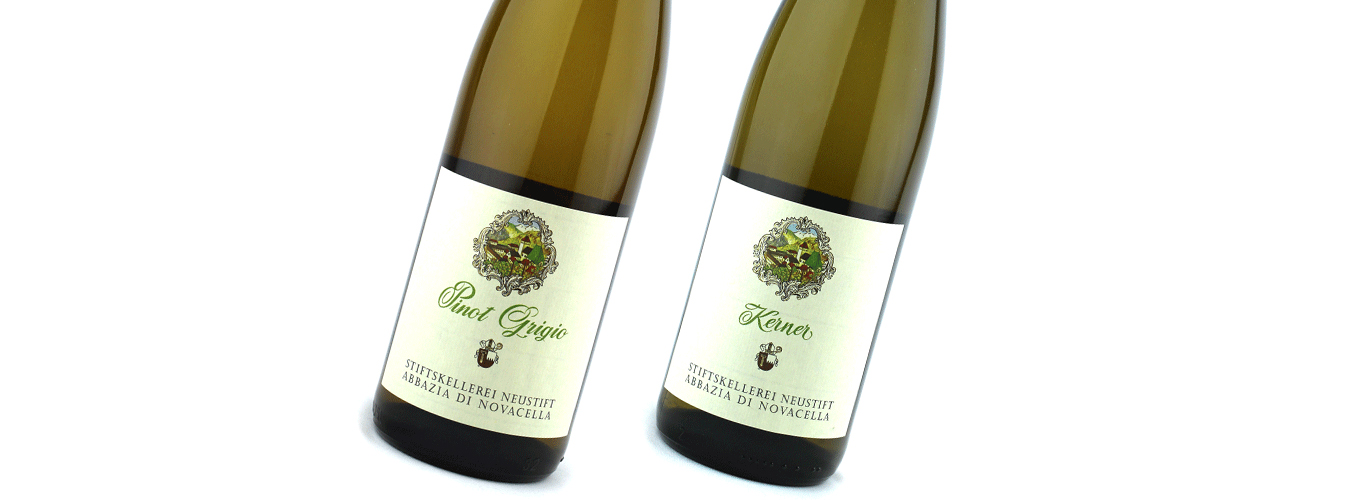
Not a lot of 2016 whites have come across our paths yet, but it’s easy to be optimistic given what we have seen so far.  More specifically, those versatile whites from northeastern Italy are most promising.  One of the real go-tos around here over the last few years have been from Abbazia Di Novacella.  They are both high quality and won’t break the bank.  We have an admitted fondness for Kerner around here and the Abbazia Di Novacella Valle Isarco Kerner 2016 is a beauty.  Tender and pliant in the mid-palate with just the right touch of acidity, the delicate florality, faintly pear and pineapple fruit and refined palate are hard to resist and this one is food friendly with anything from a pasta primavera to a lighter handed fish dish to Vietnamese spring rolls.

Pinot Grigio had sadly become almost a cliché, and that’s unfortunate because the Abbazia di Novacella Pinot Grigio 2016 is an excellent example of what this varietal can be.  It has plenty of pear and apricot fruit, some richness and weight on the palate and the requisite brightness to the flavors.  This Pinot Grigio can play to a more sophisticated audience yet has the quaffability factor to please the casual cocktail crowd.

Bailly-Reverdy Sancerre Chavignol 2015

We have loved the flashy Sancerres and Pouilly Fumes from the 2015 vintage, and the Bailly-Reverdy Sancerre Chavignol 2015 is a fine example of why.  The best examples have a certain density and weight on the palate with both grapefruit and kiwi fruit notes vying for attention underscored by a persistent streak of minerality and a clean, well tucked-in slice of mouth watering acidity.  The Bailly-Reverdy Sancerre Chavignol 2015 is all of that and more.  Bailly-Reverdy has been a fairly recent discovery for us but their pure, clear expression of some of Sancerre’s best dirt (in Chavignol) definitely gets us going.  A combination of different chalk-clay soils (2/3 Marly soils and 1/3 Pebbly limestone). The vines are planted on steep slopes and that makes the work to be done in the vineyards very difficult.  But the results are special.

Yes, it’s another of our ‘we stole some Spanish wine’ stories. 

Just had another bottle of this and felt the need to retell the story…

We first ran across the Tahon de Tobelos Rioja Reserva 2009 at a tasting sponsored by a new importing entity that was establishing a beachhead here in SoCal with a new distributor.  This was one of the standouts in what was an intriguing lineup with a lot of labels we had not seen before, as well as a few we knew well that had been off the market for a while.  A short time later, the representative for the company came by to follow up after the tasting and, to our surprise, this label was already being discontinued.

Introductory closeout!

Hey, things can run a little hot in Spain.  We get that.  Apparently the breaking point was not related to this wine, but another one from the same ownership that was not ‘a fit’ for this importer.  Ties were broken and everyone went their own way.  We have always made a joke of such happenings as being ‘introductory closeouts’.  But, as silly as that sounds, this is exactly that.  Hey, whatever makes the deal possible, and this one’s a beauty.

So who are these guys?  We found a piece from the Wine Advocate’s Luis Gutierrez on Tahon de Tobelos that encapsulates the story nicely, “I was pleasantly surprised by the wines from Tobelos, which are sought after by savvy drinkers in the famous tapas street, Calle Laurel in Logrono, (the capital city of Rioja) as they represent very good value. The winery is a very young operation, only created in 2001, their goal being to blend tradition and modernity. Today they own 10 hectares of vineyards averaging 30 years of age in the villages of San Vicente de la Sonsierra and Brinas…This is a new name to follow.”

That piece was written in December 2013, along with an enthusiastic review of the Tahon de Tobelos Rioja Reserva 2009“The 2009 Tahon de Tobelos is pure Tempranillo from vineyards averaging 60 years of age with malolactic and aging for 14 months in new oak barrels of different origin, which is racked every four months, and is clearly an ambitious wine with the intensity and depth of the old vines. It’s still very young, with a big imprint from the aging in oak with notes of smoke, vanilla and chocolate covering the aromas of ripe blackberries and plums, with a meaty palate and some gritty tannins that should resolve with a couple of years in bottle. A clean, powerful Rioja that requires a bit of patience. Drink 2015-2020. 92 points.”

As we dug some more, we found a more recent review from Wine Spectator, a web-only review from 2016.  They liked it, too, commenting, “This bold red delivers blackberry, currant, cola and chocolate flavors, with light leafy and licorice notes that add a savory element. This is round but not heavy, with well-integrated tannins and balsamic acidity. Drink now through 2019. “ They laid a 93-point score on it and showed a retail of $37.

It was one of the highest-scored Riojas of the vintage, going toe-to-toe with, as you can see, the region’s best wines and the wine had, at the time, one of the lowest prices at that $37 retail vis-à-vis its pricier peers.

Now? Wow…

It is clear from the heavy bottle, long cork and intense flavor that this juice was not intended to sell for this kind of price.  This is big Rioja, with mouthfilling, oak-infused fruit and richness, sort of a modern-styled Senorio de San Vincente meets Muga Reserva.  It has the size, weight, and flashy fruit to play to fans of New World reds but the polish and flair to keep Rioja fans quite happy.

You’ll note we’re in the prime drinking window of both reviews (and we suspect it will live past 2020), so the ‘market’ has done the hard work for you.  Most important, due to this aforementioned disagreement, we have it at a crazy good price.  Looks can be deceiving, and this wine looks and tastes more expensive.  It was supposed to be.  But nobody has to know it only cost you $19.98.  It’ll be our little secret.

Into the Wood

In the course of our business we have cause to interact with a lot of winery principals and winemakers. For the most part, we are passionate about the subject and so are they. Our general rule for buying is to taste everything that comes in the door with as little comment as possible and ask questions when we have them. Invariably there will be someone on the other side of the table that pushes us to make some sort of evaluation. “What did you think?” We usually tell them honestly because we are simply too busy to sugar coat it if the answer may not be to their liking.

We don’t claim to be winemakers. But we have tasted enough wine in our lives to have a pretty good idea of what is what, and likely have been through way more variety than most of the folks that make the stuff. Sometimes the discussions can get a little heated because telling someone their wine isn’t as special as they think is like telling them their children are ugly. We get that. But we see a lot of people in a day and, frankly, if you don’t give it to them straight, they are going to take up more time trying to make a sale they are never going to make. It’s a waste of our time and theirs.

While we do know our stuff, we are respectful of the difficulty of their task. When somebody ‘nails it’, we tell them that, too, because we understand all that goes into the process. There are countless decisions to be made at every turn in winemaking, and they are all mediated by the unpredictable weather. How to farm, how to prune, when to pick, and each of a plethora of other decisions has an impact on the final stuff in the bottle.

We know some people are aware of this stuff. But it is important for everyone to step back and look at it every so often.  It helps one to really appreciate the complicated nature of the whole process and how each decision compounds to take the juice to a totally unique end result, and one that is final. If you don’t like the color of your kitchen, you can paint it. With a lot of things, you can make changes to get what you want. One supposes you can do that with wine, too, via blending. But you will never have exactly the same juice in the end because every decision makes some difference (albeit sometimes minute) and you’ll never know for sure if the wine would have been even better had you made a different decision (or several) along the way.

Just to make the point, let us simply look at the question of wood. First, of course, is deciding whether or not you want to use oak at all. For some varieties, oak barrels may not enhance the wine,  so it may not really be an option. We do know producers that, even though the varietal or genre typically does not see oak, choose to have the juice spend the time in neutral barrels simply for the transfer of oxygen and textural enhancement.

Yes we said the ‘O’ word, and oxygen is wine’s greatest enemy…except when it isn’t. Yes, that oxygen in the empty portion of a half bottle of wine will kill it. But in the cellar, the controlled introduction of oxygen via barrels of larger volumes of liquid is an important part of rounding out the finished wine. Contact with oak literally polishes the edges and softens the mid-palate, desirable in some wines but not all. It can also impart tannins which can enhance or detract depending on the wine.

So the winemaker has to first decide whether wood fits into his program at all. If it does, then the fun really begins. The winemaker has to make multiple and sometimes collective decisions about how he is going to utilize oak barrels in whatever he is making. There are several adjunct decisions that go long with that, in no particular order.

He must consider the age of the barrels. Some only want the rounding out of the wine and therefore will use only barrels that are more than three years old. At that point, the amount of flavor influence the wood itself has on the wine is virtually nil. He can decide he actually wants a fair bit of oak influence in the finished wine in which case he may choose to use all new barrels. Or he may choose to use a combination of barrels of different ages so that he has some flexibility in blending at the end.

At that point he can choose how much of the oak influence makes sense for that particular juice.
It is important to note a couple of things here. The more common regimen is to have some new barrels, some one year old and some two years old so that there are plenty of options for blending. He must also decide how long to leave it in whatever vessels he chooses as that can affect the overall profile as much as the age of the oak. There seems to be a trend away from using high percentages of new oak these days on anything except the very top cuvee, and, even at that, we hear a lot of winemakers say they are ‘dialing back’ the amount of new oak.

So you’ve decided you are going to use oak, and have an idea of what you want to try with respect to the ages of the barrels. The next step, too, presents a huge arena of choices. French or American were, and still are the usual barrel options. But these days we also hear people talking about experimenting with Hungarian, Yugoslavian, or Russian woods as well. So you decide to go French. Which forest? Each particular oak has different tightness of the grain and imparts different flavors on the finished wine. The current darlings of the elite are Taransaud and Darnajou, but you hear names like Nevers, Limosin, Troncais, Allier and Vosges fairly regularly if you are paying attention to this sort of thing.

There are different sources for American oak barrels as well, but America is a big place. Woods can come from Pennsylvania, Missouri or Oregon (and those are just a few areas we hear about), and some insist there are vast differences between those, too. Of course point some winemakers will just buy whatever is the best they can find through a broker. Other folks are very specific and get more involved. Not only is the type of wood an issue, but so is the ‘toast’ level (how much the interior wood is fire toasted). The decision to use light, medium, or heavy toast has its own distinct and significant effect on the flavors of the finished wine over and above the type of wood.

One also must decide on the cooper, the folks that make the oak barrels. There are a number of barrel producers both here and abroad, and the quality of the barrel is as important as the components. Some folks even take it a step further and have strong opinions about how the oak is ‘seasoned’. Basically, when green oak is harvested, it is not ready to be made into barrels. It needs to dry out and lose some of the moisture related flavors that would be present (and be detrimental) to a wine. The fresh wood is seasoned a number of ways, either via a drying kiln or, essentially sitting in a pile for a number of years, often outside. Three years is kind of the standard but some winemakers insist that wood is not seasoned enough until five years.

There are those that take it to the extreme of having their own barrels made to their specification. The most extreme example we heard not long ago was a winery that liked three different kinds of wood equally. So they had the cooper create barrels from alternating staves of those three different woods, with only the barrel heads toasted and not the side staves. It can get pretty specific when taken to the extreme, but usually that happens after much experimentation has been done (and a few unsatisfactory combinations sold off) and needs become more focused.

We aren’t even going to get into the financial decisions that are incumbent to any of those aspects. A top notch, new French oak barrel can cost upwards of $1500+, which ads $60 to the cost of a case of 12 bottles. If you are making even 1000 cases, the ‘oak bill’ can be substantial and one’s ability to purchase exactly what they want, when they need it, or have to cut a corner or two, is one of those decisions that nobody really wants to talk about, but it happens.

One can make comparisons between a winemaker and a chef. Sort of. There is a lot more science involved in winemaking and the financial stakes are much higher in managing an entire vintage of a wine from start to finish than creating a dish for a menu.

Our point? Well, while we don’t always agree with winemakers choices, we are respectful and mindful of the myriad of decisions they have to make on every aspect of the winemaking process. The risks are greater if you make a mistake, and there aren’t really any ‘do-overs’ as the ‘timing’ and sequence of the process is part of the equation, too. There is no rewind. So if there is that much to think about just picking out a wood program, imagine the entire process. It is demanding enough when Nature cooperates, and when it doesn’t, everything that may have worked last time may not be relevant next time.

More Random Dribblings

ALLOCATION-THE ‘A’ WORD

“I recall trying to explain the ‘allocation’ model to my late father-in-law who owned pharmacies.  Usually he couldn’t get past the part where you just couldn’t buy what you wanted.”

This was one of the most powerful words in the wine business at one time.  For some parts of the industry it still has significant meaning.  Back in the day when there weren’t thousands of wines and unlimited information, certain wines achieved a popularity that outran the supply.  For those certain labels, the solution to trying to keep as many people happy as possible was to come up with a reasonable way to apportion what there was among the various accounts/people that wanted it.  Sounds simple on the surface, and one could make the assumption that it is a somewhat fair and legitimate process with regards to its execution.  That assumption, of course, is based on an understanding of the criteria and we can tell you wineries do not likely have the same agenda in mind as you might.

I recall trying to explain the ‘allocation’ model to my late father-in-law who owned pharmacies.  Usually he couldn’t get past the part where you just couldn’t buy what you wanted.  Unless there is some crisis, the idea of ‘rationing’ (that’s what it is, really) does not come up in virtually any other business.  The object of most businesses is to sell as much as you can.  But the wine business is unlike others in that you have finite amounts of goods that cannot be reproduced or exactly replaced.  Given this unique situation, the wine industry not only sort of invented the idea of apportioning sales via ‘allocation’, but has also figured out a number of ways to use it to their advantage, as well as a few ways to muck it up and abuse it.

The original program was to first decide how much to give to restaurants and retailers, and then divvy it up between the various accounts within those categories that are deemed worthy.  Why go to so much trouble to sell what you are going to sell anyway?  The concept is to try and keep as many people involved with the label as possible so the wine/winery can maintain the largest possible audience for the future.  If production increases over time, there presumably will be a waiting clientele.  The allocation ‘lock-down’ allows the winery to micro-manage the distribution and prevents evil merchants (yes, like us) from taking down huge chunks.

It certainly helps the allocation process to have wines that people want to buy.  But not everybody likes the same things so an allocation for someone who doesn’t care about the wine seems a pointless exercise.  But it happens all the time.  There was a ‘brand manager’ for a wholesaler not long ago who somewhere along the line decided that restaurants were the key to his ‘brand building’ plan.  In this case, the importer’s book was centered on value-driven Spanish and French wines which routinely got great reviews and were enormously popular at forward-thinking retail establishments.   There was a built-in audience for these wines and the wholesaler had to do some ‘allocating’ to keep as many high performing accounts as possible as happy customers.

This ‘guru’ decided that it was important to establish these wines in restaurants even though they were selling well already on a retail level, and weren’t obvious plays in most restaurant programs.  To that end, this individual ‘allocated’ the wines to ‘restaurants only’ who proceeded to not care a lick.  Very salable wines sat at the wholesalers for months while this individual was out trying to sell them to eateries.  In one particular instance the wholesaler was sitting on 100 cases of a highly reviewed Spanish wine that was ‘allocated for restaurants’.  After four months, there were still 96 cases left to serve the Southern California market.  The wholesaler finally called ‘nonsense’, the stock was released (it sold out immediately) and the ‘brand manager’ was relieved of duty.

In most businesses people are happy to sell things.  In the wine biz, people feel the need to have input on where their wine goes.  Whether you think that is a reasonable premise or not, many times the restaurants (or whatever) on the receiving end of an allocation don’t necessarily want it.  In most cases they simply can’t use the wines.  Most restaurants don’t necessarily need another $200 Cabernet that would sit on their list at $600.  They don’t necessarily care about a high scoring Spanish wine at a French eatery.  So allocations, intended to simultaneously give an air of exclusivity to the wine and make the recipient feel special about being included in the ‘club’, are often an exercise in futility at that level.

Finally, you have the case of the winery/distributor/importer, who may have been allocating you a singular particular wine for quite some time, suddenly create/import a new wine…or, worse yet, have some leftover stock of something else.  They might include some of those ‘not-quite-so-scarce-or-in-demand’ items ‘bundled’ in your ‘allocation’, with the tacit understanding that you are expected to take your whole allocation or potentially lose the wines you really want down the road.

Yeah, we’re not huge fans of the A-word.  If we were, there’s a good chance you wouldn’t have that special bottle of wine in your cellar that you’ll be enjoying this weekend.  Make it a great one…

The Eye of the Chicken

Now for something completely different.  This is one of those cases where we have to explain what it is before we get into the specifics.  But it is unique things like this are what make the wine business interesting.  There are a lot of folks in this industry that think they can ‘reinvent the wheel’.  But once in a great while, it happens.  This is one of those times.

This wine comes from Jerez, Sherry country, from one of the elite houses in Valdespino.  But it is a completely new concept for anyone from the region and one of the more intriguing offerings from that part of the world that isn’t Sherry.  This sees no oak, spends no time under flor and is not fortified, which immediately separates it from most everything else that comes from here.  A brisk, appealing white in a fresh, unfettered style.

The folks at Valdespino decided they wanted to step out of their traditional realm to produce this dry white.  The winery  has been vinifying different parcels of the Macharnudo Vineyard to see which parcel would make the best unfortified still wine and they found it in the particular parcel named ‘Ojo de Gallo’, or ‘Eye of the Chicken’ literally translated.   This section is included in the top part of the vineyard, which is wholly owned by Valdespino.  The soil is pure chalk (albariza en Espanol) planted to 100% Palomino, the traditional grape of the region (along with the more dessert focused Pedor Ximenez).  The vinification is done with

The ‘sales sheet’ said ‘think Chablis from Cadiz’.  We’d actually lean a little more in the direction of super-Rueda with fine citrus, quince, and pear fruit, maybe a hint of roasted grain, sleek underlying chalky minerality, just the right pop of acidity, and a twinge of that sherry-like nuttiness without the corresponding oxidative note.  Bright, crisp, intriguing, there’s mid-palate volume and cut to the finish.  It’s cool and geeky, to be sure, but there’s plenty to appreciate on a hedonistic level as well with the Valdespino Palomino Fino Ojo de Gallo 2016.  As to what we would compare it to, there isn’t really anything quite like it though you probably figured that out from the back story.


BRIEFS BLANC

BRIEFS

  • It’s time, actually perhaps a little past the time to still get in on the 2014 White Burgundies. This is the best vintage w have tasted since 2010, and definitely more on point and well delineated than the 2015s that are now hitting the market.  We are still scouring the countryside for late arriving 2014s and suggest you take this opportunity to grab a few more things while you still can.  The new Chateau de Meursault Clos du Chateau 2014 is one of the best we have tasted from a series we have followed for years.  This beautifully situated little insiders’ gem just outside the village definitely plays at a high  2014, with a complex nose of mineral, honey, flowers and salt caramel.  In the mouth it delivers citrus, toast, grilled nuts, peach and pear with a deceptively rich midpalate and finishing lift.  We’re also getting final reloads on 2014s of value favorites Albert Bichot Bourgogne Chardonnay Secret de Famille 2014 ($19.98) and Olivier Leflaive Bourgogne Blanc Les Setilles 2014 ($19.98).  If you’re feeling flush there are a few bits left of the epic 2014s from Domaine Leflaive.
  • We probably don’t spend enough time talking about California Chardonnays. But honestly there is a lot of homogeneity stylistically and it seems to be one category where people are more brand conscious and less willing to listen.  So finding things we think are worth talking about and then choosing our ‘battles’ doesn’t allow for many opportunities.  We got quite excited about the Alma de Cattleya Chardonnay a while back from dynamic young winemaker Bibiana Gonzalez Rave, but hadn’t been significantly moved in a while since.  That being said, a couple of ‘old guard’ names got our attention recently.  The name Truchard has been on other people’s labels as well as their own, but often their own wines might have been a touch too restrained for their own good.   We appreciate the old school, sort of euro, less-fussed with style that we all grew up with, but there is a thin line between ‘sleek’ and ‘boring’.  The Truchard Chardonnay Carneros Napa Valley 2015 had just a bit more stuffing in the mid-palate than other versions we have tasted, and that little went a lot way to kick this wine to a new level.  Classic Carneros apple/citrus, deft oak, and ripe but fresh flavors with a little more carry, this works.  It’s hard to pinpoint exactly what was different about the Chappellet Chardonnay Napa Valley 2014, which is often overlooked in favor of their reds and even their Chenin Blanc.  This one got our attention right away, with what is aptly described in the wine Spectator review, “Pure, rich and graceful, centered on a core of green apple, pear, melon and spice… A classic old-school Napa Chardonnay.”
  •  If you had told us 20 years ago that the Cotes de Jura would be one of the hippest appellations around sporting several sought after whites that sold in the $50 range, we would have thought you were from an alternate universe. Yet that is the case, and some of the things coming out of there these days, like those from the Jean Francois Ganevat, have created quite a stir.  This estate is clearly looking like the ‘next big thing’ from this area.  Thanks to the serious folks behind it (Burgundy legend Marquis d’Angerville started here in 2012) suggests this wine will get media attention and clearly, from the juice, they are aiming high.  The Domaine du Pelican Savagnin Ouille Arbois 2014 is a riveting wine, this indigenous varietal showcasing  driving flavors and deceptive length.   Also, for those of you that think Jura is too oxidative, this one is ‘ouille’, which means ‘topped off’ so they keep the barrels full to control the ‘sherry’ notes.  The descriptors from a 2013 review hit home, “very subtle aromas of peach skin, oyster shell and white flowers. Crisp on the attack, showing a salty tension that animates the quince and herbal flavors on the palate.”  Serious juice, superb with food and well worth the freight.  Their Domaine du Pelican Chardonnay Arbois 2014 is a fine specimen of the more traditional ‘flor‘ style as well.  


Random Dribblings

So, we walk into a local restaurant not long ago and see a sign at the reception desk announcing that a 3% fee will be added to the bill to compensate the cooks for the discrepancy in wages between them and the wait staff.  It goes on to explain, that while the wait staff brings you your food and receives gratuities, the cooks prepare it and, therefore, deserve a slice of the pie.  Now fair compensation is not the issue.  Every entity has to work out exactly what that means in their situation, and act accordingly.   The question is how that is supposed to come about.
One might muse that, if the cooks are indeed doing the job they are paid to do, why they would be entitled to an extra ‘spiff’ on the side.  Also, this little entitlement is automatic, whether your food was prepared well or not.  That’s like that mandatory ‘20% gratuity’ added for ‘parties larger than six’.  What is the servers’ motivation to not just ‘phone it in’ if they are going to get the same money anyway?  And all of this is in the face of an escalating minimum wage (the discussion of which would fill many pages with macro-economic arguments and be way too boring on a Sunday morning, or any time for most folks).


Is the Bay Area-styled entitlement mentality spreading south like some sort of airborne virus?  Is this kind of thinking one of the early signs that the ‘participation trophy’ generation is taking over?  What’s next, an add-on for their 401K?  Why restaurants think this is OK in the first place is the baffler, and where does it end?  A night out can rack up pretty fast already without all of the ups and extras.


Why don’t the servers divide their take with the kitchen?  The servers benefit when the food comes out on time and well prepared.  The customer is merely getting what he is paying for.  Why not just have a city tax on top of that because the city would like a little more money, too?  Then it can be like hotels where that $120 room you snagged on Expedia ends up costing you $180 after all the taxes and fees.


Long ago some angry restaurateur took out a billboard ad on the Long Beach Freeway that read, “If you can’t afford to tip, don’t eat out.”   Of course, our first response was why is it up to us to compensate your help?  The whole idea of tipping used to be tied to service where, if someone gave you a good experience, you tendered a little something extra.  Now there are bills that come with the tips at various percentages calculated for you, essentially shaming you into picking one of the options.  And if there are six or more of you, you don’t have a choice even if your service is lousy.


Nothing against the restaurant or their cooks, but this is a precedent that seems to be proliferating and there seem to be no natural boundaries.  Does any of it ensure a better experience for the consumer?  Oh yeah, them.  What happened to people simply doing the job they were paid to do to the best of their ability?  Or is that not a ‘thing’ any more?


KEEP ON TROCKEN?  PLEASE, NO


We just had our first exposure to the 2016s from Germany.  We’ve been telling you for to a while now to buy up the 2015s as it is a great vintage, one of the best in recent memory.  Not having a firm impression of the 2016s, we were pleased with the opportunity to work through 80-100 of them.  Our takeaway thus far?  Buy up the rest of the 2015s!


The wines (mostly Rieslings) showed a bit here and there, and lacked the characteristic zip that pulled many of those 2015’s together at the finish.  In other words, it looks like our participation in the vintage will be sparse at best.  There are always a few winners in every vintage.  But given what is out there from 2015, and a more few late 2015 releases coming from top sources hitting recently, 2016 looks to be a potentially minor play with, as always, a few stars, though we still have another 100+ wines to taste, including, in all fairness, many of the top Kabinett and Spätlese wines.


Frankly, we are pretty tired of every German importer telling us how important trockens (dry) are in German restaurants.  The Germans like to drink their own stuff, we get that.  But this isn’t Germany.  Here we have all kinds of cuisines, particularly Asian (Thai, Chinese, Vietnamese to name a few) that go beautifully with a crisp, classic kabinett or spätlese, the little bit of sweetness playing nicely against ginger, garlic, curries, and other spices.  No other wine pairs as well and as broadly across a multitude of dishes.


Plus, if you want to drink dry Riesling, the Austrians, Australians, and the folks in Alsace are making better examples and have been doing it longer.  And that’s just Riesling!  There are all kinds of other dry whites that will offer excellent choices…Sauvignon Blancs, Chardonnays, Grüner Veltliner, and so on.  We understand the Germans responding to trends in their own back yard.  But aside from Germans drinking German, we can’t see why the vintners are so intent on competing in an arena where they are at a distinct disadvantage outside their borders   Most trockens are sadly undernourished and lean, and far too many are simply not pleasurable.


There are those that will point to the GGs (Große Gewächse), the relatively new category of dry wines from ‘Grand Cru’ sites, as the example of elite dry German wine.  Alright, sure, some of them are pretty good but they are also rather expensive for what they deliver, many in the $50-80 range in stores and much more on wine lists.  There are certainly many more exciting choices for less money.  Yes, there are places like Baden and the Pfalz where dry wines have been the tradition for a long time.  But the Mosel’s delicate, racy demeanor does not translate well into trocken.  They are a little better in exceptional, warmer vintages, but rarely ‘great’.  The persistent question is ‘why?’


Given over 1000 years of viticulture in these places, where certain styles developed because of the terroir of the region, we have to wonder who came along and decided all of that was nonsense.  One of the great discoveries of modern winemaking is that, no matter how much technical wizardry one can employ, the most successful wines are the ones that are true to the place that they come from…essentially the same thing the monks figured out all those centuries ago.  They drink a lot of spätburgunder in Germany, too.  Doesn’t mean we’re obliged to do so.

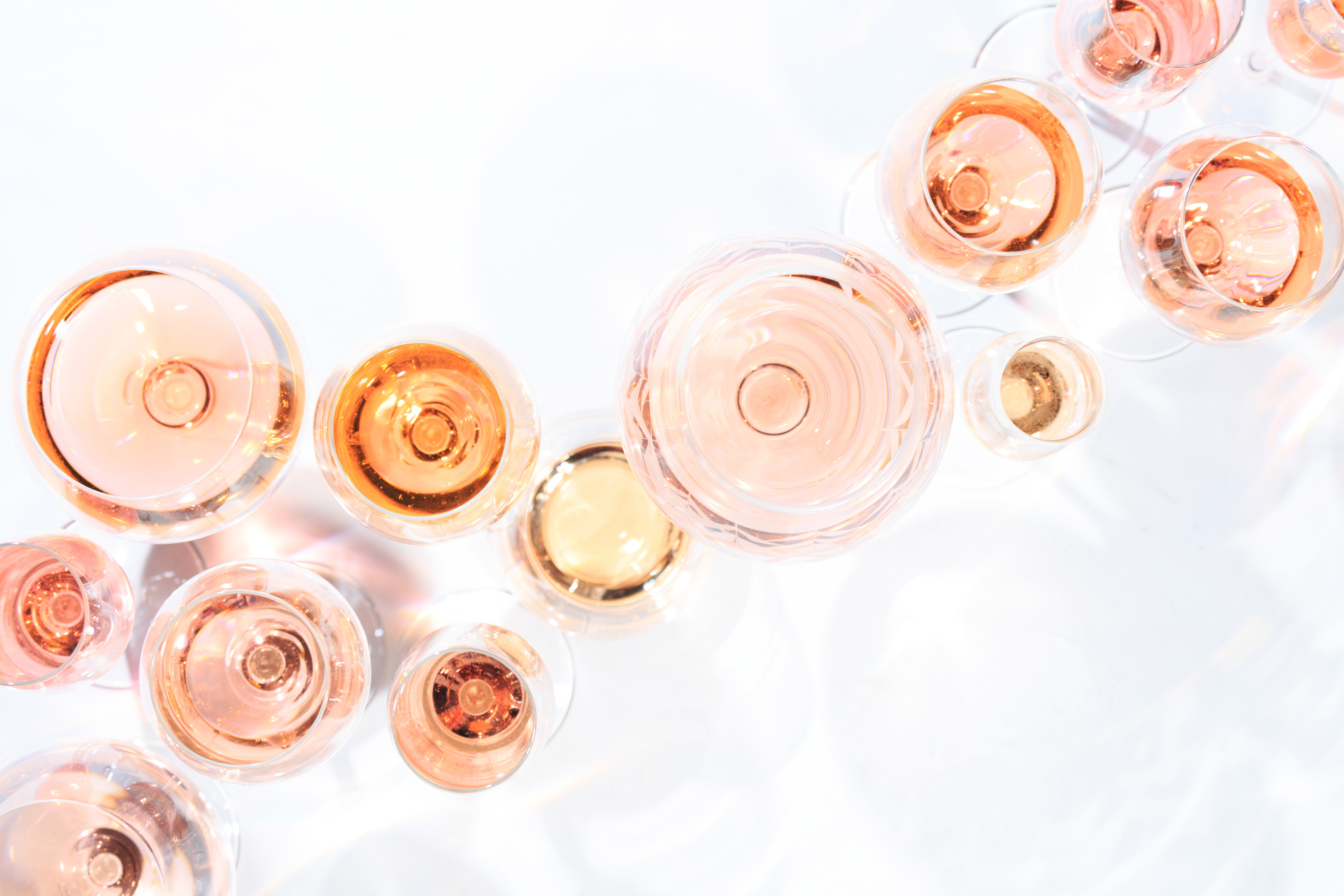
Rosé ROUNDUP


First off, our  apologies for not getting to this sooner, though it isn’t entirely our fault.  Given that Memorial Day has come and gone, we have to consider ourselves somewhat remiss in how little we have done promoting pink wine so far.  The season is upon us.  Now, in our defense, we have been a little preoccupied with a few other topics.

The 2016 Bodeaux prearrivals campaign demands a certain commitment of time.  It is the most important vintage to offered on pre-arrival since the 2010s, and possibly could provide the best opportunities for consumers since 2005.   But it is a slippery slope because, as good as the wines are, we have mixed emotions about how the campaign will play out given the remarkable sea of other choices there are out there today of all kinds of wine, and how many folks are willing to put up today’s money for something that isn’t coming for two years and really won’t be drinkable until a decade or so later.  In that sense it is a historic campaign in terms of what it will say about the whole futures market moving forward.

We also are spending a lot of time evaluating more deals in the marketplace than we ever remember seeing.  You’ve seen some of the stuff we have been tossing out there, and those are only the ones that pass muster.  There are nearly five times that many don’t even initiate a serious conversation, but we still have to look.  Finally, we are still wading through a ton of pink wines brought to us by the Johnny-come-latelys.  We  have already found plenty to get us through the summer in style, but you never know when the next gem will appear.

Finally, our choice of the word ‘roundup’ was made because of alliteration.  We couldn’t possibly cover all of the highlights of our current selection in one piece.  So we’re going to give you a few that come to mind so that you can start to get your pinks in order for the summer.  We’ll start with something that kind of surprised us.  Domestic rosés all to often lack the acidity and texture to be refreshing.  It’s nobody’s fault.  It’s just warmer here, generating higher alcohols and lower acidity, and too many folks are getting into the act just to cash in on the fad.  While we are getting a lot better at it here at home, far too many vintners here don’t have the experience in this arena and most of the local pinks are at a disadvantage outside their own tasting room.

The Andrew Murray Esperance Rose 2016 was a pleasant exception to that generalization.  It is nearly 100% Cinsault that is estate grown for making rosé (as opposed to a saignee of red wine).  Light, fresh, clean, there’s dried strawberry and red melon with an impression of minerality, a pleasing tactile crispness, and the flavors are dry.  In the winery’s own words, “this is definitely not a kool-aid Rosé of yesteryear from California”.  It got the attention of some serious Francophiles when it comes to pinks (us).  Pleasing juice, and the price makes perfect sense (far too many domestic pinks, besides being a little flabby, are kind of expensive).  A well conceived effort.

The Chateau de Trinquevedel Rose Tavel 2016 has been a staple here for some time.  Tavel has a certain cache when it comes to pink wine, which makes some of them a little expensive for what they are.  This small family farm makes classic Tavel with fresh acidity but also the defining mid-palate weight and somewhat deeper color.  The blend here is 45% Grenache, 24% Cinsault, 15% Clairette, 10% Mourvèdre, and 6% Syrah.  The flavors roll to red berry and red melon, with delicate underpinnings of spice and garrigue, and a little rounder midpalate than pinks from further south.  Far too easy to drink and very food friendly.

One of the consistent pink wine bargains over the last few years is the Le Cengle Cotes de Provence Rose Vieilles Vignes 2016, pale in color, delicate and crisp on the palate but with more going on than the visuals and price ($12.98) would lead you to expect.  The blend is 25% Cinsault, 35% Syrah, 35% Grenache and 5% Mourvedre, but there are refreshing citrus and white peach tones that give it a little bit of  white wine impression.  Certainly a candidate for go-to pink given the price and performance.

Domaine Tempier has made Bandol rosé a ‘thing’ almost by themselves.  There are some wonderful examples that cost nearly half as much because the market hasn’t caught on to yet. The Gros Nore Bandol Rose 2016 is a sensational follow-up to their outstanding 2015.  Former boxer Alain Pascal fashions this blend of 50% Mourvèdre, 25% Cinsault and 25% Grenache from grapes grown in clay soils.  Red fruit, minerals, a hint of honey at the crest, some ‘orangy’ citrus streaks, and just a touch of that cool Mourvedre earthiness, this is pretty serious as pinks go if you want to dive into it, but can play the casual, delicious quaff if called upon to do so.

Finally, here’s your absolute bargain, the Mourgues du Gres Fleur d’Eglantine Costieres de Nimes Rose 2016.  We have worked with this estate for years and they are usually in the mix with both pinks and reds.  To be honest, they don’t ‘hit’ everything every year.  But they have had a number of efforts that have ‘nailed it’ and, when they do, it provides a remarkable value performances.  The 2016 Rose is one of those ‘hit’ times.  The main thrust is Mourvedre with small parts of Carignan, Grenache, and Syrah.  The wine starts with red berries, slides into an orange and garrigue note and finishes with a little salinity.  At $9.98, it’s party time.


NO ORDINARY CHIANTIS

Chianti has come a long way since the days where all anyone saw were the straw fiasco bottles in the local checkered tablecloth Italian joint.  The rules have changed, and a number of the wineries have stepped up their game with regard to the quality of the entry-level and reserva wines.  A lot of folks are still trying to come to grips with the whole Gran Selezione designation which started with the 2010 vintage.  With all due respect to our inspired friends at Castello di Ama, the world is still a little shell-shocked with the proliferation of $50, $60, $70 Chianti, ourselves included.

Our job is to explain all of these trends to you.  But we also know for most folks, Chianti is a go-to, something to accompany some good food while not breaking the bank.  We hear you.  Maybe it was just a good day, but we found two outstanding examples back-to-back on morning not long ago.  They do have a couple of things in common.  Both were from the Classico zone, and both were produced by folks who were much more famous for their Super Tuscans, Podere Poggio Scalette (il Carbonione) and Castellare (I Sodi di San Niccolo).

Obviously one could invoke our mantra of ‘little wines from big-time sources’, but we haven’t found a Scalette or Castellare ‘regular’ Chianti this memorable before.  These are by no means ‘regular’!  We’ll start with the Podere Poggio Scalette Chianti Classico 2012.  Their Il Carbonione gets a bit of attention but Antonio Galloni, in his notes on this Chianti, was most enthuisiastic.  His words, “Poggio Scalette’s 2012 Chianti Classico is gorgeous. Dark red and black stone fruits, spices, leather and menthol meld together in a supple yet powerful wine endowed with terrific depth and complexity at its level. All the elements are in the right place.”

Like their flagship wine, this is 100% Sangiovese, and a bit darker and deeper than the norm as seems to be the case with this property.  But Galloni’s score was a mere 89+, suggesting with the ‘+’ that there was upside potential, but not high enough to turn heads.  Chiantis typically don’t get re-reviewed like, say, Bordeaux, so this wine will stand with that score for all of eternity most likely.  We are here to say that all of those ‘elements that were in the right place’ have come together beautifully since that tasting note was written in September, 2014!  Polished, classy juice from a top house, a fine option for the fare ($23.98).

We met the winemaker from Castellare years ago and he struck us as not only talented by, given the points he was discussing that day, extraordinarily meticulous.  His track record has born out our impressions over the course of several I Sodis and the currently in stock , smashing Castellare Di Castellina Chianti Classico Riserva Il Poggiale 2012.

You don’t see a lot of stuff this good from a producer like Castellare for under $20.  But the 2015 served up spectacular fruit that give Castellare Di Castellina Chianti Classico 2015  ($19.98) the stuffing and authority of a lot of reserve level wines.  All that aside, you can enjoy this one simply on the basis of its layered, intense fruit component, purity of flavor, and outgoing personality.  Even as good as 2015 is shaping up to be, we don’t imagine we’ll find many that perform like this.  A spectacularly fruit driven go-to that should deliver for years but is already quite showy.