Years ago (like the 80s and 90s), there was a publication called Connoisseurs’ Guide had significant influence on people’s tastes. Besides being a pretty good source for finding obscure California gems, they also wrote some of the best pans when they didn’t like something. More to the point, every so often they would do a tasting of California sparklers and one particular quirk of theirs was that incumbent in those reviews they would have notes on the same bubbly in regular bottles and also in magnums. The magnums consistently scored higher. After much of our own ‘research’, we came to accept their axiom. While it is difficult to verbalize why exactly (and you know we’re not usually ‘lost for words’), somehow magnums seemed to present more layers of flavor and more refinement. We can’t explain the science of it, but we are believers.
We tell that story to tell this one. We have found a modest cache of magnum bottles from a long-time house favorite Jean Laurent. The estate is situated south of Epernay, in the outlying Côte des Bar region of Champagne. We’ve talked about the Bar recently as an emerging source for serious boutique producers but these guys were out in the market long before ‘the Bar’ had the cool kid vibe it has today.
Their vineyards are in the village of Celles‐sur‐Ource, with a few parcels in the neighboring village Landreville. They total 39 acres (30 of Pinot Noir, 6+ of Chardonnay, 3 of Pinot Blanc (a legal but not widespread grape in Champagne), and small plantings of Arbane (a historic grape in this Aube region but there is little remaining). The vines are planted in distinctive chalky soils, part of a band that stretches from Champagne to Chablis and all the way to the White Cliffs of Dover (where the Brits are making some sparklers of their own).
The vineyards average 25 to 30 years in age, with the oldest parcels at more than 60 years old. Jean Laurent was one of the earliest RMs we were exposed to (“Recoltant Manipulant” – the French term for Grower Producer) and we have since followed this genre of Champagne producers with great enthusiasm. Like the title says, Jean makes Champagnes exclusively from his own vineyards. You’ve heard us yammer on about the terroir aspect that grower Champagne has over the big houses and this is one of those special places where the juice comes from small, distinctive patches of vines farmed sustainably and is produced in a limited batch.
There are a number of other key points but the most important are that this is large format bottle from, according to the Wine Advocate vintage chart, the highest rated vintage in Champagne in the last quarter century. The Jean Laurent Brut Blanc de Blanc La Griffe de l’Ource 2008Magnum is 100% Chardonnay from this legendary vintage aged 30 months in tank prior to bottling (no oak) and then seeing 8 years on the lees sur latte (on their sides) and 2 years on the lees sur point (cork down) prior to disgorgement.
Given the vintage and what we have referred to in past pieces as the riper, richer character of ‘the Bar’, this is an ample Champagne with notes of citrus, yellow melon, cherry, brioche, and honeylike flecks in the nose and finish. The mousse is refined, no doubt in part due to the bottle age, and the palate is both lifted and creamy. This is a fine and expressive bottle of Champagne to plan something around and, yes, the extra nuance that the ‘big bottle’ provides appears to be in full effect.
The Magnum format itself ostensibly adds a point or two to the review here that was done by Wine Spectator on the 750 ml bottle in December, 2019, “Creamy and well-knit, with good focus to the baked white cherry, honeycomb and ginger biscuit flavors. A harmonious version, framed by sleek acidity and a chalky underpinning, this is long and mouthwatering on the lightly spiced finish. Disgorged July 2019. Drink now through 2028. 375 cases made…93 points.”
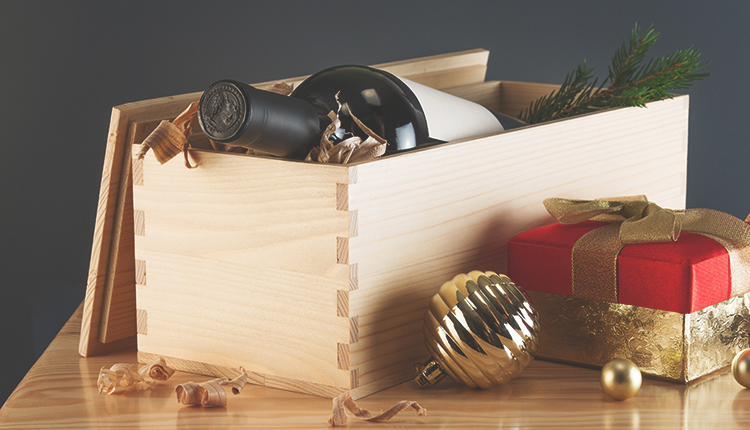
Large format, epic vintage, this is a very special holiday treat. Only 20 magnums available at this writing.
A roadmap to the wine world’s most common seasonal scenarios
Yes, it is that time of year. As you may have seen, we typically put out something of a guideline for wines for Thanksgiving, taking into account very general scenarios and offering suggestions as to what to serve. This time around, we thought it might be helpful to toss out a few suggestions based on the questions we seem to get every holiday season. Of course, it would be impossible to comment on every potential situation, probably even foolhardy. But we do encounter things based on our experience that might not cross your mind during the busy season until it happens. So, we’ll put it out there and hope it might give you some confidence in navigating your holiday milieu.
The Big Event
Everyone has their own take on the ‘big days’ and how they celebrate one day vs. another. Ours is not to comment on that, but rather look at a few ways that people celebrate. For the record, we know that there are many modern cultural takes on holiday food and holiday traditions. For the sake of this article we will be discussing more broad seasonal scenarios with traditional American holiday cuisine. With that said, three ways we can think of celebrating a big day might include a full sit-down dinner, something with more substantial hors d’oeuvres, or a more pass-through visitation like an open-house type with lighter nibbles. Each one calls for a little different lineup of beverages specific not only to the type of event but what kinds of foods you’re offering.
Sit Down Dinner A lot depends on the main course with the wine selections. We figure more popular choices might end up being ham, some sort of bird (turkey, goose, capon), or some sort of meat (beef, lamb) with an array of sides, though there are of course many other options. With ham, play against the saltiness with white wine that has crisp acidity and is light on its feet.
A little residual sugar adds to the match. Our first go-tos with ham would be Riesling or Chenin Blanc, or lighter whites like Pinot Gris, Pinot Blanc, Sauvignon Blanc, or for the more adventurous, Italian whites from the northeast like Kerner or Friulano. You want something crisp, clean, and not oaky. For reds, think about Beaujolais, Pinot Noir, Rioja or Dolcetto, lighter, brighter reds that aren’t tannic or too woody.
Our choices for some sort of bird would be pretty much the same for the same reason. Heavy reds and whites don’t really augment the food and can become tiresome over the course of the meal. If you want to serve some powerhouse red with the bird, that is of course your business, but it’s not what we’d choose.
Finally, if we’re looking at roast beef, standing rib roast, rack of lamb or some such, bring on the big reds. Red Bordeaux, Cabernet, Chateauneuf du Pape, Syrah, Barolo, or authoritative Tuscan all play well, as do a variety of things from Spain. If you’re having budget concerns, there are excellent lower priced options in every category (like instead of Chateauneuf, sub in a solid Cotes du Rhone).
Heavy Hors D’Ouerves or Tapas A lot depends on your choice of dishes, of course. But again, we’d caution to stay away from heavier wines. Also, the standup or more social scenario kind of dials back the price need because folks are less likely to note extra complexity you would pay a lot extra for. Not to mention the party might stay a little livelier if you ditch the big ponderous wines.
Our whites list remains pretty much unchanged from the last section. For reds, again Beaujolais, Pinot Noir, Chianti, Cotes du Rhone, a number of things from Spain, the goal is fruit-forward, outgoing, tasty, and not too tannic or heavy.
Open House with Lighter Fare The rules really don’t change a lot for reds and whites, but we see this as a great opportunity to sprinkle in some sparkling wines. Most folks like bubbles and there’s good fizz at virtually all price ranges, from Cavas like Poema ($9.98) and Conquilla ($10.98) to Prosecco to Crémant de Bourgogne to Champagne.
If you’ve got folks that don’t like dry, offer the Bottex Bugey-Cerdon, a sweeter, sparkling red from the Savoie that is a revelation for some (we’ve heard it inelegantly referred to as “adult Kool-aid” and we’re not necessarily disagreeing).
For some people the holidays are a time a time of festivities, but also impromptu drop-bys. We suspect most folks will have stocks of favorite go-to reds and whites on hand, which we’d recommend keeping in line with our general food suggestions… outgoing, fresher styles that are fairly versatile. Lighter, brighter reds and crisper, unencumbered whites are always appropriate. But a couple of other categories can serve specific scenarios.
Sparkling wines are widely popular and, in some folk’s minds create instant festivities. No matter where you might be comfortable price wise, there will be some bubbles to fill that need. We are as picky about our sparklers as we are everything else. No one at ‘corporate’ tells us what to sell because there is no ‘corporate’. We own it and are meticulous about our process at every level. As we mentioned in our open house piece, there are hand-picked (OK, mouth picked) choices at every level from about $11 on up. We have French Champagnes in the $20s. So there is something for everyone. But if it is on hand, all the better for the kind of spontaneity that can create memorable evenings.
If you have a lot of traffic at your place during the holidays, you might end up with a few open bottles that don’t have a definite schedule and, of course, oxygenation is a reasonable concern. You could serve via something like a Coravin wine preservation device, but the device itself and the argon gas cartridges are somewhat costly. While it might be off of some people’s ‘beaten path,’ things like Sherry and Madeira are wines where you can pour someone a polite glass put it back in the cabinet and open it again in a week or two without fear. The wine will be unchanged. For perspective we did Sherry/Madeira tasting years ago that, thanks to weather, wasn’t well attended. We did the same tasting a year later…with the same bottles.
Madeiras, the wine of our forefathers like Washington and Jefferson, are pretty much bullet-proof and the drier versions like Sercial and Verdelho are fine aperitifs while the more dessert styles Buals and Malmseys are great choice to break the chill after an evening of caroling or looking at Xmas lights. They are fortified but the alcohol isn’t any more than a typical mixed cocktail.
As for Sherries, Finos and Manzanilla are lighter and drier, but will be more affected by oxygen over time. Amontillados, Palo Cortados, and Olorosos will hold it together for quite a while since they are produced via oxidation. And no, it isn’t weird. They are much trendier today than they were a decade ago and many restaurants now have Sherry programs and you’ll frequently see the, as ingredients in the trendiest cocktails as well. All benefit from a slight chill when serving but it isn’t mandatory.
As to general guidelines, we’ll stick pretty much to our answers on prior subjects. Easy drinking, medium weight reds and crisp whites again work best, fruit forward, fairly supple, maybe a little lower in acid. We’re going to recommend imports from Spain (the land of tapas bars), France (where bistros were born), and Italy (trattoria country), because we have found their wines purer and less manipulated, and these are places with established food and wine cultures. You can simply get more compelling wines in lower price ranges. For our money you can get much more from many parts of Spain, the southern Rhone and Languedoc, Beaujolais, and northern Italy as more specific categories.
BTW we’re not anti-American by any means, but we find that usually domestic wines produced to sell at lower price points are manipulated to achieve some sort of ‘control group’ personality and lesser fruit is taken in to keep costs down. Of course, there are exceptions, but you are less likely to find them at some chain store that is more concerned with ‘national best sellers’.
Let’s say you are invited somewhere, and you don’t want to show up empty handed, and decide you’d like to bring something vinous. Of course, it’s OK to present your hosts with something you favor, or something you already know they like. But what if you have no idea what they like? Plus, if you show up with something red, are you expecting that they will open it while you are there? Our suggestion is to show up with some properly wrapped (a festive bag will do), un-chilled sparkling wine. That alleviates the question of whether they are expected to open it, and we have run across very few people who are averse to Champagne. Also, during the season, there are likely many scenarios where a bottle of fizz will come in handy for the recipient. Win-Win.
Every holiday season we get a number of people who are seeking to buy something for a co-worker, manager or employer. The whole process can be somewhat traumatic for people who don’t really know anything about wine, and it is unfortunate that those folks will likely not see our simple suggestions which might ease their process. Any good merchant is going to ask what you want to spend for the gift so have a real idea ahead of time what you are comfortable with budget-wise. Whatever that number is we’ll get as close as we can or explain why we can’t. We’re here to help you and the numbers are merely guidelines.
That said, there are a few scenarios. If you are pretty sure if the recipient is knowledgeable and you know specifics or even the genre, that helps. If you don’t, for an alleged knowledgeable recipient, the safe bets would be a classified Bordeaux or Napa/Sonoma Cabernet. The ‘prestige’ of the categories can drive prices up well into the three digits, particularly if you want something widely known like Harlan, Opus One, or even BV Georges Latour. There are high quality choices in lower price rungs that that will show beautifully in the glass but may not have the immediate label panache because they aren’t as widely distributed or been around as long. Knowledge and track record create fame but fame costs money, sometimes to the point of silliness (a bottle of Coche-Dury Corton Charlemagne costs over $6,000). Quality doesn’t have to.
If you want to present them a nice bottle but don’t really know anything about their tastes, we’re going to once again suggest Champagne. Sensing a trend there? There’s good reason though. It’s a pretty universal equalizer and there are many scenarios during the holidays when a nice bottle of Champs can come in handy, and the bubbly producers know that. That’s why there is a fight for placements in the industry. That’s a whole different story, but the point is that bubbly is a great solution for a wide range of situations.
As we have said repeatedly, we consider Champagne an excellent choice all the time, not just for festivities. But there is no denying that a little fizz can make a celebration better. Here again we’ll make the point that better known labels are better known because of history and, mainly, marketing. Marketing costs money. So you’ll pay more for label recognition and likely not get as good a Champagne on a value basis. That doesn’t mean that the big brands are ‘bad’. Our point is that, particularly with big Champagne houses, prices are being deliberately pushed upward for marketing reasons. They all want to be the wine versions of Louis Vuitton or Prada from an image standpoint. To us that means look elsewhere.
We’ve been on the bandwagon of small production grower Champagnes for decades because you typically get better and more intriguing juice (thanks to the terroir factor) for a better price (because the shipping channels are less encumbered with extraneous markups). It is impossible to replace the elements of terroir and small production as they manifest in the finished wine. To that end, here are a few recommendations in various categories.
At the top end of the spectrum, there are always those highly visible labels like Dom Perignon that are reenforced by a long history and appearances in movies and TV shows. The label will impress your friends but prices are much more than they used to be and they make a million bottles of the stuff. For less money we have top-flight boutique offerings from cool kid sources like the structured, precise, distinctive Egly-Ouriet Brut Tradition Grand Cru NV ($109.98) and Doyard Extra Brut Blanc de Blancs Grand Cru 2009 ($129.98 both done in an extra brut style from Grand Cru vineyards.
Drop down a few more dollars and there’s still plenty of good stuff Champagne-wise. The Champagne Charles Le Bel Brut Inspiration 1818 NV ($32.98) is pretty new to us but is the second wine of Champagne heavyweight Billecart Salmon and reflect the creamy house style as well as being a stellar value. Back in the saddle again is the Emile Paris, who reintroduced the brand after a 75 year layoff using their estate grapes that were being sold to Philipponat. Another striking value in real French Champagne.
If you’re looking for great sparkling wines and don’t care if they actually say Champagne on them, here are a couple of unique selections for the more adventurous. The Chateau de Brézé Crémant de Loire NV ($24.98) is a 70% Chenin Blanc/30% Chardonnay blend from a special estate in the Loire Valley that can hang with any Champagne but has a unique, fruit driven element thanks to that Chenin. Occasionally we’ll find something very cool from unexpected places. The Jean Vullien Crémant de Savoie Brut NV ($17.98) is a unique blend of 50% Jacquere, 30% Chardonnay, and 20% Altesse, this has a fine minerally texture and a very food friendly personality along with fine bubbles and creamy mousse of a classic sparkler.
More than a decade ago, long before Loire Sauvignon Blancs like Sancerre became the white hot item they are today, we discovered this new producer from Touraine that was making wine on the level of top flight Loire Sauvignons from much more famous appellations but charging the appropriately modest prices for something from the broader region. Vincent Richard was a solid commodity at the old location with three different efforts at different price points that delivered some of the best values for Sauv. Blanc in the store.
Among them, our favorite was the Vincent Ricard Touraine Sauvignon Les Trois Chenes 2020 (les trois chenes means ‘the three oaks’ as artfully portrayed on the label). Clean fruit, loads of energy, fruit notes from lime to peach with some richness but also the kind of tension and pop that defines the best efforts of this varietal, Ricard’s wines became go-tos for a 3-4 year stretch.
Like all winemakers sometimes do, he got the urge to tinker a little bit and a couple of subsequent vintages didn’t have the delineation or clarity that we had come to expect from this surprise source. As happens, other things came along that replaced what had been a steady part of the lineup. For a variety of reasons which we won’t get into here, we simply didn’t see anything from Vincent Ricard for a few years.
Recently retasted, it appears that Vincent Ricard has gone back to that driving, focused, fruit-driven style that made us big fans of his back in the day and we welcome his wines back to the fold. The estate is about 45 minutes from Tours and 20 kilometers east of famous Chenonceaux Castle. The Ricards have been growers for five generations and decided to bottle their own in 1998.
Les Trois Chenes is 100% Sauvignon Blanc from old vines (the oldest planted in 1947) on a gentle slope near the top of the hill. The vineyards face directly south, and the soil is clay and limestone. The grapes are hand-harvested and pass through a sorting table. The wine is barrel-fermented for 3 months, then aged in barrel for 8 months, with lees-stirring every 4 days or so which gives it a broader more substantial texture.
Simply a delicious mouthful of Sauvignon Blanc that overachieves for its modest appellation but also offers an excellent value option to fight the high cost of Sancerre. Great texture particularly for Sauv. Blanc, with that lime and bright white peach fruit and good underlying acidity, this is an absolute pleasure to drink at a price ($17.98) that Sancerre was about a decade ago.
Where has this been all our lives? We have been selling Billecart Salmon wines for a very long time but never got a whiff of this one until several months ago. One curiosity was that this was coming through a different wholesale source than the folks that have been Billecart’s market representative for well over a decade. Still, the prospect of a Champagne this good for the kind of price we were going to be able to sell it for with a connection to an elite and well-respected house was an exciting development. You can imagine our disappointment when the anticipated rollout of this wine didn’t happen because there were only a couple of cases at the wholesaler that vaporized instantly at kickoff time.
We never forgot about it though, and the first load of Champagne Charles Le Bel “Inspiration 1818” has finally arrived. The story is that this is the ‘second label’ of Billecart Salmon Brut Reserve NV. Billecart-Salmon vinifies base wines from a greater number of parcels than it actually needs for the production of its core cuvees. The winery has very specific ideas about the style and consistency of the sparklers that bear their label. The tasting committee tastes each of these base wines and selects only the ones that match the house palate to go into the Billecart bottlings. Those cuvees that don’t make the Billecart cut are then eligible for second wine. Bear in mind that they were grown and produced to Billecart’s standards, so this is not second tier juice.
Again according to testimony (we couldn’t find any mention of Charles Le Bec on the Billecart website though 1818 was the year that Billecart was founded) the vinification is done at Billecart’s facility in Mareuil-sur-Aÿ. The grapes come from vineyards with younger vines. The entire operation from start to finish takes place in the Billecart-Salmon cellars. That makes it a surety with respect to originality and character. The cepage is 37% Chardonnay, 33% Pinot Noir and 30% Pinot Meunier with 70% of the blend originating from reserve wines.
Of course, it’s ultimately about the juice and the Charles Le Bel Inspiration “1818” Brut NV is a delicious, classic Champagne with fine bead, aromas of baked bread, almond skins, apples, berries and pears. It is clear the winemaking aspect was done by talented cellar masters, with a refined, creamy palate feel, round mid-palate and a crisp but metered finish with touches of minerality and citrus. It’s arrival is perfect timing as, in a market where a number of Champagne producers are pushing up prices even as the euro is at a historic low, we are presenting a new value Champagne option from an unimpeachable source at a great price.
You’ve gotta love Luca Maroni, a somewhat obscure Italian wine critic that publishes only in Italian as far as we have seen. His reviews have set the standard for ‘over the top’ numbers and exotic commentary on relatively inexpensive wines. You could take it at face value and laugh. But it is more relevant that, while he seems to pass out 98s and 99s like Halloween candy, the rare occasions when we have seen a review from him, he has picked winners.
All those years of Montalba’s Ruche wines first came to our attention via a Luca Maroni review (a ‘99’) years ago, and he has consistently supported that label. Masso Antico (another Luca 99) is another find that had a great run and sold well for as long as we had it. Truly the people have spoken and Luca definitely has an audience here. He seems to favor plush, jammy reds at what are surprisingly modest prices and what’s wrong with that?
The Lupo Meraviglia Puglia IGT Tre di Tre 2019 is another juicy number right in Luca’s wheelhouse. A somewhat unusual blend of Primitivo, Aglianico, and Negroamaro from terroirs in Salento that are vinified together and pressed to maximum extraction. It’s that deep extraction, dense fruit, and plush palate feel that it has in common with the other wildly successful recommendations we have sold from Maroni. It appears there is a definite fruit driven style that seem to ring Maroni’s bell and, if our experience is any indication, that profile has a lot of fans out there.
Luca, who was formerly a major contributor to the Tre Bicchieri organization before going his own way and starting his own ratings publication, laid a 98 point score on the Lupo Meraviglia Tre di Tre 2019, . He focuses exclusively on Italian wines, and a score this high define the wine as a quintessential expression of the wine within the context of the varietal and region.
The comments, presumably translated, were presented as this, “Tre di Tre is a blend of Negroamaro, Aglianico, and Primitivo from Puglia. Intense red color. On the nose, aromas of red fruit and jam which merge with sweet and spicy notes of wood. On the palate it shows a great structure and persistence with a pleasant tannic finish.”
Our translation is that the round, jammy style that Luca likes is in full array here and we suspect it should play well with a lot of buyers because of its hedonistic, open style, particularly at its $11.98 price! We did an email on this not long ago but we wanted to remind folks of this tasty, quirky little find because we believe it will be ongoing for a while.