More Random Dribblings

ALLOCATION-THE ‘A’ WORD

“I recall trying to explain the ‘allocation’ model to my late father-in-law who owned pharmacies.  Usually he couldn’t get past the part where you just couldn’t buy what you wanted.”

This was one of the most powerful words in the wine business at one time.  For some parts of the industry it still has significant meaning.  Back in the day when there weren’t thousands of wines and unlimited information, certain wines achieved a popularity that outran the supply.  For those certain labels, the solution to trying to keep as many people happy as possible was to come up with a reasonable way to apportion what there was among the various accounts/people that wanted it.  Sounds simple on the surface, and one could make the assumption that it is a somewhat fair and legitimate process with regards to its execution.  That assumption, of course, is based on an understanding of the criteria and we can tell you wineries do not likely have the same agenda in mind as you might.

I recall trying to explain the ‘allocation’ model to my late father-in-law who owned pharmacies.  Usually he couldn’t get past the part where you just couldn’t buy what you wanted.  Unless there is some crisis, the idea of ‘rationing’ (that’s what it is, really) does not come up in virtually any other business.  The object of most businesses is to sell as much as you can.  But the wine business is unlike others in that you have finite amounts of goods that cannot be reproduced or exactly replaced.  Given this unique situation, the wine industry not only sort of invented the idea of apportioning sales via ‘allocation’, but has also figured out a number of ways to use it to their advantage, as well as a few ways to muck it up and abuse it.

The original program was to first decide how much to give to restaurants and retailers, and then divvy it up between the various accounts within those categories that are deemed worthy.  Why go to so much trouble to sell what you are going to sell anyway?  The concept is to try and keep as many people involved with the label as possible so the wine/winery can maintain the largest possible audience for the future.  If production increases over time, there presumably will be a waiting clientele.  The allocation ‘lock-down’ allows the winery to micro-manage the distribution and prevents evil merchants (yes, like us) from taking down huge chunks.

It certainly helps the allocation process to have wines that people want to buy.  But not everybody likes the same things so an allocation for someone who doesn’t care about the wine seems a pointless exercise.  But it happens all the time.  There was a ‘brand manager’ for a wholesaler not long ago who somewhere along the line decided that restaurants were the key to his ‘brand building’ plan.  In this case, the importer’s book was centered on value-driven Spanish and French wines which routinely got great reviews and were enormously popular at forward-thinking retail establishments.   There was a built-in audience for these wines and the wholesaler had to do some ‘allocating’ to keep as many high performing accounts as possible as happy customers.

This ‘guru’ decided that it was important to establish these wines in restaurants even though they were selling well already on a retail level, and weren’t obvious plays in most restaurant programs.  To that end, this individual ‘allocated’ the wines to ‘restaurants only’ who proceeded to not care a lick.  Very salable wines sat at the wholesalers for months while this individual was out trying to sell them to eateries.  In one particular instance the wholesaler was sitting on 100 cases of a highly reviewed Spanish wine that was ‘allocated for restaurants’.  After four months, there were still 96 cases left to serve the Southern California market.  The wholesaler finally called ‘nonsense’, the stock was released (it sold out immediately) and the ‘brand manager’ was relieved of duty.

In most businesses people are happy to sell things.  In the wine biz, people feel the need to have input on where their wine goes.  Whether you think that is a reasonable premise or not, many times the restaurants (or whatever) on the receiving end of an allocation don’t necessarily want it.  In most cases they simply can’t use the wines.  Most restaurants don’t necessarily need another $200 Cabernet that would sit on their list at $600.  They don’t necessarily care about a high scoring Spanish wine at a French eatery.  So allocations, intended to simultaneously give an air of exclusivity to the wine and make the recipient feel special about being included in the ‘club’, are often an exercise in futility at that level.

Finally, you have the case of the winery/distributor/importer, who may have been allocating you a singular particular wine for quite some time, suddenly create/import a new wine…or, worse yet, have some leftover stock of something else.  They might include some of those ‘not-quite-so-scarce-or-in-demand’ items ‘bundled’ in your ‘allocation’, with the tacit understanding that you are expected to take your whole allocation or potentially lose the wines you really want down the road.

Yeah, we’re not huge fans of the A-word.  If we were, there’s a good chance you wouldn’t have that special bottle of wine in your cellar that you’ll be enjoying this weekend.  Make it a great one…

The Price is Right?

Being in business today is challenging.  We could go into a lot of detail about costs of doing business, fierce competition, and the constant exposure in a world where everyone has an opinion and posts it on Yelp without fear of recourse no matter how outlandish, incorrect or vindictive.   Are we bitter?  No, we’re doing fine in these turbulent waters. That’s just the way it is, and everyone has to deal with it.

The world is a different place than it was a few decades ago, and technology has sped up the cycles of change and empowered the everyman to speak his mind whether they know what they’re talking about or not.  Again, that’s just the way it is. Back in college (about 100 years ago) we recall being in some pretty heated discussions in business school about the coming age of consumerism.  It just seemed like the children of the 60s questioned everything, including whether or not companies could run roughshod over the public with impunity any more.

What followed were drastic changes in consumer laws, Ralph Nader, and having to sign a mountain of paperwork just to have your teeth cleaned.   It’s a better world, right? Company practices are much more consumer friendly and fair (United Airlines not withstanding) and things like the ‘cooling off period’ and liberal ‘return policies’ are all there to protect consumers against themselves.  Even so, there still seems to be an itchy trigger finger when it comes to decrying someone’s business practices.

“you should always assume stupidity and ignorance before maliciousness”

It’s as if there is some sort of mass paranoia that all businesses are out to deceive the public.  These days it only takes a couple of chat-room threads to turn something into a full blown brouhaha.  Yet in this day and age, when the consumer is allowed every opportunity to back out of a purchase, retailers are vilified for things that could have just been mistakes by employees.  We jumped to the defense of a competitor for being slammed on the news for ‘deceptive practices’ because some shelf talkers on wines were misplaced or were for a prior vintage.   If it were intentional, to what end?  Ticking off consumers is not good policy.  Likely errors or lack of diligence by employee were the cause. Our creative director Patrick has a good saying that “you should always assume stupidity and ignorance before maliciousness”. Seems like a pretty useful mantra for life in general, no?

This particular rant came about because we recently read Amazon was being chastised for misstating the ‘regular prices’ on items to make their ‘sale’ price look more attractive.  We can’t imagine why a company that visible and that clearly in a position of power would do that.  The accusation apparently stemmed from them quoting ‘regular prices’ that were not actually out there.  Apparently some conspiracy theorist found a price that was a couple of bucks lower somewhere (without noting if there were special discounts from the manufacturer, coupons, club membership allowances or any one of a thousand other tactics used to make people think they are getting a deal) from the other source.  Suddenly Amazon was a bad guy.  Really?  Frankly, in the end, all that really matters is the final price, and whether it is 38.9% off or 41.6% really isn’t the issue.

Clearly Amazon doesn’t need our help.  They surely have a phalanx of lawyers for this sort of thing, and maybe they didn’t actually, or intentionally, do anything wrong.  But there seems to always be someone willing to rattle a saber and defend the common man, and some news agency looking for a headline.  That is the world we live in.  Hey, a lot of folks offer deals in the wine business, too, and use ‘regular price’ as a barometer to demonstrate the magnitude of the discount.  No doubt there are people that are ready to pounce there, too, on some perceived misrepresentation of price.

Now we aren’t saying all wine merchants are saints.  Quite the contrary, some shoot prices for merchandise they don’t actually have and some, yes, state an inflated price to make their deal look juicier.  For our part, we make every effort to find a real price before we bring it up.  With wine, there are industry wide standards for pricing, although even those are becoming more ‘fluid’ as wineries trying to sell direct to consumers undercut their own retail prices with gimmicks like club member prices etc.    So if the ‘retail’ price per bottle is $200, but anyone can call up on the phone and ‘join’ a ‘club’ for no cost and get the same bottle for the ‘membership price’ of $175, what then is the real price?

For the record, the standard markup for the wine industry is as follows, and we aren’t going to confuse the issue by calling the result a ‘markup’, ‘mark on’ or ‘margin’.  If a wine costs $10 wholesale (before any discounts or allowances), the ‘list’ price is $15, whatever you choose to call it.  Other businesses (jewelry, clothing, luxury accessories, etc) are substantially higher.  When a retailer buys direct from the winery, on a wholesale basis, that structure is traditionally the assumption. Now once there are other parties involved (like a distributor or broker), the numbers can play out a little differently because there are more fingers in the pie and different parameters.  The ‘base’ price can change and that might cause the presumed ‘retail’ to be a little different.

Thus if a distributor took a little extra bump, say $11 wholesale, and there was no winery price guidance, then the ‘stated’ retail price would be more like $16.50.  A very common occurrence is on out of state shipments, where the f.o.b. (freight on board) price of wine from California to say Texas, or Washington to California, is slightly higher than the direct ship price within the state.  Given a higher cost, a retailer might state the ‘retail price’ based on a higher cost.  Re they inflating the price?  Not necessarily.  Imports are even dicier because of the varied shipping cost not only from the point of origin to the U.S., but to whichever coast or parts in between the wine eventually goes within the U.S.  So what’s the real price?  It’s not always that easy to determine.

We get it.  There is a lot of skepticism about how businesses operate.  There are a few bad apples, this is true.  But sometimes actually determining the ‘retail’ price isn’t that easy.  Are we defending Amazon?  Not exactly. More to the point, while we aren’t naïve, we don’t think everyone is out to get you.  People are far too inclined to point to a couple of minor mistakes over thousands of products and suggest there is institutional deception happening.  Yeah, we have a few people that do that in our business, too, but only a few.

In the end if you are getting a superior product for a better price, isn’t that the issue?  But what about those price search engines like wine-searcher?  Well even those aren’t definitive for establishing a true ‘list’ price because the range can sometimes be 40-50% between the top and the bottom of the range of a wine’s price, and that’s without even knowing if all of the prices are backed by actual physical inventory or what the provenance of the particular wine is.

We try our best to be accurate.  Usually a winery will have a posted price on their website and that’s our first choice to represent as ‘original retail’.  If we can’t find the winery pricing, or in the case of imports where there isn’t a relevant price listing, we’ll consult the reviews which usually list a suggested or ‘full markup’ retail price.  We also try to say where we got the price whenever possible if it is the context of an article.  If we are making the point that something we are selling is a ‘percent off’ of an original price, we do the research to find an appropriate price comparison that we are comfortable with.  Wines come and go, but integrity and trust are long term plays.

Finally we’d like to make the point.  Yes we have been doing marketing for a long time.  We understand how it works.  Back when we started the ‘one price’ system, offering our best price ‘bottle one’ (which was pretty novel three decades ago), it took some consumer education.  Many consumers had gotten used to the fact that, under regulated ‘fair trade’ pricing in California (which ended in 1979), they got a discount for buying twelve bottles or more.  They would point out that ‘store XYZ’ gave them a 10% discount when they bought a case.  After calculating their ‘discount’ at XYZ, our price was still lower.  What really matters in the end is what you actually pay, not the real (or imagined) percentage discount you received to get there.  Happy Weekend.

The New Stock Report: What’s Past is Prologue

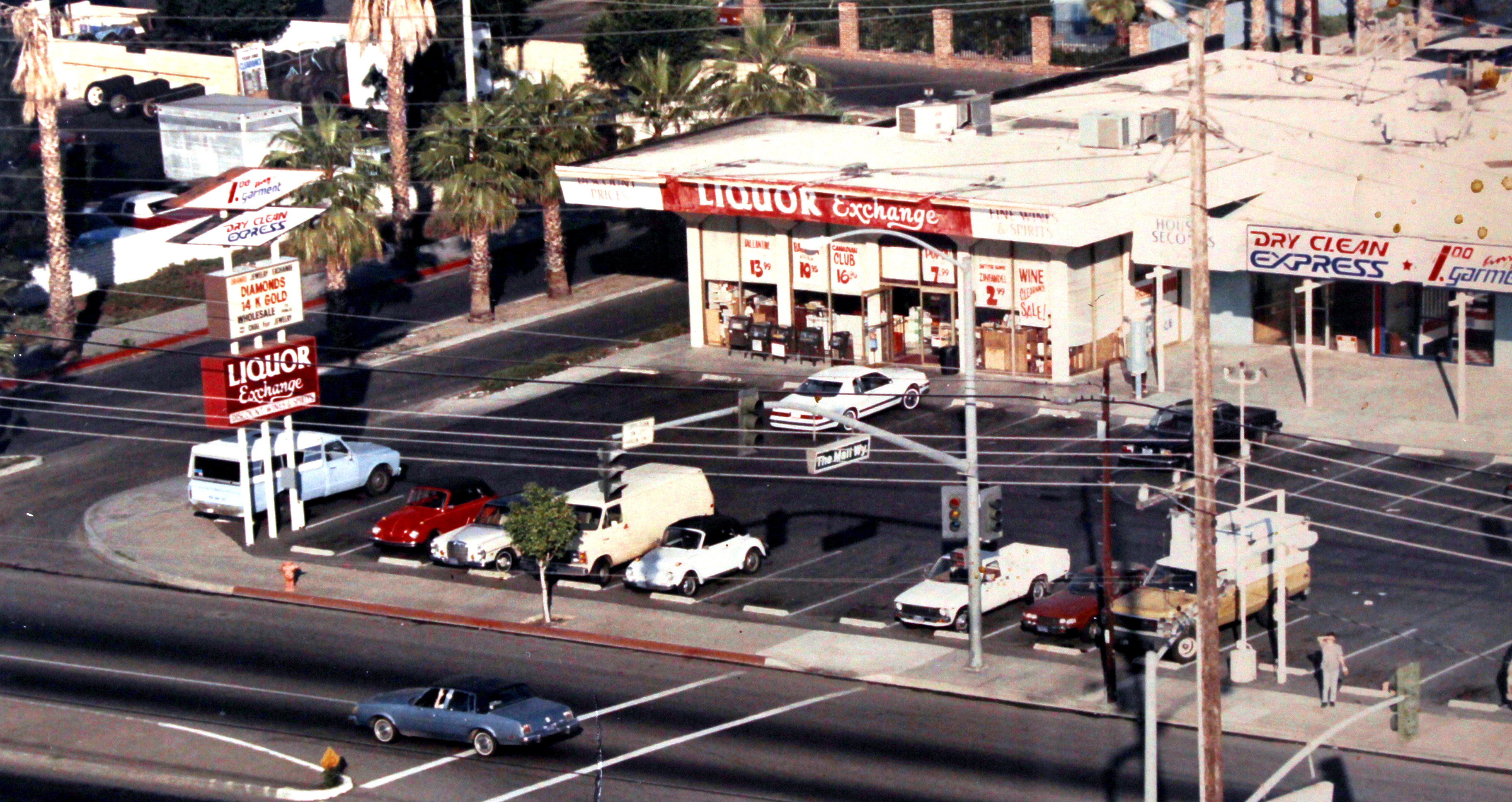
Since the first ‘Stock Report’ (such as it was) got sent to probably 100 people back in February of 1985 (we were actually called ‘Liquor Exchange’ back then), our approach has remained the same.   We see ourselves as part wine finders, part educators and part librarian.  The ‘wine finders’ part is obvious.  We are always looking to find new genres, new producers and new ideas to present to our customers.  We have been, and still are students of wine, secure in the knowledge that nobody knows everything about this ever changing subject.

Our job as educators is extremely important, and maybe a little bit self serving.  We feel it is essential to offer people the opportunity to learn and experience more in the world of wine, be that explaining new growing areas, helping you understand new techniques, essentially trying to get as many people as we can comfortable with this vast, very ‘subjective’ subject.

We understand our role as storytellers as well, as we seek to offer a wide range of different approaches to get to the point of why this or that wine tastes like it does.  Wine is varietals, regions, weather, soils, and a litany of other things we can recite.  But the wines don’t make themselves, so sometimes the ‘people’ story matters, too.  The librarian part is simple…to help you find what you are looking for within our large and ever changing collection of wines or using our network to find you something you are looking for we don’t have.  These are the things that, in our minds, are what a wine merchant is supposed to do.

In the beginning, the newsletter, via ‘snail mail’, was our only outreach.  Things started to change in the 90s with the internet and the continued rise of wine information in the computer age.  Essentially, the fax machine, the computer and and ultimately the Internet, sped up the dissemination of information and the sales cycles for wines in general.  While the ‘Stock Report’ was always something of a personal expression of the wines we had found and our ideas on them, the timeliness of a ‘monthly’ publication was compromised in the New Era.

“It will be the ‘old’ Stock Report, written by the same old dudes, presented in a different ways.”

Email marketing was something we embraced early (2002) and the fastest, most cost effective way to let you know what was happening.  But the Stock Report always served to fill in the smaller categories and specific- interest wines that weren’t best served by the direct email format.  As we have experienced, trying to make an all encompassing ‘monthly’ missive, on top of everything else we do, wasn’t necessarily doing the best service to those cool little things we find and love to talk about.  Yet we didn’t want to eliminate that geek driven message that has been such an integral part of our program since the start.

It’s all about communication, but the ways people can communicate is ever changing.  The email program is important, to be sure.  But there are only so many days in a year, and we can only highlight maybe 300-400 wines using that format.  We have ten times that amount on the floor, exciting things we had good reason to purchase, and each has a story to be told.  To that end we are making the Stock Report a more ongoing type of information source, with regular updates as often as daily.

New things come in almost every day and the ‘new’ Stock Report format can be updated on a continuous basis for you inspection and referencing.  There will be content referring to wines we have talked about before that we think should have gotten more attention.  Rants from the editorial team will also be regular features, as will the one or two line ‘Briefs’ giving ‘quick hit’ updates on a variety of wines and subjects.  But, most important, it will provide a platform for us to make notes on some of the other cool, fun juice we get in.

Some might be a little too eclectic, or too limited in quantity, or for some other such reason, not be best suited for the email format.  Yet they are worthy of attention.  Plus, like the site itself, you’ll be able to access it 24/7.

It will be the ‘old’ Stock Report, written by the same old dudes, presented in a different ways.  It aspires to be more dynamic and ongoing, as well as, ultimately, intended to provide more information in an easier-to-access format.  We hope you enjoy it.

-Steve