The Eye of the Chicken

Now for something completely different.  This is one of those cases where we have to explain what it is before we get into the specifics.  But it is unique things like this are what make the wine business interesting.  There are a lot of folks in this industry that think they can ‘reinvent the wheel’.  But once in a great while, it happens.  This is one of those times.

This wine comes from Jerez, Sherry country, from one of the elite houses in Valdespino.  But it is a completely new concept for anyone from the region and one of the more intriguing offerings from that part of the world that isn’t Sherry.  This sees no oak, spends no time under flor and is not fortified, which immediately separates it from most everything else that comes from here.  A brisk, appealing white in a fresh, unfettered style.

The folks at Valdespino decided they wanted to step out of their traditional realm to produce this dry white.  The winery  has been vinifying different parcels of the Macharnudo Vineyard to see which parcel would make the best unfortified still wine and they found it in the particular parcel named ‘Ojo de Gallo’, or ‘Eye of the Chicken’ literally translated.   This section is included in the top part of the vineyard, which is wholly owned by Valdespino.  The soil is pure chalk (albariza en Espanol) planted to 100% Palomino, the traditional grape of the region (along with the more dessert focused Pedor Ximenez).  The vinification is done with

The ‘sales sheet’ said ‘think Chablis from Cadiz’.  We’d actually lean a little more in the direction of super-Rueda with fine citrus, quince, and pear fruit, maybe a hint of roasted grain, sleek underlying chalky minerality, just the right pop of acidity, and a twinge of that sherry-like nuttiness without the corresponding oxidative note.  Bright, crisp, intriguing, there’s mid-palate volume and cut to the finish.  It’s cool and geeky, to be sure, but there’s plenty to appreciate on a hedonistic level as well with the Valdespino Palomino Fino Ojo de Gallo 2016.  As to what we would compare it to, there isn’t really anything quite like it though you probably figured that out from the back story.


BRIEFS BLANC

BRIEFS

  • It’s time, actually perhaps a little past the time to still get in on the 2014 White Burgundies. This is the best vintage w have tasted since 2010, and definitely more on point and well delineated than the 2015s that are now hitting the market.  We are still scouring the countryside for late arriving 2014s and suggest you take this opportunity to grab a few more things while you still can.  The new Chateau de Meursault Clos du Chateau 2014 is one of the best we have tasted from a series we have followed for years.  This beautifully situated little insiders’ gem just outside the village definitely plays at a high  2014, with a complex nose of mineral, honey, flowers and salt caramel.  In the mouth it delivers citrus, toast, grilled nuts, peach and pear with a deceptively rich midpalate and finishing lift.  We’re also getting final reloads on 2014s of value favorites Albert Bichot Bourgogne Chardonnay Secret de Famille 2014 ($19.98) and Olivier Leflaive Bourgogne Blanc Les Setilles 2014 ($19.98).  If you’re feeling flush there are a few bits left of the epic 2014s from Domaine Leflaive.
  • We probably don’t spend enough time talking about California Chardonnays. But honestly there is a lot of homogeneity stylistically and it seems to be one category where people are more brand conscious and less willing to listen.  So finding things we think are worth talking about and then choosing our ‘battles’ doesn’t allow for many opportunities.  We got quite excited about the Alma de Cattleya Chardonnay a while back from dynamic young winemaker Bibiana Gonzalez Rave, but hadn’t been significantly moved in a while since.  That being said, a couple of ‘old guard’ names got our attention recently.  The name Truchard has been on other people’s labels as well as their own, but often their own wines might have been a touch too restrained for their own good.   We appreciate the old school, sort of euro, less-fussed with style that we all grew up with, but there is a thin line between ‘sleek’ and ‘boring’.  The Truchard Chardonnay Carneros Napa Valley 2015 had just a bit more stuffing in the mid-palate than other versions we have tasted, and that little went a lot way to kick this wine to a new level.  Classic Carneros apple/citrus, deft oak, and ripe but fresh flavors with a little more carry, this works.  It’s hard to pinpoint exactly what was different about the Chappellet Chardonnay Napa Valley 2014, which is often overlooked in favor of their reds and even their Chenin Blanc.  This one got our attention right away, with what is aptly described in the wine Spectator review, “Pure, rich and graceful, centered on a core of green apple, pear, melon and spice… A classic old-school Napa Chardonnay.”
  •  If you had told us 20 years ago that the Cotes de Jura would be one of the hippest appellations around sporting several sought after whites that sold in the $50 range, we would have thought you were from an alternate universe. Yet that is the case, and some of the things coming out of there these days, like those from the Jean Francois Ganevat, have created quite a stir.  This estate is clearly looking like the ‘next big thing’ from this area.  Thanks to the serious folks behind it (Burgundy legend Marquis d’Angerville started here in 2012) suggests this wine will get media attention and clearly, from the juice, they are aiming high.  The Domaine du Pelican Savagnin Ouille Arbois 2014 is a riveting wine, this indigenous varietal showcasing  driving flavors and deceptive length.   Also, for those of you that think Jura is too oxidative, this one is ‘ouille’, which means ‘topped off’ so they keep the barrels full to control the ‘sherry’ notes.  The descriptors from a 2013 review hit home, “very subtle aromas of peach skin, oyster shell and white flowers. Crisp on the attack, showing a salty tension that animates the quince and herbal flavors on the palate.”  Serious juice, superb with food and well worth the freight.  Their Domaine du Pelican Chardonnay Arbois 2014 is a fine specimen of the more traditional ‘flor‘ style as well.  


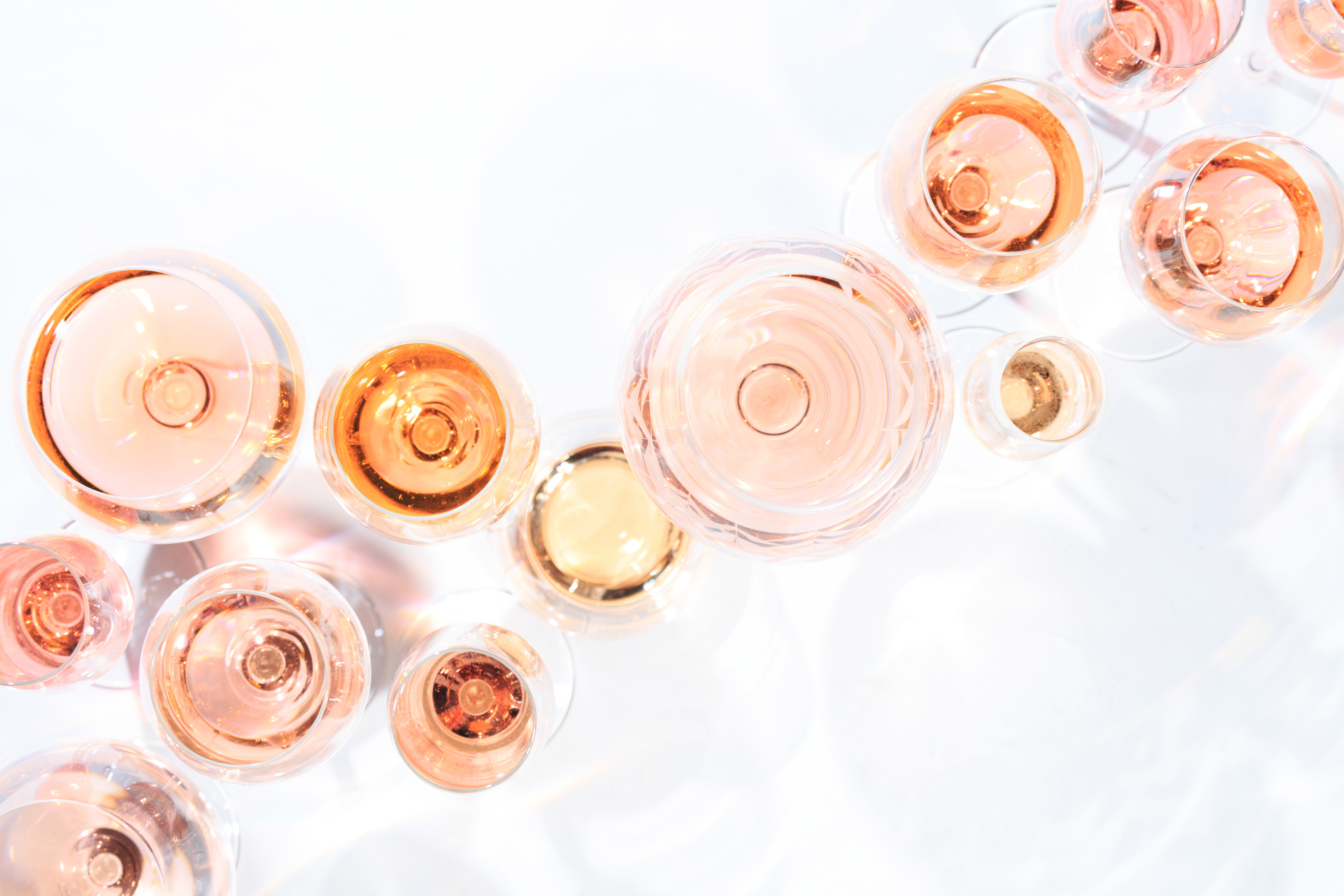
Rosé ROUNDUP


First off, our  apologies for not getting to this sooner, though it isn’t entirely our fault.  Given that Memorial Day has come and gone, we have to consider ourselves somewhat remiss in how little we have done promoting pink wine so far.  The season is upon us.  Now, in our defense, we have been a little preoccupied with a few other topics.

The 2016 Bodeaux prearrivals campaign demands a certain commitment of time.  It is the most important vintage to offered on pre-arrival since the 2010s, and possibly could provide the best opportunities for consumers since 2005.   But it is a slippery slope because, as good as the wines are, we have mixed emotions about how the campaign will play out given the remarkable sea of other choices there are out there today of all kinds of wine, and how many folks are willing to put up today’s money for something that isn’t coming for two years and really won’t be drinkable until a decade or so later.  In that sense it is a historic campaign in terms of what it will say about the whole futures market moving forward.

We also are spending a lot of time evaluating more deals in the marketplace than we ever remember seeing.  You’ve seen some of the stuff we have been tossing out there, and those are only the ones that pass muster.  There are nearly five times that many don’t even initiate a serious conversation, but we still have to look.  Finally, we are still wading through a ton of pink wines brought to us by the Johnny-come-latelys.  We  have already found plenty to get us through the summer in style, but you never know when the next gem will appear.

Finally, our choice of the word ‘roundup’ was made because of alliteration.  We couldn’t possibly cover all of the highlights of our current selection in one piece.  So we’re going to give you a few that come to mind so that you can start to get your pinks in order for the summer.  We’ll start with something that kind of surprised us.  Domestic rosés all to often lack the acidity and texture to be refreshing.  It’s nobody’s fault.  It’s just warmer here, generating higher alcohols and lower acidity, and too many folks are getting into the act just to cash in on the fad.  While we are getting a lot better at it here at home, far too many vintners here don’t have the experience in this arena and most of the local pinks are at a disadvantage outside their own tasting room.

The Andrew Murray Esperance Rose 2016 was a pleasant exception to that generalization.  It is nearly 100% Cinsault that is estate grown for making rosé (as opposed to a saignee of red wine).  Light, fresh, clean, there’s dried strawberry and red melon with an impression of minerality, a pleasing tactile crispness, and the flavors are dry.  In the winery’s own words, “this is definitely not a kool-aid Rosé of yesteryear from California”.  It got the attention of some serious Francophiles when it comes to pinks (us).  Pleasing juice, and the price makes perfect sense (far too many domestic pinks, besides being a little flabby, are kind of expensive).  A well conceived effort.

The Chateau de Trinquevedel Rose Tavel 2016 has been a staple here for some time.  Tavel has a certain cache when it comes to pink wine, which makes some of them a little expensive for what they are.  This small family farm makes classic Tavel with fresh acidity but also the defining mid-palate weight and somewhat deeper color.  The blend here is 45% Grenache, 24% Cinsault, 15% Clairette, 10% Mourvèdre, and 6% Syrah.  The flavors roll to red berry and red melon, with delicate underpinnings of spice and garrigue, and a little rounder midpalate than pinks from further south.  Far too easy to drink and very food friendly.

One of the consistent pink wine bargains over the last few years is the Le Cengle Cotes de Provence Rose Vieilles Vignes 2016, pale in color, delicate and crisp on the palate but with more going on than the visuals and price ($12.98) would lead you to expect.  The blend is 25% Cinsault, 35% Syrah, 35% Grenache and 5% Mourvedre, but there are refreshing citrus and white peach tones that give it a little bit of  white wine impression.  Certainly a candidate for go-to pink given the price and performance.

Domaine Tempier has made Bandol rosé a ‘thing’ almost by themselves.  There are some wonderful examples that cost nearly half as much because the market hasn’t caught on to yet. The Gros Nore Bandol Rose 2016 is a sensational follow-up to their outstanding 2015.  Former boxer Alain Pascal fashions this blend of 50% Mourvèdre, 25% Cinsault and 25% Grenache from grapes grown in clay soils.  Red fruit, minerals, a hint of honey at the crest, some ‘orangy’ citrus streaks, and just a touch of that cool Mourvedre earthiness, this is pretty serious as pinks go if you want to dive into it, but can play the casual, delicious quaff if called upon to do so.

Finally, here’s your absolute bargain, the Mourgues du Gres Fleur d’Eglantine Costieres de Nimes Rose 2016.  We have worked with this estate for years and they are usually in the mix with both pinks and reds.  To be honest, they don’t ‘hit’ everything every year.  But they have had a number of efforts that have ‘nailed it’ and, when they do, it provides a remarkable value performances.  The 2016 Rose is one of those ‘hit’ times.  The main thrust is Mourvedre with small parts of Carignan, Grenache, and Syrah.  The wine starts with red berries, slides into an orange and garrigue note and finishes with a little salinity.  At $9.98, it’s party time.



NO ORDINARY CHIANTIS

Chianti has come a long way since the days where all anyone saw were the straw fiasco bottles in the local checkered tablecloth Italian joint.  The rules have changed, and a number of the wineries have stepped up their game with regard to the quality of the entry-level and reserva wines.  A lot of folks are still trying to come to grips with the whole Gran Selezione designation which started with the 2010 vintage.  With all due respect to our inspired friends at Castello di Ama, the world is still a little shell-shocked with the proliferation of $50, $60, $70 Chianti, ourselves included.

Our job is to explain all of these trends to you.  But we also know for most folks, Chianti is a go-to, something to accompany some good food while not breaking the bank.  We hear you.  Maybe it was just a good day, but we found two outstanding examples back-to-back on morning not long ago.  They do have a couple of things in common.  Both were from the Classico zone, and both were produced by folks who were much more famous for their Super Tuscans, Podere Poggio Scalette (il Carbonione) and Castellare (I Sodi di San Niccolo).

Obviously one could invoke our mantra of ‘little wines from big-time sources’, but we haven’t found a Scalette or Castellare ‘regular’ Chianti this memorable before.  These are by no means ‘regular’!  We’ll start with the Podere Poggio Scalette Chianti Classico 2012.  Their Il Carbonione gets a bit of attention but Antonio Galloni, in his notes on this Chianti, was most enthuisiastic.  His words, “Poggio Scalette’s 2012 Chianti Classico is gorgeous. Dark red and black stone fruits, spices, leather and menthol meld together in a supple yet powerful wine endowed with terrific depth and complexity at its level. All the elements are in the right place.”

Like their flagship wine, this is 100% Sangiovese, and a bit darker and deeper than the norm as seems to be the case with this property.  But Galloni’s score was a mere 89+, suggesting with the ‘+’ that there was upside potential, but not high enough to turn heads.  Chiantis typically don’t get re-reviewed like, say, Bordeaux, so this wine will stand with that score for all of eternity most likely.  We are here to say that all of those ‘elements that were in the right place’ have come together beautifully since that tasting note was written in September, 2014!  Polished, classy juice from a top house, a fine option for the fare ($23.98).

We met the winemaker from Castellare years ago and he struck us as not only talented by, given the points he was discussing that day, extraordinarily meticulous.  His track record has born out our impressions over the course of several I Sodis and the currently in stock , smashing Castellare Di Castellina Chianti Classico Riserva Il Poggiale 2012.

You don’t see a lot of stuff this good from a producer like Castellare for under $20.  But the 2015 served up spectacular fruit that give Castellare Di Castellina Chianti Classico 2015  ($19.98) the stuffing and authority of a lot of reserve level wines.  All that aside, you can enjoy this one simply on the basis of its layered, intense fruit component, purity of flavor, and outgoing personality.  Even as good as 2015 is shaping up to be, we don’t imagine we’ll find many that perform like this.  A spectacularly fruit driven go-to that should deliver for years but is already quite showy.

SWAN PINOT: HOME RUN FOR THE ‘OLD GUARD’

JOSEPH SWAN VINEYARDS PINOT NOIR TRENTON ESTATE VINEYARD 2013

 Historically, this is one of those labels where we never really ‘got it’.  The reputation of Joseph Swan has been exalted for pretty much our entire time in the wine business.  But perhaps because history doesn’t really matter to us when it comes to purchasing, only what’s in the glass, we have not been big fans.  A lot of the wines were a bit too, um, ‘exotic’.  Maybe we had the misfortune to have them all on ‘root days’ (arguably before anyone knew what that was).  But we never understood why the ‘old timers’ spoke of the label in such glowing terms, and presumably never tasted the wines that generated such a buzz back in the day.

It is with that history, and with full knowledge of the fact that a number of people will simply tune out as we are pitching a $70 Pinot with a 91 point score, we say that the Joseph Swan Vineyards Pinot Noir Trenton Estate Vineyard 2013 is bloody amazing.   We kept tasting this and looking at each other with the expression, ‘is this really that good?’.  The answer is, “heck yeah!”  It is one of the best Pinots we have tasted from anywhere this year, and we have been tasting 2015 Burgundies among other things.

Apparently the 40th vintage of this wine, it shows deft winemaking in its unfettered purity, haunting, subtle spice and anise tones to the deep dark red and blue fruits, refined tannins and just the right touch of acidity to make the wine pop on the palate.  If you are looking for some sweet, gooey ‘jamball’, this is not that.  It is instead a very focused, refined and harmonious expression of Russian River Pinot that can play alongside anything.

It isn’t ‘big’ as that is defined these days.  But it is deep and expressive, simply a gorgeous effort that made us reconsider our position on this producer.  We must, in all fairness, give some of the credit to 2013, one of the most impressive vintages we have ever had from California.  It was also one that was particularly kind to Pinot, giving the wines an unusual depth and power while maintaining balance.

Lisa Perotti-Brown’s description, while accurate and complimentary enough, sounds a little clinical, “The 2013 Pinot Noir Trenton Estate Vineyard presents a pale to medium ruby color and tar and asphalt-led nose, opening out to a core of raspberry preserves, red currant jelly and licorice, plus a waft of underbrush. Full-bodied, rich and powerful in the mouth, it gives mouth-filling berry preserves and anise flavors with a chewy backbone and a long, fruity finish.”

The score and the rhetoric, while pretty good for her, simply doesn’t convey our level of enthusiasm.  Maybe she had it on a ‘root day’.  In any case, this is a serious, layered bottle of Pinot that deserves equally serious attention.  There are lots of other wines that would be easier sells, but this one is very special, and maybe something of a game-changer for us….$69.99

PLOYEZ JACQUEMART-A DIFFERENT KIND OF PINK

Yeah, we are kind of weird about Champagne. We love the stuff and think it has purpose every day of the year, not just the holidays and Valentines Day. It’s great for celebrations, but also makes a fine aperitif and excellent foil for certain dishes as well. So we’re likely to spring a Champagne piece on you any time.

We were quite taken with the Ployez Jacquemart Extra Brut Rose for its sleek bead and ample, distinctive palate. We have talked about this family-run house before but this stylish pink is something new to us. This wine is only produced in years where the red grapes excel and the base cuvee here is primarily from 2013, made with first pressed Premir and Grand Cru fruit. The red juice for this primarily red cuvée sees some time in oak which gives it a bit more depth and muscle.

The toasty edge plays nicely off the surprisingly full midpalate, and the bead is fine and precise. You’d never guess from tasting it that the dosage in this bubbly is a low 3-4 grams per liter (standard bruts run 10-15 gpl, hence the ‘extra-brut‘ handle).  The lower dosage has a lot to do with the clarity of the fruit in this sparkler, but to do it this well in this style is not easy. We could say this is a food focused cuvée, but we think a lot of you will appreciate it on its own for its masculine style.

A ‘NOSTALGIC’ CABERNET DEAL

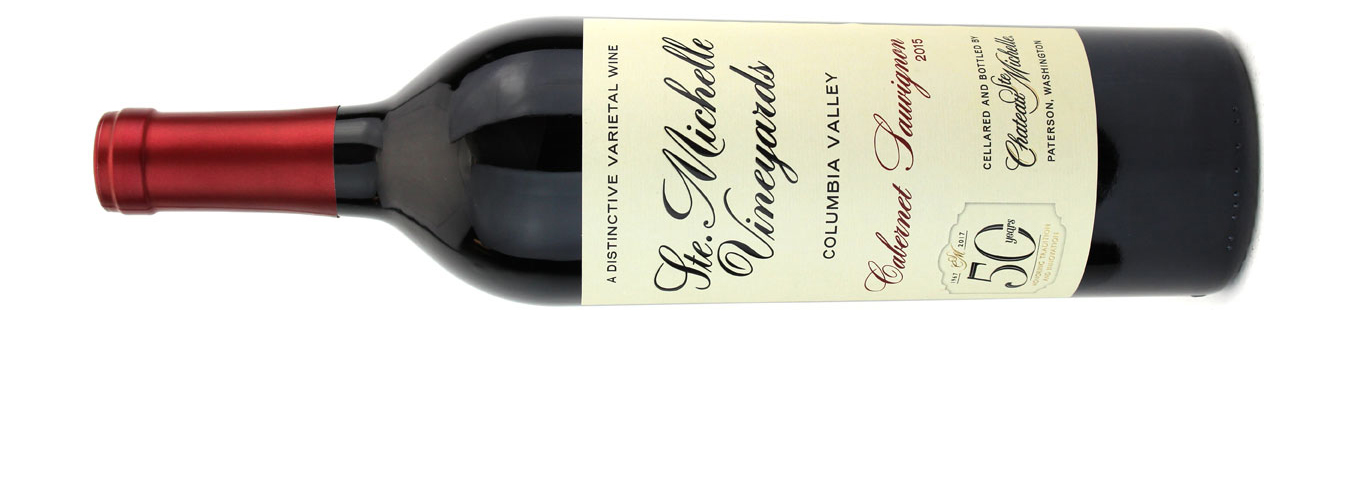
Who knew back in 1967 that we would get here?  Steve was still in high school and Chateau Ste Michelle, then called Ste. Michelle Vineyards, would start a long and impressive run as well as essentially be the genesis of the wine industry in Washington State.  We’re sure there are historians that would dispute that latter point with an example of some winery that may have preceded the folks at Ste. Michelle.  But in point of fact this is the winery that eventually got people’s (and critic’s) attention at a time when the Hugh Johnson Wine Atlas did not even have a Washington section.  The rest, as they say, is history.

We don’t necessarily go in for nostalgia plays.  Usually it is an excuse for a winery to make some special ‘commemorative’ bottling and charge a big price tag.  But this one caught our fancy because the folks at Ste. Michelle took the unusual step of ‘doing a solid’ for their customers and creating a wine at a ‘throwback’ price while adorning it with a take on their original label from back in the day.  It’s a ‘feel good’ story which, of course, is the point.  But back when they started, no one would have any way of knowing that the 2015, which is being released in their 50th year of existence (though from their 48th vintage) would happen to come in a near perfect vintage in the great Northwest (one of the warmest ever).

The winery chose Cabernet to celebrate their milestone, and sourced the grapes from Columbia Valley vineyards in eastern Washington including Cold Creek, Canoe Ridge Estate and Indian Wells.   The blend is 87% Cabernet Sauvignon, 6% Merlot, 4% Syrah, 1% Malbec, 1% Cabernet Franc, and 1% Petit Verdot and saw fourteen months in a combination of French and American oak, 32% of which was new.  The juicy Ste. Michelle Cabernet Sauvignon Columbia Valley 50th Anniversary Commemorative Bottling 2015 shows plenty of ripe dark fruits, a touch of vanilla, surprising amplitude and polished tannins for something this age.  Think of this as a step back in time, to when you could get a pretty compelling bottle of wine for ten bucks, only it’s 2017 and you can’t get much of anything for this kind of price.

Therein lays the attraction.  Cool label, sure.  Great feeling and commemoration of a surprising history that few would have predicted back then.  But in the end, our interest in the ‘50th’ is because it’s a really good, honest bottle of Cabernet for an unbelievable price in today’s market.  Think of this as at least on par with, and arguably better than the best offerings we’ve sold from their Columbia Crest brand over the years, many of which received 90-92+ scores.

Thus far we haven’t seen any reviews on this one, but the price/quality relationship is more than enough reason to get excited about it.   As you know, we are not ones to spend a lot of effort promoting large wineries, though we are certainly not afraid of doing so when the wine merits.  It certainly does here. Kudos to Ste. Michelle for their doing something tasty at a price where everyone can celebrate a little, as well as one of the better value Cabernets around.

Massican’s ‘Real’ Italian

California’s Cal-Ital movement has been quite a mixed bag.  We get that folks like Italian wine (we do to) and ‘hands on’ vintners couldn’t wait to try and emulate those wines here in California.  After all, they reasoned, the same sun shines over Italy that does over California, right?  Yeah, but that’s about where the comparison ends.  The term ‘terroir’ describes those things that make one place different than another and, frankly, a lot of Italian varietals planted here simply don’t perform well.  For sure they don’t come out anything like the ‘original’ versions.  There have been successes, sure.  But for the most part they are curiosities rather than something that threatens to find a consistent place on people’s tables.

One of the more intriguing new players in this arena has been Massican, named for a mountain range in Campania where some mythological occurrence involving Bacchus supposedly took place.  The winery has developed quite a cult following centering on wines made with such grapes as Ribolla Gialla, Greco, Friulano, and, of course, Pinot Grigio.  No small task to do this kind of thing in California, so props for that.  The wines are unique in this landscape, which will certainly get them an audience among the geek set, and they were well crafted.  But Italian purists will make the point that you can’t take certain grapes out of their native environments where they excel and expect to achieve the same level of performance somewhere else.

While some will praise the Napa versions of these distinct Italian blends as uniquely intriguing, the counterpoint is that grapes can’t ripen the same way California that tey do in Italy.  The acidities are never quite the same, and, while the wines might be richer here, they won’t have the same ‘hum’ as Italian versions.  While we will surely find fans for the small amounts of this winery’s home grown Italian blends that we get, some among us felt for this kind of fare, there had to be better, more compelling examples actually from Italy.

While winemaker/owner Dan Petroski, who also makes Larkmead wines (certainly a completely different discipline), has definitely become what one article called “icon of hipster wine”, classicists might argue that the Cal-Italian blends don’t have quite the lift and pop of the ‘real thing’.  For whatever reason, Petrowski decided to give it a spin with Italian grapes, as in from Italy.

The result is Massican Bianco Friuli Colli Orientali Gaspare 2015. Now that’s Italian.  While the winery was named for mountains in the south, these grapes came from the white wine bastion in the northeast, Colli Orientalli.  The mix here, surprisingly, is more Chardonnay heavy than the California examples (40% in the Gaspare as opposed to 9% in the Annia Napa white), but different environments might well dictate different blends.  In any case the Chardonnay, along with 35% Ribolla Gialla and 25% Friulano, pops in a way that only a proper Italian white can.

Made at Ronco Del Gnemiz, there’s some floral and faintly honeyed notes accenting bright, yellow stone fruits with an underpinning of minerality, but the freshness and lift that comes from these hills make a noticeable difference.  Sure, Italian varietals from Napa is probably more ‘cool’.  But this is a more compelling wine with an extra dimension over the very good Cali versions we have had.  This not only succeeds for itself, but opens the door for people to explore other great Italian white blends like Terlano’s ‘Terlaner’ and Vie di Romans.  Well done.

NEAR PERFECT (98 Points) DESSERT FROM HUET

“…2015 is an exceptional and historic vintage again at Huet (perhaps the best since 1997). I can only recommend to buy cases of all styles.” – Stephen Reinhardt, Wine Advocate #227, October 2016

It doesn’t take a lot to get us to talk about one of our favorite estates in the Loire, Domaine Huet.  What with the historic aspects, including Gaston’s story as a prisoner of war in Germany, the long success of the estate upon his return, the takeover by the Hwang family, and the eventual retirement fixture Noel Pinguet (he had been there since 1971) and the eventual taking of the reins by his former assistant Jean-Bernard Berthomé, there was never a lack of material to write about.

Of course, without the wine, there is no story.  Of course, we’ll be the first to admit that the timing of the winemaking transition over the course of a couple of difficult vintages did give us cause for concern.  Was Huet, one of our favorite estates, going to become ‘just another Loire producer?’  The thought was depressing.  But Berthomé hit back-to-back home runs in 2014 and 2015 and restored our faith.

As we said in an earlier piece on the 2015s, the 2015 Huet lineup serves as an exclamation point on what will be viewed as an important harvest for the Loire.   The recent Wine Spectator article on the Loire Valley in 2015 was glowing and the ‘Top Picks’ section looked like an advertisement for Huet with the top eight wines listed, and nine of the first 11, bearing the Huet label.  At the top of the list were Huet’s dessert (moelleux) offerings, destined to become modern day legends.  We wouldn’t be at all surprised to see one pop up in the Top 100, though quantities would barely justify that (not that such things concern the press).

A great Loire sweet is in a league by itself.  The complexity of late harvest Chenin Blanc and the pristine, precise acidity will enable these wines to age decades.  Great examples like this are rare because the conditions that must exist for this ripening process to occur in the place only happen once or twice a decade.  We fondly remember the historic 1996 and 1997 vintages and recently managed to scrape up a few bottles of Huet direct from their cellars from the great 1989 vintage (we still may have a few bottles).

What we’re getting at is that, for wines like this, and Huet in particular, this is a special moment.  These are best of breed, and, while they aren’t cheap, they are bargains compared to the elite Sauternes and Beerenauslese from Germany with whom they easily can stand.  The ‘Trie’ wines in particular are super labor-intensive, the result of multiple passes (or tries) through the vineyard.

This wine, however, is a little different, as the workers go through the vineyards and pick the heavily botrytized and/or raisined grapes first, berry by berry. This is why the 1ere Trie is called 1ere Trie – it is the “first pick.”

Let us reiterate…THIS WINE IS SPECIAL.

The wines from Huet’s Le Mont vineyard, from rockier soils, have a more pronounced streak of minerality and a firmer backbone that provides the structure for aging. The Wine Advocate’s Stephan Reinhardt had the Huet Vouvray Le Mont Moelleux Première Trie 2015 pegged as his favorite, noting, “This is super clear, ripe and aromatic on the nose, highly elegant and with lovely flinty flavors. Intense and concentrated, with great finesse and vitality, this is a highly elegant and perfectly balanced wine with a persistent grip and salinity. Great balance and harmony. 98 points.”

It is the Wine Advocate’s highest-scoring Loire Valley white wine for the outstanding 2015 vintage. It literally gets no better. And at $64.98 for a full bottle, it’s certainly one of the great values in world-class dessert wine that, incidentally, could potentially find itself cozying up to some spicier Asian preparations after a decade in the cellar.

Get this world-class gem while you can, historically wines like this come long once a decade.

LITTLE ITALY, PART ONE: DOLCETTO

Dolcetto days are here again.  It has been tough couple of years for Piedmont.  While Nebbiolo is king, the everyday wines like Dolcetto and Barbera are the mainstays of the vintners as well as fantastic food choices for us Americani.  The problem for both was back to back ‘stinker’ vintages.  Yes, thanks to some late sunshine, the 2013 Nebbiolos have been juicy, complex and dazzling.  Everybody is looking forward to the Barolos and Barbarescos.  But the Dolcetto and Barbera, often planted in the lesser sections of some of the top vineyards, got hit with untimely rain and couldn’t hang on until the sun shined.  As to 2014, it was all kinds of difficult across the board.

For those reasons, there simply hasn’t been very many choices for the category …that is until the 2015s started showing up.  It’s a brand new day, with ripe, plump and engaging examples of both started to show up on supplier lists.  The success of 2015 hit Piedmont as well, and the Dolcettos are no exception.  We dare say that the turnabout seems even greater here than most other European regions.  Whereas in Burgundy, Bordeaux and the Rhone were also pretty good in 2014, in this part of the world it was not.  So the difference between the 2014s and 2015s borders on staggering, the salient point being we have some seriously good Dolcetto at hand now.

The Piemontese love Dolcetto for its outgoing fruit, food versatility, and attractive pricing (the Piemontese are notoriously frugal).  You can even put a slight chill on it for service on warmer days, and it will play with virtually anything from a hearty Italian stew to a plate of salume.   It’s one of Italy’s best ‘little’ reds,  and we’re  pleased to have not only good stuff to sell, but really engaging juice to drink thanks to 2015.  To that end we have three fine, fresh examples from some of our favorite sources.

The story of Olek Bondonio is a little unusual.  Olek, who has eastern European roots as well as Italian, visited the estate he currently operates in summer as a child.  He then made his name as a competitive snowboarder before becoming a winemaker.  His family has been involved here for some 200 years but Olek only started making wine here in 2005.  His Barbaresco comes from the Roncagliette, perhaps better known by the name used by his neighbor, Sori Tildin.  He is very ‘hands on’ when it comes to working the vineyard but he is all about letting the vineyard shine through.

The Olek Bondonio Dolcetto d’Alba 2015 reflects that attention to detail with a great purity to the fruit and inviting scents of blue fruits, violet, and a little almond skin.  Sleek and polished, the expressive fruit of the vintage is perfectly punctuated by fresh acidity and the kind of lift that makes this an easy quaff.   It’s what Dolcetto is all about, with the extra added attraction of coming from storied dirt.  The vines are 30-50 years old, all is done with native yeasts and gravity flow, and it’s bottled unfiltered.

Andrea Bosco is the passionate young owner of Bosco Agosatino, named for his father and founded by his grandfather in 1904.  Again here all of the juice is state grown, all within the confines of La Morra, and the surface area of the estate is around 10 acres.  The hillside faces south west and it composed of clay and limestone, and 70% of the Dolcetto vines are over a half-century in age.   The fermentation is controlled and done entirely in stainless steel to both preserve the gregarious fruit and prevent the extraction of unwanted tannins.  As you may have expected, Andrea’s single-vineyard Agostino Bosco Dolcetto d’Alba Vantrin 2015 is something of a fruit bomb with effusive blackberry and mulberry character, a streak of minerality and earth, and just enough cleansing freshness to keep things on point.

Finally, it’s hard to talk about things like Dolcetto and Barbera without mentioning perennial all-star Luca Currado who seems to do everything well all the time.  Granted the young vignerons above have established themselves as players but no one is more passionate than the folks at Vietti.  While Luca’s Vietti Dolcetto d’Alba Tre Vigne 2015 isn’t necessarily as ‘aristocratic’ as Olek’s (serious dirt for Dolcetto) or as ‘big’ as Andrea’s, it is plump, engaging and very likely to disappear while whatever the discussion is continues.  Friendly and harmonious.

It’s great to have Dolcetto back on the shelves, and this time around we have some great Dolcetto thanks to our network of proven producers and the gloriously decadent 2015 vintage.