‘FRESH & EASY’ PORTUGUESE WHITES

We have followed Portuguese whites for some time.  Frankly for much of that period, they were little more than utilitarian.  They weren’t necessarily intended for great heights, so comparing them to ‘grand vin’ is kind of pointless.  They were, for the most part, simply ‘white and wet’.

Over the last half-dozen years or so, however, we have started to see some new faces that take their business more seriously.  They keep the wines clean and fresh.  They don’t over crop.  And the wines have fruit along with their brisk acidity.  Lately we find ourselves reaching for these a lot more often, and the newest versions of two of our favorites have hit the floor just in time.

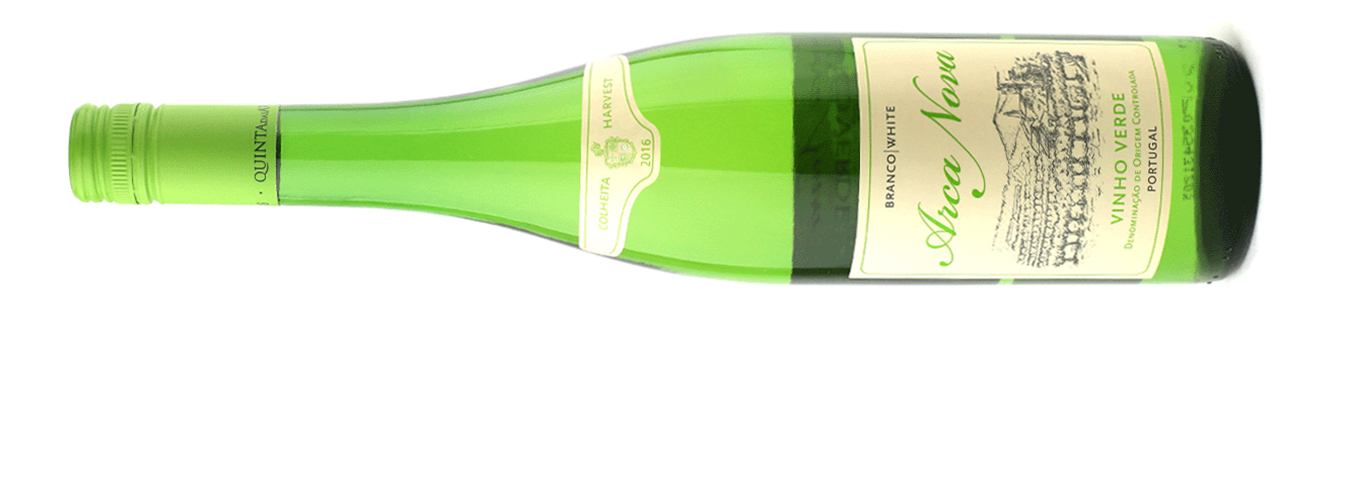
The ‘official’ drink me by-the-sea wine of Portugal is called Vinho Verde, which translates into ‘green wine’.  These are intended to be consumed young and bright, but for the most part are not necessarily compelling.  A couple of years ago we discovered this producer, and have looked for this bottling every year since.  The Arca Nova Vinho Verde 2016  is a compelling go-to again, all of that crisp quaffability but also corresponding fruit and flavor interest that you don’t find in too many Vinho Verdes.

Dubbed one of the official Winex ‘house whites’, there’s texture to the lime/apple fruit and a feeling of substance to go along with the expected zing and delicate mineral notes.   Fermentation occurs at low temperatures in stainless steel vats, preserving the wine’s jump-out-of-the-glass verve and keeping a little CO2 in the mix to give it a little hint of spritz taking the whole experience up a couple of notches!  It’s a steal at this price so ‘don’t fear the deal’ and it zips nicely with the lighter fare of summer.  You may not know the grapes (Loureiro 50%, Arinto 40%, and Treixadura 10%), but this one performs in the glass where it matters.

Another of our old favorites, and arguably a wine whose earlier versions sent us the message that there was something going on in Portugal, is the Soalheiro Alvarinho Vinho Verde 2016The grape here is a bit more familiar (Alvarinho is what the Portuguese call Albariño), and Soalheiro can compete with Spain’s best versions. Yellow melon, lime, kiwi, a wisp of salinity, this is another superb performer with a bit more power and substance and, of course, plenty of sizzle.

A Wine Advocate 92 for Soalheiro (not bad for a ‘little’ Portuguese white), the descriptive notes ring true, “This shows all the hallmarks of Soalheiro, fresh, clean and lively. It is a pointed wine that seems a bit on the lean side, but it is very tightly wound, utterly gripping on the juicy finish and perfectly focused…Don’t drink it too cold—if you do, the power just takes over. If you like them crisp and dry, with that laser-like burst of acidity, this is an easy choice at a nice price.”

The Iberian Peninsula is rocking this summer with whites…
SANCERRE’S ‘NEXT BIG THING’

Actually, the title may not be entirely ‘on point’.  In all fairness, Claude Riffault is already a big deal to fans of Sancerre.  The estate has been a consistent player producing captivating, true to type examples of the genre and getting big reviews.  What he hasn’t quite done yet is get to the upper tier price levels that it currently takes to buy labels like Vatan, Alphonse Mellot, and Paul Cotat.  However, there is little doubt that he can get there.  It wasn’t that long ago that Mellot’s wines sold for these kinds of prices (mid-$20 as opposed to around twice that now).   For now, these are still some of the best deals on elite quality Sancerre.

Riffault’s style focuses on purity, intense flavors, balance, and vineyard expression.  His last 2013s and 2015s pulled down tremendous reviews from Wine Advocate (among others) and, having tasted those two vintages ourselves, we can say without hesitation that the 2016s are right at that upper performance level.  Young Stephane Riffault has kicked up the quality here since taking the helm and has focused on more organic farming, an important point with regard to a genre like Sancerre where the wines rely on transparency.

The family owns 33 different (and quite small) plots on steep hillsides in four
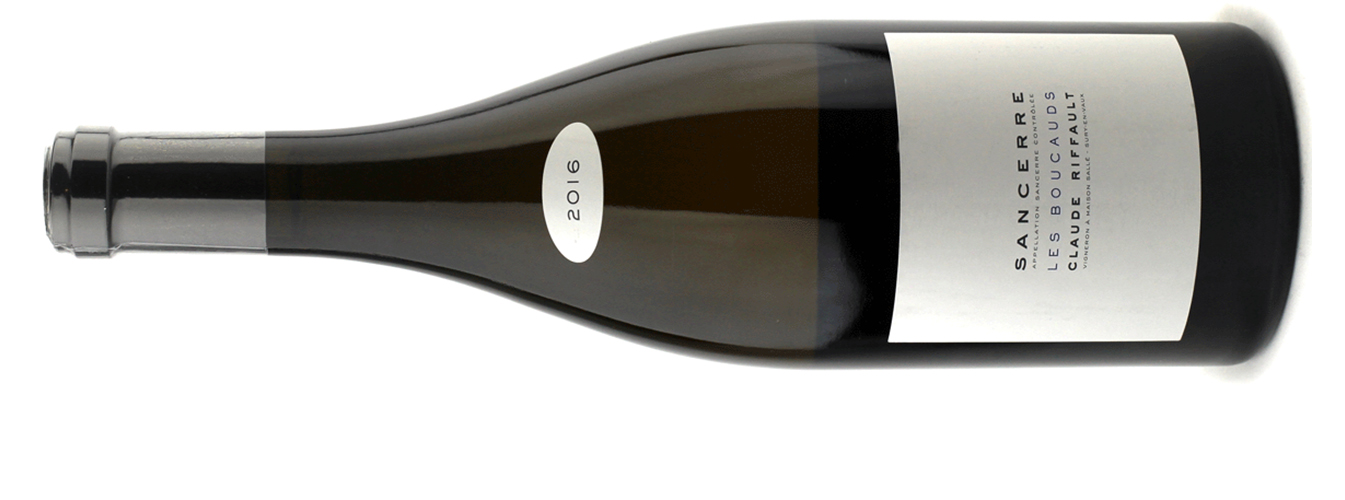
different villages. Some are limestone while others are classic flint.  Everything is hand harvested and vinified by plot.  The results speak for themselves.  The Claude Riffault Sancerre Les Boucauds 2016 comes from steep slopes of Terres Blanches soils – marls and clays over Kimmeridgian limestone. Half Steel-aged, half neutral barrels, this one is broad in the mouth with a rounded profile of ripe grapefruit, yellow stone fruits, bright flavors and a tantalizing zing of acidity to the long finish.  The Boucauds has size and power on the attack but everything is perfectly proportioned. The last one (2015) was an Advocate 92, and this one is every bit of that.

The Claude Riffault Sancerre Les Chasseignes 2016 is a subtly-but-distinctively different take on the subject.  From shallow limestone soil and subsoil containing overlapping stones, also done in half steel and half neutral oak, this one is very Sancerre but more layered and nuanced with the flavors leaning more mineral.  A little less ‘pop’, a little more complexity, sort of the white wine version of the ‘iron fist in the velvet glove’.  Last year’s effort was a glowing 93 from Advocate and this little gem is a bit better in our minds.

To us this estate is importer John David Headrick’s ‘greatest hit and this young man is putting out some serious juice.  It’s only a matter of time before these command more serious d’argent (money).  If you love Sancerre (we do!), these are a must.

Something ‘old’ is something ‘new’ from CVNE

In today’s world, the search is to find something new and exciting.  This would absolutely qualify on the thrilling part…but it isn’t new.  As a matter of fact, it’s old.  We’ll explain.  A lot of you already know about the Cune Monople Blanco, something of a staple around here for the last few years and a crazy value white that has even graced the Wine Spectator Top 100.  They have been making this wine this way for more than four decades.  But this isn’t what we are talking about, though the 2016 is once again delicious in its own style.

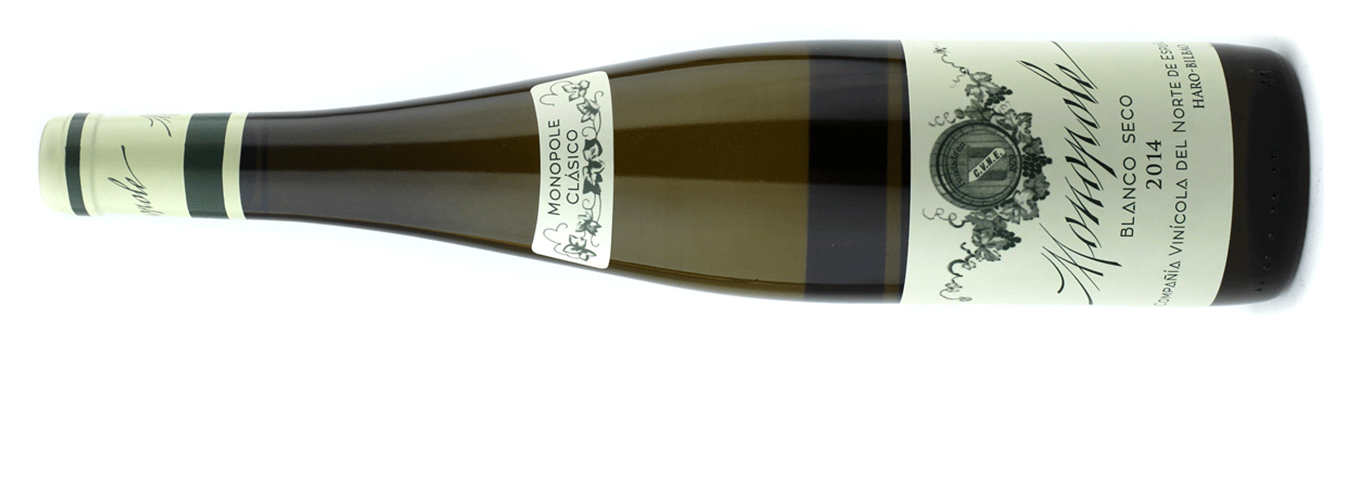
What really got us excited was this new/old release called Cune Monopole Rioja Blanco Clásico 2014, the word ‘clásico’ being of particular importance. This is the reintroduction of a unique, ‘old school’ white produced prior to the 1980s.  Cune’s explanation of the story is pretty clear.

“From the early 20th century to the 70s, Monopole was a staple of homes and restaurants across Spain. It was one of CVNE’s main wines. Sadly, fashion turned against it, sales fell, and production in this style ceased in the 80s.  Fresh, fine, bone dry, this wine had the peculiarity and originality of having some barrel ageing with a percentage of Sherry wine, with written permission from the Rioja appellation. The Sherry added structure to the Rioja white, while they both integrated harmoniously in barrel and later in bottle.

A bottle of this old Monopole was searched for in the Haro winery’s cemetery. A solitary 1979 bottle appeared. The wine was savory, very fresh, balanced, delicious. On the spot, the decision was made: we would make this wine again, as it had been made historically.  We called Ezequiel Garcia, CVNE winemaker from the 40s until the 70s, to invite him back to help us produce that wine again. Ezequiel, aka ‘the wizard’ and now in his eighties, had no doubts and said ‘Yes’ straight away.

Monopole is the story of a remake, 40 years on; this time, with the original director as guest star. And this time, handmade and in small quantities, to best ignore the whims of fashion.  The wines’ aging contributes to its peculiar organoleptic characteristics, adding aromas of chamomile, dried fruits, and a long and persistent aftertaste. The marked acidity increases Monopole Clásico’s freshness.”

We loved this wine’s panache, with a nose of pear, grain, a whiff of salinity and the subtle, penetrating nuttiness of a fine, dry Sherry.  Plenty of personality up front, a nice cut of acidity in the back, and lots of complexity to contemplate in between, it kind of reminded us of a Lopez de Heredia Tondonia with the wine’s natural vigor playing off the nuttiness in an aged white.  The Monopole Clasico’s unique ‘recipe’ really delivers.

 Wine’s Advocate’s Luis Gutierrez seemed as dazzled by this new ‘old’ gem, and reviewed it before it was even bottled…not the usual practice with Spanish whites.

“I was thinking “I wish this wine went back to the more serious bottlings of 40 and 50 years ago…” when tasting the regular Monopole, and they showed me this 2014 Monopole Clásico, which is a wine to celebrate the centenary of the brand (registered in 1914) and it blew me away. They have produced this wine like it was done in the good old times, adding some Manzanilla Sherry (yes, yes, you read it correctly); they top up the Viura with Manzanilla purchased from the Hidalgo family of Sanlúcar de Barrameda.

Not only did they add the wine (Sherry), they purchased the wine in bota, so the wine is also aged in Sherry casks. It does have an amazing nose with notes of sea breeze, iodine and esparto grass. The palate is extremely tasty, but at the same time is light and fresh, with the acidity of Viura and the kick and pungency from Manzanilla. Awesome!… This will be bottled in a couple of months, but I couldn’t help reporting on it… Welcome back, Monopole!…91-93 points.

Awesome, indeed!  Luis was obviously stoked.  It is rare for him to have multiple exclamation points in an article.  So are we.  Even though it’s an ‘old’ style, it’s new to us, and very compelling.  One of the most exciting whites we’ve had in a while, and that is saying a lot.


HIGH VALLEY WHITES-PART ONE

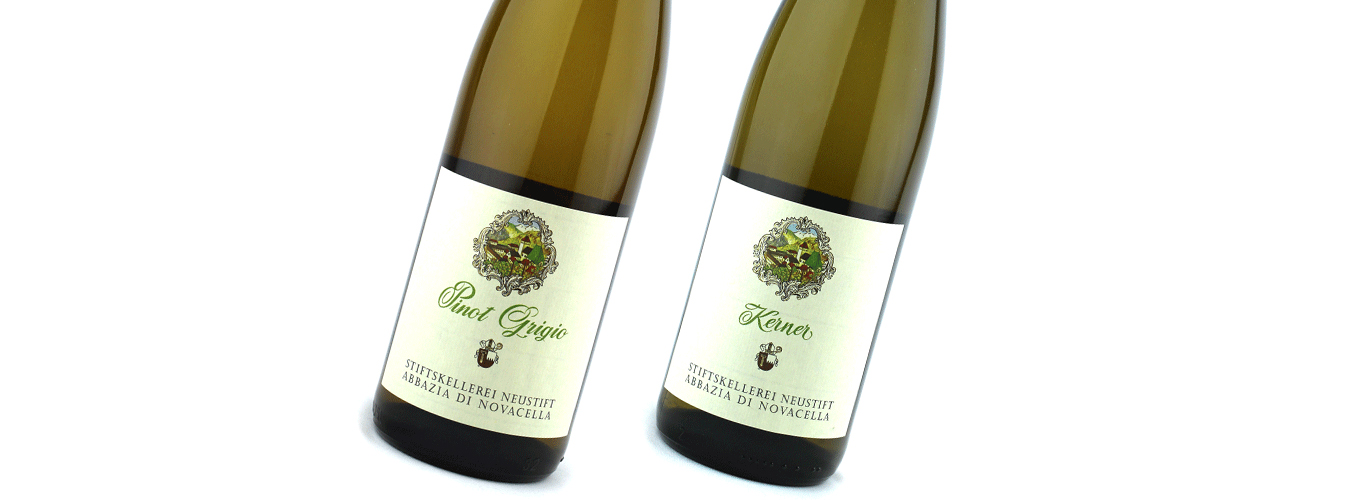
Not a lot of 2016 whites have come across our paths yet, but it’s easy to be optimistic given what we have seen so far.  More specifically, those versatile whites from northeastern Italy are most promising.  One of the real go-tos around here over the last few years have been from Abbazia Di Novacella.  They are both high quality and won’t break the bank.  We have an admitted fondness for Kerner around here and the Abbazia Di Novacella Valle Isarco Kerner 2016 is a beauty.  Tender and pliant in the mid-palate with just the right touch of acidity, the delicate florality, faintly pear and pineapple fruit and refined palate are hard to resist and this one is food friendly with anything from a pasta primavera to a lighter handed fish dish to Vietnamese spring rolls.

Pinot Grigio had sadly become almost a cliché, and that’s unfortunate because the Abbazia di Novacella Pinot Grigio 2016 is an excellent example of what this varietal can be.  It has plenty of pear and apricot fruit, some richness and weight on the palate and the requisite brightness to the flavors.  This Pinot Grigio can play to a more sophisticated audience yet has the quaffability factor to please the casual cocktail crowd.

Bailly-Reverdy Sancerre Chavignol 2015

We have loved the flashy Sancerres and Pouilly Fumes from the 2015 vintage, and the Bailly-Reverdy Sancerre Chavignol 2015 is a fine example of why.  The best examples have a certain density and weight on the palate with both grapefruit and kiwi fruit notes vying for attention underscored by a persistent streak of minerality and a clean, well tucked-in slice of mouth watering acidity.  The Bailly-Reverdy Sancerre Chavignol 2015 is all of that and more.  Bailly-Reverdy has been a fairly recent discovery for us but their pure, clear expression of some of Sancerre’s best dirt (in Chavignol) definitely gets us going.  A combination of different chalk-clay soils (2/3 Marly soils and 1/3 Pebbly limestone). The vines are planted on steep slopes and that makes the work to be done in the vineyards very difficult.  But the results are special.

The Eye of the Chicken

Now for something completely different.  This is one of those cases where we have to explain what it is before we get into the specifics.  But it is unique things like this are what make the wine business interesting.  There are a lot of folks in this industry that think they can ‘reinvent the wheel’.  But once in a great while, it happens.  This is one of those times.

This wine comes from Jerez, Sherry country, from one of the elite houses in Valdespino.  But it is a completely new concept for anyone from the region and one of the more intriguing offerings from that part of the world that isn’t Sherry.  This sees no oak, spends no time under flor and is not fortified, which immediately separates it from most everything else that comes from here.  A brisk, appealing white in a fresh, unfettered style.

The folks at Valdespino decided they wanted to step out of their traditional realm to produce this dry white.  The winery  has been vinifying different parcels of the Macharnudo Vineyard to see which parcel would make the best unfortified still wine and they found it in the particular parcel named ‘Ojo de Gallo’, or ‘Eye of the Chicken’ literally translated.   This section is included in the top part of the vineyard, which is wholly owned by Valdespino.  The soil is pure chalk (albariza en Espanol) planted to 100% Palomino, the traditional grape of the region (along with the more dessert focused Pedor Ximenez).  The vinification is done with

The ‘sales sheet’ said ‘think Chablis from Cadiz’.  We’d actually lean a little more in the direction of super-Rueda with fine citrus, quince, and pear fruit, maybe a hint of roasted grain, sleek underlying chalky minerality, just the right pop of acidity, and a twinge of that sherry-like nuttiness without the corresponding oxidative note.  Bright, crisp, intriguing, there’s mid-palate volume and cut to the finish.  It’s cool and geeky, to be sure, but there’s plenty to appreciate on a hedonistic level as well with the Valdespino Palomino Fino Ojo de Gallo 2016.  As to what we would compare it to, there isn’t really anything quite like it though you probably figured that out from the back story.