A JUICY VALUE FROM DOWN UNDER

The wine world seems to still be trying to leave Australia for dead on the big stage, but Oz keeps rolling out hits that fly in the face of the standard rumors about the balance, performance and aging potential that seem to effectively counter them.  As people who were in at the beginning of the great Australian invasion at the turn of the century, we are still among those that think the category holds too much promise to ignore.  Here we are with ‘public enemy number one’, the category most pointed to in facilitating the decline in Australian wine’s fall from grace, Barossa Shiraz and, to that, we say ‘nonsense’.

We’ll give you a short analysis of the main reasons we think Australian wines fell from grace in the marketplace.  First was the breakdown of the classic ‘big Shiraz’ wines but, as we have said, a lot of the blame there has to fall on growers with old vines that decided they needed to have their own labels.  We have proven on many occasions that ‘the players’ have excellent balance and age just fine (like the older Greenock Creeks we offered recently).  Then there was a period where everything that came in seemed to be another leafy, undernourished red that was supposed to show restraint and be food friendly.  The problem was that they weren’t very engaging in the first place.

We are doing our best to ‘make Australians great again’ in the minds of consumers because we believe in the wines and have long time relationships with a number of labels.  Today’s offer is one of those.  The Kalleskes have been working their Greenock farm for longer than anyone we know in California, some 150 years or seven generations.  They farm sustainably and not only organically but biodynamically.  They were certified back in 1998, long before it was the topic it is today.  Winemaker Troy Kalleske has been at the winemaking helm of his family’s winery for almost two decades .  It was Troy and his brother Tony that created the Kalleske label back in 2002.  They’ve had plenty of time to figure things out.

That same Troy Kalleske makes the Nietschke wines.   Johann Nietschke and Johann Kalleske both arrived in Barossa to established vineyards in 1838.  Somewhere around 1968 the families came together with the marriage of John Kalleske and Lorraine Nietschke, hence the connection here.  A number of years after the establishment of Kalleske Wines, Troy wanted to showcase some of the dedicated high-quality growers from across the Barossa Valley so the Nietschke Shiraz was born, named in honor of his mother Lorraine.

The winery calls the Nietschke Jack Shiraz 2017 (named for ‘great uncle’ Jack) a ‘modern Shiraz with a twist’. There’s a little something extra with a dash of Petite Sirah (5%) blended in for added complexity. All grapes are from the Barossa Valley including the renowned Greenock sub-region where vines are low-yielding and are grown in shallow, sandy loam soil over deep red clay, providing ideal conditions for these varieties.  The juice spent a year in a combination of French and American hogsheads (300L barrels), some new and once used.  It was bottled unfined and unfiltered.

We know a lot of you will think this an ‘unwieldy red’ when you see Barossa Shiraz.  That is the conditioned response that the media has encouraged.  Not true. Sure, this wine has some muscle and a ton of dark red fruits.  But the weight and richness here present themselves with polish and balance.  The Petite Sirah adds a little black pepper to the mix and threads of darker fruits.  Full throttle, yes.  But under control and packed with character.   Nice notes from James Suckling, “Blackberry crumble, elderberry pie, vanilla and baking spices. Full body, some nice juicy tannins and a chewy finish. .. 91 Points.” All that and a sub-$20 price tag.

A LITTLE BIT OF LIQUID HISTORY from DOWN UNDER

This is a quick note to call your attention to a number of morsels that arrived from the iconic Australian producer Greenock Creek. We were heavily involved with these wines when they were first imported by Grateful Palate right around the ‘turn of the millenneum’. Greenock Creek was an established entity that really vaulted to fame as the wines received huge initial press from Wine Advocate as they came to the U.S. market. We’d go so far as to say that Greenock was a notable catalyst in the whole Aussie boutique movement that was exploding at the time.

The short story was that Dan Phillips was advised on certain labels to seek out on his first buying trip to Australia. One of the recommendations was Rockford Winery and, in pursuing that label, Dan met winemaking superstar Chris Ringland who was at the time also the winemaker for Greenock Creek wines that were being produced at Rockford. The rest is history.

In any case, these wines came from the Grateful Palate library and were all made under Ringland’s tenure. The reviews are consistently spectacular and the wines are are excellent representatives of their genre. A lot of the knock on Australian wines after the ‘golden era’ of the first decade after they established a strong beachhead here was that they don’t age. We beg to differ.

In all fairness, a lot of the bad rap on Aussie wines was based on a second wave of less established labels that benefited from the goodwill established by proven producers like Greenock Creek, Rockford, Clarenden Hills, and Kay Brothers. A number of them were from growers who wanted to have labels and may not have been ready for ‘prime time’.

The Greenock wines are a testament to the fact that the truly exceptional Aussie reds age very well, thank you. Have a look at this little slice of Australian wine history when the wines were made by an Aussie winemaking legend who has his own label now that sells for $400+ per bottle. Quantities, as you might imagine of library bottlings, are limited. There weren’t huge quantities in the first place. Good hunting. These are very rare.

SEE THE GREENOCK CREEK OLDIES

EPIC, ‘ALMOST PERFECT’ RWT

We have been on the Penfolds trail for a very long time, going back to the 1980s when few people in this market even knew what it was or paid attention to Australian wine at all.   We bought closeouts of Bin 389, 407, and even Grange  back in the day at our first location.  Tasting them back then, we became fans pretty quickly.  How could you not?  At the time the wines had plenty of pure, in-your-face fruit, supple tannins and honest flavors.   They not only had charm, but they delivered value. 

A lot has happened since those days.  There were years of following Grange in the same way we followed top Bordeaux (the 1998 was a particular benchmark for us and before the prices got anywhere near where they are today).  There was a period where the wines began to take on a very commercial demeanor and showed signs of excessive acidification.  There was another period where the prices on what you might call the bread-and-butter mid-range wines increased 3 to 4 fold as they became white-hot in the Asian market.  There was also a period where the direction of the winery, and its corporate owners, was a little sketchy based on financials.

Fast forward to today.  Prices on some items still seem a little out of sync with the marketplace, and the current distribution scenario, in California anyway, is not exactly what we would expect for mega-volume premium players like Penfolds, Berigner, and BV.   But with respect to the juice itself, Penfolds is all systems go under the steady hand of winemaker Peter Gago. 

Given that, our mission today is to explain why this brilliant effort of Penfolds Shiraz RWT is not only a great wine that belongs in everyone’s cellar who can pay the freight, but is actually something of a deal at its $139.98 price.  First, the company spiel that RWT Barossa Valley Shiraz presents an admirable alternative to the multi-regional sourcing and American oak maturation that are hallmarks of Grange.  It is intended to express the best of a single region, Barossa Valley, and is done entirely in French oak. 

From Penfolds, “The initials RWT stand for ‘Red Winemaking Trial’, the name given to the project internally when developmental work began in 1995. Naturally, now no longer a ‘Trial’, RWT Shiraz was launched in May 2000 with the 1997 vintage. Its style is opulent and fleshy, contrasting with Grange, which is more muscular and assertive. RWT is made from fruit primarily selected for its aromatic qualities and lush texture. The result is a wine that helps to redefine Barossa Shiraz at the highest quality level…”

The standards for this wine are high, and the 2016 vintage offered the opportunity to shoot for the stars qualitatively. In a recent visit, Barossa winemaking dignitary Dave Powell (founder of Torbreck, and recently his own Powell label) said of the vintage ‘I didn’t have to do anything…the fruit was so outstanding.’  Aged in French oak (72% new), RWT offers hints of vanilla and cedar, but more than anything, it showcases the region’s bold berry and plum fruit.  The sleek, rich oak veneer is a fine backdrop to this powerful but polished fruit, and from first whiff, you know this is a special wine. 

Don’t just take our word.  Jeb Dunnuck made quite the case for the 2016 RWT in his own publication, “The 2016 Shiraz RWT is a brilliant, brilliant wine, and I suspect the finest version of this cuvee ever produced. Thrilling notes of black raspberries, crème de cassis, toasted spice, mint, and espresso all emerge from this deep, rich, powerful Shiraz. With massive concentration, it still glides across the palate with no sensation of heaviness or rusticity, building, perfectly ripe tannins, and incredible opulence and intensity. It shows more grilled meat notes with time in the glass and is a monumental Barossa Shiraz that flirts with perfection99 Points.”

It is all of that, as well as one of the greatest wines we have tasted this year.  As to the price, these days that kind of money will get you a good Bordeaux (but not a First or super Second Growth), a competent small production Napa Cabernet (but not any of the elite names), or one of the best Shiraz wines on the planet at one-fifth the price of its more famous stable-mate.  The choice seems clear.  It is a mouth-filling, legend-in-the-making must for those who relish big, bold, stylish reds.

SOMETHING SPECIAL FROM OZ

Every so often, something will come along that transcends not only varietal expectations but the confines of one’s impression of a given region.  Many years ago, at a dinner with none other than Aubert Du Villaine, the discussion came up about how an exceptional Pinot Noir, or a landmark Syrah, can almost come across as uncannily similar as they are perceived within the context of higher achievement.  This was long before we had ever heard the term umami, signifying some sort of ethereal performance on the palate, but that is essentially what happens.  The other day we had occasion to recall that very discussion.

Dan Standish came from a wine family and is a sixth generation Barossan.  He spent time honing his winemaking skills in California, the Rhone Valley, Rioja (at La Rioja Alta)  and finally working with the boisterous but enormously talented Dave Powell at Torbreck.  He was a little late to the party the first time around, his wines starting to show up here as Australia’s star started to wane from the remarkable success they enjoyed in the late 90’s and early 2000s.  He only started his own label in 1999 with a small plot of 96-year-old Shiraz vines but the results we tasted here were stellar. 

We never forgot the Standish wines and thought of them in the same vein as the top Aussie labels we helped introduce here like Clarendon Hills Astralis, Torbreck Run Rig, Chris Ringland, and Greenock Creek.  We didn’t see a lot of Dan’s wines over the next decade.  There wasn’t a lot to be had in the first places as his production hovers somewhere under 1000 cases.  But we were presented a couple of breathtaking efforts just recently that brought it all back.  Current Wine Advocate’s reviewer Joe Czerwinski was clearly as enthralled with the collection of Standish wines he reviewed, saying “I consider Dan Standish the reigning king of Barossa Shiraz.”

Of the Standish The Relic Shiraz-Viognier Barossa Valley 2016 he writes, “Everything about Standish’s 2016 The Relic Shiraz-Viognier is remarkable, starting with the ridiculous color. It’s so dark, so purple, so vibrant. Then the nose boasts soaring florals and stone fruits, while the palate delivers fresh blueberries and dried spices. It’s full-bodied but creamy-textured, with supple tannins and concentrated fruit that lingers on the plush finish. Just awesome stuff…99 points”

Thisis a top-of-the-heap, brilliant wine that compare to Australia’s best in every way but price (they are relative bargains compared to peers Henchke Hill of Grace, Ringland, Penfolds Grange, and Torbreck RunRig).  The Relic rises above traditional categorizations in the glass to offer a rare wine experience.  It shines well beyond the title ‘Australian Shiraz’ and should be considered among the world’s top tier.  We have a few scraps of a couple of other bottlings as well.  Do not miss them(See all Standish)

PENFOLDS KOONUNGA HILL: STILL ONE OF THE BEST VALUE REDS

Back when we first discovered Penfolds in the 80s, the wines represented some of the most compelling values in the marketplace.  A lot has changed since that time.  In fact it would take quite a bit of space to go over all the changes.  Perhaps the key points are that Penfolds is not the same entity we sold all those years ago.  A purchase by Southcorp some years ago, and subsequent ‘market factors’,  changed the brand forever.

Since that time there has been financial intrigue, an explosion of demand in Asia that shot prices of Penfolds Bin 389 and 407 to 2-3 times their norm, and a period where most of the moderately priced Penfolds wines bordered on undrinkable (they were ferociously over-acidified).  We won’t even get into some of the bizarre marketing moves that have recently come about.  It would be very easy to let this behemoth go the way of the dinosaurs except for one small thing…they still have the ability to make some pretty interesting wines.

The 2016 Penfolds Shiraz/Cabernet Koonunga Hill South Australia  is still one of the more compelling and straightforward value reds in the marketplace.  It is a blend of 65% Shiraz and 35% Cabernet Sauvignon sourced from a variety of locales (Padthaway, McLaren Vale, Wrattonbully, Barossa Valley and Coonawarra if you want to know) that sees 10 months in American oak.  Stylistically it is round, plump, surprising ample for the price but not overdone.  No self-respecting critic is going to give this more than an upper-80s type review simply because it is a ‘little wine’.  But it is a delicious, engaging little wine and that should always be the point.

The Syrah is the star here imparting a good bit of blackberry fruit and spice, with the Cabernet providing some redder fruit, a touch of olive and a hint of vanilla.  Is it a ‘fastball down the middle’?  Absolutely, and what’s wrong with that?  You would be hard pressed to find a more crowd-pleasing red for this kind of price.   Up-front, expressive fruit, straightforward flavors, just enough acidity and laid back tannins, it’s an outstanding, budget-friendly choice for  parties, grillin’, and everyday applications.  We don’t really need to sell commercial stuff like this, but when it’s this good, why not?

TROCKEN THIS, PART ONE: FRANKLAND ESTATE RIESLING

We know we have been a little harsh on the whole German trocken (dry Riesling) phenomenon.  Some might have said, “ these guys say they love Riesling, what’s their problem”.  Well, there are a couple of things.  One is execution.  Far too many are lean and skeletal as trocken wines.  The fruity examples with a little residual sugar to counterbalance blazing acidity is a true joy to us.  There’s nothing quite like a good traditional kabinett or spatlese anywhere in the wine world.

The other point is ‘why’?  Why muck with a good thing?  Plus, it has been done.  The Australians and Austrians have been making compelling dry Riesling for a long time.  There doesn’t seem to be a good reason to have another, less successful choice other than it’s German.  But we are not here to bag on the Geremans (they are probably cranky enough after the 2018 World Cup).  Rather we are here to praise some of the outstanding dry Rieslings that we do endorse.

We’ve been acquainted with the wines of Frankland estate for probably to decades.  The story is always a bit puzzling.  What possessed this family to head on out to one of the more remote parts of southwestern Australia to plant grapes is baffling.  To take a chance on a varietal like Riesling that doesn’t perform just anywhere  was a leap of faith.  But they have become one of the icon Riesling producers in Oz and have developed a unique and flattering style.  Delicate apple and pear, some pleasing citrus and floral notes, with a nice underpinning of a delicate earthy minerality, this is tender and fresh and lifted without being at all edgy.

The 2017 vintage in Australia is quite successful (a cracker!) and 2017 Frankland Estate Riesling is a beautifully composed expression of pristine fruit.  Made from various parcels from the estate including some of the original vines from 1988 and a 2006 planting on an ‘ironstone’ ridge, it is a subtle, layered, mouth-watering, ‘pretty’ example of the genre from a very special, if really isolated place.

We aren’t sure how much of a ‘Riesling guy’ Advocate’s Joe Czerwinski, but he seemed to like this one as well, “Scents of lime blossom and orange sherbet practically erupt from the glass. The exuberant 2017 Riesling is medium-bodied with slightly rounded edges and hints at red berries to go along with all of the expected citrus and green apple notes. It’s approachable now but should continue to drink well for a decade or more… 91 Points!”  This is how you trocken.

TASTY TO THE MAX

As soon as this one came out of the purveyor’s bag, we started to chuckle.  It was part of a new line from Penfolds, a winery that, through their armada of “bin” designated wines, would seem to already have every conceivable wine scenario covered with plenty left over.   Yet here was something dressed in an ‘artsy’ composite coating, the inaugural release it states, of a line dedicated to the memory of Max Schubert, Penfold’s historic winemaker who would have been 100 years old in 2015.

Even the most creative of corporate spin doctors would be challenged to generate a viable yarn about how a (literally) red bottle that sells for under $20 commemorates the guy that created Grange and put Penfolds on the map. But we have seen some pretty far-fetched approaches over the years for ‘stimulating’ interest in a new line of wines.  We were ready to bag on this one as yet another soulless corporate effort in a gimmicky package trying to push its way into the market…that is until we tasted it.

The Penfolds Max’s Shiraz Cabernet South Australia 2015 is legit juice, boysenberry and black cherry with flecks of spice, iron and vanilla, engaging supple texture, well tucked away acidity and ripe tannins.  It brought back memories of some of our early experience with their now coveted (and priced at nearly $60) Bin 389.  The blend on the ‘Max’ is 77% Shiraz and 23% Cabernet Sauvignon (there’s more Cab in the Bin 389) and mostly neutral oak in the process.  The fruit feels a little ‘redder’, but this is a delicious drink that offers quite the pleasing tipple both texturally and flavor-wise for its modest fare, serving much the same purpose as those early Bin 389s.

Sure there are a lot of questions, not the least of which is how will this wine play moving forward over future vintages (‘corporates’ are notorious for over-delivering on brand rollouts, and slacking off later).  As to this wine specifically, there are no concerns thus far.  This wine is one of the tasty surprises of the year thus far. It was good enough to overcome our doubts and then some, even bringing us to endorsing it.  Max Shiraz/Cabernet 2015 is a perfectly engaging and honest red. James Suckling seems to agree with a 92 point review and comments, “Perfumed and delicious with blackberry, blueberry and orange peel character. Medium to full body, firm and silky tannins and a flavorful finish. I like the acid energy to this that gives the wine clarity and tension…”   As to the next vintage, we’ll worry about that when the time comes.

VIDEO: THE EXTRACT INTERVIEWS WINEMAKER TROY KALLESKE


Have you checked out our Youtube channel, The Extract? It’s a weekly video series dedicated to wine geeks and cork dorks from novice to expert. We talk shop with wine producers, growers, and makers from all over to bring you candid discussions about wine philosophy, technique, and most of all…passion.

Here’s our most recent interview with Australian winemaker Troy Kalleske of Kalleske Wines. Troy’s family has been around the Barossa block growing grapes for over 160 years but somehow Troy is the first generation to actually make wine with them!

Enjoy.

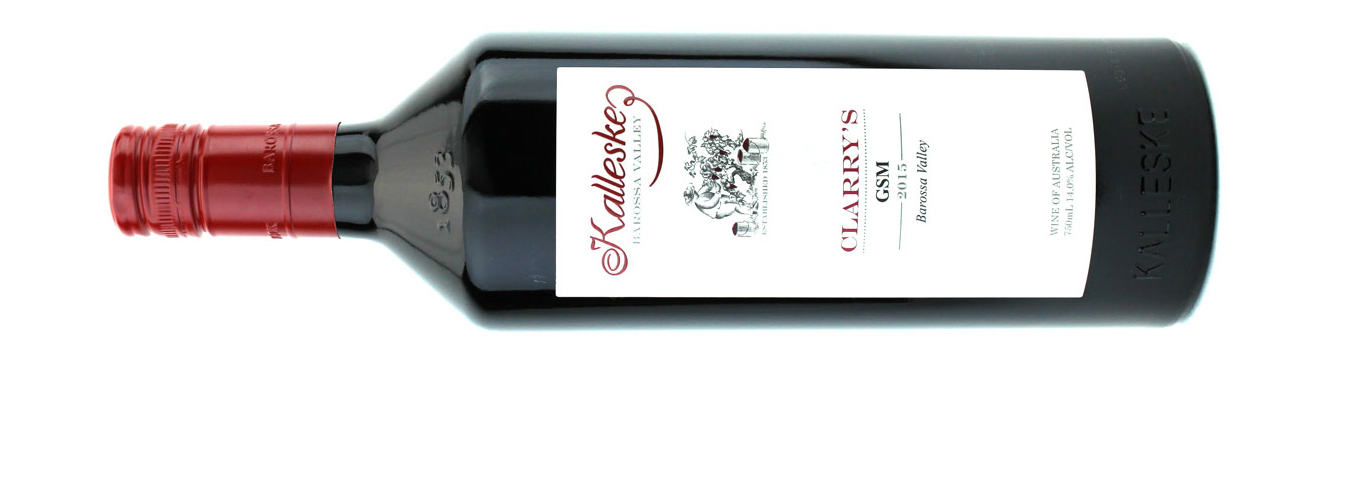
KALLESKE GSM CLARY’S 2015

KALLESKE GSM CLARY’S 2015

The ‘Land Down Under’ is still a ‘place of wonder’ when it comes to intriguing value reds. You just have to know where to look. Besides all of the widely distributed corporate beverages (Penfolds, Hardys, etc.), there are a number of small, passionate, under the radar producers with old vines and long histories that are doing some exceptional work for pretty easy-to-swallow prices. We sold some of the first Kalleske wines to come into the country back in the mid-00s and have been a fan of Troy Kalleske’s rich-but-sleek style ever since.

The Kalleske Clary’s GSM was a little later to the party but is the best we have tasted from them (though they weren’t in the market for a while). ‘Clarry’, for whom the cuvee is named, was Troy’s grandfather who tended these old vineyards (established in 1838…no that’s not a misprint). Clarry’s is a blend of Grenache, Shiraz and Mataro with old vine Grenache from the 1940s and 1960s. The wine is fermented in open-top fermenters and basket pressed. To preserve the superb fresh fruit flavors, it only sees one year in very old oak hogsheads (300 liter barrels) .

Who uses grapes from 40-60 year old vines for an under-$20 go-to red? Well, it’s a short list but that’s the deal here. A 91 from the sometimes stingy Lisa Perotti-Brown with commentary, “…redolent of baked raspberries, kirsch and red currant jelly (we’d add boysenberry, too, but we grew up SoCal… Knotts Berry Farm) with Indian spices, dried oregano and peppercorn hints. Full-bodied, ripe and opulent in the mouth, it coats the palate with plush, velvety tannins and spicy flavors, finishing long.” Does that sound like something that could be had for under a Jackson? We think not…$19.98