Sancerre Lives: CLAUDE RIFFAULT

Claude Riffault Sancerre Les Boucauds 2015

There was a period not that long ago where we were bemoaning ‘paradise lost’ with respect to Sancerre. You often don’t fully appreciate something until you don’t have it anymore. We all have had an experience or two that illustrates the saying. Well, it also happens with wine. As buyers we are supposed to take care of a variety of different genres. In our case, we don’t have a quota that dictates how many Cabernets or Chardonnays should be in stock at any given time. We taste and buy what we think are the best representations of the genre. If that means 100, fine. If we can only find 10, so be it. There are even times in the past where we’ve ended up with nothing.

Our principle objection to what was coming out of Sancerre was the lack of ‘cut’. Sancerre is prized for its verve and precision, which over a few vintages there was lacking in far too many bottlings. Was this an attempt to tune Sancerre to the broad market palate? Was the genre simply at odds with ‘global warming’? Yes, the wines have to have fruit. The trick is to have both fruit and snap. One of the producers that brought us out of our Sancerre ‘funk’ a couple years back was Claude Riffault. His 2013 Les Boucauds dazzled with both the mineral infused grapefruit and pear flavors, and that pop to the finish that left the tongue begging for more. We got excited about Sancerre again, and have been having a pretty fine run of late. But we pay special attention when the Riffault wines come along.

This domaine is now under the direction of Claude’s 30-something son, Stéphane, who is younger than most of the vines (30-40 years old) that he’s working with in this vineyard. Stéphane organically farms the hillside chalky soils, harvests by hand, carries the crates out of the vineyard by hand, and sorts them rigorously before a single grape is crushed. All is done in stainless steel to preserve the wine’s freshness and the fruit’s verve. In other words the young man does ‘all the right things’, and it shows in the wine’s purity and precision.

There’s an insistent minerality and a clean cut of acidity in this textbook effort of the Claude Riffault Sancerre Les Boucauds 2015, overlaid by an energetic, yet tender-edged blast of those familiar elements of grapefruit, kiwi, and quince. This is what great Sancerre used to taste like, in an even more deeply textured, saline sort of way. Loads of fruit, all stainless steel and the nerve to counterbalance the weightier texture Riffault achieves with this wine, perhaps that volume amplified a little more by the 2015 vintage. While he is still early in his career, it is clear that Stéphane has ‘touch’.

The notes from Wine Advocate’s Stephan Reinhardt, who is clearly ‘on board’ again, sound familiar to our descriptions of both the 2013 and this 2015. Stéphane clearly has his groove on. In Reinhardt’s words, “…the 2015 Sancerre les Boucauds is a very clear, fresh and aromatic flavored wine that was partly fermented in stainless steel and partly in French oak barrels. Full-bodied and elegant, the wine has a round, almost creamy sur-lie texture, but also a refreshing, very well-integrated acidity. The 2015 has power but also a serious phenolic and mineral grip; it comes along as a persistently aromatic, well balanced Sancerre with well dosed power and lingering fruit flavors. Very nice purity and texture…92 points”.

It may be a little premature to make predictions, but we see a lot of similarities between Stephane Riffault’s wines and some of the earlier efforts of Cotat before things went a little over-the-top there. Certainly comparisons with Alphonse Mellot are reasonable as well. In other words the ‘kid’ is already playing at a high level, and the biggest difference between his wines and the other notables we mentioned is…the price. Killer juice and still something of a value!

The three tier system

The term ‘three tier system’ is used to describe how the alcoholic beverage market works in most states.  The term is tossed around rather liberally, particularly in articles regarding the ongoing battle of shipping wine to adults across state lines.   This has been a hot button issue for at least the last quarter century, and we are sure a lot of consumers wonder what all of the fuss is about.  We thought it might be a good time to touch on this issue.  It’s complicated, and we should definitely recuse ourselves as we have a definite bias.  But here goes anyway.

So what is the three tier system?  The explanation is simple enough.  It is a system in which each segment of the market is focused on a specific aspect of that market.  At the origination level, either wineries (distilleries too for that matter) are producing wines which they then sell to wholesalers or importers are bringing in wines (or sprirts or beer for that matter) which they in turn sell to wholesalers.  The wholesalers in turn sell the products to retailers and restaurants who, in turn, sell to the public.  The flow chart is simple

Producers/Importers sell to>Distributors who sell to>Retailers/Restaurants

Couldn’t be simpler on paper.  But in this ‘eliminate the middleman’ world we live in, there will be someone who will ask the obvious question ‘why do they need a wholesaler?’  Why not just sell direct to those retailers and restaurants?  Wouldn’t the price be better without the extra markup?  Pretty logical, right?  Well, not really and, of course, it’s all about the money.

As you may know, some wineries do sell direct.  Usually though they are limited volume brands that have a very tight control on where their wines go and don’t have to spend a lot of money on sales.  Their brands are popular enough that buyers seek them out or consumers demand that the outlets carry them.  In those cases it is often the case that the cost savings is minimal because the winery would just as soon pocket both ‘cuts’ of the distribution system.  Also, out of state, wineries need to have a distributor either for the sake of functionality, or (often) by law.

Because they need to leave a little space to allow the wholesaler in the other states to make a profit, the winery will fix the ‘export’ price at one level (FOB) and then charge the  ‘wholesale’ price here in state and keep that portion themselves, effectively selling it to everyone nation-wide at the same price.  This provides what the wineries love to call the ‘level playing field’ for one and all.  We could go off on quite the rant about how ‘level playing fields’ are like unicorns and leprechauns in that they are an interesting myth (and we still might do that someday).  But today we are more on about the ‘why?’.

So why do wineries need distributors at all?  Don’t they make more money if they sell it in the way described in the last paragraph?  Yes, they do.  But only a tiny portion of the winery roster has that kind of clout in terms of demand and can afford to put their own small sales force out in the market for business development and maintenance.  Others that don’t necessarily have the situation to support their own sales force will offer their wines through a brokerage, paying a small commission to the seller.

So there still isn’t a reason to go with a distributor, you say.  Why not minimize that middle tier cost?  Like we said, it’s about the money.  Usually brokers can’t sell enough of one winery’s produce to make a living.  So they will assemble and represent a group of wineries, giving them more wines to offer clients.  On the flip side, there is less time to focus on each of those individual wineries because there are still the same amount of hours in a day (except today of course) and they must attempt to sell everything.  So the winery’s ‘sales force’ is marginalized as the representatives must spread their attention among the group. And at the end of the day, the winery themselves are responsible for collecting the money for the wines that the brokers have sold.  That is easier said than done.

There are a lot of good operators out in the retail/restaurant marketplace, but also a lot of flakes.  It doesn’t take long for a few slow-pays or bad-apples to run up some serious arrears that amount to thousands of dollars.  Such sums can be crippling to a lot of wineries.  As we have stated before in other pieces, the winery rep has to work very hard just to even get a placement in most restaurants, and then if they have to go back and try and collect that money, even if they are successful, it takes time away from selling.

The distributor model takes away all of that financial risk by buying the wine and reselling it,  But they will need to be compensated not only for their investment, but their expenses of maintaining a sales force.   And the distributor doesn’t necessarily want to operate as a de facto collection agency.  They want the ‘good apples’, to.  So typically the arrangement is all or nothing.  The winery geets a smaller cut, but their money worries are greatly reduced.  The distributor’s existence, the maintenance of an infrastructure, sales force, and as a collection arm, has to all be financed by that extra margin.  Wineries love restaurants over retail 90% of the time, but restaurants are still one of the highest failure rate businesses, making money problems part of the territory.  It’s not rocket science.  Physics is much more predictable.

There is also the delivery system, and the maintenance of other services that the winery would otherwise have to arrange themselves.  This model, as we said, largely eliminates financial risks (we say largely because sometimes distributors go under, too, though rarely).  It also affords the winery to concentrate on production, broad market planning, going to lunch (see ‘broad market planning’), or whatever they feel they need to do.

Are we saying we embrace the distributor model and feel it is important to maintain the ‘three tier system’?  Sort of.  We are saying that the model exists for good ‘market’ reasons.  In a lot of states, the arcane laws give the distributors almost ‘gangland-like’ fiefdoms, but that’s just the way it is (money, politics, etc.).  The bottom line is there is a need for some manifestation of this service in virtually every market.

A winery could sell all of their wine to a big-box store or national chain.  That would eliminate the need for a distributor.  But they also wouldn’t end up with any other customers and pretty much be at that store’s mercy in time.  Distributors ideally mediate that by spreading the product far and wide.  It’s just like ‘diversifying your portfolio’ by establishing a broad and varied customer base.

So as to our take on the three tier system is, ‘we don’t have a better idea’.  It works well enough and stabilizes the market enough that we can spend time looking for the seams and cracks and pockets where the ‘deals’ reside.  The ‘system’ provides options for us to get the things that we want.  The middle tier does serve a purpose because the market needs those services and they also absorb some risks.  This is from guys (us) who are less in need of those services than most.

What we aren’t keen on is how some of the ‘modern’ distributors are playing fast and loose with the system, and how some of the wineries and importers are playing fast and loose with the distributors.  Something’s got to give, but we’ll get into that another time.

BRIEFS (BLANC)

  • While we could write volumes on all of these (and may later on), we’d like to call attention to a few cool, off-the-main-road whites we’ve gathered in over the last few weeks.  A little sunshine can do that.  We’ll start by saying the 2015 whites from Savoie have been wonderful surprises.  A little warmer vintage in these pristine high-valley vineyards add a layer of flesh and fruit as a bonus to the crisp minerality and pure, floral flavors.  If we have to name one, start with the Jean Masson Savoie Vieilles Vignes Traditionnelle Apremont 2015, a fresh, delicate white with plenty of verve that is a star with lighter fish dishes.
  • Got Greek?  We stumbled across Assyrtiko, a crisp, mineral infused white from the Greek island of Santorini during an attempt to put together a Greek wine section with a Greek food importer some years back.  Curiously, not many years later, the brand, Sigalas, turned up on the Wine Spectator Top 100.  Since that time more, and more serious Greek producers have found their way here.  Ktima Vourvoukeli is new to us, and the winery is located in northeastern Greece about 30 miles from the Mediterranean.  The Ktima Vourvoukeli Assyrtiko 2015 is an exciting find, especially considering the Sigalas has become trendy, more expensive and harder to keep in stock.  This one is a touch fleshier with a nice layer of yellow stone fruit, a little less severe minerality, but still plenty of lift and brightness.  We aren’t sure, since this is our first go-round with Ktima, if its the region, the vintage, or both that gives it its particular character, but it is a superb alternative white at a great price.  Oopah!
  • We have been threatening to bring out examples of the new wave in South Africa but have be restrained to a large extent by some of the passionate new importers’ lack of logistical skills.  We know enough to tell you that there is a groundswell of fresh activity around the Cape and some unique and exciting new faces coming down the pike, however slowly. We’ve been doing this long enough to know that you likely aren’t going to go looking for something called Thorne and Daughters Rocking Horse Cape White 2015 unless we give you a good reason.  This is a captivating if previously unimagined white blend of 33% Roussanne, 28% Semillon blanc, 20% Chardonnay, 18% Chenin Blanc and 6% Clairette that comes together to deliver a sleek melange of white stome fruit, citrus, delicate botanicals and a slightly honeyed note. There’s a tactile yet waxy mouthfeel with a good backbone of acidity.  Skillfully done, this one really grabbed us.

Maxime Magnon Corbieres Rozeta 2015

MAXIME MAGNON CORBIERES ROZETA 2015

Think different. That has been a pretty effective marketing slogan for a certain tech company over the years, but it also applies to some of the revolutionary minds behind certain wine estates. In the earliest days of our wine experience, producers were struggling with more mundane problems like hygiene and weather. But as winemaking and viticulture improved, problem bottles were much less of an issue. Then it seemed that technology took over, and there was a period where far too many wines were technically flawless but not very interesting to drink.


The pendulum has now swung back the other way, with more and more producers eschewing the extreme technical regimens and moving back to a simpler time, organic viticulture and a more hands-off approach to winemaking.


This new/old trend is almost a complete return to old school winemaking which does the most to let the character of the vineyard shine by not doing the ‘hands-on’ things that might mediate that terroir element. Wines like these, when done right, are the purest expressions of place. The very best, as we have said on occasion, achieve a level of purity and expression that transcends even the appellation itself. The Maxine Magnon Corbieres Rozeta 2015 is that kind of effort.


Maxine Magnon is a Burgundian, an interloper to this land in the Corbieres A.O.C. Assembling parcels of old vines, he purchased mostly vineyards planted on schist and limestone subsoils in the sub-appellation Hautes Corbières, bordering Fitou to the South. Dogmatically focused on maintaining soil balance and a harmonious ecosystem in his vineyards, it is not surprising that his farming is certified organic and employs a number of biodynamic practices. This regional ‘hero’ is certainly a loyal follower of his mentor’s ideas, they being Jean Foillard in Morgon and good buddy, biodynamic guru Didier Barral in Faugeres. His wine retains the character and complexity of both these hands-off winemaking legends.


Maxime has made quite a name for himself in the short existence of this domaine (founded in 2002). We have had some pretty rousing examples ourselves on occasion. But even though we know the guy is something of a rock star in his part of the world, we don’t remember anything like this. Perhaps the deep, juicy fruit of 2015 is what took this one to the next level, but whatever the cause, the result is exciting.


The wine itself comes from two terroirs, one that contains an abundance of the classic garrigue of Corbieres and the other a rocky schist with virtually no topsoil that feels more like the Roussillon. The blend is predominantly old vine Carignane (65%) in a field blend with Grenache, Syrah and not-so-mainstream varietals Grenache Gris, Macabou, and Terret (the first two being white varietals and the third having mutations in both white and red).


Now the first thing we need to say is that the Rozeta is a real attention grabber that doesn’t taste like most people’s idea of Carignane, which can lean a little stemmy, nor does it have the intense garrigue component usually associated with the Corbieres appellation. It is a captivating red with an inviting nose of red fruits, spice, lavender and minerals that grows more intense and complex as it unwinds. In the mouth you get a ripe, lifted mouthful with lots of red and blue fruit, insistent spice notes and a pleasing touch of earth. In short, this is a delicious effort with both richness and brightness that takes a path all its own, with a direction veering towards the finest Morgons from mentor Foillard or, dare we say it, Burgundy. We had no idea this was a Carignane grown in Corbieres until they told us. All we knew is the wine was ‘a trip’ and offered a take on both the region and the varietal that we had not seen before.


Previous versions of Rozeta have received great press, and this is certainly the best version yet from a terrific vintage in The Sud. It will get a HUGE score. But that is not the point(s). The wine is the point.


Is it the vintage? The terroir? The 50-60 year old vines? The naturally manicured-by-farm-animals vineyard? The 30-something, low-keyed Maxine’s je ne c’est quoi? All of the above? Hard to know, but it’s something very tasty and engaging that steps outside the boundaries of its origins. For how it performs, it’s something of a bargain as well. We bought everything Kermit Lynch had because it lit us up, but quantities aren’t huge. Good hunting.

Jamek Riesling Ried Klaus Federspiel 2015

JAMEK RIESLING RIED KLAUS FEDERSPIEL 2015

We’ve became big fans of Jamek a few years back. The best efforts were packed with character and also had sufficient flesh to go along with the traditional zing. The we lost sight of them for a number of years as they left their old importer and hadn’t found a new arrangement as yet. Finally they were back and not a moment to soon. It would have been a shame to miss their efforts from the best Austrian vintage we have tasted.

Here in Wachau, as most know, they take the step of identifying the ripeness levels of their wines ala Germany, with Federspiel being more or less the equivalent of kabinett, with the measure referring to the ripeness levels of the grapes. It means the same in fact, that the grapes were harvested at a certain sugar. But the key element is that in Germany the presumption is that the wine is fruity (it can be dry, or half-dry, but it will state that on the label). In Austria, Riesling are dry unless they say otherwise, which in the case of federspiels, they never do.

On the palate, this one flirts with Smaragd richness, with a lovely textural presentation of yellow stone fruit and pear supporting the presentation of floral, citrus, and mineral tones. As always, the wine has lift and layers, and sits higher on the palate. But the fruit and deceptive density of the vintages give this Riesling an extra dimension.

Stephan Reinhardt notes are enticing, “The 2015 Riesling Federspiel Ried Klaus offers a precise bouquet of white fruits intertwined with herbal and flinty stone aromas. Round and intense on the palate, with beautiful concentration and a persistent, lovely salty finish, this is a highly elegant and complex, tightly structured Riesling from one of the most spectacular single-vineyard sites of the Wachau. The finish is full of tension, purity, salt and finally pretty long as well.”

His accompanying 90 point score didn’t jive with the review, and we think it’s on the low side. This is an unabashed, pristine beauty that sports a uniquely ripe, tender fruit component along with all of the classic lines of the genre that are unique to this special vintage. Sehr gut!


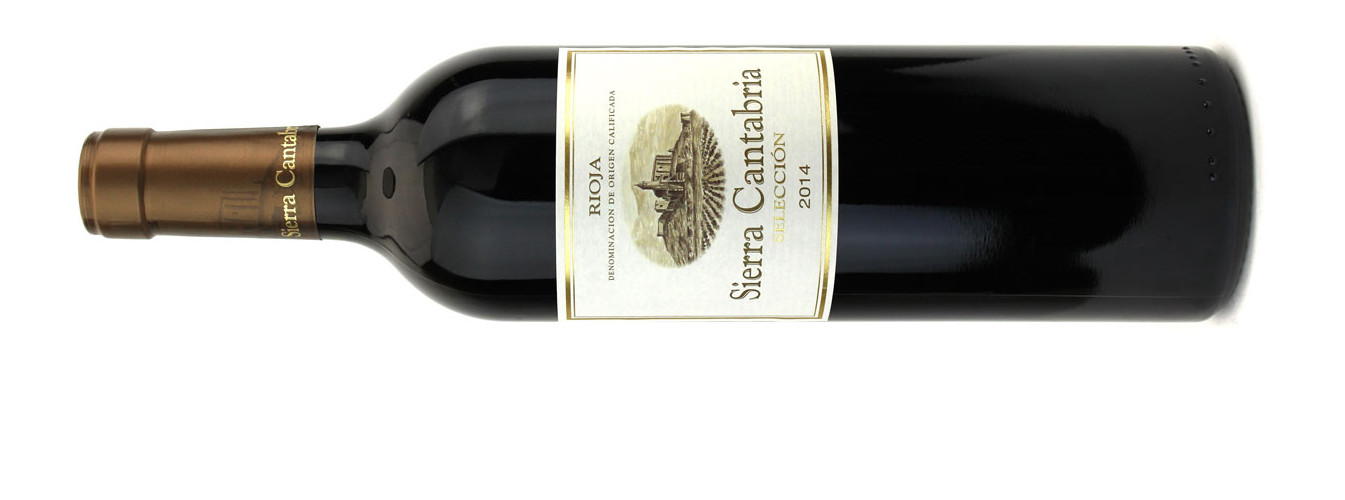
SIERRA CANTABRIA RIOJA SELECCION 2014

SIERRA CANTABRIA RIOJA SELECCION 2014

Think of this as what we used to call a wine-of-the-month, though with the new ongoing format time is a lot less linear.  An amazing deal from Spain shouldn’t surprise us. We have been on our soapbox regarding the value of Spanish wines at a wide range of price points for, what, a couple of decades now? But this one certainly did! When the purveyor pulled the bottle out of the bag, the only thing we saw was Sierra Cantabria, one of the most trusted, go-to names for us in Rioja since we began selling their wines in the mid-90s.

The Eguren family have been one of the superstars of the region not only for their range of Sierra Cantabria wines, but also their Senorio de San Vicente project that focuses on an arcane variety of Tempranillo (called Tempranillo Peludo because the leaves have a unique ‘fuzzy’ surface) that typically works on the level of a Classified Growth Bordeaux. These same folks, along with importer Jorge Ordonez, sidled over to Toro and created Numanthia (which they later sold to LVMH) which helped redefine the region. They turned right around and started Teso la Monja essentially with the same concept as Numanthia as premium Toro red.

The Egurens, even though the family has been in Rioja since the 1870s, they are ‘movers and shakers’ in the region in the most modern way. Where do they fall stylistically? They do it all, making traditional Crianzas, Reservas and Gran Resevas, as well as wines reaching for a more modern sheen with the like of Finca Eel Bosco, Reserva Unica, El Puntido and Seleccion Privada outside the traditional ‘rules’. They make more than twenty different wines, including a more ‘mass market’ enterprise under the Dominio de Eguren label.

Given our knowledge of this winery’s broad lineup, we had no idea what to expect of this label that we couldn’t remember seeing before. We tasted it with no particular expectations in mind since these folks worked on many levels. Plenty of dark fruit (strawberry, plum, currant), vanilla highlights from what appeared to be some time in oak, fine purity of fruit, and the classic chocolate/earthy notes that are a part of Rioja terroir. ‘Pretty good stuff’, we thought, ‘a fine tipple in the upper teens.’

As it turned out, this was only the second release of this wine, and the price was under $10! Our shock was legitimate. Sourced from proprietary vineyards located in San Vicente de la Sonsierra and Laguardia, this wine was 100% de-stemmed and saw 6 months in tank and 6 months in a combination of 1-3 year old American and French Bordelaise barrels.

For the price point, it was a revelation! We have been complaining for quite a while that ‘value-priced’ wines have been tasting more and more homogenized and ‘messed with’. Far too many have the prevalent flavor of wood stays or oak chip ‘teabags’ meant to give the wine the ‘impression’ of more expensive winemaking, or leave residual sweetness in the wine to fill in some of the ‘cracks’. The flavors often lean more towards industrial chocolate cake frosting and candied fruit.

This one tastes like wine! Good wine! We can’t think of a more exciting thing to say than that in a wine world that seems to be intent on using wine-making tricks to gussy up marginal, ordinary juice (the ‘lipstick on a pig’ analogy comes to mind). The Egurens are giving you delightful, honest Rioja for the same kind of price.

Not only is this a $10 wine we would happily drink ourselves, it caught the attention of the usually-not-particularly-generous Josh Raynolds of Vinous, who remarked, “…Dark ruby. Ripe dark berries, candied flowers and a suggestion of woodsmoke on the perfumed nose. Pliant and expansive in the mouth, offering bitter cherry, cassis and peppery spice flavors that become sweeter on the back half. Finishes on a juicy dark berry note, showing very good persistence, gentle tannins and lingering spice and floral notes…90 Points.”  A 90 from Josh on a wine in this price range is a rare occurence.

The Egurens know their business, but something tasty, honest, and inexpensive is the hardest thing to do in wine. Bravo. House red, party red, something that delivers in a way few $10 wines can (and, sadly, a whole lot of $15-20 wines as well), this is one to buy by the case…$9.98

VIDEO: THE EXTRACT INTERVIEWS WINEMAKER TROY KALLESKE


Have you checked out our Youtube channel, The Extract? It’s a weekly video series dedicated to wine geeks and cork dorks from novice to expert. We talk shop with wine producers, growers, and makers from all over to bring you candid discussions about wine philosophy, technique, and most of all…passion.

Here’s our most recent interview with Australian winemaker Troy Kalleske of Kalleske Wines. Troy’s family has been around the Barossa block growing grapes for over 160 years but somehow Troy is the first generation to actually make wine with them!

Enjoy.

Gauging Temperature: What happens when my wine gets hot?

Throughout the years we’ve always found ourselves caught up in discussions about the effects of certain things on a bottle of wine, predominantly temperature.  Now we could be like much of the industry and simply stick to the perfection rule that all wine must be kept between 52 and 65 degrees through all of its life or it will be ruined.  That not only refers to the storage in your home or office, and the temperature of the place where you acquired the bottle, but all points in between including the weather through which it is shipped from beginning to end.  In a perfect world, sure, why not?  But let’s face it, things in your life are rarely this perfect.

It gets warm, it gets cold, and people make mistakes.  We aren’t going to try and tell you that those fears are overblown.  But there are people out there that think anything short of perfection is actionable.  They think that the UPS driver should be there at a specific time to avoid any prolonged ride on the truck when the temperature is over 70 degrees, and that the driver should wear insulated gloves so as not to transfer any body heat to the wine when he touches it.  Yea…right. With all of the new virtual reality stuff that’s happening these days, maybe someone will come up with that perfect world.  But in the meantime, it isn’t realistic.

We once saw a merchant claim in a written advertisement that all of his wines came in refrigerated trucks. Hmm…  ‘Long haul’ trucks might be refrigerated.  We shipped a lot of loads from a Washington State importer with a company that also hauled fish.  Sometimes the truck smelled, um, like the sea?  But the wine arrived in great shape.  Shipping containers for expensive wines, and even not so expensive wines, were usually refrigerated. But as far as trucks that delivered from the local distributors, or couriers around town, we only saw one refrigerated truck per year…the Romanee Conti release.  The rest of the time they were at ambient temperature.  For everyone.

Our merchant ‘friend’ was being less than honest, but often consumers are over-the-top the other way, saying two hours on a truck at 80 degrees is ruinous.  It isn’t, and we say that knowing there are plenty of holier-than-thou types in the industry that will call us out because it is easier to be elitist.  It’s easy to preach perfection, a lot harder to actually do it where weather and human beings are involved.

We’ll tell a short story about an experience a few years ago.   I put a case of mixed Burgundies in the car after work and went off to do a bit of ‘research’.  Upon getting home, I went straight into the house, forgetting that case of Burgundy in the trunk.  I did not have occasion to go into the trunk for another week during a very warm July, essentially driving the case around town until one day when I had a reason to get into the trunk…and saw the case.  My reaction was, oh shucks (or…something like that).  But I figured it was a way to test the heat/wine thing real time (bear in mind I am a trained professional).

The heat was substantial but not extreme (90s but not over 100).  Over the course of the next month I had those twelve bottles.  Eleven of them were just fine and one was corked (which it would have been regardless of temperature).  We continued the experiment for years testing the occasional shipping ‘mishap’bottles as they came back.  For the most part, we found that in the difficult cases, the wine did show some deterioration after a few months, even sooner in the cases where the corks were pushed up (which of course would allow more oxygen to reside inside the bottle)*.   But most were good to go early on.

What we are getting at is that, much of the time, if there is a temperature ‘accident’, it is rarely the proverbial ‘bullet to the brain’.  It can, and again we are talking extremes, cause deterioration over time probably as often because the airspace in the bottle changed as being the direct effect of extreme heat or cold.  If it does happen, like we said, as long as you get to it sooner (let’s nominally say within a month or two), you should experience little if any perceptible depreciation.  So if it is a ‘drinking bottle’, as most bottles are these days, go ahead and drink it.  The one caveat is ‘natural wines’.  Since such wines are not typically stabilized, a change in temperature might occasionally set off an unanticipated reaction within the wine itself .

“wine is a living thing, which means it can take anything you can”

Obviously nobody goes out of their way to create these unfortunate scenarios.  We do our best to avoid them and mediate the weather with our shipment timing as best we can.  We tell people picking up wine that, when it’s hot, they should put their wine inside the cabin of the car where its air conditioned and go straight home.  Some don’t listen, go to the mall for two hours and complain to us because the bottle leaked.

If someone asks us to ship into Phoenix in August, we will simply say no.  One must be cautious to a point.  However weather being what it is, you never know for sure how it will play out.

In truth, most of the industry doesn’t worry about it that much.  But then something like 90% of the wine purchased is consumed with in a couple of weeks so it’s rarely ever an epidemic.  The point is we don’t live in a perfect world and sometimes stuff happens.  When it does, don’t panic.  Move those bottles up in the rotation, serve them at the proper temperature, and most of the time you’ll be just fine.  Occasionally unfiltered wines might throw off some extra sediment.  In those cases, stand them up a day or two, and then proceed as planned.

While we always practice, and recommend, exercising caution, wine is not as fragile as some might have you believe.  As someone told us once, yes wine is a living thing, which means it can take anything you can.  In other words, except in extreme cases, it isn’t ‘life or death’, at least in the short run.


* Extreme heat or cold will cause liquid to expand which will push the wine out of the cork or push the cork itself up in the neck. As it comes back to a more normal temperature the wine will contract to where it should be, minus any that pushed out.  In either case, there may be a larger air gap in the bottle, which will accelerate the process.  It’s basic physics. 

PEGASUS BAY PINOT NOIR WAIPARA VALLEY 2012

PEGASUS BAY PINOT NOIR WAIPARA VALLEY 2012

It seems like only yesterday (it was actually the mid-90s) that we were invited to a very low-keyed tasting that a supplier was hosting. That supplier, who pioneered Oregon wines in the late 80s, long before they really took hold in the broad market, had just come back from a trip to New Zealand. He brought with him bottles of Pinot Noir from New Zealand, something we had been exposed to before. Apparently the wine industry there was just starting to get a feel for the varietal and our geeky Oregon vendor felt compelled to drag a few bottles back (a lot easier to do in those days given current airport security) to test the water. Guess we were curious, too , since we attended this small scale event just to check them out. This was so early in the game, we weren’t even aware that there was a game.

Since we had no expectations, we went simply to do our jobs and taste because, as we have said so often, you just never know. The lineup of eight wines, which included Ata Rangi and Te Kairanga we recall, showed rather well. We were prompted to order small quantities of these, at the time, completely unfamiliar labels from a completely untrested genre. Perhaps more important, our take-away from this little show was “hey, this could turn into something”. Are we saying we were ahead of the curve. Yeah, we often are because we actually take the time to look. But that isn’t the point. Are we saying we could have predicted where Kiwi Pinot would go over the next couple of decades? Not a chance.

As it turned out, that showing proved to be no fluke. Here we are roughly two decades later, and the Kiwis are accepted players on the world stage. Not only are New Zealand Pinot Noirs taken seriously in wine circles these days, their ‘top guns’ have been consistently producing lights-out juice that should be a part of any serious collection. Our subject here is one of those ‘players’, Pegasus Bay. We aren’t going to claim this is the most consistent of the top drawer estates, but they certainly hit ‘higher highs’ when they’re ‘on’. This is one of those times.

The Pegasus Bay Pinot Noir Waipara Valley 2012 also gets a little less visibility because they because of their location. The name Marlborough is certainly more ingrained in the wine buying public’s psyche and Central Otago is the more ‘glam’ locale. Now we aren’t going to mix words. Sometimes Kiwi Pinots in general can be a little too savory for their own good. But when it gets a little warmer, as it did in 2012, the riper fruit component fills in the middle and plays nicely off the cooler notes while there are none of the green edges that can sometimes get in the way. That leaves a pretty compelling drink when all is said and done.

We’re not the only fans. The added ripeness and flesh (think Burgundy not Santa Lucia Highlands) got multiple ‘thumbs up’ from the critics, including a 92 from Wine Advocate and 93 from Wine Enthusiast. The lead cheerleader in this case, besides us putting our money where our mouths (keyboards?) are, was James Suckling. He dropped a ‘96’ score on this one with the comments, “A sense of real depth, soothing dark cherry notes, some forest floor and deeply knitted oak. The palate has noble tannins and the sort of structural complexity and completeness that is the envy of most other NZ Pinot Noir makers”

As a matter of course, Kiwi Pinots can use a good splash in a decanter before serving. Who knew back in the day that New Zealand would become a world player in Pinot Noir?  It is examples like this that drive the point home. As wines with this kind of reviews goes, and compared to most reserve level California Pinots, it’s quite the bargain, too…$34.98

NEYERS CABERNET SAUVIGNON NEYERS RANCH CONN VALLEY 2013

NEYERS CABERNET SAUVIGNON NEYERS RANCH CONN VALLEY 2013

There are certainly times when wine offers are ‘cut and dried’. Somebody gave it a big review, it’s super hard to find, or there is some other compelling reason to connect with an offer immediately. It is the way of things in the age of the internet… quick decisions made by evaluating easily digestible bullet points and clicking. We have no objection to the process, and understand it. But it can also work to the exclusion of some really spectacular finds that, while they might be among of the most desirable wines in a particular category over the course of a year, don’t have a simple story that can be sliced, diced and edited into a rapid-fire offer.

We knew going in that his was going to be one of those stories that required a bit of an attention span, and therefore eliminated a number of readers and was an uphill fight in the current world of ‘quick hits’. The story of Bruce Neyers and the Neyers Cabernet Sauvignon Neyers Ranch-Conn Valley 2013 isn’t one that can be adequately told in “25 words or less”, let alone “140 characters”. But at the end of the day, we believe the ‘read’ will pay dividends in telling you about one f the most interesting Cabernets we have seen of late.We’ll open with a little perspective piece done by Spectator’s James Laube which we think is really on point, “There are so many things that Neyers winery is doing right these days that it’s hard to know where to begin…What impresses me about their winery goes beyond the quality of the wines, which is often exceptional, and extends to the sensibility of pricing. That comes from being on the sales side of the equation, working with dozens of imports and being a consumer at heart. It’s a function of Bruce Neyers having been in the wine business for 43 years, including 21 at the helm of his own winery.” He had stints at Mayacamas, Heitz, Stony Hill, and Joseph Phelps Vineyards. Bruce is a wine industry lifer, not somebody that flew in on a private jet and decided he was going to make the next Screaming Eagle.

It is that grounded perspective that is the first aspect of why this wine got us going. We’ve had people trying to sell us revved up, one dimensional oak bombs for 2, 3, or 4 times as much money as this one, a lot of them laughingly overpriced. Bruce sees all of that and goes about his business, setting a price that represents a bargain in the rarified air of serious Napa Valley Cabernet.

The vineyard, located in Conn Valley, is also a large part of the story. Bruce and his wife of 46 years, Barbara were introduced to this property in 1984. It had been a vineyard previously as indicated by the abandoned grape stakes and end posts. The land was a succession of gentle hills with a south-facing exposure; in parts it seemed impossibly steep and rocky. We thought it was beautiful, especially from the top of the hill looking southwest across Lake Hennessey towards the heart of the Napa Valley. Then there was that creek – Conn Creek it’s called — that flowed through the south block of the property. An idyllic spot that soil analysis proved was beautifully suited to Cabernet.

The vineyard was planted, or shall we say ‘repalnted’ in 1992 by the esteemed David Abreu. The vines sit on a steep, south-facing slope of basalt mixed with gravel and loam. It is considered one of the best sites for Cabernet in the Napa Valley, and now this primo site has some of the oldest Cabernet vines in the Valley. WE have spoken at length about the value of older vines, and would also make the point that a lot of those trophy Cabs other people presented us were from 6-10 year old plantings.
The last piece of the puzzle was 2013, the vintage. Robert Parker said, “…2013 may turn out to be the finest vintage I have experienced in tasting North Coast varietals over the last 37 years. It’s a game-changer …” In Bruce’s case, drought and wind reduced the crop by 25%.

Sensible, passionate winery owner, organic farming, exceptional site and, now, mature vines (2013 was their 21st harvest), lower yields and an outstanding vintage, you can see where we are going with this. But we wouldn’t be telling this story if the wine wasn’t special. For true fans of Cabernet, this is a gem. The Neyers Cabernet Sauvignon Neyers Ranch-Conn Valley 2013 is wonderfully aromatic, combining cassis and blackberry fruit with violets, cocoa and spice notes. There’s a persistent underlying minerality and whiffs of lead pencil and cedar. The palate is decidedly plush and there is an endearing softness to the edges.

There are plenty of Napa Cabs that have power and punch. Size does matter to Cabernet drinkers. But this one has more than just volume. There are layers to the flavors as well as already emerging complexity and something that can only be defined as ‘soul’. We don’t have a bunch of ‘bullet point’ scores to throw at you here. But to tell the truth our minds were made up at first sip and whatever might come later review-wise will just be a bonus. A must for Cabernet lovers.