TRADITIONAL HOLIDAY MESSAGE: WINES FOR THE BIRD, AND OTHER FAVORITES

We interrupt our originally scheduled rant to bring an important message…holy smokes it’s November!  Yeah, it kind of snuck up on us again as we were scurrying around trying to find delicious deals and innovative new sources of fermented grape juice.

We realize there are folks that have it all planned from their own cellar stock.  But there are others who treat this family holiday differently than they would a dinner or event with their ‘wine and food’ friends. Ours is neither to judge, nor comment on prices because that is up to everyone’s discretion and based on their individual needs.

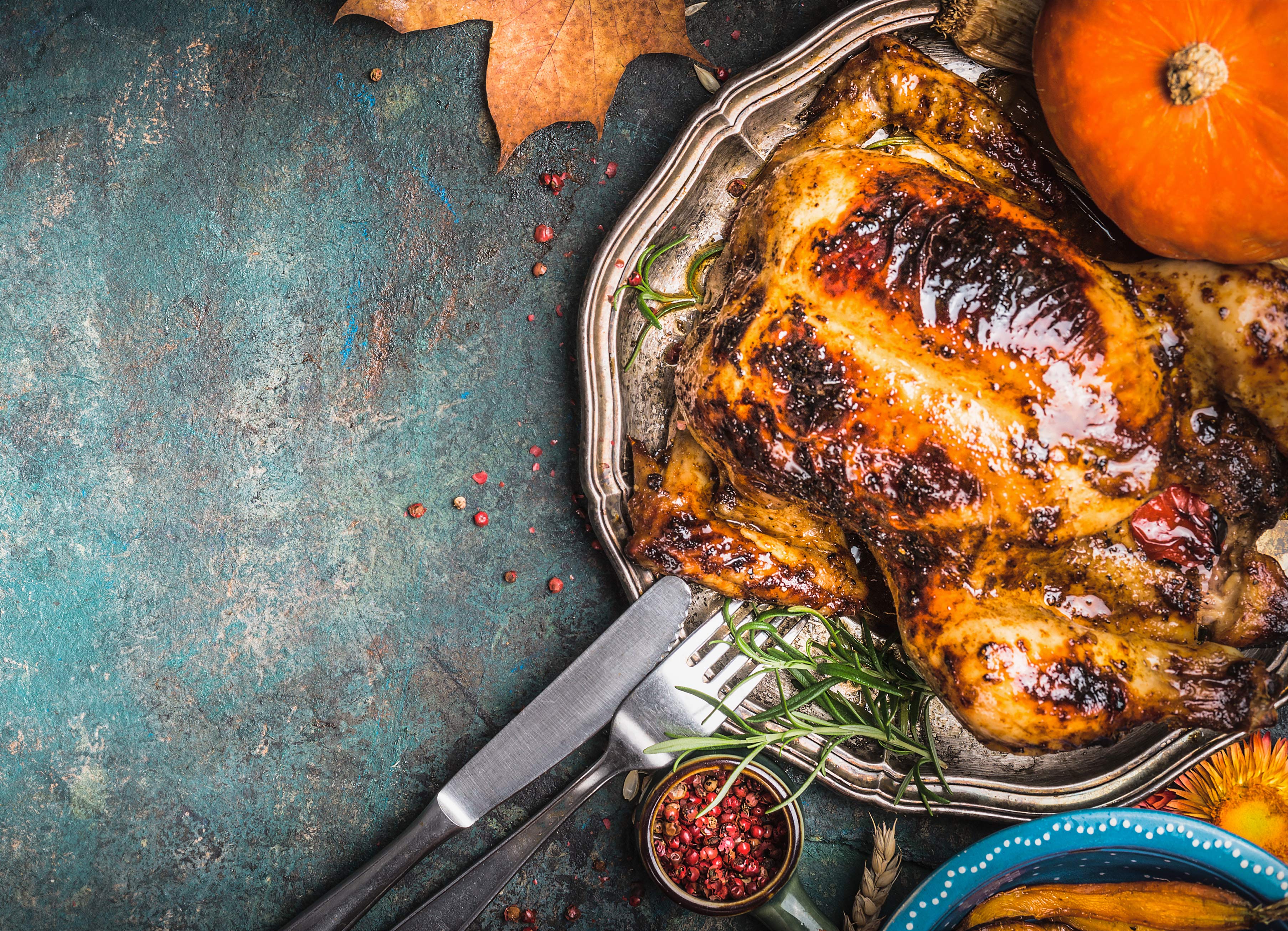
We’re merely here to comment on some categories that we think work well with the Thanksgiving bird.  Isn’t it the same stuff every year?  To a point, yes.  The ‘basics’ still apply.  No matter how it is cooked, turkey is still fowl and tolerates a wide range of wine choices.  It is less about the bird and more about the stuffing and other accoutrement in determining which choices might prove most complimentary.

Every year is different wine-wise as well.  There are some categories hitting a high note this year, and others that are at a nadir.  For the most part this year offers more potential choices in what we feel are the ‘right’ categories.  Our basic rule of thumb is that, given the varied goodies that will be on the holiday table, whites should have good acidity and little or no oak, and it’s a fine spot for something with a little residual sugar.  As for reds, bright fruit, light to medium body, and not a lot of tannin or obvious wood work best.  Again a bit of underlying acidity is a good thing, and large framed, oaky, high alcohol wines can get tiresome over the course of the meal.

For those ‘big reds’(Cabernet, Bordeaux, Syrah), save them for hearty beef or lamb roasts.  Acidity is good, wood and tannins not so much with fowl.  These are our favorite red plays with the bird.

Pinot Noir-The fruit driven, bright fruit of a Pinot marries beautifully with roast, smoked, or fried bird.  These are wonderful times for Pinot fans as California has been rolling out the hits and there are plenty of 2012 and 2013 examples on the shelves, with a few 2014s now in the mix, a vintage that has a real elegant tender edge that makes them pretty serviceable.  Oregon has plenty of good stuff, too, particularly the outstanding 2014s and remaining 2012s.  Burgundy?  Of course, if the budget allows.

BeaujolaisThis is also the ‘near perfect’ choice always and one we have been recommending for ages.  But this year is particularly exciting given the arrival of the bold, expressive 2015s and the remaining tender, elegant 2014s.  Serving them with a slight chill offers another dimension to the folks at the table.  Not everybody ‘gets’ room temperature.  Forget the still travel-shocked 2016 ‘nouveau’ when even the ‘little’ 2015 Beaujolais are lovely, juicy glassfuls.

Rioja-Somehow you knew we’d get there but the elegance, versatility, and the bottle age of reservas and gran reservas make them crowd pleasing choices.  Spanish wine for an American holiday?  Heck yeah.

Chianti- Sangiovese works nicely particularly on tables where the food choices have a more savory bent.  The 2015s are quite juicy.

If Thanksgiving is a ‘white night’ for you, there are lots of unique options this time around that didn’t exist last year.  The key is fresh, bright flavors, lifted acidity, and little or no oak.  Again the choice has a lot to do with the sides because turkey itself is pretty versatile.   Spanish Albarinos, Portuguese versions of the same, white Rhones, and a host of things from northeastern Italy (Kerner, Pinot Grigio, Pinot Bianco, Friulano, etc.) are as good as they have been since the benchmark 2010s, maybe better.  The 2016s have even a bit more drive.  Consider this a blanket recommendation.

Riesling- Crowd pleasers and the kind of wines that far too many people deny even liking (until they taste it).  We are not fans of the new ‘trocken’ movement in Germany and find the majority of the examples either under nourished or over priced.  That being said, classic German Riesling at the kabinett (fruity) and halb-trocken or fienherb (medium dry) level are always lovely choices, particularly from the 2015 vintage.  If you want dry Riesling, the Australians and Austrians do fine work with the 2015s from Austria particularly noteworthy.

Pinot Blanc- We are referring to the examples from Alsace rather than the bigger, often oaky California versions, though there are some Oregon efforts that will work also.  Pinot Blanc definitely plays well in a ‘supporting role’ and rarely calls attention to itself…until the bottle is empty.

White Bordeaux- People are surely waiting for us to say Sauvignon Blanc or Sancerre.  Hey the 2015 Sancerres are knockout, but the pungent edge, while gorgeous with a plate full of oysters or mussels, can run afoul of some of the varied things on a lot of Thanksgiving tables.  The Bordeaux versions, tempered with Semillon and Muscadelle, play more to the melons and minerals profile with less of the lime/grapefruit edge.

Wild Cards- We aren’t deliberately trying to frighten people here.  But sometimes they need a nudge to try something new.  The 2015 vintage in Austria is the ‘year of the Gruner Veltliner’, with so many examples carrying the classic terroir-driven stony flavors, but also with more stuffing in the middle and stone fruit flavors adding another gear and dimension that we can’t remember in any recent crop.  Our wildest card?  Muscat from Alsace, with a super spicy nose that says sweet, but a bone dry cut to clean the palate.

We could go on, and certainly haven’t covered all the possibilities.  But this is where our heads will be spinning as we are out looking at the shelves for our own holiday plans.  It is a particularly bountiful year in some of our favorite categories for Thanksgiving service.  Of course, if you can’t decide, there is always Champagne!  Happy Thanksgiving.


BERTHAUT-GERBET: A REFRESHING NEW FACE

We had a recent rant about how predictable Burgundy is in the wine press.  Same producers, same vineyards in the same relative order…a nice, defined hierarchy.  Even though we know that going in,  we press on anyway.  One of the things that is new and different in Burgundy is youth.  There are a lot of old-guard producers that have been doing things the same way for decades passing the baton to the next generation.  Sometimes youthful exuberance can create new problems, other times it can be the path to enlightenment by bringing fresh ideas to the domaine.

In this particular case, there was a smooth transition from Denis Berthaud, sixth generation to operate this now 13 hectare domaine founded in the late XVIIIth Century, to his daughter Amelie at the ripe old age of 25.  Denis is married to Marie Andree Gerbet whose family estate is located in Vosne Romanee.  Amelie also works the properties inherited from her mother’s family, hence the name Berthaud-Gerbet.

The change was immediate and continuing as Amelie demonstrated great touch, refining the sometimes rustic, old school tannins of the previous ‘regime’, while still preserving the sense of place.  She started with the difficult 2013 vintage, but the 2015 vintage gave this graduate of the University of Bordeaux a chance to really show her stuff.  There’s the classic ripeness of the vintage, pure red and some black fruit expression to the wines, but all within the context of fresh acidity and lift.  The concentration to the fruit in all of the wines, the clean lines, and notes of spice, speak to a youthful vision of the new Burgundy where technology meets tradition.

In earlier writings, Wine Advocate’s Neal Martin spoke to what Amelie had to face taking over the reins as a young woman.  Getting the respect of the older workers and getting them to do what she wanted was a task in itself.  But the end result was that the quality of the Berthaut label, long known as a source for old school, ‘value’ Burgundy, was suddenly raising eyebrows.  Martin credits her with revitalizing the image of Fixin (where the family has the most vineyard land) in the eyes of wine buyers.  It was in these well crafted, sleek ‘lesser’ appellations that we got excited.

The Berthaut-Gerbet Bourgogne Rouge Hautes Cotes de Nuits 2015 got our attention immediately by virtue of its insistent fruit, purity, and very fresh flavors.  Cherry, mulberry, a little spice and damp earth, all the things you expect from good Burgundy.  Undeniable elegance, this is from the higher elevations (haut cotes) and came from a 1.6 hectare plot of 45 year old vines.  The juice in the bottle definitely reaches to a higher level than the appellation might lead you to believe, and thus under $30 price tag for something that tastes like ‘real Burgundy’ was darned appealing.

Amelie’s Berthaut-Gerbet Fixin Les Clos 2015 generated the same comments from us that we later read in reviews…’when was the last time you had a Fixin like this’?  Indeed her kinder, gentler take addresses the very issue that had plagued so many examples from this village in recent years.  According to the domaine, this 1 heactare site sits high on the hill at nearly the same level as the Premier Crus, and the vines here, which range from 10-80 years old play like a more pedigreed site.  The funny thing is that, with several different reviews on the doamine that included the requisite Grand Crus and Premier Crus, this and the Hautes Cotes were not even mentioned.  That’s Burgundy for you.

While those showed great bang for the buck and were the bulk of our buy, we grabbed a little of the Berthaut-Gerbet Fixin En Combe Roy 2015 from 70-year-old vines near the 1er Cru Les Arvelets with a touch more gras and earth and a beautifully proportioned, spice driven Berthaut-Gerbet Vosne Romanee 2015.  To make our point about how Burgundy reviews work, do these words “A deft touch of wood sits atop the super-spicy and fresh black pinot fruit, cinnamon and violet-tinged aromas.  There is really lovely richness to the unusually concentrated and muscular flavors that also possess a caressing, even velvety mouth feel while delivering fine depth on the lingering finale where the only reproach to be made is a hint of warmth” sound like this kind of score (88-91)?  We think not.  An important and emerging but still under-the- radar domaine.

THE 2015 VINTAGE IN BURGUNDY REVISITED

This is partly a reminder.   We and others have gone on at length about 2015, particularly with respect to the flattering reds, one of the juiciest and most engaging vintages we can recall.  For Burgundy veterans, think back to the expressive, fleshy 2009s, but lighter on their feet like the 2002s, with a nice verve to the acidity that calls 2005 to mind.  It will surely be considered in the pantheon of great vintages.

We have also (and often) discussed the difficulty in finding value in Burgundy a number of times over the years.  High demand, small production, not to mention the ups and downs of marginal viticulture in general, have an upward effect on the price tag.  Even at the lower end, prices aren’t necessarily all that low.  It’s not impossible to find a deal.  It’s just really hard.  The best results usually come in concert with the blessing of Mother Nature because Pinot is a delicate grape that needs all the help it can get, a little extra sun raising the level of all vineyards great and small.

Untimely rain, thin skins, under-ripeness, too much heat, not enough heat, there are many things that can cause Pinot to underperform.  But the reason that some appellations consistently sell for much higher prices than others is history, plain and simple.  Chambertin has hefty price tags because it consistently performs at a high level.  The places that don’t carry big tickets do not by virtue of the fact that they don’t perform at the highest level consistently.  Maybe that lack of consistent success is due to exposure, or perhaps the fact that, year-in and year-out ripeness levels might not be as high as other locations.  But it is because they are on the more marginal side of ‘marginal viticulture’ that they sell for less.

However, when the sun shines, those areas perform at their very best.  But, because of history, the vignerons can’t charge substantially more money when they are successful because of the ‘hierarchy’.  When that happens, it is the consistent recipe for a deal, and that’s how to play Burgundy in 2015 unless you own oil wells or invented an app.  Places like Marsannay, Savigny-Les-Beaune, and Mercurey had sensational seasons in 2015 and we have spent a good amount of time going through the less famous locales to find the honest gems.  That we did, though we had to, as they say, ‘kiss a lot of frogs’ and work through some disappointments to get it done.  Hey, that’s Burgundy.

The hardest part isn’t the work, though.  The hardest part is bucking the system.  When we first referred to the ‘hierarchy’ in that last paragraph.  That is a very specific phenomenon in our view.  While there is an ‘official’ classification to Burgundy that determines Grand Crus and Premier Crus from ‘village level’ vineyards, there is also an unspoken but immutable pecking order to the vineyards as reported by the press.  It’s hard to explain even to Burgundy ‘hardcores’, many of whom accept the hierarchy as law.  But if you read enough stuff, you realize that a most of the ‘conclusions’ are forgone and/or political.

By ‘foregone’, we mean that there is a certain ‘weight’ assigned to certain climats and producers.  The most brilliant Maranges ever made has an upper limit to its scoring potential because it’s Maranges.  Most of the time it will dwell in the upper 80s score-wise, perhaps creep into the low 90s on occasion, almost always in cases where that domaine doesn’t have significant upper cuvees in their lineup.  But that’s it.  If it is tasted in the same cellar next to a wine from a better appellation, the odds of it besting that wine isn’t ‘zero’.  It’s just nearly zero.

Sure there are always exceptions, just not many of them.  When a reviewer tastes at a Burgundy domaine, he is presented the wines in the ‘order of importance’ of the bottlings…Bourgognes et. al, villages wines, Premier Crus and Grand Crus. Reviewers will taste them relative to their pecking order, and the reviews stick to that script a preponderance of the time.  Is that the most logical result?  Probably, but our point is that it almost never varies to the contrary.

On top of that, the 100-point scale that everybody uses these days has an upper limit…100.   A wine cannot score greater than 100, so everything is scaled back from whatever the top effort is.  If the best wine in the cellar, using the numbers analogy, scores a 94, the next best has to be less.  By the time you get 2-3 wines down the ladder, you are in a place where most consumers are lukewarm about most things, particularly something that has a $50-60 price tag.  Those potentially delicious ‘little wines,’ in these hierarchy lineups, have a remote chance of getting a review that will motivate buyers even though the quality warrants it.

We refer to this as the ‘theory of relativity’, as in reviewers tend not to always be able to figure out where one group of wines fits in to the broader array of all wines.  The best and most extreme illustration is Romaine Conti.  Always presented ‘in order’ (and remember nothing can be scored above 100), by the time you get ‘down’ to the Echezeaux, you are at 91-92 point scores, the same as a modestly-priced Rioja or Argentine Malbec.  Silly.  Take that Echezeaux and put it in a different lineup, and it crushes.  So what is the takeaway from this small and very slanted sampling?  Nothing clear.

Also, from one year to the next, reviewers are either clueless or afraid.  Let’s take the 2013 vintage in Burgundy versus the 2015.  While the vintages were substantially different qualitatively, the majority of the scores on the individual wines were within a couple of points between the vintages, hardly a reasonable representation of the difference between those two vintages.  Also, we don’t recall anyone coming out on the 2013s and saying that these wines weren’t worth the prices and don’t buy them.  With 2012 still on shelves, and the very good 2014s and flashy 2015s coming down the road, did anyone say not to spend your hard-earned dollars on the 2013s.

That would have been honest advice from these reviewers who represent themselves as working for you, the consumer.  But we don’t remember seeing anything of the sort in print.  We can point to Robert Parker’s brutal honesty with respect to the 1983 red Burgundies a long time ago.  He said the reds were overly tannic and had issues with rot.   Was he right?  Doesn’t matter, he was simply giving his honest opinion to the folks that pay him to give them his opinion.  The Burgundians didn’t like it very much and, if memory serves, there weren’t many subsequent reviews on Burgundy from Parker.

Are we saying reviewers go easy on the Burgundy producers so they get to come back (and you can infer the same for a lot of top addresses in other areas as well)?  Are we suggesting that Burgundy gets treated with ‘kid gloves’ by the press for fear of reprisal?    You can read the pages and pages of predictable reviews and judge for yourself.  The same wines finish at the top, the general rankings of the individual wines relative to each other within a portfolio are virtually unvaried year-to-year.  Sure there will be the occasional ‘up and comer’, but the inter-relationship between producers and vineyards is virtually unchanged from house to house and year to year.

Maybe we are jealous.  Would we like to get paid to hang out in Burgundy and tell people to buy Dujac and Roumier? Heck yeah! But we have a hard time wondering why anyone would do that.  That leaves us, the poor schmuck merchants who are trying give consumers some viable, reasonably priced and enjoyable options thanks to the quirk of fate of an exceptional vintage in a prestige (and typically expensive, sometimes laughably so) region, in a tough place.

There are a lot of delicious wines in Burgundy that won’t break the bank.  But the ‘system’ does not lend itself to promoting them in a meaningful way.   Human nature being what it is, we certainly can’t expect people to easily shell out say $50-60 for something ( say a village Vosne Romanee) that the ‘system’ allowed no more than 90-91 points within the ‘hierarchy’.   Better to spend it on an Oregon Pinot that got a ‘94’, though that score came in a completely different category and mix.

We’re going to continue to do our best because it’s the right thing to do.  We love finding that delicious Bourgogne or Marsannay for a song.    They are out there, particularly in vintages like 2015.  Just don’t expect there to be lofty reviews because of the way Burgundy is handled by the media. The hierarchy of vineyard and producer, the top-heavy score bias, and the ‘old boy’ review network, make us feel like salmon swimming against the very predictable current in the sense of creating sales.  You  will get sweeping (though calculated) comments regarding a vintage overall.  But when you actually dig into the individual reviews, the information is predictable and not particularly enlightening.

Still, we have found things that we are truly exciting from this vintage because they are compelling, engaging bottles of Pinot Noir to drink (or hold) from the place where Pinot was born.  That is ultimately the point.  Given all of the things we have mentioned, you can clearly understand that there are a lot easier things for us to sell than Burgundy.   But finding a $20-30 Monthelie that you can pull out in a few years that puts a smile on your face is a labor of love.


CHAMPAGNE, PART ONE: THE ROAD TO ZERO

As we have mentioned in a couple of other pieces, the holidays are considered Champagne season.  We love Champagne any time, but it difficult to get a lot of people’s attention for most of the year.  Usually at this time of year, because of the Q4 tradition, we have been through a number of serious tastings focused on Champagne.  Having completed that gauntlet, it seemed time to offer a few thoughts on what’s out there and the happenings in the wonderful world of Champagne.  For the most part all is well.  The big brands are the same as ever, there are more grower Champagnes appearing in this market all the time, and the selection is historically unparalleled.

In simple English, if you want a great bottle of Champagne, you can find one at virtually any price you are willing to pay over $30.  Occasionally less.  Of course, the issue is what you are looking for.  If you are looking for classic, likeable fizz that anyone would enjoy, most of the bigger brands will deliver that.  They are formulated with a higher dosage (i.e. a little more sugar) to appeal to a broader range of palates.  Consistency works for the big houses and delivering a fruit driven wine has never proven to be bad business in the glass.  There’s a saying in the industry that “People talk ‘dry’, but they drink ‘sweet’. That is true the majority of the time…provided that no one actually says the word ‘sweet’.

We have been leaning towards individual grower Champagnes for a long time.  Our feeling is that the more specific terroirs of these smaller estates adds another dimension to the wine’s profile, and the lower (but not necessarily low) dosage tends to augment the visibility of the terroir elements.  These grower cuvees are made a little dryer stylistically to approach a more sophisticated audience.  Plus, because they are not necessarily aiming for the ‘broad market’, the individual growers can take a more personal approach to their wines which also, over the vast majority, leans a bit more to the dry side.

Any time we talk about ‘sweet’ and ‘dry’, there are invariably some misunderstandings about meaning.  Before we go on, we should make the point that there are definitely guidelines for the descriptors.  In the real world, sweetness is a perception.  What people say, how they describe things, are subjective, but not necessarily accurate.  One man’s sweet could be too dry for someone else.  So our references here are based on scientific fact.  A Champagne can be called ‘brut’ up to about 1.2% per cent residual sugar. A Champagne that is 0.9% residual sugar is drier, period.  As you can probably surmise, there is a significant difference in the profiles of something that has zero residual sugar and sitting at 1.2%.

One’s individual appreciation of a particular style or dosage is strictly personal.  In other words, it is not up to us to tell you what to like, merely give you data to help you determine what you might like.   Because of Champagne’s higher acidity, a higher level of sweetness will, in plain talk, not taste as sweet as it would in a lower-acid still wine.  Unlike a lot of people who think anything with any sweetness at all is for grandma, some wines need a bit of sweetness to offset certain levels of acidity.  It is particularly true with varietals that have higher natural acidities like Chenin Blanc and Riesling.  We see Champagne as falling into the same kind of requirement.  Don’t get us wrong, we don’t mind a little sweetness, or a complete dryness.  But no matter the profile, the individual wine has to be balanced. Most important, it has to be enjoyable.

That being said, we are seeing a strong trend towards more dryness, maybe a little too much.  A lot of folks we have followed for years seem to be lowering their dosages across the board, or at the very least introducing ‘brut zero’ or ‘no dosages’ options in their line.  Let us first point out that the industry does not ask the people what they want.  They merely decide what is best for all of us and proceed to make it (see also Syrah and Italian varietals in California).  One of our more frequent descriptors regarding a rather substantial number of Champagnes we have tasted this year is ‘angry’.

A somewhat drier entry is an indicator stylistically, but far too many examples cut away mid-palate exposing something soily, stoic and a sometimes little bitter.  The grower says he is ‘expressing the terroir’by keeping the sugars very low.  To that we say ‘yeah, but it isn’t very pleasing to drink.’

We are sure there are self-appointed gurus and twenty-something sommeliers who think the super dry cuvees are the ultimate food wines.  It seems that the brut-zero/orange wine/underripe-red set currently has a disproportionately larger voice among suppliers.  Maybe the next generation of producers like ‘angry’ wine better.   Who are we to question the pontifications of some self-appointed ‘trend setter’ who has moved on from skeletal trocken Riesling to embrace literally ‘bone dry’ Champagnes.

To be honest, we have had a few examples (Ruppert-Leroy, for one) of low dosage bubbly that we liked a lot.  But to pull it off is really, really difficult.  The fruit has to be near perfect, have enough flesh on it to give the impression of richness, and an extra lift at the finish.  Very few that we have tasted, a really small percentage in fact, can deliver that style in an engaging way.  We get it that there are a lot of folks that decry the mawkish nature of some of the most popular French bubblies (like Moet White Star).  But there’s a new wave in Champagne that seems to be taking it too far the other way.

Not to sound like Mary Poppins, but a little bit of sugar does help the ‘medicine’ go down.  It makes it taste good, and ultimately that is the point.

Another trend that seems to be developing throughout the industry (though most folks may not see it for years, if ever) are ‘dirt’ cuvees (they don’t call them that, but the name fits).  We encountered more than a couple instances where some growers were not only bottling from their property, but subdividing parcels and making even more finite cuvees based on soil types, exposures, etc..  While they gave those cuvees individual names, the explanation was, ‘…this one comes from mainly chalky soil, and this other one comes from volcanic soils’.  In other words their base was rooted in some more finite aspect of site specifics.

There were also individual plot bottlings defined by vine-age, and still others that featured a specific varietal.  We love artisan Champagne, but many of the artisans are becoming a bit too artisan, and we have a hard time believing that a producer can (or should) make six, seven, eight different cuvees.  Sure, winemakers, being winemakers, love to tinker with new ideas.  But they sometimes get too involved in their own world.  We’re afraid things will go the way of California and Oregon Pinot Noir where too many individual bottlings from the same house confuse the consumer (and us), and don’t provide nearly as significant a varied profile to people out in the world as they might appear to a winemaker who tastes them repeatedly in a closed environment.

We understand trying to challenge the palate.  But even most Champagne dorks (and we count ourselves among them) would not  find a lot to get viscerally excited about with the slightly different nuances of these varied cuvees (which are noticeable in a side-by-side comparison but certainly less so otherwise), all done in a more austere style, at $60, $80, $100 per bottle.

Growers already have a challenge in that they only have their own dirt to work with, and can’t address problems that crop up in their own winemaking by blending juice from other areas.  We taste growers every year because they can vary quite a bit from year to year based on the base wines and reserves they have available.  There are some houses that we have loved almost every year (Vilmart, Billiot, Agrapart, Pierre Peters).  But most are off-and-on and can ‘sing’ one year and disappoint the next.

The overall quality level has been augmented by some exceptional vintages in the base wines (like 2012).  But the stylistic shift towards drier styles negates some of that because of the demands it puts on the individual cuvee.  If you expect the consumer to appreciate the terroir, the terroir has to perform. The lower the dosage, the more the base wine is exposed.

If we aren’t sounding like cheerleaders, it is due to our concern about the trend we see taking shape. It wouldn’t be our choice.  Somewhere in between those tart, no-dosage Champagnes and the sweetish broad market cuvees would seem to be the happy medium.  ‘Drier’ isn’t ‘better’ by definition as far as Champagne goes.  Still, as far as thrilling options, there are plenty of those.  We’ll get more specific about that next time.


LOS VASCOS CABERNET SAUVIGNON 2015-A STEP (OR TWO) UP

Chile has come a very long way since we started to see the wines in the late 80s when the majority were  generally a collection of rustic juice that could sell for super low prices.  Given the development of higher end collectables like Almaviva, Seña, and Clos Apalta, a growing number intriguing boutique projects, and a general surge in quality from a number of the Chilean ‘old guard’ producers, there’s a lot to talk about.  Sadly, if it’s not ‘hot’, ‘elite’, or ‘new’, the wine media doesn’t pay much attention…a token 86 or 87 score and a cloud of dust.  We didn’t want this one to get lost in the footnotes.

That presents a little bit of a problem for those of us with boots on the ground who spend a lot of time to find tasty, well-priced and angst free beverages to recommend to people.  Talking about the things we do find isn’t exactly easy either.  In a world where one email after another hits your inbox making claims to be offering the ‘best ever’ in one way or another, giving someone a straight, honest assessment of a wine often proves to be a pointless exercise.  Hyperbole sells and we know that.

Even so, we feel compelled to mention things that got our attention and, in some cases, do so without overstating our case.  That being said, we like to mention the Los Vascos Cabernet Sauvignon 2015.  Yes the under $10 one!  We go back a long way with this label and have tasted many vintages.  They have usually been solid, honest Cabernets that you could serve with confidence.  Some have been a little leaner, occasionally they might have had a little green streak, but consistently serviceable Cabernet.

The Rothschilds (yes the same folks that own Chateau Lafite, Duhart-Milon, Rieussec, and L’Evangile) have been in Chile for quite some time, taking over this estate in 1988 and giving it the name Los Vascos (meaning the Basques, a nod to their family heritage).  The wines have consistently improved over the years as the family has become more familiar with the terroir, but the 2015 vintage seemed to allow them to kick it up a notch.

Knowing Los Vascos as we do, we were immediately impressed with the more ample, supple fruit that this wine delivered…  a pleasing midpalate of dark red fruits reminiscent of a well made petite chateaux from Bordeaux with fleck of spice, earth, and graphite.  We were also pleased by what it didn’t have…the green peppercorn notes and overtly savory edge that seems to be a component of many Chilean reds at all price points.

Apparently James Suckling was as charmed by this Cabernet as we were, saying, “An attractive and delicate Cabernet Sauvignon with very fine tannins and bright fruit. Medium body. Black currant, walnut and wet earth. Delicious Chilean Cabernet. Fantastic value. One of best ever from here. Drink now…92 points.”

Ditto for Decanter Magazine.  The Brits know a good buy when they see it and, for them, this review is positively giddy, “A fresher and purer style seems to have emerged from this new release, part of the Domaines Barons de Rothschild holdings. It’s vibrant and bold, focused on primary cassis and red cherry fruit and a herbal hint. Silky textured and supple, it’s elegant with lovely depth to0. 90 Points ”

We’d go so far as to say it is the best we’ve had in this series, and this is a Los Vascos most folks will be able to get comfortable with.  We aren’t telling you to throw away all of your $50 Cabernets.  We aren’t shouting from the rooftops.  We’re simply telling you in a regular voice that this is a rather tasty little surprise and nine bucks well spent.


THE MAN (/WOMAN) IN THE HIGH CASTLE

To be honest, the relationship between us, the industry, and the wine press has been a varied one over our three (plus) decades.  We started Winex (such as it is) in 1982, roughly about the time The Wine Advocate and Wine Spectator gained substantial enough readership and influence to ‘move the needle’ with respect to sales of a particular wine.  The emerging, expanding wine-drinking population was looking for guidelines to help them select from among the increasing array of wines in the marketplace.  These two publications in particular were in the right place at the right time with formats that were palatable enough to generate substantial followings.  In turn, those ‘followers’ began to have more impact on the marketplace as they reacted to reviews and bought up the lauded wines.

Now that we are about 35 years into this process, and possibly witnessing a change in the landscape, it seemed a reasonable time to assess where we are.  It started simple enough with the reviewers giving their opinions about various wines they tasted, and people heeding that advice.  As a greater number of people started to follow these scribes, the intensity of the reaction elevated.  A big review was like that proverbial magnifying glass focusing the ‘rays’ of demand into a white hot flashpoint that burned up the existing supplies of showcased vinos faster and faster.

The industry had the opportunity to hold their own in the face of this growing phenomenon, but instead largely accepted that it was easier to just paste up reviews than generate their own sales programs.  For most of the time since, buying and selling based on reviews was the only program for most retailers.  Still is.  Exploring most wine web sites, you will find cut-and-paste reviews almost exclusively on most, and virtually no original text.

The introduction of the internet increased the power of the press and made their chosen sites more accessible more quickly.  The whole buying/selling process became much quicker accordingly.  What took a particular wine a few weeks to sell through before could now sometimes go from start to finish in an hour or two thanks to the internet.

The wholesalers/wineries/importers, reacting to getting blindsided by people buying up reviewed wines (and nothing else) did what they always do…overreacted.  Tie-ins (which aren’t technically legal) and abuse of the ‘allocation’ process were chosen as the best defensive tools for purveyors to make sure peole don’t corner too many of the ‘cherries’.  That is loosely where we are today, although it has been a little easier to get some of the high-demand, highly reviewed goods simply because the market is so fiercely competitive thanks to greater variety, higher quality of goods, and a much more widely educated buying public.

As most of you that have followed Winex over the years, we are about as fiercely independent as a merchant can be today.  The wine writers’ hype is a tool for us to use when we like something to get the message to buyers.  But they have never been something to be blindly followed without question.  We have turned down many wines over the years that we could have sold through in a nano-second simply because we don’t think the wines are good enough.  We have had a love/hate relationship with the press for all of these years, which we will explain in a minute.

First let’s give credit where it is due.  The reason that we have a more educated wine-buying population these days can be attributed to a large extent to the wine press, which has explored, explained, and helped develop a broader understanding and appreciation of a number of genres that were not en vogue back in the early days.  People are aware of, and more comfortable with a much wider range of wines than ever before and, because of that, are presented with even more to choose from by virtue of that broader receptiveness.  A lot of this can be credited to the press covering those formerly off-the-beaten-path categories and educating the consumer.  If you write it they will read?

Also the press has revved up the discovery process.  It took years for a brand to develop in the marketplace, even decades.  But a new wine or winery can be an instant icon with some timely press coverage and a couple of big scores.  Yes the ‘waters’ run faster in today’s wine news cycle and things can pass by rather quickly.  But there is plenty to be had if you swim fast enough, and really even if you don’t.

Our point is that, while we sometimes get a little miffed with the wine press, and have pointed out a number of things we see as flaws in the ‘process’, in all fairness they have been a big part of the development of the wine market over the past quarter century.  Now that there are a few more players in the ratings game we’ll see how it shakes out.  More opinions shouldn’t hurt the message, though it could dilute the impact of a particular review.

That being said, we felt the need to mention a couple of things to the writers themselves.  We would ask the banal question ‘who pays your salary?’  Consumers and the trade presumably are using ratings services to help them evaluate choices in the marketplace.  Do they have the same objectives?  Perhaps, perhaps not.  But the ‘why?’ isn’t the issue.  So much stuff hits the market every year at such a high rate, every byte of usable information can help sort it out.   It is the definition of ‘usable’ that we are debating today.

We were reading the Wine Spectator the other day and happened to notice their review of the 2014 Ramonet Montrachet at 98 points.  The piece stated that ten cases were imported.  You can only imagine our relief at knowing that someone had tasted one of the rarest and most collectable white wines in the world, in an outstanding vintage, and deemed it worthy.  We can rest secure in the knowledge that if we had $1100 to drop on a single bottle of Chardonnay (if you could even get it for that) and could find one of the remaining 119 bottles that came into the U.S., it would be OK to pull the trigger.   Is this usable knowledge?

We can say the same thing about a number of other highly reviewed icon wines.  Does it really matter to anyone if Sine Qua Non gets a 98 or 100?  OK maybe to Manfred Krankl, though the guy doesn’t really need the hype to sell wine any more.  It might matter to the few guys that buy wines like that to ‘flip’ so they can seek a higher resale return.  But to most folks, what is the message?  That the reviewer got to taste the wines and you didn’t?  That you should start thinking about getting on the waiting list to be on the waiting list?  Is this usable knowledge for most folks?

We grabbed a few ‘special report’ titles from Wine Advocate to further illustrate our point:

–A Retrospective of Barone Ricasoli’s Vin Santo del Chianti Classico -30 tasting notes

–Sunday Prayers with Trotanoy 18 tasting notes

–Tenuta San Guido – Bolgheri Sassicaia Retrospective 47 tasting notes

–Chateau Montrose 1893 – 2014 62 tasting notes

–Valandraud Complete- 45 tasting notes

–2007 Southern Rhônes – Living Up to the Hype at Age Ten?  192 tasting notes

–Bordeaux: The Pauillac of Margaux – Brane-Cantenac 1971-2013

It didn’t take long to get that list, and we could dig deeper into multiple publications and create the ‘mother of all lists’ regarding this sort of thing, but the point is that the information in many of those articles isn’t necessarily actionable or of any real value to most readers in a conventional context.

Is there an audience for these pieces or is it writer’s self-indulgence?  If you are telling me in detail about wines I have little likelihood of seeing, let alone tasting, how am I enriched?  By sharing in your experience vicariously?  Thanks a bunch.  I would question how many subscribers were actually seeking this kind of information when they signed up.  But since the publication already has the money, readers don’t have a lot of say about they are being served.

There will be arguments that these kinds of tastings augment the tasters’ experience and therefore their ability to assess wines oveerall.  Street cred.  To that we would rebut that such experiences can have just the opposite affect and jade the palate beyond reason and make everything else such people taste seem ordinary.  We know people like that.

A ‘consumer report’ that delivers the message that virtually everything is banal or ordinary, except a few things that you likely can’t buy, doesn’t really help those consumers very much.  Yet this is the direction such publications seem to be leaning over the last few years in particular.  If writers view their role as being the de facto sales department for winery-only, boutique wines or the guy with the 119 bottles of Montrachet, let them pay you, too.

We say to the wine press, come down off your high horse.  Reviewing page after page of wines that most folks will never see, except at a restaurant at three times an already hefty price doesn’t benefit most consumers.  Climb down out of your high castle and be among the little people.  We drink pretty well ourselves and still think a lot of this stuff you writers do is indulgent and over the top.  What’s next?  Jayer Cros Parantoux vertical?  The 1947 Bordeaux 70 years on?  Favorite 5-case production wines? We’re sure it will make for compelling reading, but really what is the point?

Simply, when writers take up space with this kind of stuff, we don’t believe they are serving the best interests of the majority of their clients.  We can say for ourselves that we read much less in these publications than we used to.  Are we jealous?  Would we like to get paid for our detailed notes on the 1985 Romanee Conti lineup?  Sure!  But we can’t imagine who would pay for that, nor do we really need such info from somebody else.  It is more likely, if we adopted that business model, we’d end up on a freeway off-ramp with a cardboard sign that says, “will pontificate for food.”


NOT JUST ANY OLD BEAUNE

Ah, Burgundy.  No appellation is more frustrating or confusing, yet the joy of finding the ‘good one’ always seems to provide the impetus to continue the hunt.  Finding a deal is a bonus. The 2015 vintage has been a fun exercise because the vintage’s engaging ripeness definitely allows for a higher success rate.  Of course the trick, from our point of view, is to find the juicy little numbers that don’t have triple (or quadruple) digit prices.

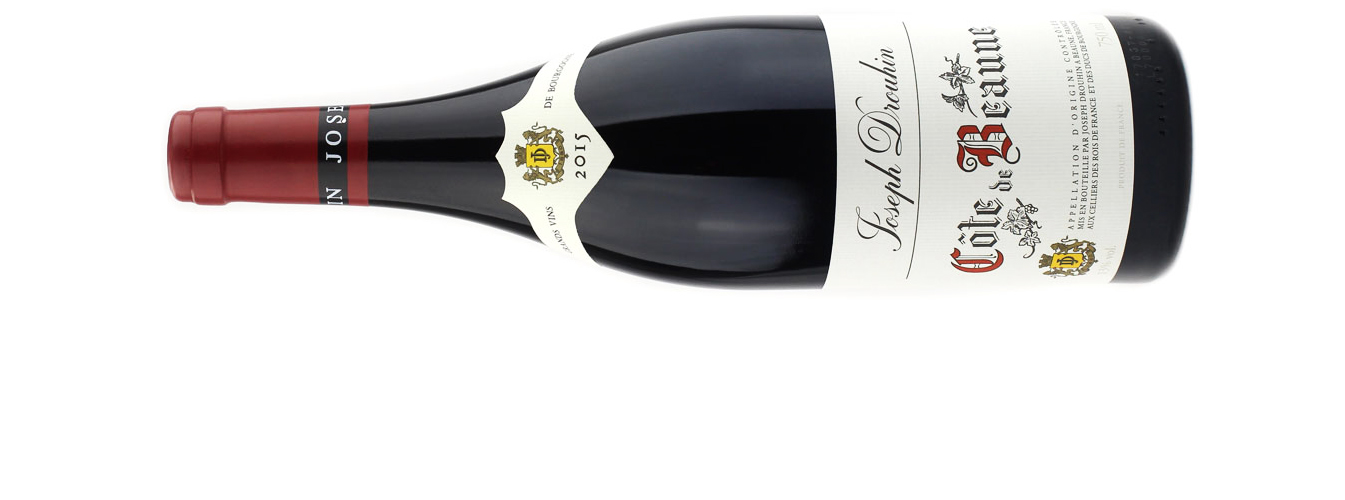
Sometimes the quest is easy; sometimes there are riddles to be solved as there was with this sleeper from Joseph Drouhin.  We have been pleased with Drouhin’s 2015 red Burgundy efforts at a number of levels.  But when we first came across this one, it was a bit of a curiosity.  Labeled Joseph Drouhin Cote de Beaune 2015 but bearing a fancier label (with a resemblance to Drouhin’s Clos des Mouches label…sans mouches of course), it was priced $10 higher than their more plainly labeled Cote de Beaune Villages.

It brought about questions on our part since the labeling didn’t necessarily sync with our impressions of the workings of the Burgundy hierarchy.  As one might have expected there was a perfectly Burgundian explanation.  Drouhin is a big house and produces a lot of negocient wine as well as bottlings from their own estate properties.  The ‘Villages’ with the regular label can come from any one of 16 different individual villages (Aloxe Corton, Volnay, etc) and isn’t necessarily all estate fruit.

The Cote de Beaune, according to the folks at Drouhin, “comes from the vines of the Joseph Drouhin estate (total vineyard area around 3 hectares – 7.5 acres) as well as from the younger vines of Clos des Mouches and other Premier Crus of Beaune that have been declassified (a Beaune wine can be declassified into Côte de Beaune).”  The story here is that there is much better (and more specific) stuff used in this one than the ‘villages’.  However you wouldn’t necessarily know that from looking at the label.

Fun folks, those Burgundians.  But once you get the ‘lay of the land’ and consider the possibilities is in a top vintage, things like this can become your own precious little secret.  Pour it out and you’ll really get a feel for where this one can go, and behold its deep ruby color.  The wine is a little reticent at first, with a touch cooler edge that most of the ultra tender 2015s, but Burgundy fans would consider the touch more lift and freshness a good thing.

As the nose opens, the breeding of the grapes here start to unfold.  There are dark cherries and currants, of course, but also a penetrating florality and high notes of mineral and clove in the nose.  As it sits in the glass few minutes, the Cote de Beaune unwinds to reveal spicy layers of fruit and plenty of flesh, nicely juxtaposed with clean acidity.  The highlights, or maybe it’s the power of suggestion, suggest this one flashes a bit of its ‘Mouches-y’ pedigree, but in any case there is no doubt that this one merits serious attention in this expensive vintage.

James Suckling had some nice words for this one as well, offering, “Very floral and fresh with crushed raspberries and flowers. Medium-to full-bodied, dense and silky. Beautiful and layered. Lovely texture. Drink now. ..92 Points!”  Still young and very lively, it is certainly a fine choice for current applications.  By all means, ‘drink now’ after giving this one a few minutes to stretch.   But we also think shows the definition and class to allow one to ponder putting away a few bottles for 5-10 years.  Either way, you win.

Also, and perhaps as important, there’s the value.  Clos des Mouches itself sells for over $100, this one costs about 66% less.  Good well priced Burgundy isn’t easy to find.  But it’s out there if you are willing to dig.


The Aftermath

Obviously, we need to start this by sending wishes and prayers to all of our friends in the wake of the fires in ‘wine country’.  The loss of life is horrific and the extensive damage to property, still being assessed, is clearly catastrophic.  Our heartfelt sorrows go out in particular to those who lost their homes and businesses.


There are a lot of folks who will be offering condolences.  The media has, and will, be full of articles about people’s heroics, first responders, and other encouraging tales about the human spirit.  It does seems like there have been way too many disasters this year in particular.   There are a lot of people that will tell you they know how you feel, but most don’t.  Being helpless in the face of an overwhelming tragedy isn’t something most humans have had to experience over the last few decades.


Around here, we’ve had a bit of an inkling (more than we cared to) of what NoCal has been going through as three of the ‘characters’ in our own Winex crew were far too close for comfort to the Corona fire a couple of weeks ago and Canyon Fire 2 early this week.  Having to decide what to save, considering the immediate and long-term importance of the item, and to have to make those decisions within a very short period of time and under duress, is scary enough in itself.   Our people were fortunate to be beyond the final perimeter in those cases, but others weren’t.


It’s certainly fair to say that some of us down here didn’t realize how bad things were in Napa and Sonoma because we had our own disaster going.  It was amusing to hear the national news people talk about our fires as ‘just outside of L.A.’  We’re an hour south on a good day and substantially more in traffic.  In any case we have been ‘shaken and stirred’ here to the point where we might vaguely be able to sense the situation up there.


We actually weren’t sure what to do given the events of the past week.  We know a lot of people in the north, and have friends that did lose houses.  But we also figured that a people are a little tired of hearing about things burning.  We’re supposed to be the ‘fun’ place.  But this particular set of horrific events is right in our own back yard and, both as wine merchants and Californians, we thought we needed to say something.


The only point we would make falls in line with that whole ‘the wine business isn’t like any other’ thing.  Given the fact that there are still fires raging up there it is still too soon to assess the damage.  There have been more fatalities, more evacuations and more structures burned.  Obviously, we aren’t trying to make light of anything.  But we are starting to see articles about ‘what happens next’ and ‘rebuilding’.  That caused us to ponder a little about ‘wine’ things.


How do you rebuild?  Let’s say you are a winery.   There’s no ‘good’ timing for a fire but right now is harvest.  There are still some ‘ready’ grapes on the vine, possibly partly scorched, heat damaged, or affected by smoke.  Even if they were still ok (apparently there were cases where the expanse of green healthy vines in a vineyard acted as something of a firebreak for crops, homes and buildings), how are wineries going to get to them?  It doesn’t sound particularly healthy or safe to put a crew on picking.   So, a lot of grapes are going to be lost in the vineyard.


If you were one of the luckier ones in this earlier harvest, a lot of your grapes are harvested and fermenting.  But a lot of folks can’t get to their wineries to do some of the simple things essential to the basic making of the wine.  As we have said many times on these pages, timing is an essential part of the winemaking equation.  Not everyone does things the same way, but each winemaker has a protocol that can be pretty time intensive at this part of the process.  Failure to do certain things at the right moment can create problems that cannot be fixed later on.


There are potential risks to existing stocks from fire, smoke or heat.  Some are preventable, some are not, but someone has to be there and able to do it.  Clearly that will be a problem for a number of producers.  Even if there aren’t the ‘specifics’ we mentioned to negatively affect grapes or wine, lack of access on the part of winery crews has its own unique set of problems this time of year.


Taking it a step further, what if the winery goes altogether?  You not only have what is being made, you have a bit of what was already made and still aging in barrel.  So not only is the current ‘crop’ gone, so are portions of the last one or two vintages.  At White Rock, one of the wineries rumored to be destroyed (their website tells a more positive story), they age their Cabernet in French oak for 20 months.  So, the potential existed to lose three vintages.


The final assessment isn’t in for them.  There are storage caves on the property which may have saved a lot of the stock.  But White Rock serves as an example of what can happen.  It isn’t the first name you think of when Napa Valley is mentioned, even though they have been there for decades.  It is a unique, small production property in Soda Canyon that has a very specific style.  They have a carefully established network for sales and most folks that have been around Napa Valley for a while know who they are.


So, let’s say they did lose as many as three vintages of their red wines (hopefully not).  They could buy something else and bottle it, but it wouldn’t be the same thing that consumers have come to expect.  They could be off the market for three years and have to start the distribution process all over again, no easy feat these days.  If some of their 40-year-old vines were destroyed, it would take them, you guessed it, 40 years to get to them back to the same point.  A lot of folks went through this kind of decision-making with phylloxera in the 90s, but that was a slow, predictable process not an overnight wipeout.  You can’t plan for this sort of thing.


Finally, and again White Rock is just a real name that represents scores of wineries in every conceivable state of disarray from this terrible tragedy, what happens to such labels in the meantime?  If you make tables, and one of your tables burns, you can make another one (yeah, we know that there’s at least one guy out there mumbling no two pieces of wood are the same).  You can’t remake wine.  Vintages, vine age, blends, etc., cannot be precisely reproduced.  The competition in the marketplace is the fiercest we have seen in our decades of doing this, so coming to the market with less than your best is an uncomfortable proposition.   If you don’t come to the market at all, that’s bad for other reasons.


On top of it all, you’ve got tourism.  We are old enough to remember walking into a tasting room in the Napa Valley and seeing the owner behind the counter.  Of course, that was the 70s.  That was light years from where it is now.  It is an industry unto itself.  We read one article that said ‘wine country’ (however they defined it) had more visitors than Disneyland in the last year.  How will all of this destruction and relocation affect that aspect?


This is a nasty situation, lives lost, property lost, jobs lost, and more jobs lost by the people that support the people in the industry.  The whole industry will feel the sting of something of this magnitude in a number of different ways.   It will take weeks to assess the obvious damages, but perhaps a decade or more to see the full, as yet unpredictable impact on the region.  However, none of it matters until the winds die down and the fires subside, and that can’t come soon enough.

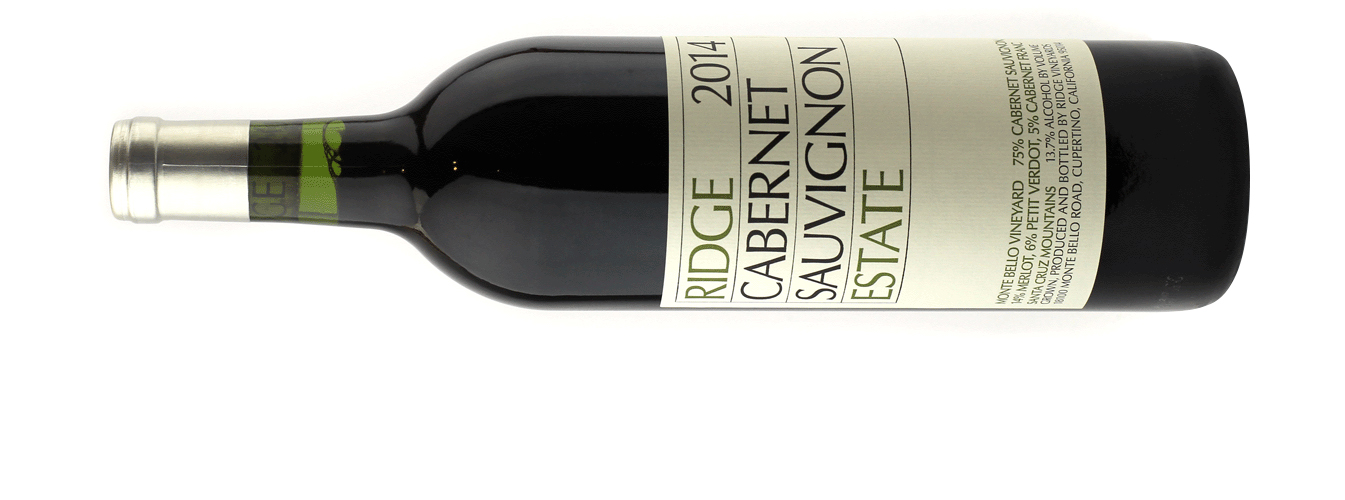
RIDGE CABERNET SAUVIGNON ESTATE 2014-Montebello Heritage, Lower Fare

One of our long time tenets has been to explore ‘other offerings’ from iconic wineries.  If you haven’t heard our reasoning it’s pretty simple.  ‘Iconic’ wines are wines that have achieved a certain status because of continued excellence over a period of time, and our thought (which has proven true time and again) is that the folks who make great wines answer to a higher standard than the rest.  A value wine for them has to still fill a certain criteria no matter what.

Over the years we have told this story a number of times, usually with the subject being something from a top Bordeaux chateau like Lafite or Pavie, a Chave or a Lodovico, or something of that ilk.  We openly admit that our usual forte is the Old World because California has eschewed the value handle it seems, almost bristling at the suggestion that anything of theirs be offered at a price that is less that whatever they divined to sell it for.  But even here, the theory can work.  It’s just a matter of finding the example.

So who is our icon?  Well, it would be difficult for any California aficionado would deny that Ridge Montebello is among the state’s most storied Cabernet series.  AS folks who have tasted these them since the late 80s, we would have the temerity to suggest that Montebello has actually gotten better over time and the current releases are among the best ever.  The problem is that the wine is becoming even more scarce and, these days, sells in the $200 range.

That’s what makes this story particularly important.  A few years back we started to see a wine called Ridge Cabernet Sauvignon Estate.  So what is it?  Well, in this case, think of Ridge Montebello’s answer to Carruades de Lafite, Les Forts de Latour, or Pavillon Rouge de Chateau Margaux.   In other words this is Ridge Cabernet from the younger vines and deselected lots of the ‘big dog’.  There was a lot of experimentation that lead to this decision, with earlier versions that were simply labeled Ridge ‘Santa Cruz Mountains’ until we started to see this nomenclature in 2008.

We liked the 2012 version of this wine quite a bit (it was also a Wine Advocate 92 and 94 Galloni), but think the new version, while perhaps a little less outgoing out of the gate than the 2012, is possibly even a touch more polished and complete.  Once again we were not alone and this Cab already has a few reviews including a 92 from former Wine Advocate scribe Jeb Dunnuck who has recently started his own service, and Antonio Galloni’s 93.

Galloni posts a rather rave review, stating “…bold, incisive flavors. Even with all of its intensity, the 2014 has a certain silkiness in its tannins that makes it approachable today. Of course, the 2014 will be even better in another few years, but opening a bottle on the early side is not a crime. The 2014 spent 27 months in French oak. Readers who are looking for a more affordable alternative to Ridge’s iconic Monte Bello should consider the 2014 Estate. Look for the Estate to be a real overachiever in 2014 as well as one of the best – possibly the best – California Cabernets in its price range.

 That’s kind of what we’re on about here.  This is a brilliant effort made up of 75% Cabernet Sauvignon, 14% Merlot, 6% Petit Verdot, and 5% Cabernet Franc, and 100% Montebello fruit! More importantly, it’s a very classy, sophisticated Cabernet essentially hidden in plain sight in the shadow of its famous sibling.  This is not a place most folks think to look for an elite Cabernet but beside performance, horse sense tells you that you can’t buy much in Napa at this level for $60-70.  So in its own way, the Ridge Cabernet Sauvignon Estate 2014, at a quarter the price of the Montebello, is a legit value for folks looking for serious Cabernet.  It’s also proof that the more affordable efforts from big time players theory works in California sometimes as well.


AVIRON BEAUJOLAIS-BETTER LATE THAN NEVER

Given the remarkable abundance of great wines that are out in the marketplace these days, finding the right ones at the right prices is a monumental and never-ending tasking.  At the point where we actually do find something that gets us excited, particularly the ones where all of the boxes (quality, style, typicite, and price) get checked, we commit without a blink.  At that point it’s out of our hands until the wine arrives.  Often it is merely a process of the purveyor putting it on a truck and sending it.   Sometimes it becomes a lot more complicated.  This was one of those times, though we will save the particulars for another piece on the sometimes curious ways in which the industry works.

You have likely heard us jabber on about the fantastic 2015 Beaujolais.  Several months ago we had the opportunity to taste what might be some of the best values of this sensational vintage.  We started working with Stephane Aviron’s wines back with the also highly revered 2009 vintage.  At the time he was working with Nicolas Potel under the heading ‘Potel-Aviron’.  Delicious Beaujolais, fresh and fruit driven, and at remarkable prices for what they delivered, those were among the many exciting new faces we discovered with that breakout vintage in Beaujolais.

Aviron and Potel parted ways but we continued to follow Stephane because the guy could definitely make wine, and made it in the lifted, engaging, can’t-put-the-glass-down style that would win friends for the genre.  Oh yeah, and he still sold the stuff for 199os type prices.  In other words just about the best of all possible scenarios.  Needless to say when we knew we were going to have the opportunity to taste his 2015s, there was definitely interest.

The fact that the wines were compelling was no surprise.  Some of the wines that were particularly successful wasn’t necessarily what we might have predicted.  Running through the lineup, among the most impressive offerings were the Julienas and Chenas, not the appellations that usually rise above.  We picked the Stephane Aviron Chenas Vieilles Vignes 2015 between them because this appellation rarely merits this kind of attention.  Don’t get us wrong.  Good Chenas is exciting, but it is also something of a rarity as the region doesn’t necessarily have too many superstar labels (though that might be changing thanks to folks like Thillardon).

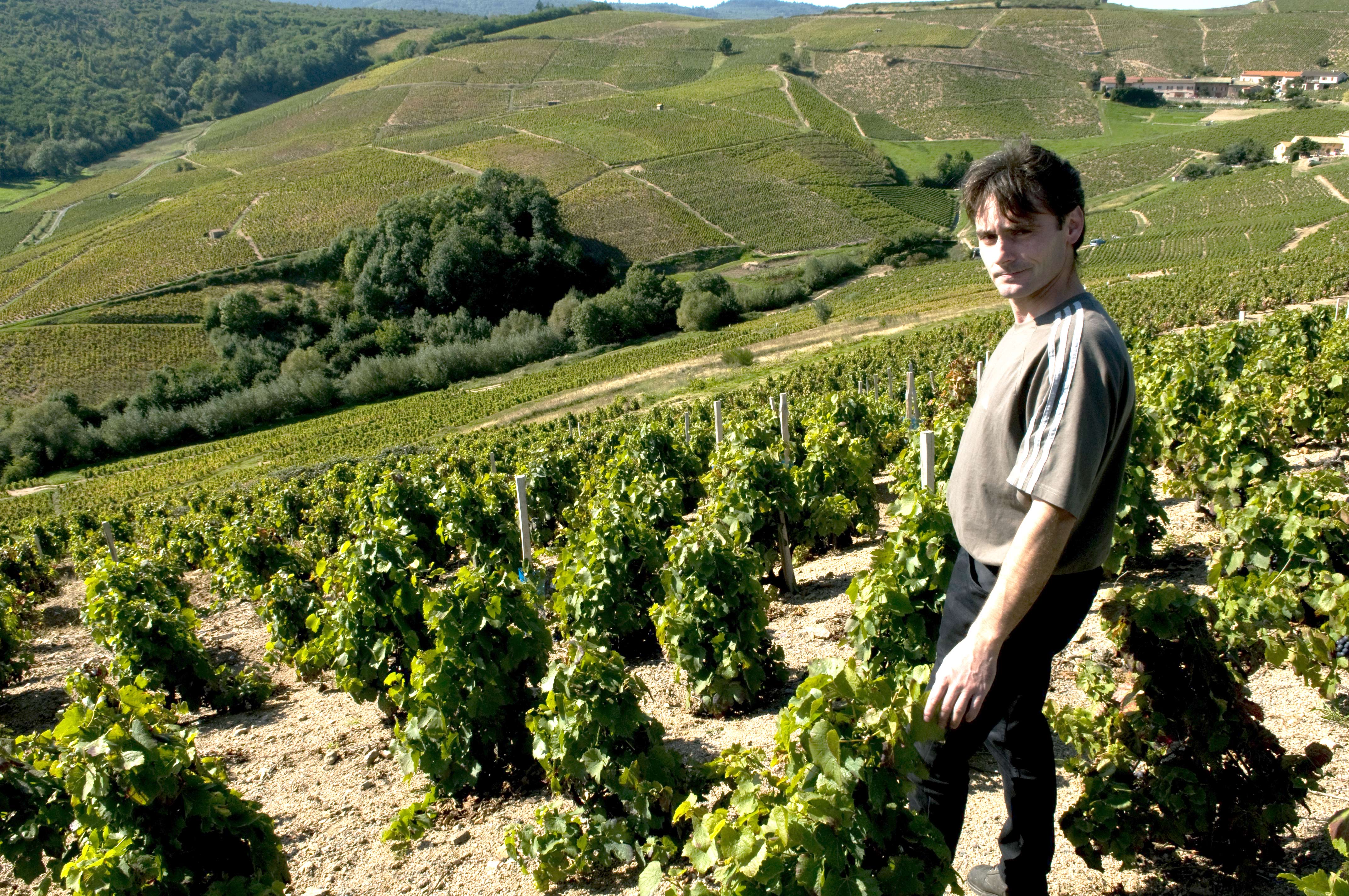
Made from pre-phylloxera vines that average over 100 years-old, from a 13.6 acre parcel that Stephan Aviron has been producing from since 1993. The soil is light and made up mostly of sand and small pebbles over a layer of clay and quartz which explains that brighter, more delicate and outgoing nature of the fruit in this engaging beverage.

While we think the Chenas is a crowd pleaser, we know the more serious Beaujolais types like to have something with a little more pedigree.  To that end, consider the Stephane Aviron Morgon Cote du Py Vieilles Vignes 2015Again the focus is on lip smacking fruit, as is the house style.  But there is more firmness, salinity, minerality, and maybe a little smoke by virtue of this respected hillside terroir.  His vineyard faces south on the slopes of this inactive volcano and the vines are a minimum of 40 years-of-age.  Like the Chenas, the well-under-$20 price is pretty enticing for a wine of this quality and this one might even benefit from some bottle age though it has that classic 2015 outgoing drinkability.

We tasted these wines way back in the early spring and they have just arrived (we have been getting deliveries of 2016s from a number of purveyors already).  Why did it take so long?  Let’s just say for some the ‘wheels of commerce’ turn more slowly.  But on the bright side, these are excellent performers at their modest fares and any opportunity to grab a few more of the flashy ’15s, especially at these kinds of prices, has to be considered a good thing.