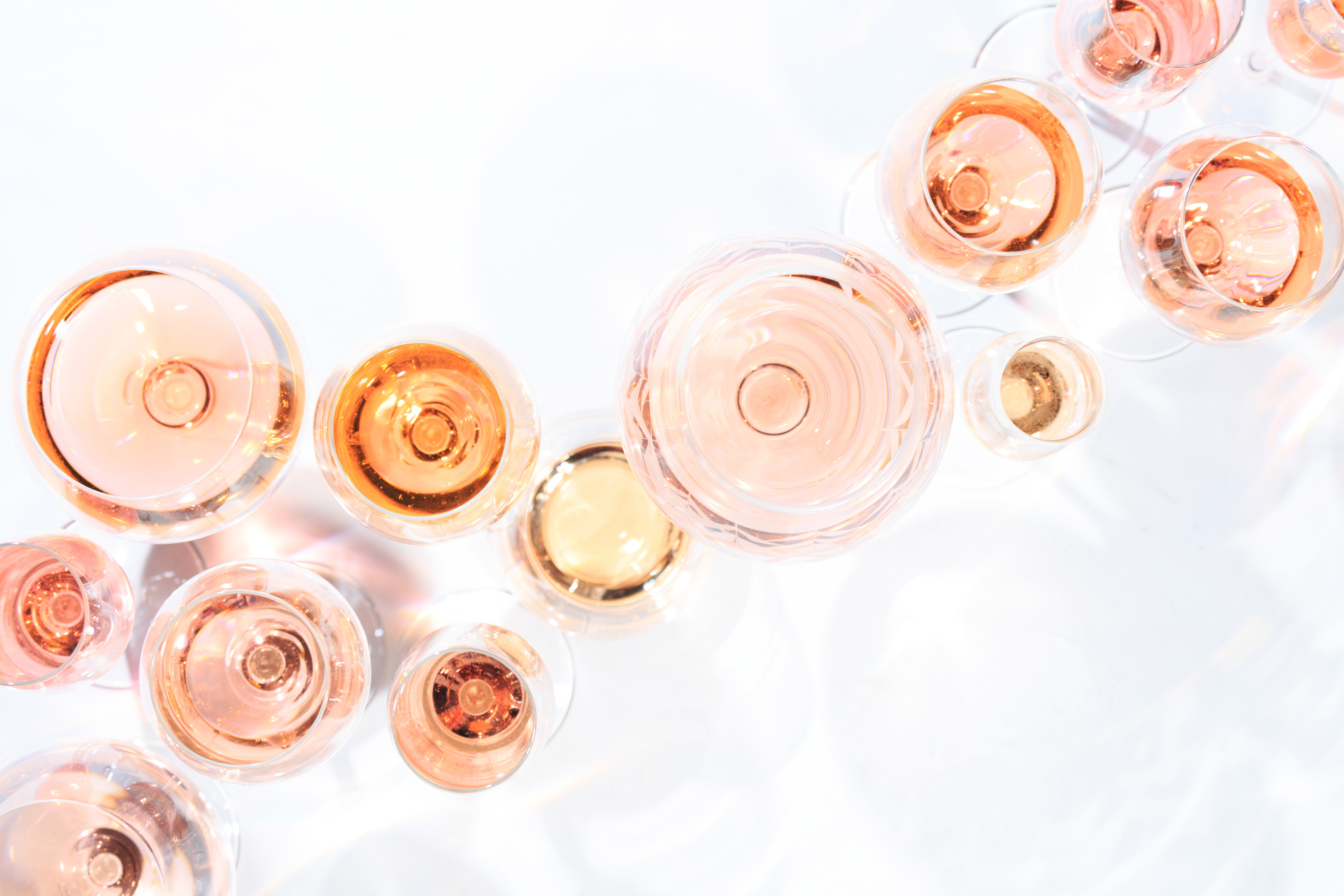
We spoke our piece last time about the current market for pink wine. In short, it is stronger than ever, but there has been a proliferation of labels well beyond what should have been. In other words, there is a lot more rosé to look at these days, which by definition would give us more things to choose from. That is partially true. There are more good rosés out there, but a much higher percentage of clunkers in the mix because there are a lot of mediocre efforts being made by people who are just trying to participate in the market and many examples being made from places that really haven’t made them before.
All of this just makes our job harder because there is much more pink wine to slog through to find the few gems. But it’s summer, we love pink wine, and the 2017s are generally quite satisfying. So here’s another update on a few more favorites from this year’s crop.
LE PARADOU CÔTES DE PROVENCE ROSÉ 2017– This wine’s performance should be no surprise given the people involved. The Paradou project is a partnership between the brothers Alex and Fred Chaudière of Château Pesquié and importer Eric Solomon. We have been selling Pesquié wines for years and appreciate the honest, terroir driven character that the wines exude. It seems only natural that these folks could create something enjoyable for this label and the Le Paradou Côtes de Provence Rosé 2017 is that wine.
The grapes for this wine come from the more remote center of Provence, a land of lavender fields, olive groves, and wild herbs growing on the hillsides. This is far from the French Riviera and the Cinsault, Grenache and Vermentino (known as Rolle in this part of the world) grapes come from a vineyard at the foot of Sainte Victoire, a peak featured in a number of works by Cezanne. The term ‘Paradou’, while it might sound like some ancient French word for ‘paradise’, actually refers to the old watermills that once dotted the landscape
Each grape plays its part. The Cinsault provides this wine’s delicate fruit flavors reminiscent of raspberries and strawberries, the Grenache its color and spice, and the Vermentino its freshness and acidity plus a hint of white stone fruit in a supporting role. Put it all together and you have one engaging, tasty rosé. Here they do all the right things as the grapes are sustainably farmed, harvested by hand in the early morning, and pressed whole cluster in a cool cellar to extract the lightest color possible.
The 2017 pinks in general show a bit rounder demeanor up front and a bit more weight, yet still deliver the classic rosé experience. Besides that the wine is nicely packaged and well priced. Again, this one checks all the boxes. Jeb Dunnuck had some praise for this juicy pink, “Light pink in color, the 2017 Côtes de Provence Rosé from Le Paradou is a juicy, yet textured, lively rosé that does everything right. Offering lots of white cherry, strawberry, and floral notes, with an almost salty minerality, this beauty hits the palate with medium-bodied richness, nicely integrated acidity, and a clean, dry finish. This is what Provençal rosé is all about and it’s worth a case purchase….90 points.”
CHATEAU DE SEGRIES TAVEL ROSE 2017– Here’s one of those classic Tavels that still thinks it is red wine. The color is a deep orange/pink and there is considerably more mid-palate weight than most of the rosés out there. Yet at the same time it still has the required lift to function beautifully in its capacity as a rosé.
Segries has provided us with a number of tasty selections over the years in both the red and pink variety, and it is one of the sources that still provides ‘old school’ value. It’s added muscle allows it to play with a bit more substantial fare like grilled pork, smoked chicken, sausages, or even meats and provide a more refreshing alternative when the weather is warm.
This is a mix of 50% Grenache, 30% Cinsault, 10% Clairette, and 10% Syrah from 60-year-old vines planted in soils composed of pure silica, sand, clay, pebbles and, of course, stones. This is a saignée which means it was light pressings from grapes that were ultimately destined to be red wines. Everything is done by hand, the grapes were destemmed, and the fermentation takes place at low temperatures to preserve the fruit component.
The nose has an almost red wine element to it as well as notes of ripe melon, red berry and blood orange. All of that plays on the palate along with subtle notes of mineral and pepper. Like we said, this is a more mouth-filling and weightier version of rose than the rank and file, but it still has the freshness to pull it off. It is one of the more impressive and distinctive efforts from this year’s crop of pinks. Thus far the wine got a 92 from Wine Enthusiast with comments, “Beautiful ripe cherry and red berry aromas with floral scents. Good concentration on the palate, flavorful and perfectly balanced. Good acidity and mineral backbone make it a great match with Provençal or Asian cuisine, grilled meat, fresh fruit salads.” We expect there will be more.
CHATEAU PRADEAUX BANDOL ROSE 2017- Every year as we taste through countless pink wines we find a reasonable number of engaging examples and one or two that play on a level all their own. Most long time Francophiles will tell you that Provence is a fine source for rose, but that Bandol has ‘home run’ potential. When a Bandol rosé hits its highest level, it is the quintessential choice. Domaine Tempier has set the standard for years and now sits in the $40 range more or less, expensive even for Bandol. But this one was one of the standouts we have tasted this year, and arguably one of the most memorable ever for its sheer richness, style and layered complexity.
We have had a positive, if somewhat inconsistent relationship with Chateau Pradeaux dating back into the 1990s. This is one of the few times we have had their rosé, but we dare say that it is the most complete, impressive, engaging examples of this category we can recall. This is classic Bandol rosé in both the most traditional and best possible way. The current family took the helm around the time of the French revolution, and the near-the-coast location clearly has a profound effect on the wine’s personality.
The blend here is 50% Cinsault and 50% Mourvedre, with the latter imparting the wine’s distinctive undercurrent of that unique musky minerality that seems to be proprietary to how that varietal performs in this terroir. In more rustic versions it can be overwhelming, but here it is another instrument in a virtual symphony of flavors. The effusive nose speaks of red berries, blood oranges and that earthy/mineral thing that is so indicative of the region. In the mouth it shows layers of flavor including, strawberry, orange and spice. The tension is nearly perfect and there’s enough outgoing fleshiness to easily make friends who aren’t necessarily even fans of Bandol.
The bottom line is that the Chateau Pradeaux Bandol Rose 2017 is an enlightened version of a traditional style and operates in this vintage a level or two above most everything else we have tasted this year. Rosé doesn’t get much better at any price and, at $25, the intensity and complexity in this wine over delivers. If you can find a more compelling pink drink, good on’ya.
DOMINIO DEL AGUILA PICARO CLARETE ROSE 2014- Now for something completely different. First it is important to point out that this is the current release, not some ‘old rosé’ we found in the back room. Some rosés are built to develop in the bottle. The Alphonse Mellot we sold last year is still developing and the Tiburon-based wine from Clos Cibonne is kept in bottle a year before release, just to name a couple. So we are already in rarified air with this element in general, and that is further compounded by the completely unique approach of Dominio del Aguila Picaro Clarete Rose 2014.
Firm, melon, citrus, and berry fruit laced with a kind of chalky minerality and surprising verve for a pink wine at this age, this lets it be known right away that it is not your rank and file pink. A rather unusual blend of Tempranillo, Albillo (a white grape unique to the Ribera del Duero), Garnacha, and Bobal (neither of which are usually associated with the Ribera), this unique mix of red and white grapes is sourced from 60-year-old vines sitting at nearly 3000 ft. elevation. It spends 16 months in a combination of French and American oak, another indication it isn’t necessarily made to be quaffed in its youth.
Wine Advocate’s Louis Gutierrez was quite taken with this wine, and the estate in general. His comments, “The 2014 Pícaro Clarete… is more in the style of a white wine than a red. There are white flowers, aromatic herbs, fine spices and a touch of petrol? The palate is extraordinary, incredibly fresh and complex, with good weight and very good acidity. This has to be the finest vintage to date. The 2012 is drinking superbly today and it’s still young, so I don’t see why this 2014 should not age the same or even better, as I see more freshness and balance here...93 points.”