
ROSÉ ROUNDUP

First of all, our apologies for just getting around to our first words on pink wine in the middle of summer. We’re usually better than that but the supply chain issues are still a reality. A lot of the things we are most excited about just got here. There are still some favorites that are ‘on the water’. We would have loved to have them back in mid-May but it didn’t happen. For the locals, you know that summer itself was a little late this year, but it has come upon us with a vengeance. Hence, it is now time to talk pink.

First off a couple of notes. The 2022 vintage in Europe was generally as warm one. While that is a great thing for red wines in most cases, the effect is sometimes the opposite for whites and pinks. Simplistically speaking, when the grapes get ripe, there is plenty of fruit and body to the wines, but a corresponding drop in the acidity levels. For that reason a lot of our past go-tos were showing a little soft in the middle in 2022 and lacking the backbone to have the necessary brightness that makes rosé so appealing.

Don’t get us wrong. We found enough to like, and a few things we really like. But the ‘hit ratio’ was down quite a bit. We have never felt the need to adhere to any particular numeric guidelines. There’s no particular amount of anything we need to have. But what we do have has to measure up to our criteria. If that means fewer wines in a particular category, so be it.

We’ll also make another point about pink wine. Consumers have been given the notion that rosés have to be just-off-the-boat super fresh. That’s not necessarily an axiom in all cases. Many rosés benefit from a few months to a year in the bottle and drink well until age three. They may have a touch less snap, but reveal more of their origins and pick up nuance provided they have sufficient acidity in the going in.

So don’t ignore the 2021s as you fill your pink needs. It was a cooler vintage and the majority of them are in a really good place right now. We know there are cynics that will accuse us of just saying that to sell the older stocks. We were selling pinks long before they became the item they are today and would argue that anyone who really knows their stuff would not say otherwise. That said, we have both as ’22s and ’21s as options, so whatever you choose is fine with us.

Briefly on the subject of very tasty 2021s, here are a few to consider…

Chateau Sainte Roseline Cotes de Provence Rosé Cru Classé Lampe de Meduse 2021-One of the original Cru Classé Provence rosés (there are only 14 that are permitted to carry that designation), this blend of Grenache, Cinsault, Mourvèdre, and Syrah is settling in nicely with red berry and red melon fruit and citrus with classic Provenҫal herb nuance, subtle minerality, and a refreshing finishing salinity. Robertparker.com 91 and a special price ($14.99)

Leo Steen Rose of Grenache Sonoma Valley 2021-The Leo Steen Rose of Grenache Sonoma Valley Rose Ranch 2021 comes from the Rose Vineyard at the base of Sugarloaf not far from Kenwood in Sonoma Valley. Sugarloaf is an extinct volcano and this vineyard, made up mainly of clay laced with lava, has been farmed biodynamically since the 1990s. One of our complaint about domestic rose (besides that there are way to many of them) is that they are often blowsy and alcoholic. Not this one! Steen, a European sommelier in a past life, understands what rosé is about and this Grenache based effort has that euro feel with a bit heartier fruit. Special price $15.99 (was $22) !

Clos Cibonne Rosé Cuvee Speciale des Vignettes 2021– A brilliant and substantial rosé made from old vinte plots of the arcane, ancient grape Tibouren. This can hang with any of those ‘special reserve’ bottlings from Ott and Esclans but with a more textural personality and substance. A 94 point selection from robertparker.com with comments, “…matured in old barrels. It has a delicate, refined bouquet with aromas of spring flowers, garrigue, red berries, tonca bean and iodine as well as delicate oaky hints. Medium to full-bodied, lively and delicate, it has a lively, fine acidity structure and perfectly well-integrated oaky notes. Perfectly ripe, it will offer a broad drinking window…”

Poli Family Ile de Beauté Rosé Nielluc+Sciacca 2021-Corsican grape varieties Neulluccio and Sciaccarellu are still relatively unknown to most folks on this side of the Atlantic, as are the wines of Corsica in general. But this Mediterranean island is perfectly primed for growing crisp rosés with minerality and a haunting salinity from the sea’s influence. Crisp, bright, high-toned and floral, this is a superb pink for food and a cooler-edged choice for aperitif applications. A steal at $10.98 (was $16.99).

Clos Alivu Patrimonio Rosé 2021– Made by the same winemaker as the Poli but from a different estate, this is once again the essence of Corsica…crisp, nervy rosé with flowers, mineral, and salinity reflecting its seaside origins, all augmenting the delicate berry fruit. Made of Niellucciu, which has been genetically linked to Sangiovese, which thrives on the island of Corsica. The naturally low yields result in wines with more freshness and finesse than those made from its Tuscan cousin. Was 24.98, now $14.98 as we make room for our late shipments of pink wine.

The best of the 2022s:

Saint Damien Gigondas Rosé 2022 Saint Damien Gigondas Rosé 2022– This rosé doesn’t have a long history but this bottling, from one of the absolute top producers in Gigondas is round and ample with a broad palate of red berries and surprising nuance of spice, earth and flowers. A touch rounder than the stunning 2021, this is one of the most complete pinks in the store.

Commanderie de la Bargemone Coteaux d’Aix en Provence Rosé 2022-Typically one of the ‘go-to’ stars of delivering interesting, juicy fruit components, with bright acids and plenty of personality at a really comfortable price, this Bargemone hits all the right notes once again. It may, in fact, be the most engaging versions in recent memory as it reflects the fatter fruit f the vintage and still manages to maintain the necessary lift. The stars of the show are Grenache and Cinsault with Cabernet Sauvignon, Syrah, and Sauvignon Blanc in a supporting role. Too easy to drink.

Domaine de Fontsainte Corbières Gris de Gris Rosé 2022– We don’t even remember how long this has been one of the anchors of the rosé section. The 2022 is, as always, a blend of 90% Grenache Gris, 5% Carignan, and 5% Mourvèdre, a saignée rosé made from Grenache Gris. One of the most consistent value pinks on the planet.

Bastide Blanche Bandol Rosé 2022– Bandol is a unique and special category, and the predominance of Mourvedre gives them a kind of Provence with attitude vibe. Sure there’s plenty of red berry at the center but it is augmented with notes of spice, mineral, tonic, and that intriguing earthy/musky note we associate with Mourvedre. There is also Grenache, Cinsault, and white grapes Clairette and Ugni Blanc in the mix. A 92 from robertparker.com.

La Coste Coteaux d’Aix en Provence Rosé 2022-If you were making something to work itself into current market sentiment, this would be a good profile. They make their organic practices into a banner and promote the fact that this is an organic wine. “Organic” and “Provence” will push a lot of buttons but the wine’s round, juicy, outgoing demeanor will win friends. Pretty Grenache-y up front with support from Cinsault and Cabernet Sauvignon, this plays nicely to the crowd.

Chateau Pradeaux Bandol Rosé 2022– Thus far, once again, this is the star of the lineup. Deeper color, redder fruits and all kinds of nuance of earth, spice, wild herbs, and that distinct Mourvedre thing, this is packed with character. The folks here have controlled the property since the French Revolution and work as organically as possible. It’s 50% Mourvedre, 50% Cinsault, 93 from robertparker.com and super tasty.
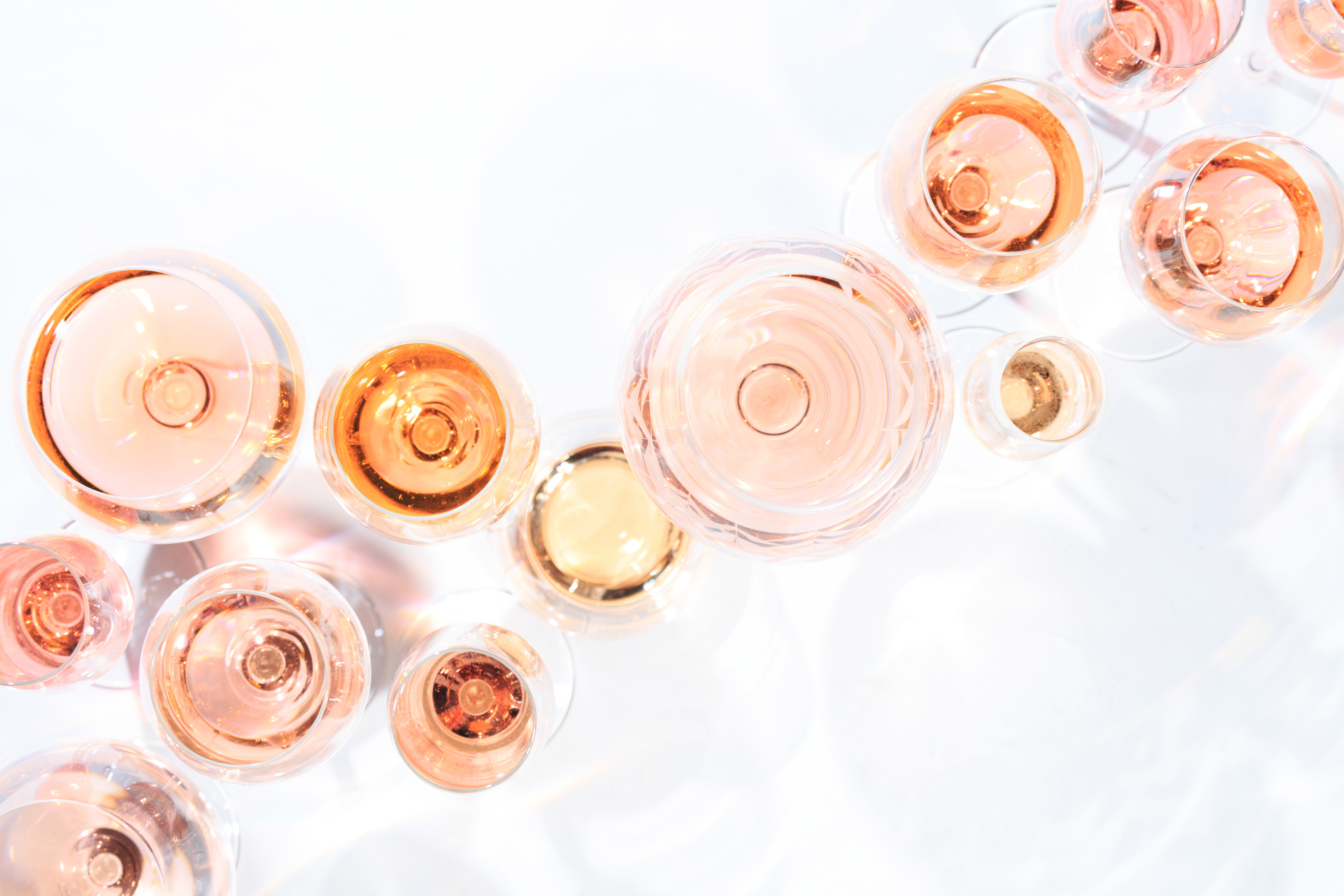
IN THE PINK, PART TWO: ROSE TIME AGAIN

We spoke our piece last time about the current market for pink wine.  In short, it is stronger than ever, but there has been a proliferation of labels well beyond what should have been.  In other words, there is a lot more rosé to look at these days, which by definition would give us more things to choose from.  That is partially true.  There are more good rosés out there, but a much higher percentage of clunkers in the mix because there are a lot of mediocre efforts being made by people who are just trying to participate in the market and many examples being made from places that really haven’t made them before.

All of this just makes our job harder because there is much more pink wine to slog through to find the few gems.  But it’s summer, we love pink wine, and the 2017s are generally quite satisfying.  So here’s another update on a few more favorites from this year’s crop.

LE PARADOU CÔTES DE PROVENCE ROSÉ 2017– This wine’s performance should be no surprise given the people involved.  The Paradou project is a partnership between the brothers Alex and Fred Chaudière of Château Pesquié and importer Eric Solomon.  We have been selling Pesquié wines for years and appreciate the honest, terroir driven character that the wines exude.  It seems only natural that these folks could create something enjoyable for this label and the  Le Paradou Côtes de Provence Rosé 2017 is that wine.

The grapes for this wine come from the more remote center of Provence, a land of lavender fields, olive groves, and wild herbs growing on the hillsides.  This is far from the French Riviera and the Cinsault, Grenache and Vermentino (known as Rolle in this part of the world) grapes come from a vineyard at the foot of Sainte  Victoire, a peak featured in a number of works by Cezanne.  The term ‘Paradou’, while it might sound like some ancient French word for ‘paradise’, actually refers to the old watermills that once dotted the landscape

Each grape plays its part.  The Cinsault provides this wine’s delicate fruit flavors reminiscent of raspberries and strawberries, the Grenache its color and spice, and the Vermentino its freshness and acidity plus a hint of white stone fruit in a supporting role.  Put it all together and you have one engaging, tasty rosé.  Here they do all the right things as the grapes are sustainably farmed, harvested by hand in the early morning, and pressed whole cluster in a cool cellar to extract the lightest color possible.

The 2017 pinks in general show a bit rounder demeanor up front and a bit more weight, yet still deliver the classic rosé experience.  Besides that the wine is nicely packaged and well priced.  Again, this one checks all the boxes.  Jeb Dunnuck had some praise for this juicy pink, “Light pink in color, the 2017 Côtes de Provence Rosé from Le Paradou is a juicy, yet textured, lively rosé that does everything right. Offering lots of white cherry, strawberry, and floral notes, with an almost salty minerality, this beauty hits the palate with medium-bodied richness, nicely integrated acidity, and a clean, dry finish. This is what Provençal rosé is all about and it’s worth a case purchase….90 points.”

 CHATEAU DE SEGRIES TAVEL ROSE 2017–  Here’s one of those classic Tavels that still thinks it is red wine.  The color is a deep orange/pink and there is considerably more mid-palate weight than most of the rosés out there.  Yet at the same time it still has the required lift to function beautifully in its capacity as a rosé.

Segries has provided us with a number of tasty selections over the years in both the red and pink variety, and it is one of the sources that still provides ‘old school’ value.  It’s added muscle allows it to play with a bit more substantial fare like grilled pork, smoked chicken, sausages, or even meats and provide a more refreshing alternative when the weather is warm.

This is a mix of 50% Grenache, 30% Cinsault, 10% Clairette, and 10% Syrah from 60-year-old vines planted in soils composed of pure silica, sand, clay, pebbles and, of course, stones.  This is a saignée which means it was light pressings from grapes that were ultimately destined to be red wines.  Everything is done by hand, the grapes were destemmed, and the fermentation takes place at low temperatures to preserve the fruit component.

The nose has an almost red wine element to it as well as notes of ripe melon, red berry and blood orange.  All of that plays on the palate along with subtle notes of mineral and pepper.  Like we said, this is a more mouth-filling and weightier version of rose than the rank and file, but it still has the freshness to pull it off.  It is one of the more impressive and distinctive efforts from this year’s crop of pinks.  Thus far the wine got a 92 from Wine Enthusiast with comments, “Beautiful ripe cherry and red berry aromas with floral scents. Good concentration on the palate, flavorful and perfectly balanced. Good acidity and mineral backbone make it a great match with Provençal or Asian cuisine, grilled meat, fresh fruit salads.”  We expect there will be more.

CHATEAU PRADEAUX BANDOL ROSE 2017- Every year as we taste through countless pink wines we find a reasonable number of engaging examples and one or two that play on a level all their own.  Most long time Francophiles will tell you that Provence is a fine source for rose, but that Bandol has ‘home run’ potential.  When a Bandol rosé hits its highest level, it is the quintessential choice.  Domaine Tempier has set the standard for years and now sits in the $40 range more or less, expensive even for Bandol.  But this one was one of the standouts we have tasted this year, and arguably one of the most memorable ever for its sheer richness, style and layered complexity.

We have had a positive, if somewhat inconsistent relationship with Chateau Pradeaux dating back into the 1990s.  This is one of the few times we have had their rosé, but we dare say that it is the most complete, impressive, engaging examples of this category we can recall.  This is classic Bandol rosé in both the most traditional and best possible way.  The current family took the helm around the time of the French revolution, and the near-the-coast location clearly has a profound effect on the wine’s personality.

The blend here is 50% Cinsault and 50% Mourvedre, with the latter imparting the wine’s distinctive undercurrent of that unique musky minerality that seems to be proprietary to how that varietal performs in this terroir.  In more rustic versions it can be overwhelming, but here it is another instrument in a virtual symphony of flavors.  The effusive nose speaks of red berries, blood oranges and that earthy/mineral thing that is so indicative of the region.  In the mouth it shows layers of flavor including, strawberry, orange and spice.  The tension is nearly perfect and there’s enough outgoing fleshiness to easily make friends who aren’t necessarily even fans of Bandol.

The bottom line is that the Chateau Pradeaux Bandol Rose 2017 is an enlightened version of a traditional style and operates in this vintage a level or two above most everything else we have tasted this year.  Rosé doesn’t get much better at any price and, at $25, the intensity and complexity in this wine over delivers.  If you can find a more compelling pink drink, good on’ya.

DOMINIO DEL AGUILA PICARO CLARETE ROSE 2014- Now for something completely different.  First it is important to point out that this is the current release, not some ‘old rosé’ we found in the back room.  Some rosés are built to develop in the bottle.  The Alphonse Mellot we sold last year is still developing and the Tiburon-based wine from Clos Cibonne is kept in bottle a year before release, just to name a couple.  So we are already in rarified air with this element in general, and that is further compounded by the completely unique approach of Dominio del Aguila Picaro Clarete Rose 2014.

Firm, melon, citrus, and berry fruit laced with a kind of chalky minerality and surprising verve for a pink wine at this age, this lets it be known right away that it is not your rank and file pink.  A rather unusual blend of Tempranillo, Albillo (a  white grape unique to the Ribera del Duero), Garnacha, and Bobal (neither of which are usually associated with the Ribera), this unique mix of red and white grapes is sourced from 60-year-old vines sitting at nearly 3000 ft. elevation.  It spends 16 months in a combination of French and American oak, another indication it isn’t necessarily made to be quaffed in its youth.

Wine Advocate’s Louis Gutierrez was quite taken with this wine, and the estate in general.  His comments, “The 2014 Pícaro Clarete… is more in the style of a white wine than a red. There are white flowers, aromatic herbs, fine spices and a touch of petrol? The palate is extraordinary, incredibly fresh and complex, with good weight and very good acidity. This has to be the finest vintage to date. The 2012 is drinking superbly today and it’s still young, so I don’t see why this 2014 should not age the same or even better, as I see more freshness and balance here...93 points.”

IN THE PINK, PART ONE: ROSE TIME

It’s that time again, though admittedly when we started getting serious about rosés back with the 2001 vintage we never imagined it would play out like it has.  Back then, after a couple of decades of white Zinfandel domination, most wine buyers were reluctant to try pink wines because they thought of them as the mawkishly sweet, soda pop examples that grandma drank.  The folks that bought pink wine were typically looking for the white Zin experience and thus disappointed with a crisp dry rose.  Our only thought back then was to try to introduce more people to dry pinks because they served such a need during the warmer months because they were fresh, light, and versatile with food.

A decade and a half later we and others like us fear we may have done our job too well.  There is a thirst for rosé in the marketplace like there never has been.  People are willing to try all kinds of different pinks and many consider them a necessary part of their beverage program.  The industry has responded, as it so often does, by overdoing it to the point of silliness (see also White Zinfandel, Syrah, Merlot, and high-octane, red  ‘mutt’ blends with artsy labels and big price tags).  There are anywhere from five to ten times as many rosé options as back when we started, a great many of them from places that never made pink wine before and arguably shouldn’t be making them now.

All of this rose madness has done a number of things.  We get a lot more selection from places like Provence, Bandol and the Rhone, places that have a long and positive history with the genre.  There are also a few intriguing new options that have been created simply because there was a potential market.  Sadly, there is way too much mediocre-to-poor pink out there and our task of working through them has almost become a slop.  Everybody has a pink wine (or two, or three) to sell.

With that, our game plan this year is to be even more selective in what we offer than in years past.  The 2017s, while perhaps a half-step behind the 2016s (which are still showing beautifully by the way) and the 2015s, are still quite complete and engaging.  Our preferred profile is still fresh, honest fruit and bright acidity.  We tend to avoid efforts with higher alcohols and lower acidity because they simply aren’t refreshing and that is what pink wine is all about.  Even as we work with fewer wines than before, it is still a fair amount of juice to talk about.  So with summer right around the corner, we’d best start talking…

RIMAURESQ ROSE PROVENCE CRU CLASSE 2017While the whole idea of Cru Classe de Provence has been around for a long time, with even the ‘official’ founding of the appellation happening back in 1955, there has been a real interest recently to put more vigor into the marketing of this special little spot for pink wine.  This is one of the ‘original’ fourteen members of this very specific delineated terroir and these guys appear to be upping their game a bit.

The microclimate of Rimauresq is a real singularity of the Côtes de Provence appellation.   The vineyard is  located at an altitude varying from 140 to 190 meters at the foot of Notre Dame des Anges. The shade of the hill and the beneficial effects of the Mistral play a role in this wines fresh personality.  The estate consists of a clay-schist and crystalline soil, with sandy and stony parts. It is common to benefit from the combination of several soils (degraded schist, pink sandstone, rolled pebbles) within the same plot and that is the case here. Rimauresq takes its name from the Moors River which crosses the Domain.

They make other ‘flavors’ but this is a house rosé built.  They make five different versions.  The Rimauresq Rose Provence is a mix of 43% Grenache, 24% Cinsault, 10% Mourvedre, 8% Syrah, 6% Carignan and 9% Rolle (aka Vermentino).  The aromatics speak of berries, apricot and citrus with a little garrigue and some mineral and floral aspects.  In the mouth it isd both fleshy and lifted with the red fruits as the central theme but subtle layers as befits this wine’s diverse makeup.

ELIZABETH SPENCER GRENACHE ROSE MENDOCINO SPECIAL CUVEE 2017- We aren’t going to say we weren’t a little surprised by this wine.  Usually California pinks have a tendency to be a little plodding.  To tell the truth we went back three times to make sure we weren’t just in a good mood or it was a biodynamic ‘fruit day’.  The wine delivered plenty of mouth-watering red berries flecked with stone fruit, apple, and floral notes, with just the right amount of snap at the end.  The story is that this wine came from Mendocino, where it is cooler and therefore more likely for the wine to retain its necessary acidity.

The grapes came from rocky soils in the benchlands up by Ukiah, and they were harvested specifically to make pink wine (as opposed to being a saignee of something else.  That accounts for the depth of flavor here, and some of the wine saw a bit of neutral oak for rounding out.  Bright, insistent yet still with a playful quaffabilty, this one definitely has a European demeanor, but the Mendocino fruit makes for an interesting change of pace.

Made from 100% Grenache, this one checks all the boxes in a way few domestic versions do in our minds…fresh, fruit driven, lifted, and well-priced.

MOURGUES DU GRES COSTIERES DE NIMES GALETS ROSE 2017- We go back a long way with this domaine, and their 2017 is arguably one of te best buys on pink wine values we have seen this year.  Located in the Costieres des Nimes at the southern end of the Rhone Valley.   This vineyard is covered with the round rocks that you see in Chateauneuf to the north (hence the reference to galets) which add a subtle mineral character to the rose.  The main show is red berry flanked by notes yellow atone fruit and a touch of both white pepper and garrigue.

The style here is definitely old school, with a rather broad fruit component but just the right touch of acidity to keep it fresh on the palate.  The mix here is a pretty standard one of 50% Syrah, 40% Grenache, and 10% Mourvèdre, but they produce a lot of red win so the juice comes mainly from saignee.  The wine has a bit more size than some pinks which allows it to play with a wider array of grilled fare, and the price ($11.98) definitely makes it easier to swallow.

CHATEAU VANNIERES BANDOL ROSE 2017-  No discussion of rose is complete without Bandol, arguably ‘Provence reserve’ but with its own unique twist thanks to the healthy portion of Mourvedre in the blend.

Bandol is historic, the first vines being planted here by the Romans some 2500 years ago.   Also, Bandonl is arguably the elite category of French rose and prices have edged up accordingly on the heels of producers like Domaine Tempier.  Finding good Bandol Rose isn’t as big a challenge as finding good Bandol rose that is reasonably priced.  Vannieres fits that requirement nicely.

The current family that owns the property, the Boisseaux, are outliers from Beaune that bought this property in 1957.  Father Gaston has now passed the reins to son Eric who is a bit of an epicurean and is currently tinkering with concentration and elegance among other things.   This wine is an indication that the program is working well.  One could call this ‘classic’ Bandol Rose, a blend of 60% Mourvedre from saignee, along with 20% comes from the each of Grenache and Cinsault from direct pressing, all from vines ranging from 20 to 60 years of age.

The flavors range from white stone fruits to red melon to faintly citrus tones, with that inviting, intriguing musky note that the Mourvedre from this area delivers.  Mouthwatering, maybe even a little intellectual, it is a fine example of what Bandol rose is all about and very reasonable for this currently ‘too hot’ genre.