BRILLIANT WHITES FROM LISMORE REVISITED

We have covered a lot of ground during our wine journey, but there are some stories that are so unique and remarkable that they should not be forgotten. Lismore is one of those. California native and former T.V. writer Samantha O’Keefe, along with her husband at the time, made the conscious decision to get away from it all, and managed to end up about as far from Southern California as one could imagine…into the mountains in the area of Greton in South Africa where they fell in love with a visually spectacular site named Riversonderend, a 300-hectare property that was a dairy ranch.

It had never been a wine farm, nor had Samantha ever made wine, but the connection subsequently became serendipitous. The place was, as Sam put it, ‘an hour past nowhere’.   From the farm, for example, it is more than an hour’s drive just to get groceries. But the couple decided this remote, untested area would be an excellent place to grow grapes.

The challenges were enormous, so much so that Sam’s husband made an early exit.  O’Keefe built a house and a winery, and the vineyards were planted in 2003.   The first commercial release was 2008.  The Overberg region is unique in South African viticulture as it is a particularly cool growing area, with grapes taking as much as 3 to 4 weeks longer to mature.    The combination of cool temperatures and altitude was a unique and emerging trend in South Africa.  This particular project just happened the furthest out.  As it turned out, Riversonderend was particularly suited for four of the five grapes Sam planted.

Besides the normal array of issues like weather and disease that can face any vintner, this distinct plot of land had a few additional challenges.  Because this was a remote, even somewhat ‘wild’ area, the threat from abundant numbers of voracious birds to the final crop added more uncertainty.  There was even another ‘wild card’ to this winery’s story that we can’t recall ever hearing in all of our years doing this…baboons.  Yes, baboons.  Apparently they show up in numbers when the crop is reaching optimum time to pick.  Samantha says they are good indicators of when it is time to harvest. The place even burned down thanks to a wildfire reportedly set by two children.

You’ve got to admire her chutzpah. But she is still at it and her newest releases are once again completely unique and absolutely brilliant. Samantha says she is trying to emulate a top drawer Meursault stylistically. Mission accomplished. The Lismore Chardonnay Estate 2021 has plenty of that resiny, nutty, spicy character running through her intensely flavored Chardonnay to make you think of the Cote d’Or, yet there is an element to the peach/apple fruit that sets it apart from most of the world’s Chardonnays. It is a Chardonnay that can hold its own with virtually any produced on the planet.

Nice notes from the somewhat stingy Neal Martin as well, “94 Points! The 2021 Chardonnay Estate Reserve is 100% from Greyton matured for 11 months in 500-litre barrels, 40% new. It has a wonderful bouquet with honeydew melon, apricot blossom and light crushed stone scents that percolate through with time. The palate is very well balanced with tropical hints of passion fruit and guava, but the acidity keeps everything on a tight course, very minerally on the finish. Top class…94 points.”

The story of the Lismore Viognier Age of Grace 2022 is similar. This has everything a great Condrieu has in terms of personality but boasts the kind of backbone acidity that seems virtually impossible for this fussy varietal. The nose has the classic floral, peach, brown spice, floral, and honey tones you expect from Viognier, but seemingly flashing a bit more energy than most versions. All of those flavors reveal themselves on the palate but with an unexpected verve.

Martin was a fan of this one as well, “The 2021 Viognier The Age of Grace comes from Sutherland and Bot River, whole bunch pressed with 11 months on the lees using 15% concrete eggs. With pretty white peach and Mirabelle scents on the nose, this takes time to blossom, but it never fully lets go. The palate is medium-bodied with a gorgeous dried apricot, mango and spicebox entry, nothing blowsy here with a very focused, almost understated finish. Excellent…93+ points!

The conclusion is the same. These whites, from a remote place that never grew grapes before made by someone who came in with no winemaking background, can stand alongside any example we can think of. They aren’t cheap, but the prices given the quality and the hardship, are more than justifiable. How did this come about? We certainly can’t explain it. But if you think we’re saying that these wines from the middle of nowhere in South Africa deserve a place alongside Condrieus, Meursaults, and Montrachets, we absolutely are. And, relative to things like that, they are relative bargains, baboons notwithstanding.

We’d be naive to think that enough people would listen to our rant and buy buckets of these wines. Changing the thinking in the wine world has long been an uphill battle. Heck, not that much of this stuff is produced in the first place. But Lismore is a unique and solitary endeavor that deserves serious attention.

SHOCKING CHARDONNAY BUY FROM THE LAND OF GAMAY

The thing about wine is that the story is ongoing.  There are always new regions and new personalities coming along to broaden one’s selection and unusual things coming from places you might not expect.  Yes, they do grow some Chardonnay in Beaujolais, some of it pretty good but mostly utilitarian stylistically.  Here in the land of granite, Gamay is king.  With that in mind, there are apparently rare exceptions.  In this case, in and among the Gamay in the Cru Beaujolais villages are plots of Chardonnay.  A few of them (well, this one anyway) have soil conditions more akin to those of the Cote d’Or.

Located near the dividing line between Macon and Beaujolais, Domaine de la Sorbiere is the new name for an existing estate that was purchased by Jacques Juilliard and his wife Anne Marie.  It was not Jacques original intent to dive deeply into either farming or winemaking.  But there was a commitment to making wine in the most non-interventionist way possible and, once he got his hands dirty, it was ‘game on’.  Like a lot of small estates these days, the golden rule was to showcase the terroir.  In this case, for this area, the ‘terroir’ has more in common with those famous Chardonnay plots to the north.  Yeah, it’s the limestone that makes this plot so Chardonnay-friendly here in the land of granite, something rather rare in this part of the world.

Since it was legitimately ‘natural’, it quickly found an audience.  But unlike a lot of wines made this way, it is meticulously clean and bright.  The juice is fermented with native yeasts and aged in a combination of amphorae and neutral, 600-liter barrels. No sulfur is added during winemaking and only tiny amounts are used during bottling.

This has all of the trappings of something from the Cote de Beaune with crisp minerality and a touch of salinity in the nose.  The flavors run from yellow stone fruits to apple with flecks of grilled nuts and stones.  It is round in the mouth, reflecting the warm vintage, but has sufficient cut to keep everything lifted and fresh. Very classy juice for the fare.

In the end, the Domaine de la Sorbière Bourgogne Blanc Terre de Roche 2022 bears a strong resemblance to a Chardonnay from more famous terroirs with its unexpected nuance and purity of fruit save for one important aspect…the price ($17.98)!

CHABLIS TRIPLE PLAY FROM COLLET

It may appear to some that we write disproportionately about Chablis. Well, to be honest, we’ve long been fans of the region. But, perhaps more to the point, it has been increasingly difficult to find things to get excited about. First off, pricing in Burgundy overall has become even more expensive even to those of us that have been around it for quite some time. Add to that the dual effect of global warming, and the success rate seems to have been greatly reduced.

First off, these days, it seems they have some sort of weather disaster on a regular basis. There have been a few untimely frosts over the last few years that have decimated the size of the crop almost to the point where you wonder how these folks can make ends meet. Farming in Chablis these days would hardly be a proposition that would invite outside investment given the variability in the crop size.

Perhaps more consistently problematic is the increasingly warm growing seasons threaten the mojo of Chablis itself. As we have also said of Sancerre, the riper vintages and lower acidity presented by global warming make far to many examples from the region today taste fat and flabby, definitely not the crisp, flinty profile that makes Chablis, well, Chablis. So when we do run across something that gives us a wine that is crisp, linear, vibrant, truly terroir driven and packed with nuances of the marine soils that define the region, these days that is newsworthy.

Within that context, 2021 was a cooler, closer to normal (from a weather standpoint anyway) vintage for fans of traditional Chablis. The producer in this case was Jean Collet, a domaine we have featured a few times of late because they are, unlike a lot of other sources in the region, are still making Chablis that tastes like Chablis, really good Chablis as a matter of fact.

The aromas all centered on the happy scents of crisp apples, ripe limes, and seashells, with a fine underpinning of acidity to support a fruit component that was giving but with the proper amount of tension. In other words, delicious Chablis bottlings that were well made, terroir driven examples of what they were supposed to be. We tasted four and bought three because each one was such a spot-on, focused expression of their distinct Crus. Thrillingly ‘real’ Chablis…tasting notes from Burghound and quite good scores for him.

Domaine Jean Collet Chablis Les Forêts 2021 (90-93 ♥)-“A slightly riper nose features nose of white peach, sea breeze, citrus confit and quinine. There is again fine volume and intensity to the relatively powerful, even muscular, medium-weight flavors that flash ample minerality on the youthfully austere, balanced and more complex finale.”

Domaine Jean Collet Chablis Montmains 2021 (90-92)-“A much more floral nose expresses nuances of citrus confit and spice if more moderate amounts of Chablis character. There is however both better volume and refinement to the medium-bodied flavors that offer a lovely minerality on the lingering, balanced and delicious finale. If this can add depth with a few years in bottle it could be excellent.”

Jean Collet et Fils Chablis 1er Cru Montee de Tonnerre 2021 (90-93 ♥)-“Discreet but still noticeable wood easily allows the elegant floral-suffused aromas of mineral reduction, lemon rind and sea breeze. The racy, wonderfully refined and beautifully detailed flavors exude a bracing minerality on the youthfully austere and impressively long finale. This too needs more depth but appears to have the necessary stuffing to develop it.”

NEW ‘FRENCH’ BUBBLY IN AMERICA

It has been a very long time since the first invasion of California by a French Champagne house, Chandon, way back in the 70s. Many more have come since. But over time a lot of the prices have edged up to the point where one can find actual French Champagne for the same kind of prices. This new offering from Pommery serves as an exciting new and well priced option for the genre.

We have sold the French Pommery Champagne off and on for years. But we saw the Louis Pommery Reserve Brut NV California bottling for the first time just recently, and it fills a niche that, at present, isn’t really being addressed…a good California sparkler under $20. As we know with the French, that value factor could change tomorrow. But for the time being this is a find and is definitely made to be a fruit forward, crowd pleasing, easy style.

Maybe we are picky but, while the French Pommery announces their founding in 1857, there is no specific statement on when this program began (there is also an English version in the UK) or where the grapes come from. One can presume that ‘grapes carefully selected across California vineyards’ is about as much info as they are going to provide. They did make the point that this cuvee is 100% Chardonnay and that the production was overseen by Clement Pierlot, the current chef de caves at Champagne Pommery. But, you know us, in the end it’s about the juice and this French inspired domestic sparkler is pretty appealing on that score.

The bubbles are refined and the mousse is creamy. The nose offers bright scent of green apples and citrus tones with a whiff of minerality. The palate is fairly generous while still bright and lifted and it finishes with notes of yellow stone fruits. You wouldn’t necessarily guess domestic at first and, once you get into it, you likely won’t care. It fills the bill nicely for a good price ($19.98).

A FRESH TAKE ON PASO WHITE: FAVORITE NEIGHBOR CHARDONNAY

The back story here is worth knowing.  The property was assembled by two orphaned brothers, Dick and Claude Booker, back in the ‘20s.  Over the decades their property grew to nearly 1200 acres of land which they ultimately left to charity on their passing.  They were exceptional farmers and humanitarians.  Eric and Lisa Jensen acquired a 100 acre parcel of the estate in 2001.  Eric learned the ropes working with Justin Smith (Saxum) and Stephan Asseo (L’Aventure).  In 2005 Jensen launched his own winery which he named for the brothers, Booker.  This producer has been pretty much a juggernaut since its inception.  Booker Syrahs and Rhone Blends moved into the spotlight almost from the outset.

Their own words define the ongoing vision of the estate, “Booker is dedicated to the pursuit of farming perfection, constantly striving to find the perfect balance in the vineyard through certified organic farming practices as well as methods that draw inspiration from biodynamics. The westside of Paso Robles terroir is unique, boasting extreme vertical slopes and calcareous soils. Limestone beds with very little water make it hard to believe that anything could grow, yet the Booker estate produces some of the greatest wine grapes on earth.”. 

They eventually they decided to add to the portfolio by creating an adjunct label which was originally marketed un the Booker banner, using their relationships, particularly that with Asseo as the inspiration for the new name, My Favorite Neighbor.  It didn’t stop there as Jensen went on to create another label in honor of his parents who, in his words, “loved wine, but in today’s world, couldn’t have afforded a quality bottle.” Harvey and Harriet is the brand.

The reach for quality grapes has spread beyond the confines of Jensen’s estate to include other like-minded growers for additional fruit, organics and biodynamics being the words of the day every day.  Everything is made at the solar powered winery at Booker.  Even the purchase by mega corporation Constellation hasn’t changed the mantra…yet.  What they have done is give each of the labels more or less their own stage and, while you can get info on each of them from the same website, they don’t use the Booker name on the other wines any more.  They also probably had a hand in creating a white wine program though, clearly from the results, Jensen’s philosophy inspired the tasty, unique new lineup of whites. 

Some might think California doesn’t need another Chardonnay, but the My Favorite Neighbor Blanc Chardonnay 2021 is expansive, palate coating efforts that has its own unique personality. Sure it’s ripe and layered. But it also boasts elements that one might associate with a something white from the northern Rhone. There’s spice, tropical notes, baked apple, and a richness to the fruit that some might confuse with sweetness. In any case this is a very likeable, maybe even a little exotic wine that lovers of big, bold domestic Chardonnay should embrace.

Erin Brook of robertparker.com liked it too, “The 2021 MFN Blanc Chardonnay is very ripe in style with scents of banana chip, apple pie, jasmine, allspice and brown sugar. The full-bodied palate is packed with ripe, spicy fruits and plenty of refreshing acidity, and it finishes long with a satiny, mouth-coating texture. It’s an old-school style reminiscent of Napa that fans of ripe, oaked Chardonnays will enjoy…97 points.”

YET ANOTHER IMPRESSIVE EFFORT FROM A THEVENET

The name Thevenet is pretty common in Burgundy, including the proprietors of a couple of our favorites from the Maconnais in Domaine de la Bongran and Emilian Gillet, and a Beaujolais producer of some repute (Jean-Paul Thevenet) as well as rising star Anthony. It’s hard to keep track of all the Thevenets without a program. Today’s subject is one we have sold only one other time (a sparkling wine) and, for whatever reason, gets little attention from the press (we did find a couple of WIne Advocate reviews…from the mid-90s. But the Thévenet & Fils Saint Véran Clos de l’Ermitage Saint Claude Vieilles Vignes 2021 was such an impressive effort at such an attractive fare, it merited adding yet another Thevenet to the mix.

Asto the estate, Jean-Claude Thevenet took the reins for this family domaine in 1971 from his father, Raymond. At the time, their holdings were a mere three 3 hectares. Jean Claude proceeded to build the domaine to its current size of 30 hectares with vineyards centered on their village of Pierreclos at the heart of the Maconnais. In addition to working their own vineyards, the Thévenet family, for three generations, has also conducted a successful nursery business producing fine quality grape vines for many family-owned domaines in Burgundy and also in the Champagne district. Now his three sons (Benjamin, Jonathan and Aurélien) are part of the team.

This prestige cuvée is produced from the oldest vines in a five-hectare parcel (Clos de l’Ermitage Saint Claude ) exploited entirely as a “monopole”by the Thevenet family. The average age of the south-facing Chardonnay vines located in Prissé are seventy years old, certainly validating the nomenclature vieilles vignes. The production of this cuvee is rather limited at roughly 1000 cases per year, and it sees no oak aging.

This is an unexpectedly broad-shouldered Chardonnay particularly given its origins. Sizeable, well packed, with a firm backbone of fine acidity and big fruit to match. Pear and citrus are the main themes with floral elements to the nose and a sleek underpinning of acidity. Impressive, particularly for the fare.

LEO STEEN, EURO SENSIBILTY IN CALIFORNIA

Leo Hansen was born and raised in Denmark to a father that was a chef and hotelier. So food and wine have always been a part of his life. Leo’s first career was as a sommelier in some of Europe’s best restaurants including Kong Hans, Copenhagen’s first one-star Michelin guide restaurant. Having caught the wine bug, Leo came to the United States in 1999 to check out the food and wine scene, and never went back!

He migrated to the Sonoma wine country, and worked as a waiter and sommelier and, ultimately, a wine buyer at the wine-centric Dry Creek Kitchen and Cyrus restaurants in Healdsburg. He later began working at Stuhmuller winery in the Alexander Valley, and started making a bit of his own wine, at the Stuhlmuller facilities, in 2004.

From his years as a buyer, he noticed there was a decided lack of food-friendly, energetic wines from California. So, it was fitting that the centerpiece of Leo’s winemaking efforts was a bone-dry Chenin Blanc. Steen is also his family’s middle name and it is also what South African call Chenin Blanc.

We met Leo Hansen recently along with his latest releases. While Leo has reputation for Chenin Blanc (he makes three different bottlings), on this day those were not what got our attention. We sense vineyard selection plays a big part here. Leo has a bit of range and works with sites all over the state and we were surprised by a Chardonnay from Santa Cruz and a Grenache Rose from single biodynamic site near Kenwood that made for distinctive additions to our carefully curated lineup. Though they are food friendly, the style here isn’t the usual ‘lean and mean’, sommelier-torture ‘food’ wines. There’s depth, character, and pleasure here.

The 2019 Leo Steen Chardonnay Santa Cruz Mountains Bruzzone Vineyard comes from a single vineyard located in the southern hills of Scotts Valley, just four miles from the town of Santa Cruz and the Pacific Ocean. The dry-farmed Chardonnay vines on this site were planted in 1998, in sandy soils rich in marine deposits. Surrounded by forests, and featuring a north-south row orientation, these vines yield small, tiny-berried clusters. While this is a very cool vineyard that produces grapes with great acidity, the fruit also achieves lovely ripeness at low sugar levels. 

The resulting Chardonnay impressed us as a slightly earthier version of a white Burugundy with some notes that reminded us of something from Mount Eden. Apple, pear, spice, and finishing salinity, there was plenty of flavor but also fine delineation provided by the acidity. Leo is clearly a Euro-palate and typically so are we, so this sneaky little gem was right in our wheelhouse. Deceptive complexity here, a distinctive profile and a very fair fare made it an easy call. Only 265 cases produced.

The Leo Steen Rose of Grenache Sonoma Valley Rose Ranch 2021 comes from the Rose Vineyard at the base of Sugarloaf not far from Kenwood in Sonoma Valley. Sugarloaf is an extinct volcano and this vineyard, made up mainly of clay laced with lava, has been farmed biodynamically since the 1990s. One of our complaint about domestic rose (besides that there are way to many of them) is that they are often blowsy and alcoholic.

Here again Leo’s ‘euro’ sensibilities, and the long, cool growing season of 2021, created a distinctive combination of berries, floral notes and a touch of minerality sitting atop fresh acidity that kept everything humming along. It was a surprising effort from a California vineyard, with purity of fruit and the brightness that is imperative in good rose. It can play alone or pair well with nibbles, gilled fish, and other lighter handed fare.

SPECIAL PURCHASE, MACON NOSTALGIA

Like the song says, ‘every day is a winding road.’  We’re old enough to remember when it wasn’t unusual to find a knockout Macon for this kind of price.  But that was a long time ago.  In fact, with all of the new Premier Cru things happening in the Macon, prices are going the other way.  That’s what makes this Macon buy not only special, but in a way kind of nostalgic.  Meanwhile this ripping Macon deal was brought about by events.

Founded in 1989, Domaine Catherine & Didier Tripoz is located in the southern part of the Mâcon appellation, with an area of about ​​13 ha (about 32 acres) planted mainly with Chardonnay as you would expect.  The age of the vines is between 20 and 65 years, averaging about 45 years-of-age.  As of 2018, they have converted to organic farming. 

Fast forward some three decades, and Catherine and Didier have decided to retire.  They are selling the domaine and were liquidating their existing stocks.  An importer we know was ‘johnny on the spot’ and snapped up a great portion of their remaining wines, which were predominantly from the very good 2019 and excellent 2020 vintages.

You can bet this would have been a full-blown email except that we didn’t quite have enough wine to do that because some of our shrewder buyers have been nibbling on the stocks for a while.  Still, it was time to mention the Domaine Catherine & Didier Tripoz Macon Charnay Clos des Tournons 2020 (‘Clos des Tournons’ is a monopole, meaning that the Tripoz family owns the entire parcel). This will give a hint to a few new folks and be fair warning to those that have already discovered this little gem that it’s one and done.

This Macon has a real ‘old school’ feel to it.  The wine shows floral notes, crisp apple, pear and citrus in the nose.  The palate has bright apple, pear and a touch of citrus fruit, a surprising depth and intensity to the palate with notes of stone and faintly honeyed notes to the finish.  From top to bottom the is plenty of underlying, as one taster called it ‘crackling’ acidity and a nice snap of minerality.  The crisp profile, and the price ($13.98!), reminds us pleasantly of ‘days of yore’ before global warming.  Right place, time, an exceptional buy…while it lasts.

THE ‘LITTLE BOAT’ HAS LANDED

As much time as we spend researching and tasting in our never ending quest for exceptional wines, there are times when it can just take a little luck. We would likely never have crossed paths with Jose, the proprietor of these wines, had it not been for random chance. The wine has been almost exclusively sold in elite eateries like French Laundry, Daniel Boulud, Jose Andres and Spago.

The short story is that Jose Ignacio Cuerco, a native of Spain, was scratching his ‘homesick’ itch at a Saturday paella lunch offered at one of our favorite food sources, La Espanola Market. Randomly, someone whom we knew from a consulting gig happened to sit next to him at the lunch and they began to talk. He told Jose about these wildly passionate wine merchants that he knew and, as a result of the conversation, we got a call asking if we might be interested in checking out his wines. “Of course”, we said.

Jose picks the sourcing and, having worked with a few top flight sommeliers who were instrumental in developing the program, is very hands on about the stylistic results of the wine. He is not in the wine biz per se. But this is not an ego project either. This is a ‘passion’ project and speaks of his wines as if they were his actual children, clearly very emotionally involved in where they go. The name “The Little Boat” was chosen with reference to a song Barquito de Papel (‘Little Paper Boat’), an ode to peace and friendship. The project is dedicated to his son Mateo.

Jose brought in three wines and we bought all three of them, something that people who know us know that is a rare occurrence. The thing is that they hit all of the parameters we look for. They were tasty, well conceived and well made, and the prices were quite reasonable for the quality in today’s market. Most important perhaps is that they are classically styled, varietally pure, easy to like and food friendly. The style isn’t to bowl you over. This is California fruit with Old World sensibility.

The Little Boat Chardonnay Russian River Valley 2020 had the classic Russian River nose of peach/pear fruit, spice, and toasty oak. In the mouth, you get that same impression of delicate but insistent peach and pear, with just the right touch of toasty accents and a little underlying minerality, but the well proportioned acidity lifts at the finish a leaves the palate ready for the next bite.

The Little Boat Pinot Noir Sonoma Coast 2019 offers up aromas of baking spice and ripe strawberries with a little touch of cocoa. In the mouth it is silky and seamless with the spicy berries as the elegant center of attention. Great purity of fruit here but also the added bonus of drinkability. So many things from the vaunted but loosely defined Sonoma Coast can be very ungiving. This one is tender and ready for prime time.

Sometimes random chance can work in one’s favor. Enjoy these classy Cali efforts. We also have a small quantity of a Spanish Rioja called Barquito Rioja Gran Reserva 2014 (barquito is Spanish for ‘little boat’) that was made for him by La Rioja Alta, the first time the winery had done a contract bottling for someone else in 150 years we are told. We have big plans for that one, too, but must wait for the ‘big boat’ to come in to have enough stock.

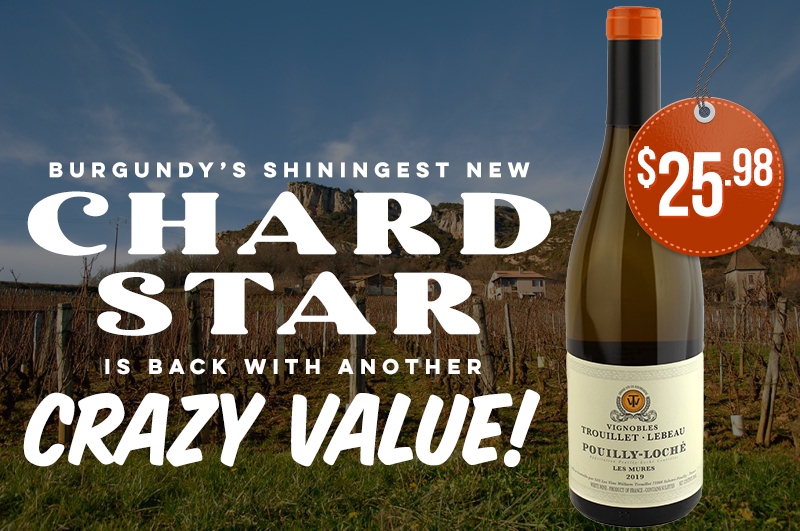
Another Sensational Chardonnay Steal from this Soon-To-Be 1er Cru!

To all Wine Exchangers,

Like many of you, we love Burgundy.  So, it truly exciting that a new, passionate, dedicated generation has taken hold and among them are a number of vignerons committed to raising the bar.  Today’s latest offering from one of the most exciting new Chardonnay crafters on the planet being a wonderful case in point.

We did an offer not too long ago talking about the new Premier Cru designations in Pouilly Fuissé that would surely elevate the status (and probably the prices) of this long-respected region.  In a sense, like we said in that offer, it’s kind of like getting a stock tip, except that everybody knows it’s going to happen.  It just hasn’t happened yet.  Officially, started in the vintage 2020, the climats that were designated can bear the title Premier Cru.  

To illustrate the point, we offered out a brilliant effort from a site, one of 22, that was given the new Premier Cru designation, Pouilly Fuisse Aux Chailloux, from a relatively unknown estate named Trouillet-Lebeau.  That Chardonnay had it all, great fruit, terroir, complexity and structure.  It was a riveting bottle of white wine. Today we are offering another wine from that same estate and arguably one of the most engaging Chardonnay values we’ve tasted this year.

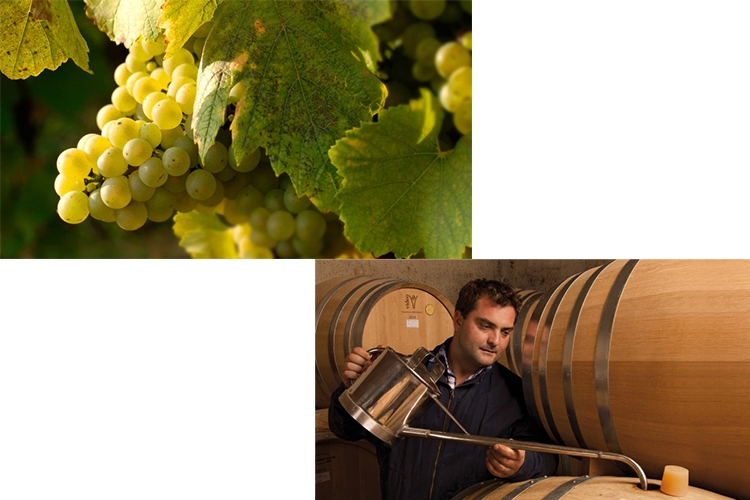
The estate itself was founded by Jean Guérin, who took over 4 hectares of share-cropped land from his father, Jules, and worked it for 45 years. Today the winery extends over 20 hectares and is owned and managed by Jean’s grandson and fourth generation vintner William Trouillet, who is helped by his mother (and Jean’s daughter) Marie-Agnès.  It is composed of vines in six villages that average 40-50-years-old planted in classic clay-limestone soils: Soluté-Pouilly, Fuissé, Loché, Vinzelles, Leynes, and Davayé.  The vines are grown sustainably, and tilling is largely carried out to encourage underground soil life and root development to obtain the richness and minerality required for the highest quality wines.
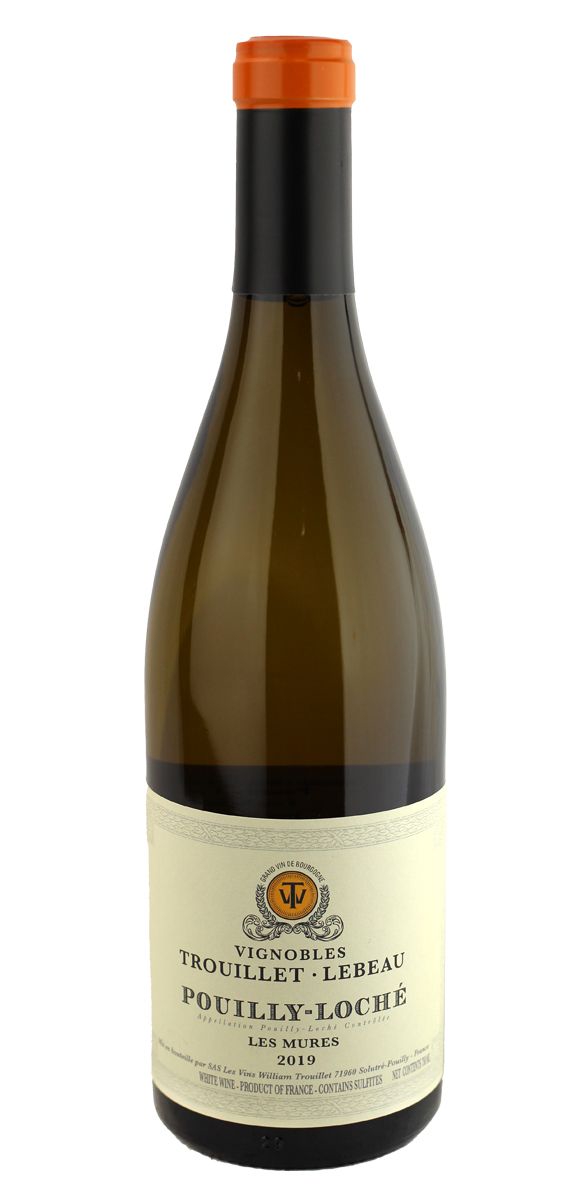
In the cellar, grapes are pressed gently using a pneumatic press and decanted rigorously for 24 hours, in order to obtain clear, pure grape juice. All vintages are vinified in oak vats, large barrels or casks from Burgundy, fully respecting the required cool temperatures in order to maintain all of the freshness and finesse of Chardonnay. The wines benefit from the exceptional terroir, which produces a wide range of dry and fruity wines with great complexity.  We told you that the Pouilly Aux Chailloux 2018 really lit us up.  So did the Trouillet-Lebeau Pouilly Loché Les Mures 2019, from their holdings in Pouilly Loché, next door to Pouilly Fuissé and one of the smallest zones in the region, encompassing a mere 33 hectares.

Pouilly Loché, the appellation, has existed since 1940.  But viticulture in this little jewel of a spot dates back to Roman times.  The ‘Les Mures’ vineyard lies on an east-facing hillside at 250 meters of elevation.  The vines here are 25 years old.  The grapes are harvested manually and aged in 100% French oak, 30% new.  It sees extended contact with the lees.  This vineyard wasn’t designated as a Premier Cru, but clearly the emerging superstar winemaker William Trouillet didn’t need a ‘title’ to ‘make magic’ here!

The nose shows precise yellow stone fruits with whiffs of spice and chalky minerality.  In the mouth, the fruit has breadth and weight, delivering on the promise of buoyant, perfectly ripe peach and apricot with a fine underpinning of lifting acidity and an insistent carry-through of the mineral tones, all ending with a hint of fine, wild herbs jumping on board at the finish.  A very tasty bottle of Chardonnay with surprising palate presence.  Because this isn’t a titled vineyard, it costs even less than the Chailloux and is easily one of the best Chardonnays we have has for under $25 in a long time.

It’s the kind of effort that will justify the recognition the area is having bestowed on it as well as showcase Trouillet Lebeau as a player in the ‘new order’.  Putting our money where our mouths are, we bought every box the purveyor had.  This drinks beautifully now and should develop further if one can leave it alone.  The price performance here is exceptional, and this stylish Chardonnay will definitely make a big impression.

Regardless of all of the political aspects of new Premier Cru status and the buzz it creates for the region, this producer is a marvelous discovery in and of itself.  Trouillet-Lebeau is still relatively unknown, though it has clearly proven to be one to follow.  It’s clear this label is going places and we suspect, given the performance of the few wines we have tasted (there was a stunning Saint Veran we bought as well), we don’t expect prices will stay the same much longer.  This is classy, complex Chardonnay of the highest order…at the lowest price.
Trouillet-Lebeau Pouilly Loché Les Mures 2019
The nose shows precise yellow stone fruits with whiffs of spice and chalky minerality.  In the mouth, the fruit has breadth and weight, delivering on the promise of buoyant, perfectly ripe peach and apricot with a fine underpinning of lifting acidity and an insistent carry-through of the mineral tones, all ending with a hint of fine, wild herbs jumping on board at the finish.  A very tasty bottle of Chardonnay with surprising palate presence.  Because this isn’t a titled vineyard, it costs even less than the Chailloux and is easily one of the best Chardonnays we have has for under $25 in a long time. 
ONLY $25.98
COMPANY
© 2021 WINE EXCHANGE
CONTACT INFO
1544 East Warner Avenue, Santa Ana, CA 92705, USA
PHONE: 1-800-769-4639
FAX: 714-979-1520

{{Sender_Name}}

{{Sender_Address}}, {{Sender_City}}, {{Sender_State}} {{Sender_Zip}}

UnsubscribeUnsubscribe Preferences