THE 2015 VINTAGE IN BURGUNDY REVISITED

This is partly a reminder.   We and others have gone on at length about 2015, particularly with respect to the flattering reds, one of the juiciest and most engaging vintages we can recall.  For Burgundy veterans, think back to the expressive, fleshy 2009s, but lighter on their feet like the 2002s, with a nice verve to the acidity that calls 2005 to mind.  It will surely be considered in the pantheon of great vintages.

We have also (and often) discussed the difficulty in finding value in Burgundy a number of times over the years.  High demand, small production, not to mention the ups and downs of marginal viticulture in general, have an upward effect on the price tag.  Even at the lower end, prices aren’t necessarily all that low.  It’s not impossible to find a deal.  It’s just really hard.  The best results usually come in concert with the blessing of Mother Nature because Pinot is a delicate grape that needs all the help it can get, a little extra sun raising the level of all vineyards great and small.

Untimely rain, thin skins, under-ripeness, too much heat, not enough heat, there are many things that can cause Pinot to underperform.  But the reason that some appellations consistently sell for much higher prices than others is history, plain and simple.  Chambertin has hefty price tags because it consistently performs at a high level.  The places that don’t carry big tickets do not by virtue of the fact that they don’t perform at the highest level consistently.  Maybe that lack of consistent success is due to exposure, or perhaps the fact that, year-in and year-out ripeness levels might not be as high as other locations.  But it is because they are on the more marginal side of ‘marginal viticulture’ that they sell for less.

However, when the sun shines, those areas perform at their very best.  But, because of history, the vignerons can’t charge substantially more money when they are successful because of the ‘hierarchy’.  When that happens, it is the consistent recipe for a deal, and that’s how to play Burgundy in 2015 unless you own oil wells or invented an app.  Places like Marsannay, Savigny-Les-Beaune, and Mercurey had sensational seasons in 2015 and we have spent a good amount of time going through the less famous locales to find the honest gems.  That we did, though we had to, as they say, ‘kiss a lot of frogs’ and work through some disappointments to get it done.  Hey, that’s Burgundy.

The hardest part isn’t the work, though.  The hardest part is bucking the system.  When we first referred to the ‘hierarchy’ in that last paragraph.  That is a very specific phenomenon in our view.  While there is an ‘official’ classification to Burgundy that determines Grand Crus and Premier Crus from ‘village level’ vineyards, there is also an unspoken but immutable pecking order to the vineyards as reported by the press.  It’s hard to explain even to Burgundy ‘hardcores’, many of whom accept the hierarchy as law.  But if you read enough stuff, you realize that a most of the ‘conclusions’ are forgone and/or political.

By ‘foregone’, we mean that there is a certain ‘weight’ assigned to certain climats and producers.  The most brilliant Maranges ever made has an upper limit to its scoring potential because it’s Maranges.  Most of the time it will dwell in the upper 80s score-wise, perhaps creep into the low 90s on occasion, almost always in cases where that domaine doesn’t have significant upper cuvees in their lineup.  But that’s it.  If it is tasted in the same cellar next to a wine from a better appellation, the odds of it besting that wine isn’t ‘zero’.  It’s just nearly zero.

Sure there are always exceptions, just not many of them.  When a reviewer tastes at a Burgundy domaine, he is presented the wines in the ‘order of importance’ of the bottlings…Bourgognes et. al, villages wines, Premier Crus and Grand Crus. Reviewers will taste them relative to their pecking order, and the reviews stick to that script a preponderance of the time.  Is that the most logical result?  Probably, but our point is that it almost never varies to the contrary.

On top of that, the 100-point scale that everybody uses these days has an upper limit…100.   A wine cannot score greater than 100, so everything is scaled back from whatever the top effort is.  If the best wine in the cellar, using the numbers analogy, scores a 94, the next best has to be less.  By the time you get 2-3 wines down the ladder, you are in a place where most consumers are lukewarm about most things, particularly something that has a $50-60 price tag.  Those potentially delicious ‘little wines,’ in these hierarchy lineups, have a remote chance of getting a review that will motivate buyers even though the quality warrants it.

We refer to this as the ‘theory of relativity’, as in reviewers tend not to always be able to figure out where one group of wines fits in to the broader array of all wines.  The best and most extreme illustration is Romaine Conti.  Always presented ‘in order’ (and remember nothing can be scored above 100), by the time you get ‘down’ to the Echezeaux, you are at 91-92 point scores, the same as a modestly-priced Rioja or Argentine Malbec.  Silly.  Take that Echezeaux and put it in a different lineup, and it crushes.  So what is the takeaway from this small and very slanted sampling?  Nothing clear.

Also, from one year to the next, reviewers are either clueless or afraid.  Let’s take the 2013 vintage in Burgundy versus the 2015.  While the vintages were substantially different qualitatively, the majority of the scores on the individual wines were within a couple of points between the vintages, hardly a reasonable representation of the difference between those two vintages.  Also, we don’t recall anyone coming out on the 2013s and saying that these wines weren’t worth the prices and don’t buy them.  With 2012 still on shelves, and the very good 2014s and flashy 2015s coming down the road, did anyone say not to spend your hard-earned dollars on the 2013s.

That would have been honest advice from these reviewers who represent themselves as working for you, the consumer.  But we don’t remember seeing anything of the sort in print.  We can point to Robert Parker’s brutal honesty with respect to the 1983 red Burgundies a long time ago.  He said the reds were overly tannic and had issues with rot.   Was he right?  Doesn’t matter, he was simply giving his honest opinion to the folks that pay him to give them his opinion.  The Burgundians didn’t like it very much and, if memory serves, there weren’t many subsequent reviews on Burgundy from Parker.

Are we saying reviewers go easy on the Burgundy producers so they get to come back (and you can infer the same for a lot of top addresses in other areas as well)?  Are we suggesting that Burgundy gets treated with ‘kid gloves’ by the press for fear of reprisal?    You can read the pages and pages of predictable reviews and judge for yourself.  The same wines finish at the top, the general rankings of the individual wines relative to each other within a portfolio are virtually unvaried year-to-year.  Sure there will be the occasional ‘up and comer’, but the inter-relationship between producers and vineyards is virtually unchanged from house to house and year to year.

Maybe we are jealous.  Would we like to get paid to hang out in Burgundy and tell people to buy Dujac and Roumier? Heck yeah! But we have a hard time wondering why anyone would do that.  That leaves us, the poor schmuck merchants who are trying give consumers some viable, reasonably priced and enjoyable options thanks to the quirk of fate of an exceptional vintage in a prestige (and typically expensive, sometimes laughably so) region, in a tough place.

There are a lot of delicious wines in Burgundy that won’t break the bank.  But the ‘system’ does not lend itself to promoting them in a meaningful way.   Human nature being what it is, we certainly can’t expect people to easily shell out say $50-60 for something ( say a village Vosne Romanee) that the ‘system’ allowed no more than 90-91 points within the ‘hierarchy’.   Better to spend it on an Oregon Pinot that got a ‘94’, though that score came in a completely different category and mix.

We’re going to continue to do our best because it’s the right thing to do.  We love finding that delicious Bourgogne or Marsannay for a song.    They are out there, particularly in vintages like 2015.  Just don’t expect there to be lofty reviews because of the way Burgundy is handled by the media. The hierarchy of vineyard and producer, the top-heavy score bias, and the ‘old boy’ review network, make us feel like salmon swimming against the very predictable current in the sense of creating sales.  You  will get sweeping (though calculated) comments regarding a vintage overall.  But when you actually dig into the individual reviews, the information is predictable and not particularly enlightening.

Still, we have found things that we are truly exciting from this vintage because they are compelling, engaging bottles of Pinot Noir to drink (or hold) from the place where Pinot was born.  That is ultimately the point.  Given all of the things we have mentioned, you can clearly understand that there are a lot easier things for us to sell than Burgundy.   But finding a $20-30 Monthelie that you can pull out in a few years that puts a smile on your face is a labor of love.


CHAMPAGNE, PART ONE: THE ROAD TO ZERO

As we have mentioned in a couple of other pieces, the holidays are considered Champagne season.  We love Champagne any time, but it difficult to get a lot of people’s attention for most of the year.  Usually at this time of year, because of the Q4 tradition, we have been through a number of serious tastings focused on Champagne.  Having completed that gauntlet, it seemed time to offer a few thoughts on what’s out there and the happenings in the wonderful world of Champagne.  For the most part all is well.  The big brands are the same as ever, there are more grower Champagnes appearing in this market all the time, and the selection is historically unparalleled.

In simple English, if you want a great bottle of Champagne, you can find one at virtually any price you are willing to pay over $30.  Occasionally less.  Of course, the issue is what you are looking for.  If you are looking for classic, likeable fizz that anyone would enjoy, most of the bigger brands will deliver that.  They are formulated with a higher dosage (i.e. a little more sugar) to appeal to a broader range of palates.  Consistency works for the big houses and delivering a fruit driven wine has never proven to be bad business in the glass.  There’s a saying in the industry that “People talk ‘dry’, but they drink ‘sweet’. That is true the majority of the time…provided that no one actually says the word ‘sweet’.

We have been leaning towards individual grower Champagnes for a long time.  Our feeling is that the more specific terroirs of these smaller estates adds another dimension to the wine’s profile, and the lower (but not necessarily low) dosage tends to augment the visibility of the terroir elements.  These grower cuvees are made a little dryer stylistically to approach a more sophisticated audience.  Plus, because they are not necessarily aiming for the ‘broad market’, the individual growers can take a more personal approach to their wines which also, over the vast majority, leans a bit more to the dry side.

Any time we talk about ‘sweet’ and ‘dry’, there are invariably some misunderstandings about meaning.  Before we go on, we should make the point that there are definitely guidelines for the descriptors.  In the real world, sweetness is a perception.  What people say, how they describe things, are subjective, but not necessarily accurate.  One man’s sweet could be too dry for someone else.  So our references here are based on scientific fact.  A Champagne can be called ‘brut’ up to about 1.2% per cent residual sugar. A Champagne that is 0.9% residual sugar is drier, period.  As you can probably surmise, there is a significant difference in the profiles of something that has zero residual sugar and sitting at 1.2%.

One’s individual appreciation of a particular style or dosage is strictly personal.  In other words, it is not up to us to tell you what to like, merely give you data to help you determine what you might like.   Because of Champagne’s higher acidity, a higher level of sweetness will, in plain talk, not taste as sweet as it would in a lower-acid still wine.  Unlike a lot of people who think anything with any sweetness at all is for grandma, some wines need a bit of sweetness to offset certain levels of acidity.  It is particularly true with varietals that have higher natural acidities like Chenin Blanc and Riesling.  We see Champagne as falling into the same kind of requirement.  Don’t get us wrong, we don’t mind a little sweetness, or a complete dryness.  But no matter the profile, the individual wine has to be balanced. Most important, it has to be enjoyable.

That being said, we are seeing a strong trend towards more dryness, maybe a little too much.  A lot of folks we have followed for years seem to be lowering their dosages across the board, or at the very least introducing ‘brut zero’ or ‘no dosages’ options in their line.  Let us first point out that the industry does not ask the people what they want.  They merely decide what is best for all of us and proceed to make it (see also Syrah and Italian varietals in California).  One of our more frequent descriptors regarding a rather substantial number of Champagnes we have tasted this year is ‘angry’.

A somewhat drier entry is an indicator stylistically, but far too many examples cut away mid-palate exposing something soily, stoic and a sometimes little bitter.  The grower says he is ‘expressing the terroir’by keeping the sugars very low.  To that we say ‘yeah, but it isn’t very pleasing to drink.’

We are sure there are self-appointed gurus and twenty-something sommeliers who think the super dry cuvees are the ultimate food wines.  It seems that the brut-zero/orange wine/underripe-red set currently has a disproportionately larger voice among suppliers.  Maybe the next generation of producers like ‘angry’ wine better.   Who are we to question the pontifications of some self-appointed ‘trend setter’ who has moved on from skeletal trocken Riesling to embrace literally ‘bone dry’ Champagnes.

To be honest, we have had a few examples (Ruppert-Leroy, for one) of low dosage bubbly that we liked a lot.  But to pull it off is really, really difficult.  The fruit has to be near perfect, have enough flesh on it to give the impression of richness, and an extra lift at the finish.  Very few that we have tasted, a really small percentage in fact, can deliver that style in an engaging way.  We get it that there are a lot of folks that decry the mawkish nature of some of the most popular French bubblies (like Moet White Star).  But there’s a new wave in Champagne that seems to be taking it too far the other way.

Not to sound like Mary Poppins, but a little bit of sugar does help the ‘medicine’ go down.  It makes it taste good, and ultimately that is the point.

Another trend that seems to be developing throughout the industry (though most folks may not see it for years, if ever) are ‘dirt’ cuvees (they don’t call them that, but the name fits).  We encountered more than a couple instances where some growers were not only bottling from their property, but subdividing parcels and making even more finite cuvees based on soil types, exposures, etc..  While they gave those cuvees individual names, the explanation was, ‘…this one comes from mainly chalky soil, and this other one comes from volcanic soils’.  In other words their base was rooted in some more finite aspect of site specifics.

There were also individual plot bottlings defined by vine-age, and still others that featured a specific varietal.  We love artisan Champagne, but many of the artisans are becoming a bit too artisan, and we have a hard time believing that a producer can (or should) make six, seven, eight different cuvees.  Sure, winemakers, being winemakers, love to tinker with new ideas.  But they sometimes get too involved in their own world.  We’re afraid things will go the way of California and Oregon Pinot Noir where too many individual bottlings from the same house confuse the consumer (and us), and don’t provide nearly as significant a varied profile to people out in the world as they might appear to a winemaker who tastes them repeatedly in a closed environment.

We understand trying to challenge the palate.  But even most Champagne dorks (and we count ourselves among them) would not  find a lot to get viscerally excited about with the slightly different nuances of these varied cuvees (which are noticeable in a side-by-side comparison but certainly less so otherwise), all done in a more austere style, at $60, $80, $100 per bottle.

Growers already have a challenge in that they only have their own dirt to work with, and can’t address problems that crop up in their own winemaking by blending juice from other areas.  We taste growers every year because they can vary quite a bit from year to year based on the base wines and reserves they have available.  There are some houses that we have loved almost every year (Vilmart, Billiot, Agrapart, Pierre Peters).  But most are off-and-on and can ‘sing’ one year and disappoint the next.

The overall quality level has been augmented by some exceptional vintages in the base wines (like 2012).  But the stylistic shift towards drier styles negates some of that because of the demands it puts on the individual cuvee.  If you expect the consumer to appreciate the terroir, the terroir has to perform. The lower the dosage, the more the base wine is exposed.

If we aren’t sounding like cheerleaders, it is due to our concern about the trend we see taking shape. It wouldn’t be our choice.  Somewhere in between those tart, no-dosage Champagnes and the sweetish broad market cuvees would seem to be the happy medium.  ‘Drier’ isn’t ‘better’ by definition as far as Champagne goes.  Still, as far as thrilling options, there are plenty of those.  We’ll get more specific about that next time.


LOS VASCOS CABERNET SAUVIGNON 2015-A STEP (OR TWO) UP

Chile has come a very long way since we started to see the wines in the late 80s when the majority were  generally a collection of rustic juice that could sell for super low prices.  Given the development of higher end collectables like Almaviva, Seña, and Clos Apalta, a growing number intriguing boutique projects, and a general surge in quality from a number of the Chilean ‘old guard’ producers, there’s a lot to talk about.  Sadly, if it’s not ‘hot’, ‘elite’, or ‘new’, the wine media doesn’t pay much attention…a token 86 or 87 score and a cloud of dust.  We didn’t want this one to get lost in the footnotes.

That presents a little bit of a problem for those of us with boots on the ground who spend a lot of time to find tasty, well-priced and angst free beverages to recommend to people.  Talking about the things we do find isn’t exactly easy either.  In a world where one email after another hits your inbox making claims to be offering the ‘best ever’ in one way or another, giving someone a straight, honest assessment of a wine often proves to be a pointless exercise.  Hyperbole sells and we know that.

Even so, we feel compelled to mention things that got our attention and, in some cases, do so without overstating our case.  That being said, we like to mention the Los Vascos Cabernet Sauvignon 2015.  Yes the under $10 one!  We go back a long way with this label and have tasted many vintages.  They have usually been solid, honest Cabernets that you could serve with confidence.  Some have been a little leaner, occasionally they might have had a little green streak, but consistently serviceable Cabernet.

The Rothschilds (yes the same folks that own Chateau Lafite, Duhart-Milon, Rieussec, and L’Evangile) have been in Chile for quite some time, taking over this estate in 1988 and giving it the name Los Vascos (meaning the Basques, a nod to their family heritage).  The wines have consistently improved over the years as the family has become more familiar with the terroir, but the 2015 vintage seemed to allow them to kick it up a notch.

Knowing Los Vascos as we do, we were immediately impressed with the more ample, supple fruit that this wine delivered…  a pleasing midpalate of dark red fruits reminiscent of a well made petite chateaux from Bordeaux with fleck of spice, earth, and graphite.  We were also pleased by what it didn’t have…the green peppercorn notes and overtly savory edge that seems to be a component of many Chilean reds at all price points.

Apparently James Suckling was as charmed by this Cabernet as we were, saying, “An attractive and delicate Cabernet Sauvignon with very fine tannins and bright fruit. Medium body. Black currant, walnut and wet earth. Delicious Chilean Cabernet. Fantastic value. One of best ever from here. Drink now…92 points.”

Ditto for Decanter Magazine.  The Brits know a good buy when they see it and, for them, this review is positively giddy, “A fresher and purer style seems to have emerged from this new release, part of the Domaines Barons de Rothschild holdings. It’s vibrant and bold, focused on primary cassis and red cherry fruit and a herbal hint. Silky textured and supple, it’s elegant with lovely depth to0. 90 Points ”

We’d go so far as to say it is the best we’ve had in this series, and this is a Los Vascos most folks will be able to get comfortable with.  We aren’t telling you to throw away all of your $50 Cabernets.  We aren’t shouting from the rooftops.  We’re simply telling you in a regular voice that this is a rather tasty little surprise and nine bucks well spent.


THE MAN (/WOMAN) IN THE HIGH CASTLE

To be honest, the relationship between us, the industry, and the wine press has been a varied one over our three (plus) decades.  We started Winex (such as it is) in 1982, roughly about the time The Wine Advocate and Wine Spectator gained substantial enough readership and influence to ‘move the needle’ with respect to sales of a particular wine.  The emerging, expanding wine-drinking population was looking for guidelines to help them select from among the increasing array of wines in the marketplace.  These two publications in particular were in the right place at the right time with formats that were palatable enough to generate substantial followings.  In turn, those ‘followers’ began to have more impact on the marketplace as they reacted to reviews and bought up the lauded wines.

Now that we are about 35 years into this process, and possibly witnessing a change in the landscape, it seemed a reasonable time to assess where we are.  It started simple enough with the reviewers giving their opinions about various wines they tasted, and people heeding that advice.  As a greater number of people started to follow these scribes, the intensity of the reaction elevated.  A big review was like that proverbial magnifying glass focusing the ‘rays’ of demand into a white hot flashpoint that burned up the existing supplies of showcased vinos faster and faster.

The industry had the opportunity to hold their own in the face of this growing phenomenon, but instead largely accepted that it was easier to just paste up reviews than generate their own sales programs.  For most of the time since, buying and selling based on reviews was the only program for most retailers.  Still is.  Exploring most wine web sites, you will find cut-and-paste reviews almost exclusively on most, and virtually no original text.

The introduction of the internet increased the power of the press and made their chosen sites more accessible more quickly.  The whole buying/selling process became much quicker accordingly.  What took a particular wine a few weeks to sell through before could now sometimes go from start to finish in an hour or two thanks to the internet.

The wholesalers/wineries/importers, reacting to getting blindsided by people buying up reviewed wines (and nothing else) did what they always do…overreacted.  Tie-ins (which aren’t technically legal) and abuse of the ‘allocation’ process were chosen as the best defensive tools for purveyors to make sure peole don’t corner too many of the ‘cherries’.  That is loosely where we are today, although it has been a little easier to get some of the high-demand, highly reviewed goods simply because the market is so fiercely competitive thanks to greater variety, higher quality of goods, and a much more widely educated buying public.

As most of you that have followed Winex over the years, we are about as fiercely independent as a merchant can be today.  The wine writers’ hype is a tool for us to use when we like something to get the message to buyers.  But they have never been something to be blindly followed without question.  We have turned down many wines over the years that we could have sold through in a nano-second simply because we don’t think the wines are good enough.  We have had a love/hate relationship with the press for all of these years, which we will explain in a minute.

First let’s give credit where it is due.  The reason that we have a more educated wine-buying population these days can be attributed to a large extent to the wine press, which has explored, explained, and helped develop a broader understanding and appreciation of a number of genres that were not en vogue back in the early days.  People are aware of, and more comfortable with a much wider range of wines than ever before and, because of that, are presented with even more to choose from by virtue of that broader receptiveness.  A lot of this can be credited to the press covering those formerly off-the-beaten-path categories and educating the consumer.  If you write it they will read?

Also the press has revved up the discovery process.  It took years for a brand to develop in the marketplace, even decades.  But a new wine or winery can be an instant icon with some timely press coverage and a couple of big scores.  Yes the ‘waters’ run faster in today’s wine news cycle and things can pass by rather quickly.  But there is plenty to be had if you swim fast enough, and really even if you don’t.

Our point is that, while we sometimes get a little miffed with the wine press, and have pointed out a number of things we see as flaws in the ‘process’, in all fairness they have been a big part of the development of the wine market over the past quarter century.  Now that there are a few more players in the ratings game we’ll see how it shakes out.  More opinions shouldn’t hurt the message, though it could dilute the impact of a particular review.

That being said, we felt the need to mention a couple of things to the writers themselves.  We would ask the banal question ‘who pays your salary?’  Consumers and the trade presumably are using ratings services to help them evaluate choices in the marketplace.  Do they have the same objectives?  Perhaps, perhaps not.  But the ‘why?’ isn’t the issue.  So much stuff hits the market every year at such a high rate, every byte of usable information can help sort it out.   It is the definition of ‘usable’ that we are debating today.

We were reading the Wine Spectator the other day and happened to notice their review of the 2014 Ramonet Montrachet at 98 points.  The piece stated that ten cases were imported.  You can only imagine our relief at knowing that someone had tasted one of the rarest and most collectable white wines in the world, in an outstanding vintage, and deemed it worthy.  We can rest secure in the knowledge that if we had $1100 to drop on a single bottle of Chardonnay (if you could even get it for that) and could find one of the remaining 119 bottles that came into the U.S., it would be OK to pull the trigger.   Is this usable knowledge?

We can say the same thing about a number of other highly reviewed icon wines.  Does it really matter to anyone if Sine Qua Non gets a 98 or 100?  OK maybe to Manfred Krankl, though the guy doesn’t really need the hype to sell wine any more.  It might matter to the few guys that buy wines like that to ‘flip’ so they can seek a higher resale return.  But to most folks, what is the message?  That the reviewer got to taste the wines and you didn’t?  That you should start thinking about getting on the waiting list to be on the waiting list?  Is this usable knowledge for most folks?

We grabbed a few ‘special report’ titles from Wine Advocate to further illustrate our point:

–A Retrospective of Barone Ricasoli’s Vin Santo del Chianti Classico -30 tasting notes

–Sunday Prayers with Trotanoy 18 tasting notes

–Tenuta San Guido – Bolgheri Sassicaia Retrospective 47 tasting notes

–Chateau Montrose 1893 – 2014 62 tasting notes

–Valandraud Complete- 45 tasting notes

–2007 Southern Rhônes – Living Up to the Hype at Age Ten?  192 tasting notes

–Bordeaux: The Pauillac of Margaux – Brane-Cantenac 1971-2013

It didn’t take long to get that list, and we could dig deeper into multiple publications and create the ‘mother of all lists’ regarding this sort of thing, but the point is that the information in many of those articles isn’t necessarily actionable or of any real value to most readers in a conventional context.

Is there an audience for these pieces or is it writer’s self-indulgence?  If you are telling me in detail about wines I have little likelihood of seeing, let alone tasting, how am I enriched?  By sharing in your experience vicariously?  Thanks a bunch.  I would question how many subscribers were actually seeking this kind of information when they signed up.  But since the publication already has the money, readers don’t have a lot of say about they are being served.

There will be arguments that these kinds of tastings augment the tasters’ experience and therefore their ability to assess wines oveerall.  Street cred.  To that we would rebut that such experiences can have just the opposite affect and jade the palate beyond reason and make everything else such people taste seem ordinary.  We know people like that.

A ‘consumer report’ that delivers the message that virtually everything is banal or ordinary, except a few things that you likely can’t buy, doesn’t really help those consumers very much.  Yet this is the direction such publications seem to be leaning over the last few years in particular.  If writers view their role as being the de facto sales department for winery-only, boutique wines or the guy with the 119 bottles of Montrachet, let them pay you, too.

We say to the wine press, come down off your high horse.  Reviewing page after page of wines that most folks will never see, except at a restaurant at three times an already hefty price doesn’t benefit most consumers.  Climb down out of your high castle and be among the little people.  We drink pretty well ourselves and still think a lot of this stuff you writers do is indulgent and over the top.  What’s next?  Jayer Cros Parantoux vertical?  The 1947 Bordeaux 70 years on?  Favorite 5-case production wines? We’re sure it will make for compelling reading, but really what is the point?

Simply, when writers take up space with this kind of stuff, we don’t believe they are serving the best interests of the majority of their clients.  We can say for ourselves that we read much less in these publications than we used to.  Are we jealous?  Would we like to get paid for our detailed notes on the 1985 Romanee Conti lineup?  Sure!  But we can’t imagine who would pay for that, nor do we really need such info from somebody else.  It is more likely, if we adopted that business model, we’d end up on a freeway off-ramp with a cardboard sign that says, “will pontificate for food.”


NOT JUST ANY OLD BEAUNE

Ah, Burgundy.  No appellation is more frustrating or confusing, yet the joy of finding the ‘good one’ always seems to provide the impetus to continue the hunt.  Finding a deal is a bonus. The 2015 vintage has been a fun exercise because the vintage’s engaging ripeness definitely allows for a higher success rate.  Of course the trick, from our point of view, is to find the juicy little numbers that don’t have triple (or quadruple) digit prices.

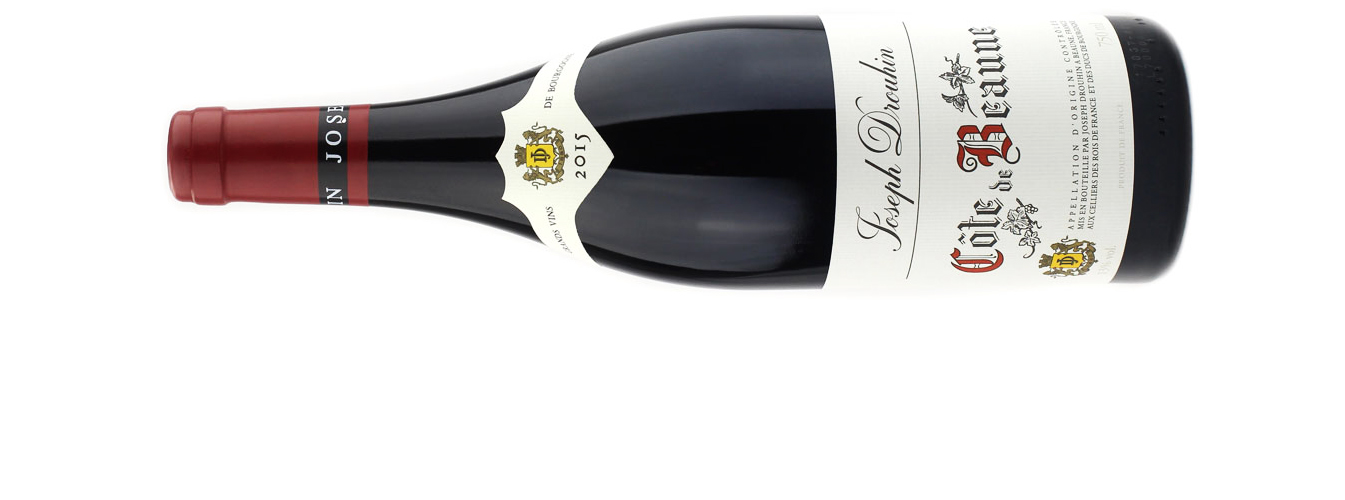
Sometimes the quest is easy; sometimes there are riddles to be solved as there was with this sleeper from Joseph Drouhin.  We have been pleased with Drouhin’s 2015 red Burgundy efforts at a number of levels.  But when we first came across this one, it was a bit of a curiosity.  Labeled Joseph Drouhin Cote de Beaune 2015 but bearing a fancier label (with a resemblance to Drouhin’s Clos des Mouches label…sans mouches of course), it was priced $10 higher than their more plainly labeled Cote de Beaune Villages.

It brought about questions on our part since the labeling didn’t necessarily sync with our impressions of the workings of the Burgundy hierarchy.  As one might have expected there was a perfectly Burgundian explanation.  Drouhin is a big house and produces a lot of negocient wine as well as bottlings from their own estate properties.  The ‘Villages’ with the regular label can come from any one of 16 different individual villages (Aloxe Corton, Volnay, etc) and isn’t necessarily all estate fruit.

The Cote de Beaune, according to the folks at Drouhin, “comes from the vines of the Joseph Drouhin estate (total vineyard area around 3 hectares – 7.5 acres) as well as from the younger vines of Clos des Mouches and other Premier Crus of Beaune that have been declassified (a Beaune wine can be declassified into Côte de Beaune).”  The story here is that there is much better (and more specific) stuff used in this one than the ‘villages’.  However you wouldn’t necessarily know that from looking at the label.

Fun folks, those Burgundians.  But once you get the ‘lay of the land’ and consider the possibilities is in a top vintage, things like this can become your own precious little secret.  Pour it out and you’ll really get a feel for where this one can go, and behold its deep ruby color.  The wine is a little reticent at first, with a touch cooler edge that most of the ultra tender 2015s, but Burgundy fans would consider the touch more lift and freshness a good thing.

As the nose opens, the breeding of the grapes here start to unfold.  There are dark cherries and currants, of course, but also a penetrating florality and high notes of mineral and clove in the nose.  As it sits in the glass few minutes, the Cote de Beaune unwinds to reveal spicy layers of fruit and plenty of flesh, nicely juxtaposed with clean acidity.  The highlights, or maybe it’s the power of suggestion, suggest this one flashes a bit of its ‘Mouches-y’ pedigree, but in any case there is no doubt that this one merits serious attention in this expensive vintage.

James Suckling had some nice words for this one as well, offering, “Very floral and fresh with crushed raspberries and flowers. Medium-to full-bodied, dense and silky. Beautiful and layered. Lovely texture. Drink now. ..92 Points!”  Still young and very lively, it is certainly a fine choice for current applications.  By all means, ‘drink now’ after giving this one a few minutes to stretch.   But we also think shows the definition and class to allow one to ponder putting away a few bottles for 5-10 years.  Either way, you win.

Also, and perhaps as important, there’s the value.  Clos des Mouches itself sells for over $100, this one costs about 66% less.  Good well priced Burgundy isn’t easy to find.  But it’s out there if you are willing to dig.


RIDGE CABERNET SAUVIGNON ESTATE 2014-Montebello Heritage, Lower Fare

One of our long time tenets has been to explore ‘other offerings’ from iconic wineries.  If you haven’t heard our reasoning it’s pretty simple.  ‘Iconic’ wines are wines that have achieved a certain status because of continued excellence over a period of time, and our thought (which has proven true time and again) is that the folks who make great wines answer to a higher standard than the rest.  A value wine for them has to still fill a certain criteria no matter what.

Over the years we have told this story a number of times, usually with the subject being something from a top Bordeaux chateau like Lafite or Pavie, a Chave or a Lodovico, or something of that ilk.  We openly admit that our usual forte is the Old World because California has eschewed the value handle it seems, almost bristling at the suggestion that anything of theirs be offered at a price that is less that whatever they divined to sell it for.  But even here, the theory can work.  It’s just a matter of finding the example.

So who is our icon?  Well, it would be difficult for any California aficionado would deny that Ridge Montebello is among the state’s most storied Cabernet series.  AS folks who have tasted these them since the late 80s, we would have the temerity to suggest that Montebello has actually gotten better over time and the current releases are among the best ever.  The problem is that the wine is becoming even more scarce and, these days, sells in the $200 range.

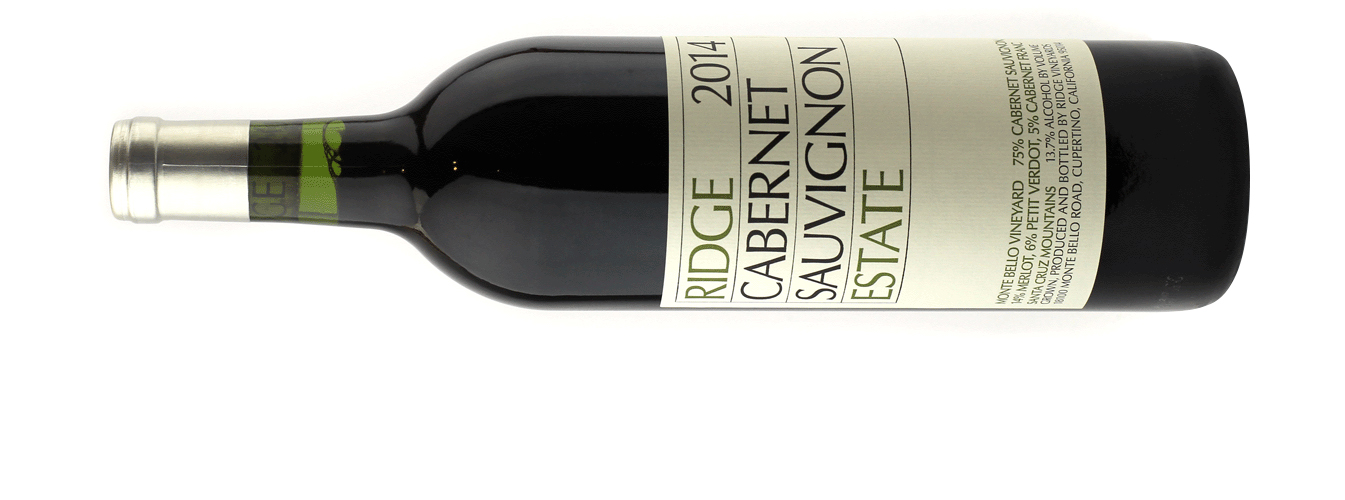
That’s what makes this story particularly important.  A few years back we started to see a wine called Ridge Cabernet Sauvignon Estate.  So what is it?  Well, in this case, think of Ridge Montebello’s answer to Carruades de Lafite, Les Forts de Latour, or Pavillon Rouge de Chateau Margaux.   In other words this is Ridge Cabernet from the younger vines and deselected lots of the ‘big dog’.  There was a lot of experimentation that lead to this decision, with earlier versions that were simply labeled Ridge ‘Santa Cruz Mountains’ until we started to see this nomenclature in 2008.

We liked the 2012 version of this wine quite a bit (it was also a Wine Advocate 92 and 94 Galloni), but think the new version, while perhaps a little less outgoing out of the gate than the 2012, is possibly even a touch more polished and complete.  Once again we were not alone and this Cab already has a few reviews including a 92 from former Wine Advocate scribe Jeb Dunnuck who has recently started his own service, and Antonio Galloni’s 93.

Galloni posts a rather rave review, stating “…bold, incisive flavors. Even with all of its intensity, the 2014 has a certain silkiness in its tannins that makes it approachable today. Of course, the 2014 will be even better in another few years, but opening a bottle on the early side is not a crime. The 2014 spent 27 months in French oak. Readers who are looking for a more affordable alternative to Ridge’s iconic Monte Bello should consider the 2014 Estate. Look for the Estate to be a real overachiever in 2014 as well as one of the best – possibly the best – California Cabernets in its price range.

 That’s kind of what we’re on about here.  This is a brilliant effort made up of 75% Cabernet Sauvignon, 14% Merlot, 6% Petit Verdot, and 5% Cabernet Franc, and 100% Montebello fruit! More importantly, it’s a very classy, sophisticated Cabernet essentially hidden in plain sight in the shadow of its famous sibling.  This is not a place most folks think to look for an elite Cabernet but beside performance, horse sense tells you that you can’t buy much in Napa at this level for $60-70.  So in its own way, the Ridge Cabernet Sauvignon Estate 2014, at a quarter the price of the Montebello, is a legit value for folks looking for serious Cabernet.  It’s also proof that the more affordable efforts from big time players theory works in California sometimes as well.


AVIRON BEAUJOLAIS-BETTER LATE THAN NEVER

Given the remarkable abundance of great wines that are out in the marketplace these days, finding the right ones at the right prices is a monumental and never-ending tasking.  At the point where we actually do find something that gets us excited, particularly the ones where all of the boxes (quality, style, typicite, and price) get checked, we commit without a blink.  At that point it’s out of our hands until the wine arrives.  Often it is merely a process of the purveyor putting it on a truck and sending it.   Sometimes it becomes a lot more complicated.  This was one of those times, though we will save the particulars for another piece on the sometimes curious ways in which the industry works.

You have likely heard us jabber on about the fantastic 2015 Beaujolais.  Several months ago we had the opportunity to taste what might be some of the best values of this sensational vintage.  We started working with Stephane Aviron’s wines back with the also highly revered 2009 vintage.  At the time he was working with Nicolas Potel under the heading ‘Potel-Aviron’.  Delicious Beaujolais, fresh and fruit driven, and at remarkable prices for what they delivered, those were among the many exciting new faces we discovered with that breakout vintage in Beaujolais.

Aviron and Potel parted ways but we continued to follow Stephane because the guy could definitely make wine, and made it in the lifted, engaging, can’t-put-the-glass-down style that would win friends for the genre.  Oh yeah, and he still sold the stuff for 199os type prices.  In other words just about the best of all possible scenarios.  Needless to say when we knew we were going to have the opportunity to taste his 2015s, there was definitely interest.

The fact that the wines were compelling was no surprise.  Some of the wines that were particularly successful wasn’t necessarily what we might have predicted.  Running through the lineup, among the most impressive offerings were the Julienas and Chenas, not the appellations that usually rise above.  We picked the Stephane Aviron Chenas Vieilles Vignes 2015 between them because this appellation rarely merits this kind of attention.  Don’t get us wrong.  Good Chenas is exciting, but it is also something of a rarity as the region doesn’t necessarily have too many superstar labels (though that might be changing thanks to folks like Thillardon).

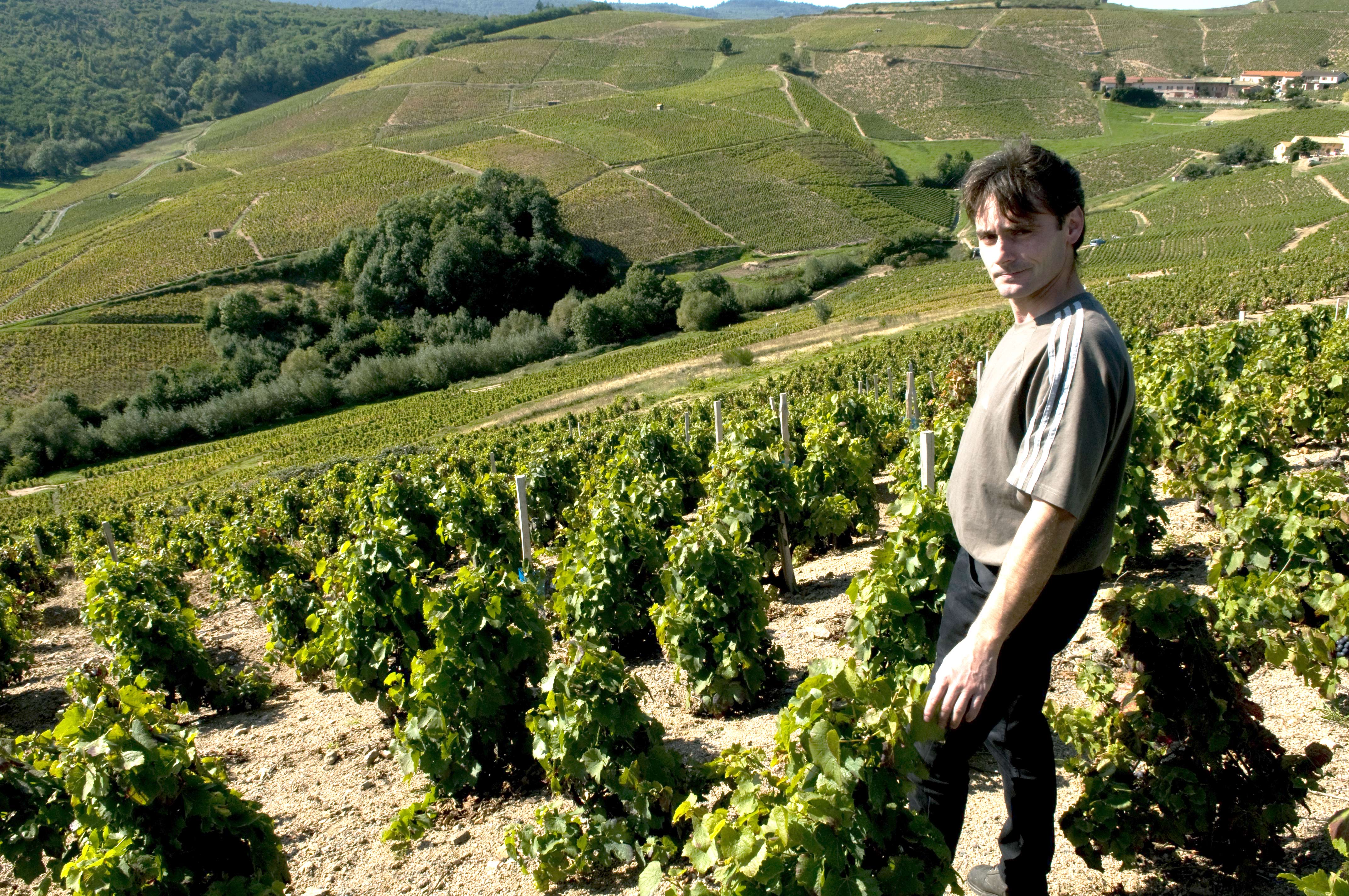
Made from pre-phylloxera vines that average over 100 years-old, from a 13.6 acre parcel that Stephan Aviron has been producing from since 1993. The soil is light and made up mostly of sand and small pebbles over a layer of clay and quartz which explains that brighter, more delicate and outgoing nature of the fruit in this engaging beverage.

While we think the Chenas is a crowd pleaser, we know the more serious Beaujolais types like to have something with a little more pedigree.  To that end, consider the Stephane Aviron Morgon Cote du Py Vieilles Vignes 2015Again the focus is on lip smacking fruit, as is the house style.  But there is more firmness, salinity, minerality, and maybe a little smoke by virtue of this respected hillside terroir.  His vineyard faces south on the slopes of this inactive volcano and the vines are a minimum of 40 years-of-age.  Like the Chenas, the well-under-$20 price is pretty enticing for a wine of this quality and this one might even benefit from some bottle age though it has that classic 2015 outgoing drinkability.

We tasted these wines way back in the early spring and they have just arrived (we have been getting deliveries of 2016s from a number of purveyors already).  Why did it take so long?  Let’s just say for some the ‘wheels of commerce’ turn more slowly.  But on the bright side, these are excellent performers at their modest fares and any opportunity to grab a few more of the flashy ’15s, especially at these kinds of prices, has to be considered a good thing.


VALUE BURGUNDY? MAURICE CHARLEUX SANTENAY 1ER CRU CLOS ROUSSEAU 2015

First a little basic wisdom.  We’ve explained in painful detail about how, in warm vintages, the best place to find good honest value in Burgundy is in the ‘second tier’ appellations.  The term second tier isn’t meant to be derogatory.  It is a simple fact that the hierarchy of Burgundy has been established over centuries based on performance.  Typically places like Marsannay, Santenay, Maranges and Givrey don’t perform at the same level as the heart of the Cotes d’Or.  But when things get a little warmer, as they did in 2015, the wines perform exponentially better and prices stay consistent with their normal place in the hierarchy.  That offers an opportunity for Burgundy buyers, and that has been a key element of our play on the juicy, but very much in-demand, and often expensive 2015 reds.

In vintages past, we have looked to purist sources like Maurice Charleux who work extensively with these ‘fringe’ areas.  A good bit of sunshine and things move to another level of quality.  That being said, we’ll get to the meat of it.  Santenay is one of those places that ‘outperformed’ in 2015 and we have had some positive experience with this house when the opportunity has presented itself.  This is definitely one of those times.

Domaine Maurice Charleux is located in Dezize-les-Maranges, about 4 kilometers southwest of Santenay. It was founded in 1894 by Ferdinand Charleux, who owned just a little over half a hectare (about 1.3 acres) of vines. By the time he died in 1924, he had expanded the property to 2 hectares A few years later, Ferdinand’s son, Joseph, began a 30-year span of growing the size of the property to 8 hectares. Maurice took over the domaine upon his father’s retirement in 1970 and began branding the wines under his name. Nearly 20 years later, his son Vincent began working with his father and, little by little, acquired more plots of vines.

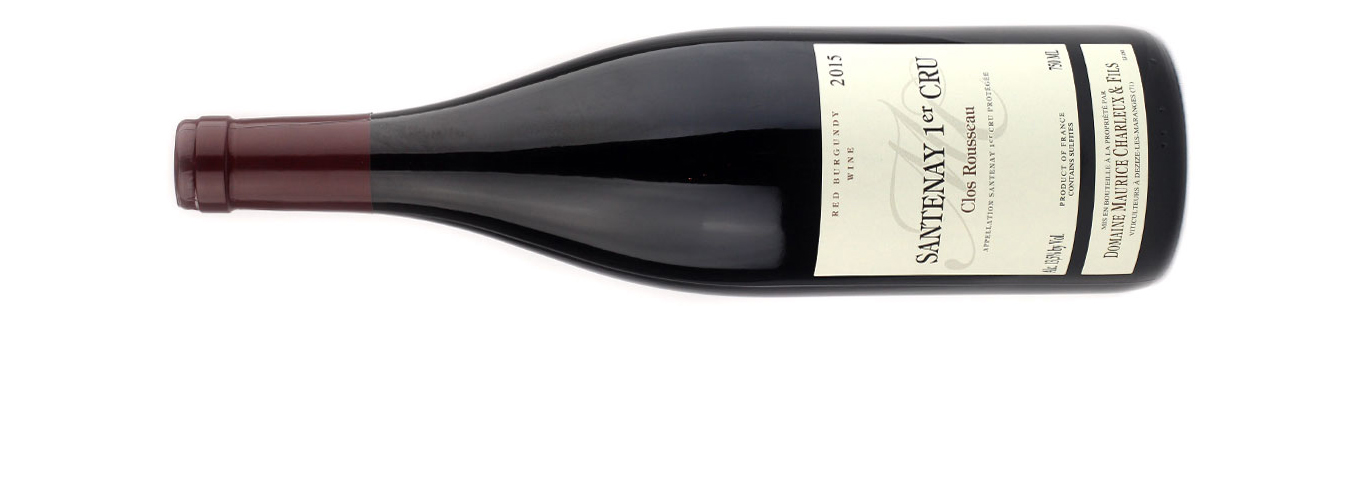
When those warmer vintages come along, Maurice Charleux has been a particularly ‘fruitful’ source for pure, honest Burgundy at very attractive fares.  Today’s property encompasses about 10 acres, 85% of which is Pinot Noir in the appellations Santenay, Maranges and Bourgogne.  The soils typically have a lot of limestone and this .51 hectare plot consists of primarily 30-year-old vines.  The vineyard sits at the southern end of the appellation, and the wines see 15% new oak with the rest 2nd and 3rd use vessels. The Maurice Charleaux Santenay 1er Cru Clos Rousseau 2015 is the best example we can recall since the 2009.

This is ripe, pure, ‘old-school’ Burgundy in the sense that there is a rather deep core of black cherry fruit with a touch of earth, a little minerality, and a pleasing little bit of rustic chewiness to the finishing tannins.  This is Burgundy that excels here as being a fine, engaging, unpretentious example of this hidden away village at the southern end of the Cote du Beaune.  It is a well-priced, expressive example of ‘real Burgundy’, something we don’t get to say all that often any more.


.


Talking ‘bout a revolution…

It has been almost a half century since a guy named Antinori decided that the ‘rules’ in Chianti were far too restrictive.  The rules were put into place to prevent people from cutting corners and, in so doing, protect the appellation.  In the case of this producer, they turned out to be counter-productive.  The Antinoris were looking to reach beyond the appellation with better grape blends and a more refined barrel regimen.  The ‘appellation police’ essentially said ‘no’, that Antinori had to conform to the rules of the DOC if he wanted to identify with Chianti.  He said no, and the rest is history.

To Antinori the existing narrow boundary for winemaking and requirement to use certain ‘second tier’ varietals in the wine, were a severe handicap.  Since he felt constrained by following the rules, he said ‘forget it!’, essentially causing the ‘super Tuscan’ category to emerge. But the wine industry thrives on tradition, and breaking out of the ‘beaten path’ is harder than it would appear.

Antinori was a rebel, and his challenge of the status quo was legendary. But the wine industry is not afraid to change in many ways.  There are constant discussions about various techniques of winemaking, viticulture…how to make better wine, how to grow better grapes, etc.  But as far as questioning the very ‘definitions’ and ‘guidelines’ by which appellations are defined…revolts such as Antinori’s have been historically rare.

That said, there is a significant uprising going on in Spain that not a lot of folks have heard much about.  True there are a lot of rumblings in Spain these days about a lot of things9.  In the area of Catalunia in the northeast, which was an independent kingdom for a couple of centuries, there have been definitely been aspirations to secede from Spain proper.  Heck, the Basques to the north act like an independent country to some extent.  There has long been ‘turbulence’ in Spain, but nothing thus far has actually gone beyond that.  But there are disturbances in Spain, specifically Rioja, that threaten to significantly alter the modus operandi of the region.

A long-simmering conflict in Rioja kind of erupted when Bodegas y Vinedos Artadi announced its “decision to leave the Consejo Regulador of the D.O.C Rioja,” the region’s governing organization.  Artadi was founded in 1985 by a group of vintners led by Juan Carlos López de Lacalle and is located in the village of Laguardia, part of the Rioja Alavesa subregion.   We have sold Artadi for a long time (since the early 2000s) and they have never really marketed under the ‘traditional’ banner.  But eschewing the regional banner is a new twist.

The bodega has focused more on origin (bottling a number of single-vineyard wines, including its flagship El Pison) than on the common Rioja designations of CrianzaReserva and Gran Reserva. Artadi isn’t the only winery to do that. Muga, for example, makes a couple of wines that don’t follow the specific guideline of the appellation.  They don’t use the ‘official’ nomenclature, however.  They simply give those less traditional bottlings other names like Torre Muga and Seleccion that don’t confuse themselves with the ‘traditional’ designations that Muga also produces, and they still call everything ‘Rioja’.

What makes the move by Artadi notable is that, moving forward, their wines will not say Rioja on them at all!   According to the article we read, Lopez de Lacale says he is not trying to be a revolutionary.  In fact, in his mind, he isn’t doing anything different at all!  He was quoted as saying, “We would like to highlight that there is no change in our project…We will keep betting on the land and the vineyard as the main sources of value for our wines.”

Senor Lopez de Lacale claims he isn’t trying to lead a secessionist movement.  But it is a pretty major move to buck a century plus of tradition without a clear end game.  His wines aren’t going to say Rioja on them.  So what are they? The Riojanos have put in more than a century of work to get their region’s identity established in the world market.  A number of large concerns are benefitting from that identity, and the region seems to have made some real progress over the last decade or so in raising awareness.

Now what?  Where does it go from here? Is Artadi a ‘lone wolf’ or will more bodegas follow the Artadi lead, and to what end?  There are a lot of issues swirling around, and it is unlikely that a solution that will garner widespread support can be cobbled soon given the range of diverse range of concerns that seem to be at the heart of the matter.  There don’t seem to be any easy answers.

Part of the problem is philosophical. Rioja’s classification system permits only one geographical indication… Rioja.  That works as long as everybody is on board and all of the ‘players’ conform at least to the task of solidarity in representing the region.  Rioja has done a lot to elevate itself in the international wine market.  That solidarity of image has been a key part of the program.  Sure there are some mavericks that experiment with more modernist approaches to winemaking, but all under the “Rioja’ banner.

But there are forces that are pushing for a more specific identity within the region as a whole.  Telmo Rodriguez, a highly visible winemaker who has projects all over Spain, has been advocating implementation of a “village” appellation system (a la Burgundy) in Rioja for years. In January, El Grupo Rioja, the largest association of wineries in the region, issued a proposal to move in this direction, including formalization of criteria for village and single-vineyard designations!  A ‘Grand Cu’ map for Rioja in other words.

Also, Rioja’s three sub-regions (Rioja Alavesa, Rioja Alta and Rioja Baja) have been looking towards an opportunity to express their own specific areas beyond the simple catch-all ‘Rioja’ appellation.  According to an article in Wine Spectator, the Alavesa region (located within the very independent Basque area) wants to put the Rioja Alaveza designation on bottles.  In June 2015, 120 bodegas in the Alavesa region requested permission to add this indication to their labels, and officials in the Basque government have indicated their support.

Finally, the folks in Rioja have worked long and hard to create an international image for themselves.  They seem to be finally getting to a good place and a number of their ‘native sons’ are doing better than ever.  Is it worth blowing the economics of a united thrust for the sake of individualism? The largest bodegas have also built worldwide brands based largely on multi-regional blends of vineyards from all over Rioja.  If Rioja becomes a subservient appellation to, say, Rioja Alavesa, where are they left in the consumers view?

If a bunch of bodegas, arguably some of the more prestigious ones among them, eschew the Rioja handle altogether for something like Rioja Alavesa or Rioja Alta, or even something more specific like Logronio or La Guardia, where does it end?  What does that do to Rioja’s larger marketing thrust?  Most important, how will consumers, many of whom are just recently coming to grips with Rioja and loving it, deal with the confusion this kind of ‘upheaval’ can create?

“Clarity” is important part of the wine experience.  A lot of people like to be comfortable with regions and varietals before they settle in with the genre.  If things happen that cloud the identity of the region in the consumers mind, or a lot of big names back out of using the appellation name, it could undo a lot of what Rioja has done to elevate itself in the wine market over the last decade.

By the same token, how do the secessionists garner any kind of attention for themselves?  We are reminded of one of our favorite Spanish producers, Mauro, who hail from the Ribera del Duero adjacent, nebulously defined (in consumers’ minds) Vinos de Tierra y Leon.  The Garcia family makes killer wines here, but they don’t necessarily fall into a category that gets reviewed by a majority of the pundits.  They are technically ‘other Spanish wines’. So their name doesn’t get in front of consumers as much the wine merits simply because they are effectively independents.

The same would happen with those Rioja guys that aren’t calling it Rioja.  There isn’t a ‘category’ for ‘folks in Rioja that aren’t calling themselves Rioja’.  The whole fuss causes would-be buyers to have a more muddled picture of what the region, and the wines, are about. That is usually not a positive from a marketing and imagery perspective.

It is possible that, ultimately, a terroir-centric orientation might play better with the wine cognoscenti.  But it would involve a bit of back-tracking in re-educating people to the new terminology and the more specific landscape in Rioja. They make a lot of wine in Rioja, and something that undermines the broad message of Rioja would seem to be something to avoid.

Granted those rebels in Tuscany ended up creating a whole new category (‘super Tuscans’) that has elevated the whole region.  But it is important to note that those wines are typically estate, rather than regionally focused.  It’s ‘Tignanello’ or ‘Orenellaia’ that most people know, not the dirt they sit on.  Yes, Burgundy is a terroir focused region.  But it has taken centuries to develop the vineyard framework and most people still don’t understand it.  So if you like confusion, you already have Burgundy for that.

Rioja has never outwardly been about site specifics.  We don’t deny the importance of the terroir with something very specific like Senorio de San Vincente.  But they still call themselves Rioja.   We can’t really contemplate all of the complications that might occur down the road, particularly for Artadi who is the one pushing the issue.

We understand the independent spirit of Artadi, Rioja Alavesa, and Basque country.  We get the idea that the winery feels site specificity is important to their program.  As independent types ourselves, we admire their courage.  But having pioneered a number of genres ourselves over the years and taught consumers about all kinds of things they were not familiar with.  We are well aware of how difficult the education process can be even when it is relatively straight forward.  There can be wine-speak, curious foreign words, maps, and all manner of ‘information’ that isn’t necessarily easily digestible.

We also know the more complicated the explanation, the smaller the audience will be at the end.  As students of business, we have to wonder what the long term benefit for this kind of ‘declaration of independence’ is, and what kind of marketing mess it will create if more people follow suit.


PURLIEU CABERNET 2014-SERIOUS DIRT YIELDS SERIOUS JUICE

This is a curious example of the ‘new math’, and certainly an anomaly in today’s Napa.  In world where legitimate $40-50 Cabernets are asking $150, this guy is offering a wine sourced from an iconic list of Napa vineyards, made by one of Napa’s ‘rock star’ winemakers, for less than $100.  This isn’t our first go-around with Purlieu Cabernets.  We’ve sold a couple of prior vintages just because we thought they were seriously good and offered value in a rarefied world of elite Napa Cabernets that seems to be philosophically averse to it.

The list of vineyards in the Purlieu Cabernet Sauvignon Napa Valley 2014 is sick…Missouri Hopper, Beckstoffer To-Kalon, the Pritchard Hill vineyard next to Ovid (Martinez) and Teucer.  These make $150-300+ single vineyard wines for Purlieu and others.  Put them together and it’s…less?  The fruit in this wine is gorgeous…black cherry, plum, and blackcurrant with flecks of vanilla, toast, and dark chocolate (around 82% cocoa if you want specifics, chocolate geeks).    In line with the 2014 vintage, the wine is pretty seamless front-to-back, and the texture of plush and palate caressing.

The winemaker here is one Julien Fayard, one of Napa’s rising superstars with a resume that sounds like some one made it up.  He has worked as the director of winemaking for Phillipe Melka’s all-star team that took care of wineries like Hundred Acre, Vineyard 29, Lail, and Gemstone.

Robert Parker’s notes are pretty enthusiastic about the wine, “The real knock-out is the 2014 Cabernet Sauvignon from Napa… this is a superb example of Napa Cabernet Sauvignon. Inky purple in color, with beautiful blackberry and cassis fruit, a touch of creosote, charcoal and some subtle background oak, the wine hits the palate with authority, serious extract and richness, but enough acidity to frame up its boisterous and exuberant parts. It is a big, rich, concentrated, mouth-filling Cabernet Sauvignon with relatively sweet tannin. It should drink well for 15-20 years, possibly longer…94 points”

We would’t be at all surprised if this sexy, layered Cabernet could kick some serious tail in a scrum of high-digit Napa stalwarts, yet at this price it’s actually a deal based on performance in our minds. Robert Parker went out of his way to say the wine ‘wasn’t a bargain’ at under $100.  Since ‘print’ has no nuance, we aren’t sure about the context of that comment, but we politely (though firmly) disagree.  We aren’t the type of folks that tell people to spend this kind of money lightly and are very measured in our praise. This one delivers.  It’s is also as crowd pleasing a high end Cabernet as we have had in a while.  It will only get better.  Not everyone can play at this level price-wise.  But if you can, this is a star.