
AVIRON BEAUJOLAIS-BETTER LATE THAN NEVER

Given the remarkable abundance of great wines that are out in the marketplace these days, finding the right ones at the right prices is a monumental and never-ending tasking.  At the point where we actually do find something that gets us excited, particularly the ones where all of the boxes (quality, style, typicite, and price) get checked, we commit without a blink.  At that point it’s out of our hands until the wine arrives.  Often it is merely a process of the purveyor putting it on a truck and sending it.   Sometimes it becomes a lot more complicated.  This was one of those times, though we will save the particulars for another piece on the sometimes curious ways in which the industry works.

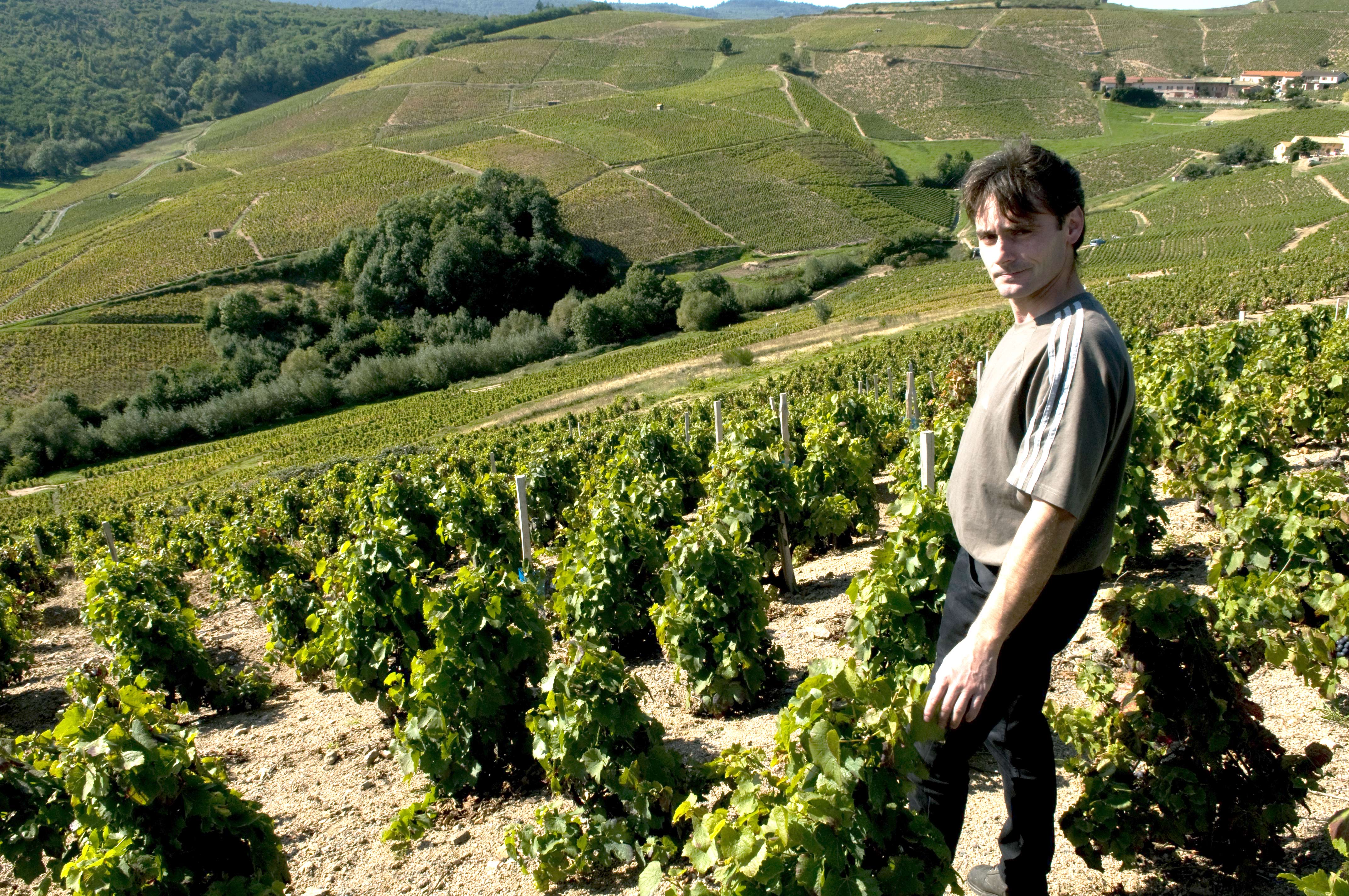
You have likely heard us jabber on about the fantastic 2015 Beaujolais.  Several months ago we had the opportunity to taste what might be some of the best values of this sensational vintage.  We started working with Stephane Aviron’s wines back with the also highly revered 2009 vintage.  At the time he was working with Nicolas Potel under the heading ‘Potel-Aviron’.  Delicious Beaujolais, fresh and fruit driven, and at remarkable prices for what they delivered, those were among the many exciting new faces we discovered with that breakout vintage in Beaujolais.

Aviron and Potel parted ways but we continued to follow Stephane because the guy could definitely make wine, and made it in the lifted, engaging, can’t-put-the-glass-down style that would win friends for the genre.  Oh yeah, and he still sold the stuff for 199os type prices.  In other words just about the best of all possible scenarios.  Needless to say when we knew we were going to have the opportunity to taste his 2015s, there was definitely interest.

The fact that the wines were compelling was no surprise.  Some of the wines that were particularly successful wasn’t necessarily what we might have predicted.  Running through the lineup, among the most impressive offerings were the Julienas and Chenas, not the appellations that usually rise above.  We picked the Stephane Aviron Chenas Vieilles Vignes 2015 between them because this appellation rarely merits this kind of attention.  Don’t get us wrong.  Good Chenas is exciting, but it is also something of a rarity as the region doesn’t necessarily have too many superstar labels (though that might be changing thanks to folks like Thillardon).

Made from pre-phylloxera vines that average over 100 years-old, from a 13.6 acre parcel that Stephan Aviron has been producing from since 1993. The soil is light and made up mostly of sand and small pebbles over a layer of clay and quartz which explains that brighter, more delicate and outgoing nature of the fruit in this engaging beverage.

While we think the Chenas is a crowd pleaser, we know the more serious Beaujolais types like to have something with a little more pedigree.  To that end, consider the Stephane Aviron Morgon Cote du Py Vieilles Vignes 2015Again the focus is on lip smacking fruit, as is the house style.  But there is more firmness, salinity, minerality, and maybe a little smoke by virtue of this respected hillside terroir.  His vineyard faces south on the slopes of this inactive volcano and the vines are a minimum of 40 years-of-age.  Like the Chenas, the well-under-$20 price is pretty enticing for a wine of this quality and this one might even benefit from some bottle age though it has that classic 2015 outgoing drinkability.

We tasted these wines way back in the early spring and they have just arrived (we have been getting deliveries of 2016s from a number of purveyors already).  Why did it take so long?  Let’s just say for some the ‘wheels of commerce’ turn more slowly.  But on the bright side, these are excellent performers at their modest fares and any opportunity to grab a few more of the flashy ’15s, especially at these kinds of prices, has to be considered a good thing.
 

VALUE BURGUNDY? MAURICE CHARLEUX SANTENAY 1ER CRU CLOS ROUSSEAU 2015

First a little basic wisdom.  We’ve explained in painful detail about how, in warm vintages, the best place to find good honest value in Burgundy is in the ‘second tier’ appellations.  The term second tier isn’t meant to be derogatory.  It is a simple fact that the hierarchy of Burgundy has been established over centuries based on performance.  Typically places like Marsannay, Santenay, Maranges and Givrey don’t perform at the same level as the heart of the Cotes d’Or.  But when things get a little warmer, as they did in 2015, the wines perform exponentially better and prices stay consistent with their normal place in the hierarchy.  That offers an opportunity for Burgundy buyers, and that has been a key element of our play on the juicy, but very much in-demand, and often expensive 2015 reds.

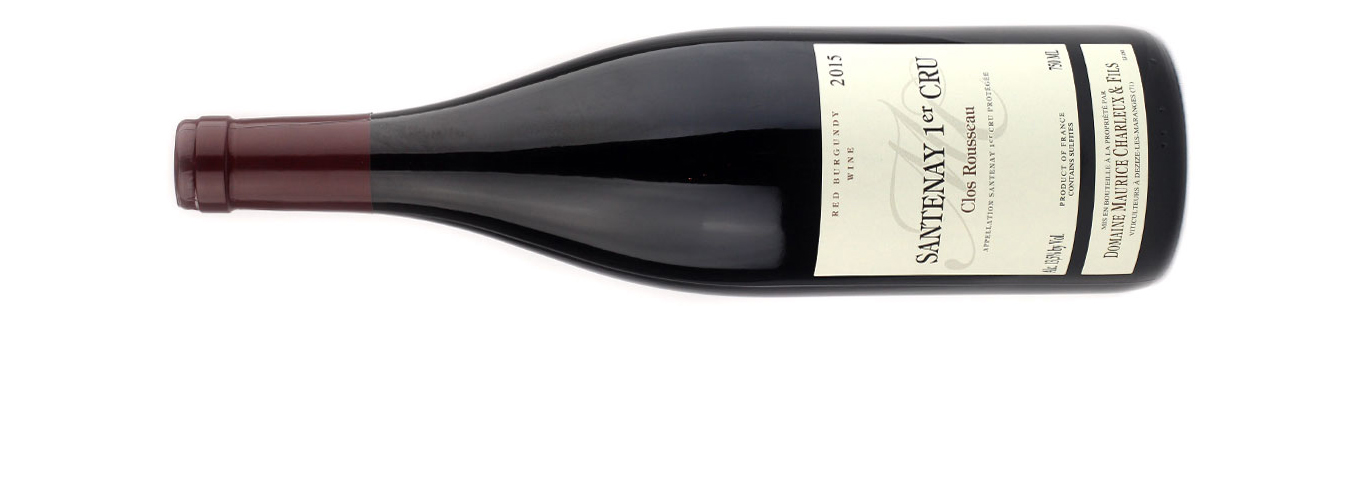
In vintages past, we have looked to purist sources like Maurice Charleux who work extensively with these ‘fringe’ areas.  A good bit of sunshine and things move to another level of quality.  That being said, we’ll get to the meat of it.  Santenay is one of those places that ‘outperformed’ in 2015 and we have had some positive experience with this house when the opportunity has presented itself.  This is definitely one of those times.

Domaine Maurice Charleux is located in Dezize-les-Maranges, about 4 kilometers southwest of Santenay. It was founded in 1894 by Ferdinand Charleux, who owned just a little over half a hectare (about 1.3 acres) of vines. By the time he died in 1924, he had expanded the property to 2 hectares A few years later, Ferdinand’s son, Joseph, began a 30-year span of growing the size of the property to 8 hectares. Maurice took over the domaine upon his father’s retirement in 1970 and began branding the wines under his name. Nearly 20 years later, his son Vincent began working with his father and, little by little, acquired more plots of vines.

When those warmer vintages come along, Maurice Charleux has been a particularly ‘fruitful’ source for pure, honest Burgundy at very attractive fares.  Today’s property encompasses about 10 acres, 85% of which is Pinot Noir in the appellations Santenay, Maranges and Bourgogne.  The soils typically have a lot of limestone and this .51 hectare plot consists of primarily 30-year-old vines.  The vineyard sits at the southern end of the appellation, and the wines see 15% new oak with the rest 2nd and 3rd use vessels. The Maurice Charleaux Santenay 1er Cru Clos Rousseau 2015 is the best example we can recall since the 2009.

This is ripe, pure, ‘old-school’ Burgundy in the sense that there is a rather deep core of black cherry fruit with a touch of earth, a little minerality, and a pleasing little bit of rustic chewiness to the finishing tannins.  This is Burgundy that excels here as being a fine, engaging, unpretentious example of this hidden away village at the southern end of the Cote du Beaune.  It is a well-priced, expressive example of ‘real Burgundy’, something we don’t get to say all that often any more.


.


Regis Bouvier Gevrey Chambertin 2015

One thing about the great vintages of Burgundy these days is that the level of commerce rarely is in line with the level of excitement.  The juicy 2015 vintage is a prime example of how it works, and perhaps something of a trifecta of things that can go wrong.  First, while very successful, the crop was small.  Second, because the crop was small and demand was high, the prices on some wines got to the point of silly.  Even with that, if you were a high-end collector and were willing to pay the substantial ‘ticket price’, you still might not get many opportunities to snag many cherries because the unattractive ‘bundles’ of various producers wines, and the risk associated with selling every level of those bundles kept a lot of usual purveyors from offering the wines at all.

If you are looking to buy some legendary label at the current, astronomical market price, the going is tougher than ever. If you are looking for good wine to drink, that is doable. Incumbent in great, ripe vintages is the success from top to bottom, and the possibility of finding some pretty fine juice at whatever price range you are willing to pay. To that end, let us recommend the Regis Bouvier Gevrey Chambertin 2015.

This is a terroir filled example of this famed village with the additional benefit of a ripe fleshy vintage. There are Burgundies that need to be contemplated because they are not forthcoming with their statement. Here that juicy cherry-leaning-to-black currant fruit unfolds and engages pretty quickly. Classic spice for Gevrey, with savory flecks of earth and mineral, this is an ambassador for the genre. If you are a fan of Burgundy that doesn’t seek status of a famous label, only deliciousness, this is a fine choice. If you want to show someone what Burgundy is about who doesn’t necessarily have a lot of experience, this juicy 2015 will serve you well. For us, Regis Bouvier has been a regular source of truly likable, reasonably priced, honest Burgundy for a few years now.

The bulk of his holdings lie in Marsannay, a natural place to look for value in a warm vintage. But this .55 hectare parcel of 45 year-old-vines gave him some plump, ripe, fine juice in this vintage from a more ‘prestige’ address. This is the kind of Burgundy that makes friends, with the early drinkability that the 2009s had, but plenty structure underneath if you want to give it a few years. Folks in Oregon and California make comparisons to Burgundy, and there are a number of good Pinot Noirs that carry price tags a lot higher than this one. Our point is that, if you want something that tastes like really good Burgundy, how about actual Burgundy? Options like this where the typicité, profile, the accessibility and the sensible pricing all happen together aren’t easy to find even in the best of times. Here’s a tasty one…$49.98