

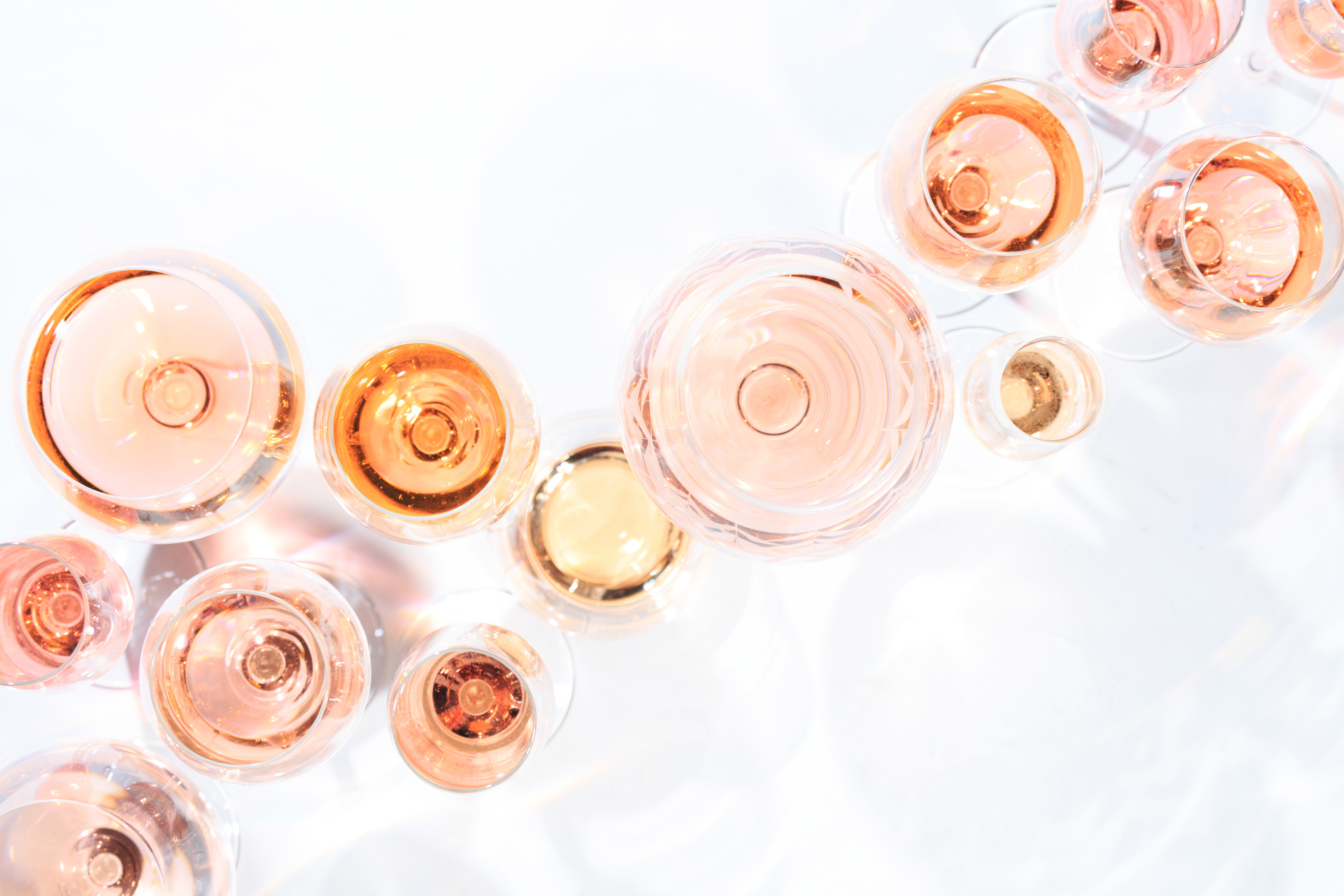
It’s that time again, though admittedly when we started getting serious about rosés back with the 2001 vintage we never imagined it would play out like it has. Back then, after a couple of decades of white Zinfandel domination, most wine buyers were reluctant to try pink wines because they thought of them as the mawkishly sweet, soda pop examples that grandma drank. The folks that bought pink wine were typically looking for the white Zin experience and thus disappointed with a crisp dry rose. Our only thought back then was to try to introduce more people to dry pinks because they served such a need during the warmer months because they were fresh, light, and versatile with food.
A decade and a half later we and others like us fear we may have done our job too well. There is a thirst for rosé in the marketplace like there never has been. People are willing to try all kinds of different pinks and many consider them a necessary part of their beverage program. The industry has responded, as it so often does, by overdoing it to the point of silliness (see also White Zinfandel, Syrah, Merlot, and high-octane, red ‘mutt’ blends with artsy labels and big price tags). There are anywhere from five to ten times as many rosé options as back when we started, a great many of them from places that never made pink wine before and arguably shouldn’t be making them now.
All of this rose madness has done a number of things. We get a lot more selection from places like Provence, Bandol and the Rhone, places that have a long and positive history with the genre. There are also a few intriguing new options that have been created simply because there was a potential market. Sadly, there is way too much mediocre-to-poor pink out there and our task of working through them has almost become a slop. Everybody has a pink wine (or two, or three) to sell.
With that, our game plan this year is to be even more selective in what we offer than in years past. The 2017s, while perhaps a half-step behind the 2016s (which are still showing beautifully by the way) and the 2015s, are still quite complete and engaging. Our preferred profile is still fresh, honest fruit and bright acidity. We tend to avoid efforts with higher alcohols and lower acidity because they simply aren’t refreshing and that is what pink wine is all about. Even as we work with fewer wines than before, it is still a fair amount of juice to talk about. So with summer right around the corner, we’d best start talking…
RIMAURESQ ROSE PROVENCE CRU CLASSE 2017–While the whole idea of Cru Classe de Provence has been around for a long time, with even the ‘official’ founding of the appellation happening back in 1955, there has been a real interest recently to put more vigor into the marketing of this special little spot for pink wine. This is one of the ‘original’ fourteen members of this very specific delineated terroir and these guys appear to be upping their game a bit.
The microclimate of Rimauresq is a real singularity of the Côtes de Provence appellation. The vineyard is located at an altitude varying from 140 to 190 meters at the foot of Notre Dame des Anges. The shade of the hill and the beneficial effects of the Mistral play a role in this wines fresh personality. The estate consists of a clay-schist and crystalline soil, with sandy and stony parts. It is common to benefit from the combination of several soils (degraded schist, pink sandstone, rolled pebbles) within the same plot and that is the case here. Rimauresq takes its name from the Moors River which crosses the Domain.
They make other ‘flavors’ but this is a house rosé built. They make five different versions. The Rimauresq Rose Provence is a mix of 43% Grenache, 24% Cinsault, 10% Mourvedre, 8% Syrah, 6% Carignan and 9% Rolle (aka Vermentino). The aromatics speak of berries, apricot and citrus with a little garrigue and some mineral and floral aspects. In the mouth it isd both fleshy and lifted with the red fruits as the central theme but subtle layers as befits this wine’s diverse makeup.
ELIZABETH SPENCER GRENACHE ROSE MENDOCINO SPECIAL CUVEE 2017- We aren’t going to say we weren’t a little surprised by this wine. Usually California pinks have a tendency to be a little plodding. To tell the truth we went back three times to make sure we weren’t just in a good mood or it was a biodynamic ‘fruit day’. The wine delivered plenty of mouth-watering red berries flecked with stone fruit, apple, and floral notes, with just the right amount of snap at the end. The story is that this wine came from Mendocino, where it is cooler and therefore more likely for the wine to retain its necessary acidity.
The grapes came from rocky soils in the benchlands up by Ukiah, and they were harvested specifically to make pink wine (as opposed to being a saignee of something else. That accounts for the depth of flavor here, and some of the wine saw a bit of neutral oak for rounding out. Bright, insistent yet still with a playful quaffabilty, this one definitely has a European demeanor, but the Mendocino fruit makes for an interesting change of pace.
Made from 100% Grenache, this one checks all the boxes in a way few domestic versions do in our minds…fresh, fruit driven, lifted, and well-priced.
MOURGUES DU GRES COSTIERES DE NIMES GALETS ROSE 2017- We go back a long way with this domaine, and their 2017 is arguably one of te best buys on pink wine values we have seen this year. Located in the Costieres des Nimes at the southern end of the Rhone Valley. This vineyard is covered with the round rocks that you see in Chateauneuf to the north (hence the reference to galets) which add a subtle mineral character to the rose. The main show is red berry flanked by notes yellow atone fruit and a touch of both white pepper and garrigue.
The style here is definitely old school, with a rather broad fruit component but just the right touch of acidity to keep it fresh on the palate. The mix here is a pretty standard one of 50% Syrah, 40% Grenache, and 10% Mourvèdre, but they produce a lot of red win so the juice comes mainly from saignee. The wine has a bit more size than some pinks which allows it to play with a wider array of grilled fare, and the price ($11.98) definitely makes it easier to swallow.
CHATEAU VANNIERES BANDOL ROSE 2017- No discussion of rose is complete without Bandol, arguably ‘Provence reserve’ but with its own unique twist thanks to the healthy portion of Mourvedre in the blend.
Bandol is historic, the first vines being planted here by the Romans some 2500 years ago. Also, Bandonl is arguably the elite category of French rose and prices have edged up accordingly on the heels of producers like Domaine Tempier. Finding good Bandol Rose isn’t as big a challenge as finding good Bandol rose that is reasonably priced. Vannieres fits that requirement nicely.
The current family that owns the property, the Boisseaux, are outliers from Beaune that bought this property in 1957. Father Gaston has now passed the reins to son Eric who is a bit of an epicurean and is currently tinkering with concentration and elegance among other things. This wine is an indication that the program is working well. One could call this ‘classic’ Bandol Rose, a blend of 60% Mourvedre from saignee, along with 20% comes from the each of Grenache and Cinsault from direct pressing, all from vines ranging from 20 to 60 years of age.
The flavors range from white stone fruits to red melon to faintly citrus tones, with that inviting, intriguing musky note that the Mourvedre from this area delivers. Mouthwatering, maybe even a little intellectual, it is a fine example of what Bandol rose is all about and very reasonable for this currently ‘too hot’ genre.