

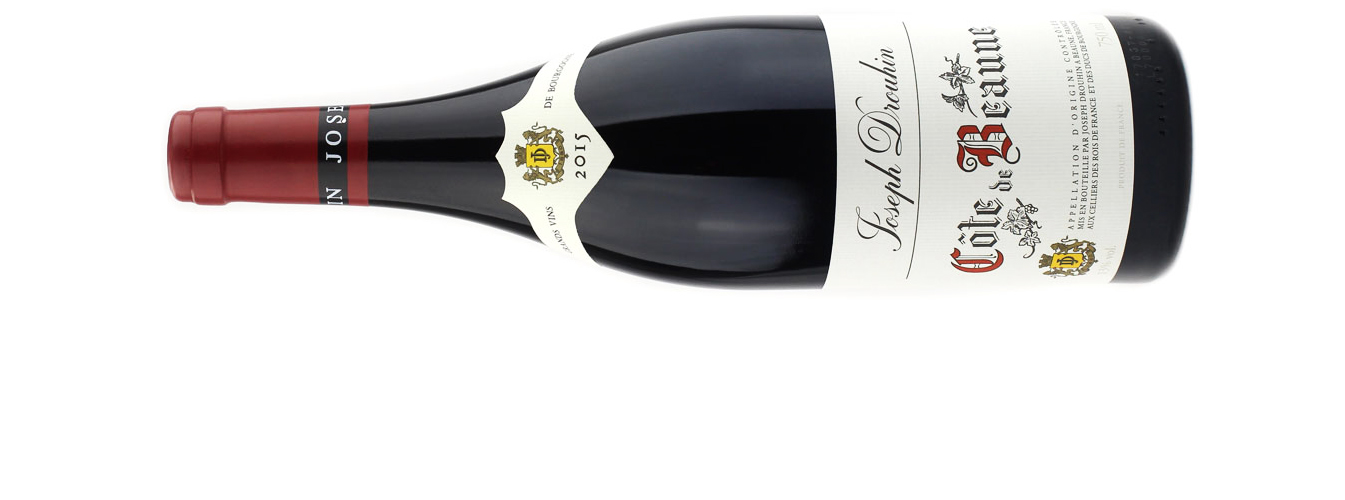
Ah, Burgundy. No appellation is more frustrating or confusing, yet the joy of finding the ‘good one’ always seems to provide the impetus to continue the hunt. Finding a deal is a bonus. The 2015 vintage has been a fun exercise because the vintage’s engaging ripeness definitely allows for a higher success rate. Of course the trick, from our point of view, is to find the juicy little numbers that don’t have triple (or quadruple) digit prices.
Sometimes the quest is easy; sometimes there are riddles to be solved as there was with this sleeper from Joseph Drouhin. We have been pleased with Drouhin’s 2015 red Burgundy efforts at a number of levels. But when we first came across this one, it was a bit of a curiosity. Labeled Joseph Drouhin Cote de Beaune 2015 but bearing a fancier label (with a resemblance to Drouhin’s Clos des Mouches label…sans mouches of course), it was priced $10 higher than their more plainly labeled Cote de Beaune Villages.
It brought about questions on our part since the labeling didn’t necessarily sync with our impressions of the workings of the Burgundy hierarchy. As one might have expected there was a perfectly Burgundian explanation. Drouhin is a big house and produces a lot of negocient wine as well as bottlings from their own estate properties. The ‘Villages’ with the regular label can come from any one of 16 different individual villages (Aloxe Corton, Volnay, etc) and isn’t necessarily all estate fruit.
The Cote de Beaune, according to the folks at Drouhin, “comes from the vines of the Joseph Drouhin estate (total vineyard area around 3 hectares – 7.5 acres) as well as from the younger vines of Clos des Mouches and other Premier Crus of Beaune that have been declassified (a Beaune wine can be declassified into Côte de Beaune).” The story here is that there is much better (and more specific) stuff used in this one than the ‘villages’. However you wouldn’t necessarily know that from looking at the label.
Fun folks, those Burgundians. But once you get the ‘lay of the land’ and consider the possibilities is in a top vintage, things like this can become your own precious little secret. Pour it out and you’ll really get a feel for where this one can go, and behold its deep ruby color. The wine is a little reticent at first, with a touch cooler edge that most of the ultra tender 2015s, but Burgundy fans would consider the touch more lift and freshness a good thing.
As the nose opens, the breeding of the grapes here start to unfold. There are dark cherries and currants, of course, but also a penetrating florality and high notes of mineral and clove in the nose. As it sits in the glass few minutes, the Cote de Beaune unwinds to reveal spicy layers of fruit and plenty of flesh, nicely juxtaposed with clean acidity. The highlights, or maybe it’s the power of suggestion, suggest this one flashes a bit of its ‘Mouches-y’ pedigree, but in any case there is no doubt that this one merits serious attention in this expensive vintage.
James Suckling had some nice words for this one as well, offering, “Very floral and fresh with crushed raspberries and flowers. Medium-to full-bodied, dense and silky. Beautiful and layered. Lovely texture. Drink now. ..92 Points!” Still young and very lively, it is certainly a fine choice for current applications. By all means, ‘drink now’ after giving this one a few minutes to stretch. But we also think shows the definition and class to allow one to ponder putting away a few bottles for 5-10 years. Either way, you win.
Also, and perhaps as important, there’s the value. Clos des Mouches itself sells for over $100, this one costs about 66% less. Good well priced Burgundy isn’t easy to find. But it’s out there if you are willing to dig.